A journal for industry and audiences covering the past, present, and future of the musical stage.
Today is Sunday, and this week’s Report features a review of In Clay; a brief comment on the resurfacing of revue; quick takes on The Nice List and the closing of The Queen of Versailles; a quote of the week; for your consideration…; select press announcements from the past week; and a list of the upcoming week’s previews and openings.
QUOTE OF THE WEEK
The lyric, by Howard Dietz, for “Atlanta,” cut from the 1948 revue Inside U.S.A. The song, a satiric razzler, is comprised of two choruses separated by a patter section, and it is performed by a jewel thief preparing to vacation at the United States’ famed East Coast penitentiary. Can you identify the three (small) technical dramatic blunders in what is otherwise a smart, sharp, vibrantly theatrical lyric?
Robbed a jewelry store
Now I’m headin’ for
Atlanta
Life’ll soon begin
When they put me in
Atlanta
I got a feelin’ that I never will roam
The people there don’t seem to want you to roam
I got a feelin’ you’re my permanent home
Atlanta
They will charm you
And they’ll disarm you
In the Big House
Where the yard’s immense
With a cozy fence around
They’ll have you sent there
‘n pay your rent there
And your best years will be spent there
In Atlanta
Where I’m bound
You reach the Pennsylvania Station ’bout a quarter to eight
That’s where a Secret Service man’ll take you right thru the gate
All aboard the Seaboard
That’s the train that we board
I got a date – they won’t let me be late
I got a date with a State
That’s why I’m headin’ towardja, Georgia
I got to be where I’ll see
The sweet magnolia, like I tole ya
Oh, I can even hear the honeysuckle callin’ to me
I hear the honeysuckle sayin’, “It’s a long time no see”
Soon I’m gonna plant a
Foot down in Atlanta
One foot
Other foot
One foot
Other foot
Robbed a jewelry store
Now I’m headin’ for
Atlanta
If you’re forced to rest
Mind if I suggest
Atlanta
That’s where you mingle
With the rich and the poor
And they provide a guide
When you’re on a tour
There’s only one resort
To go for the cure
Atlanta
You will rise at dawn
Rise and start upon your roadwork
In a bran’ new suit
That will suit you to the ground
Let me remind you
That you’ll find you
Can’t escape the ties that bind you
To Atlanta
Where I’m bound
REVIEWS
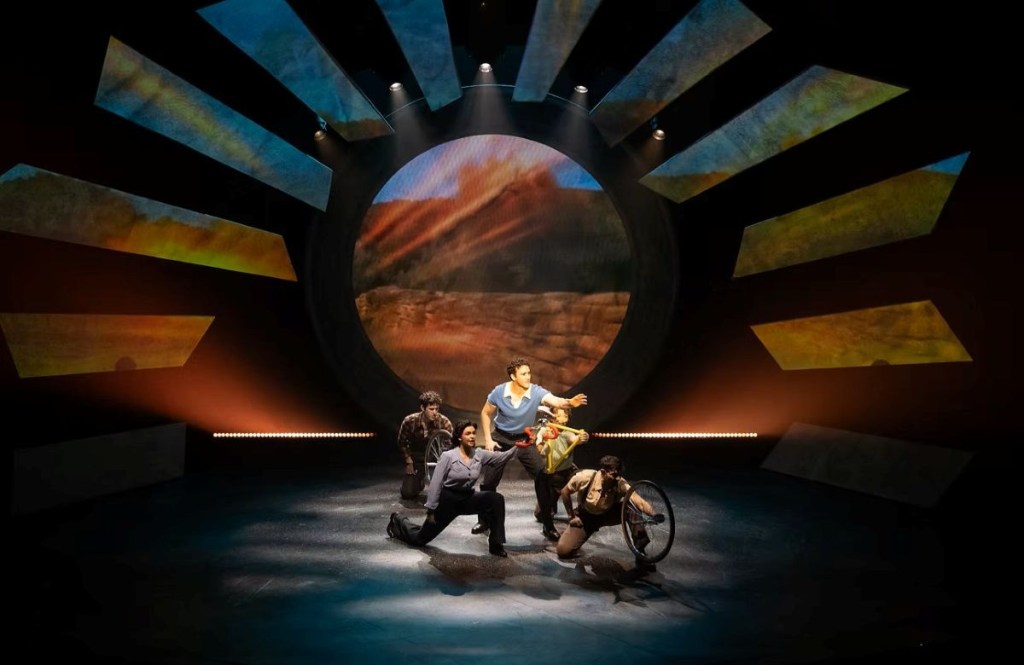
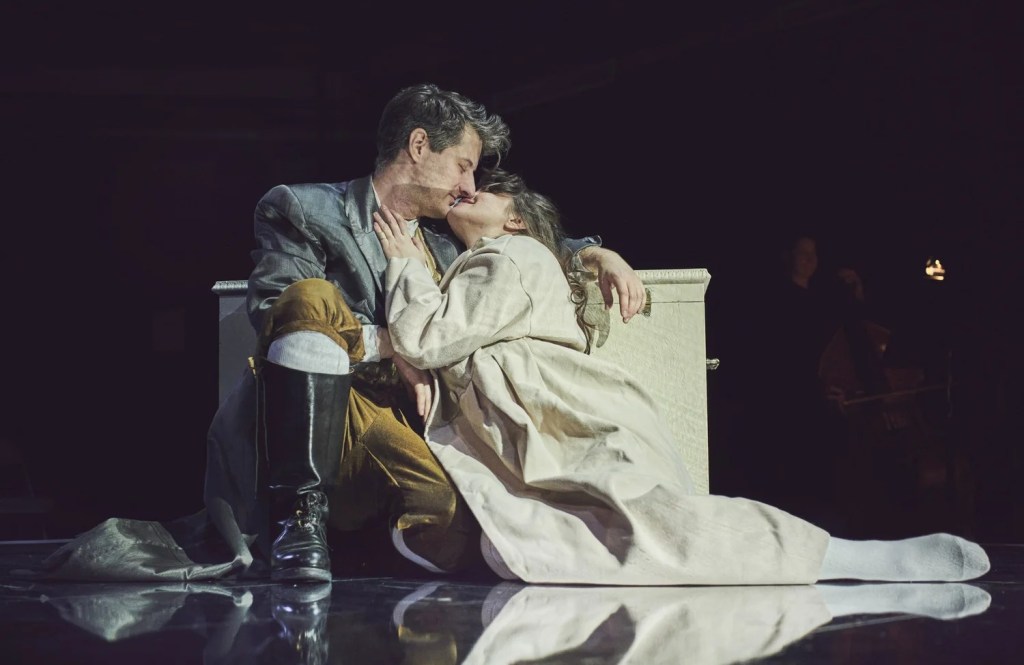
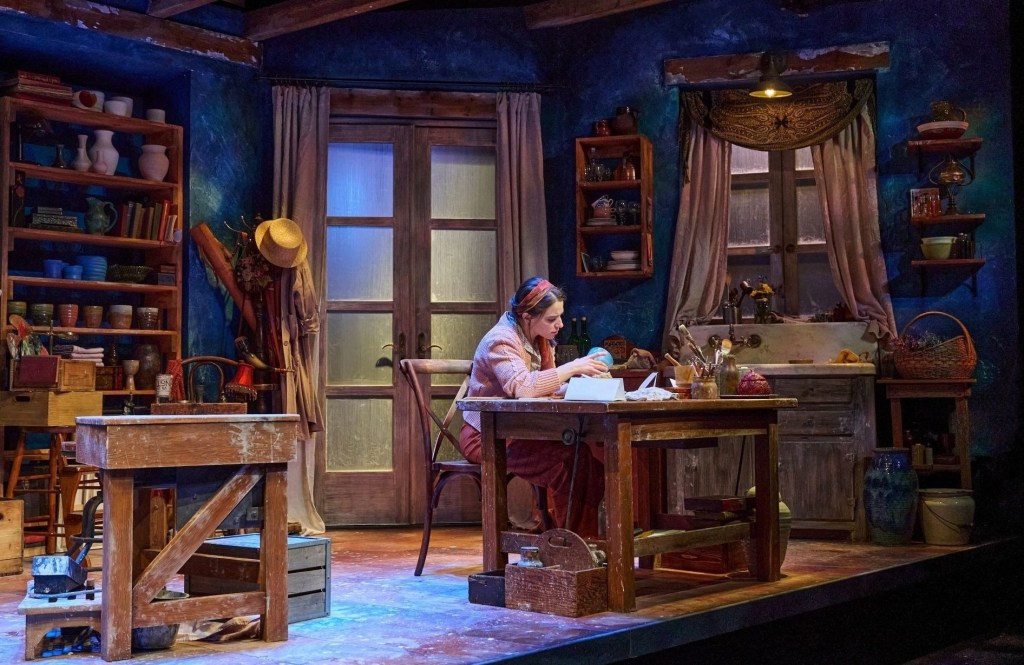
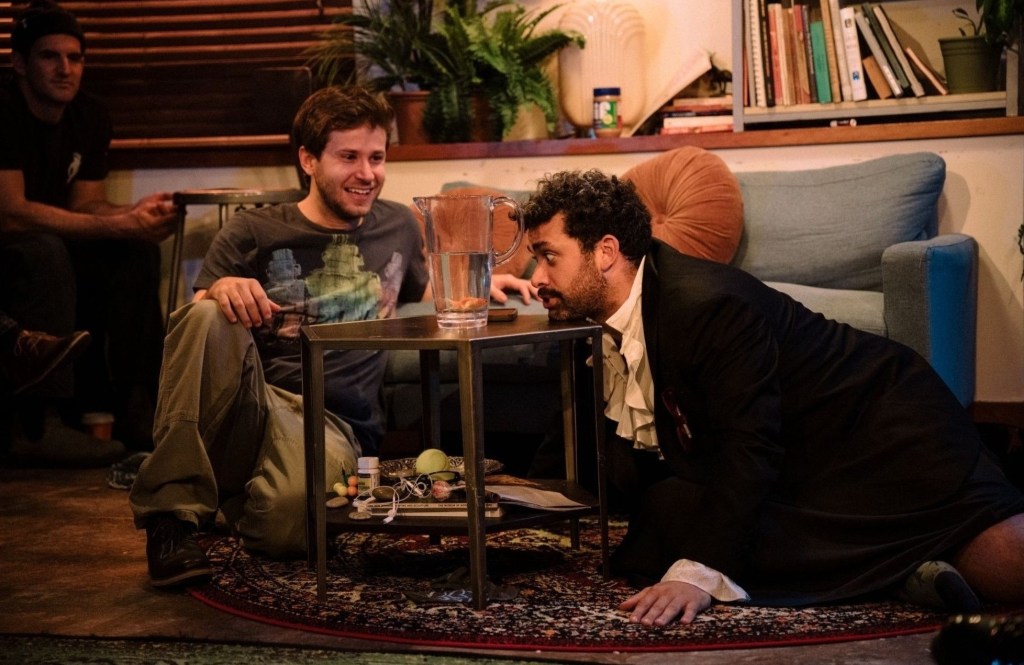
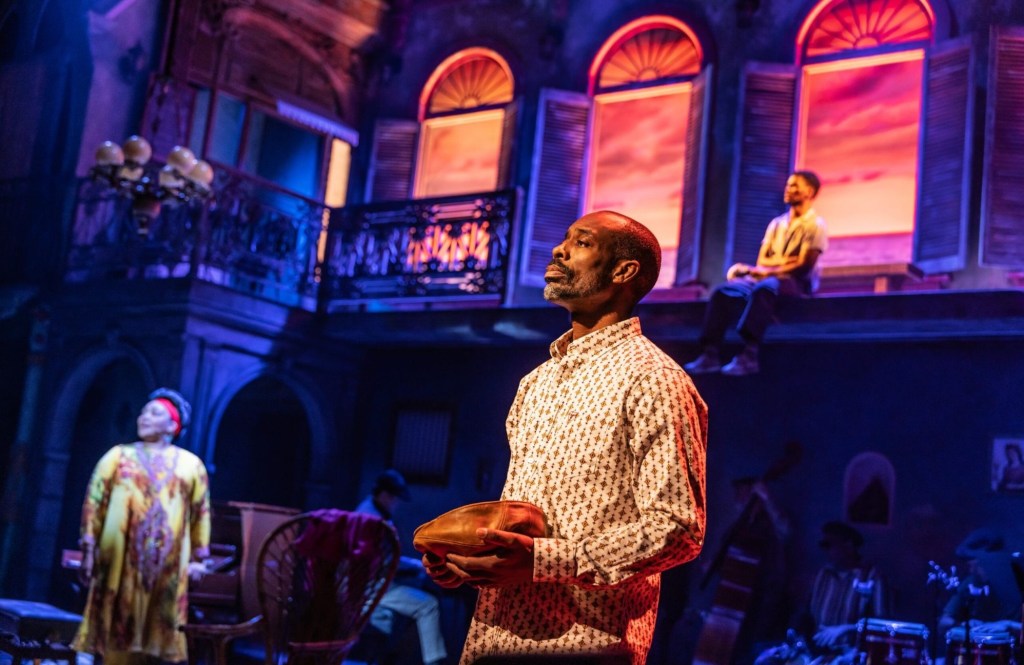
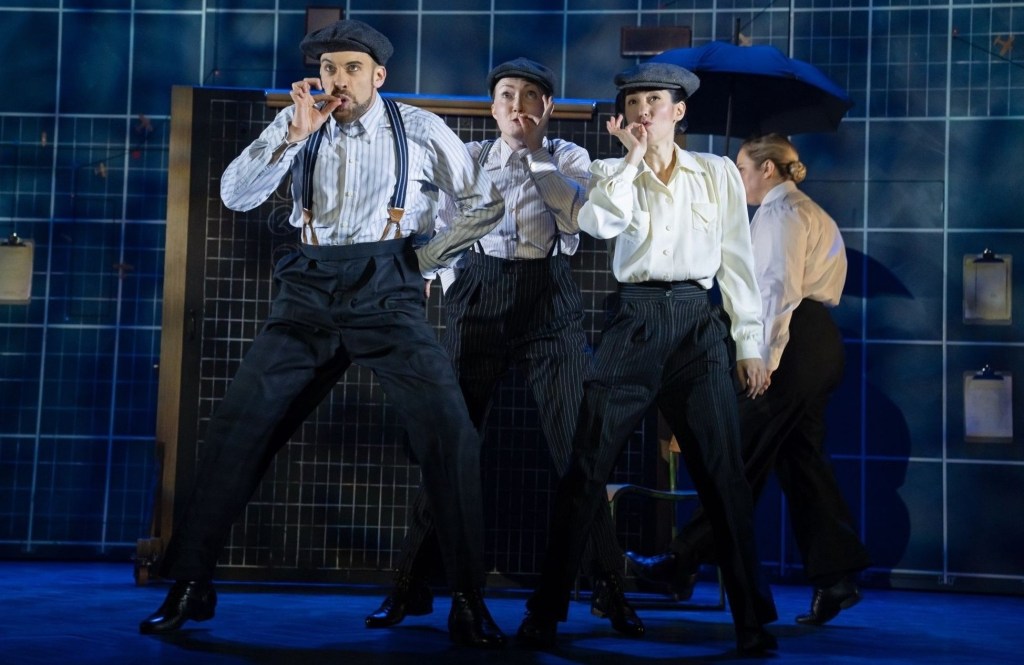
• In Clay, a new musical about Marie-Berthe Cazin, is currently playing an engagement at Signature Theatre in Arlington, Virginia, after previously having been seen in London. It has a book and lyrics by Rebecca Simmonds, lyrics and music by Jack Miles, additional music, arrangements, and orchestrations by Matt Herbert, and direction by Kimberly Senior, and it is a miniscule affair, marked by childishness. Here is my review, highlighting the musical’s one major problem.
THE RESURFACING OF REVUE
Revue, today, is a nondescript term referring to anthologies, retrospectives, contemporary cabaret shows, and the like. But revue was, throughout roughly the first half of the 20th century and even into the 1950s, a distinct form, of musical theatre, sans story or plot, consisting of individual comedy sketches, songs, and dances, crafted expressly for the respective affair, organized into a specific routine, and regularly infused with intelligence, acerbity, satire, and wit. This distinct form was – and still is – exquisitely theatrical and exceptionally difficult.
A revue demands showmanship and precision and a bounty of fresh ideas and punch with every episode. It demands, as well, variety and balance and ingenuity and skill. Revue was instrumental in the maturation of the musical stage, in the middle of the last century, and it sharpened the wares of many mid-century authors, directors, and choreographers like E.Y. Harburg, Frank Loesser, Harold Rome, and Arthur Schwartz. In fact, Rome found writing a revue to be “much harder” than writing a book show.
Among the many incredibly fine original revues are As Thousands Cheer, The Band Wagon, Call Me Mister, Flying Colors, The Little Show, Make Mine Manhattan, Pins and Needles, and Three’s a Crowd. The concept, material, and routine for each of these pieces, written between 1929 and 1948, are (mostly) outstanding, and four of these pieces were spearheaded by Howard Dietz, who sought to make the script of a revue “as complete as that of a play.” Among the smaller number of incredibly fine narrative revues, employing the episodic form as a means of nontraditional storytelling, are Assassins, Bring in ‘Da Noise, Bring in ‘Da Funk, and Company.
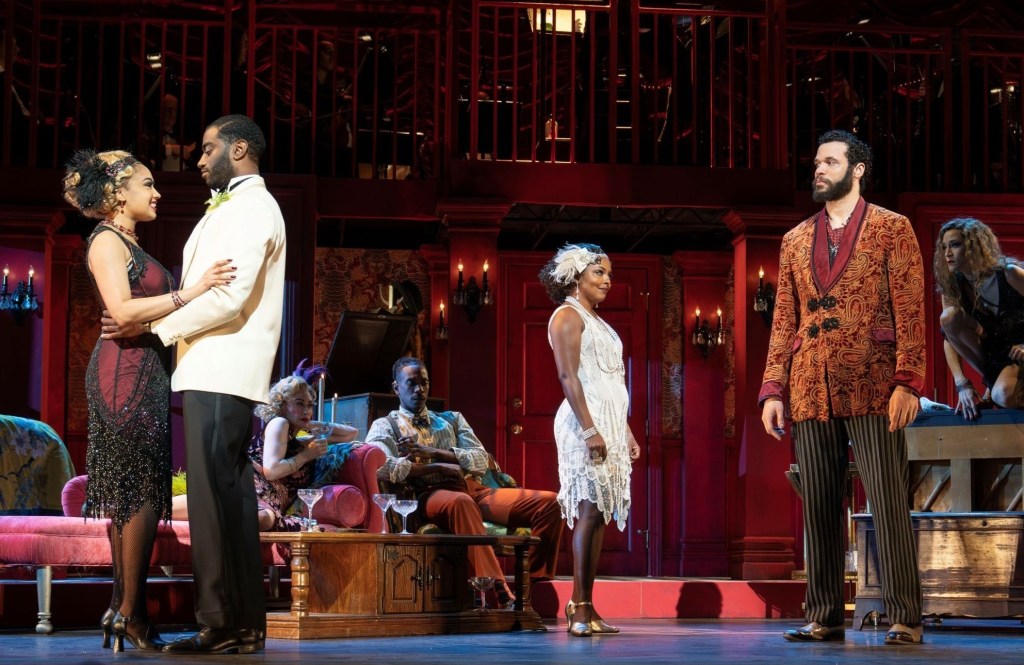
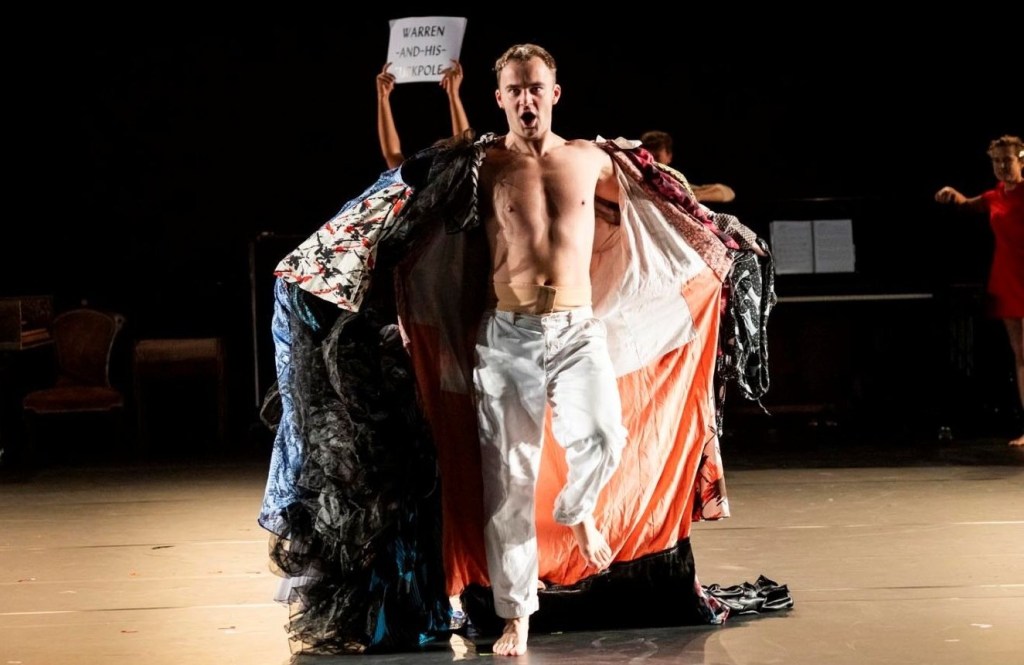
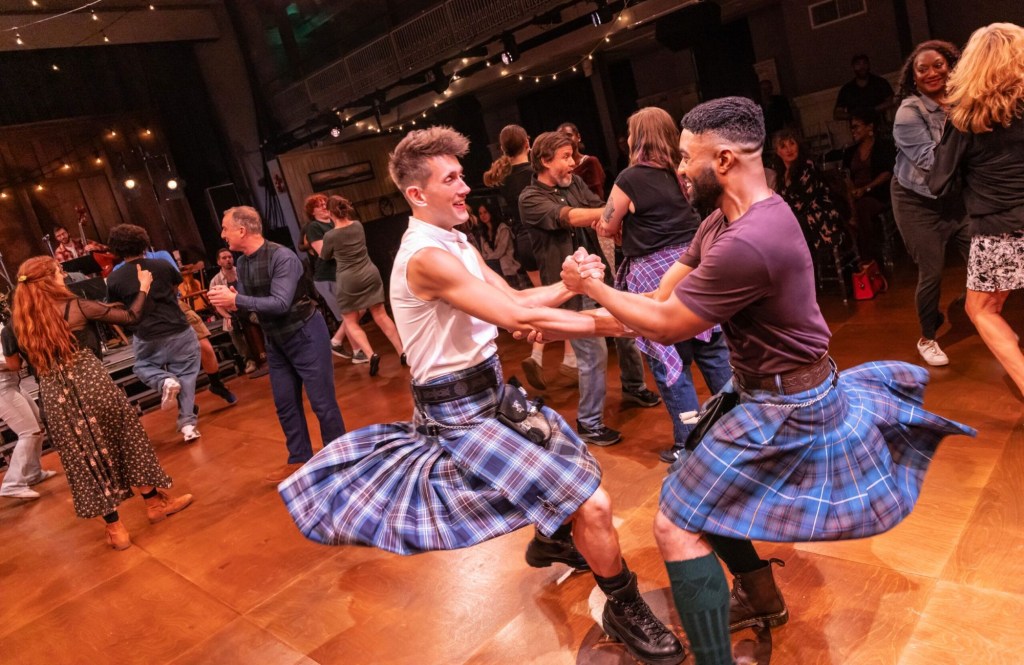
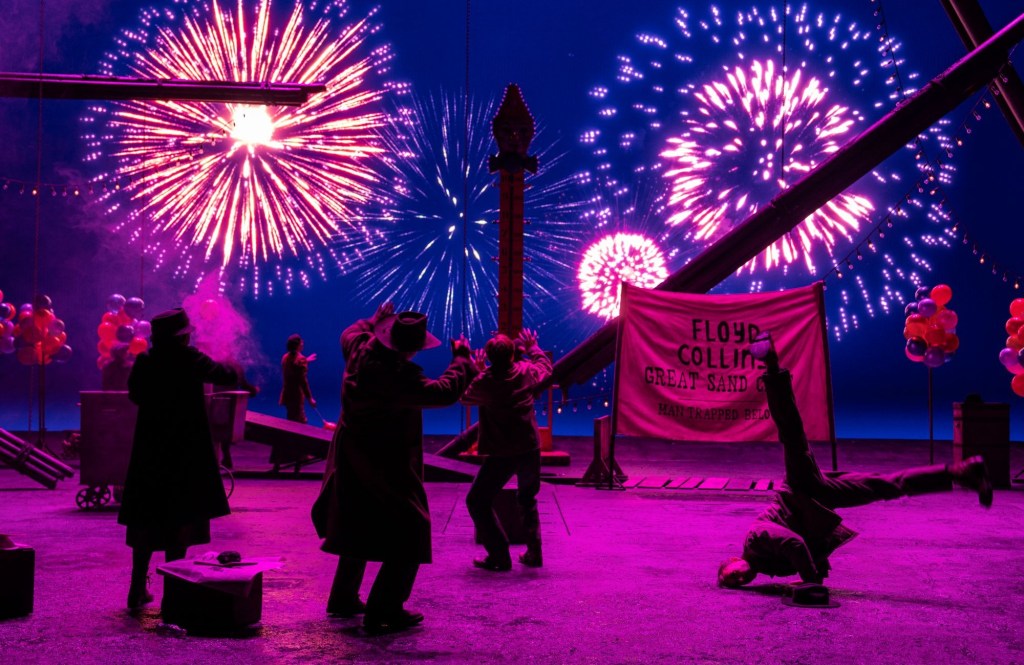
Now, after a tremendous drought, comes The Faggots and Their Friends Between Revolutions – which is cause to rejoice. Here is a potentially thrilling storybook revue with a personality, a point of view, a heap of substance, and a sense of style, theatricality, and invention, revealing the singular dramatic potential and the singular dynamism of the distinct form. (See my review of the Park Avenue Armory production.)
The Faggots and Their Friends Between Revolutions is based on the 1977 book of fables, written by Larry Mitchell and illustrated by Ned Asta, and it is pregnant with ideas and interest. I hope that the show’s creators, Ted Huffman and Philip Venables, will carry the piece to completion, making the necessary refinements, and I hope that the completed piece will enjoy a wider life. Relatedly, I hope that every artist and producer will consider revue, for reasons previously stated. And by revue I do not mean Ain’t Misbehavin’ or Smokey Joe’s Café.
THE NICE LIST AT BRISTOL RIVERSIDE THEATRE
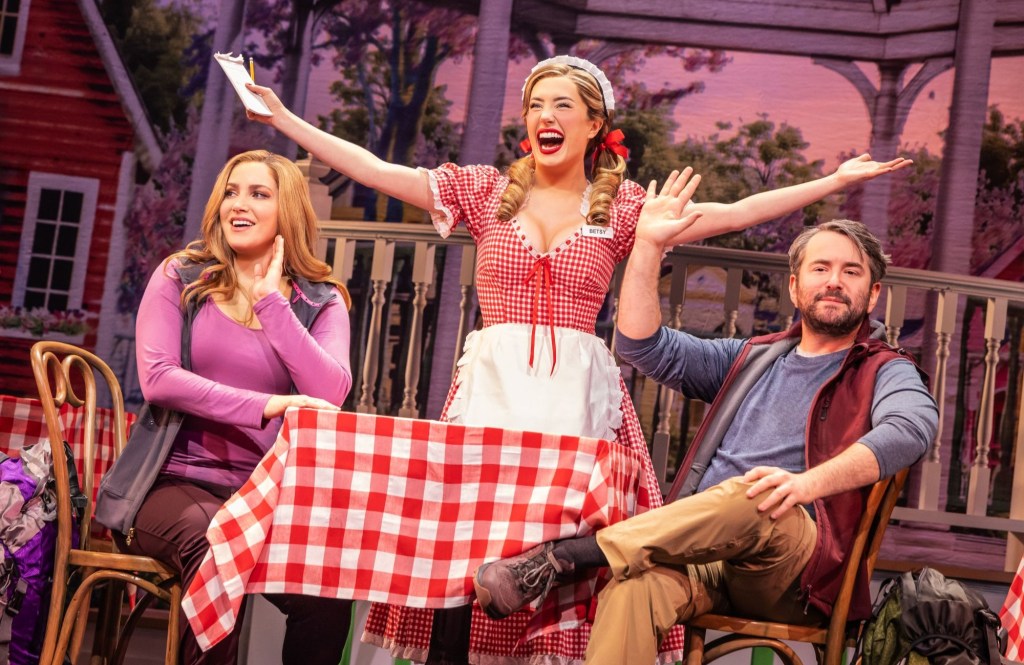
The Nice List, a new family-oriented holiday musical, is currently playing a world premiere engagement at Bristol Riverside Theatre in Pennsylvania. It has a book and lyrics by Phoebe Kreutz, music by Gary Adler, direction by Alan Muraoka, and an original story that finds Santa Claus leaving the North Pole in order to boost morale among the world’s mall Santas, entrusting his titular list to two elves: one naughty and one nice.
The musical runs roughly 75 minutes, with a cast of seven, and it contains life lessons, bouncy music, reindeer gibberish, jingle-jangle wordplay, French candy canes, and a passing reference to Timbuktu and Timbukthree. A young girl sitting in front of me, at the 11am performance on December 20, gave the show “a 10 out of 10.” Other kids in attendance gave it a literal thumbs up. And a parent said, “We had a really good time.” Korie Lee Blossey, as Santa, is evidently a favorite. And my husband, who enjoyed the show, has great appreciation for the buttons, but he longs for a more explosive climax and corresponding finale.
ON THE CLOSING OF THE QUEEN OF VERSAILLES
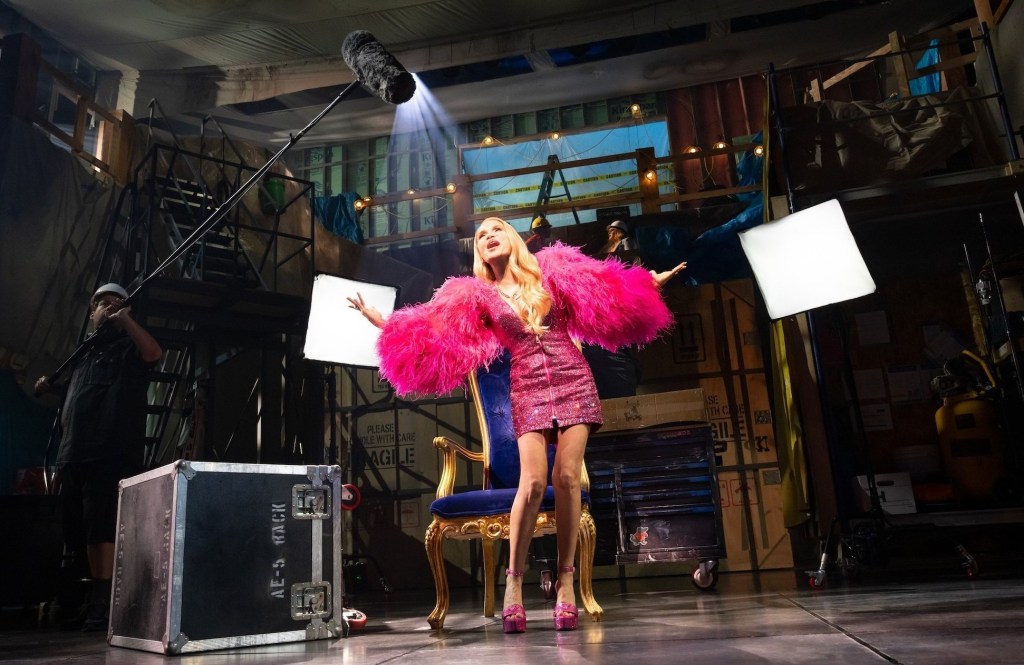
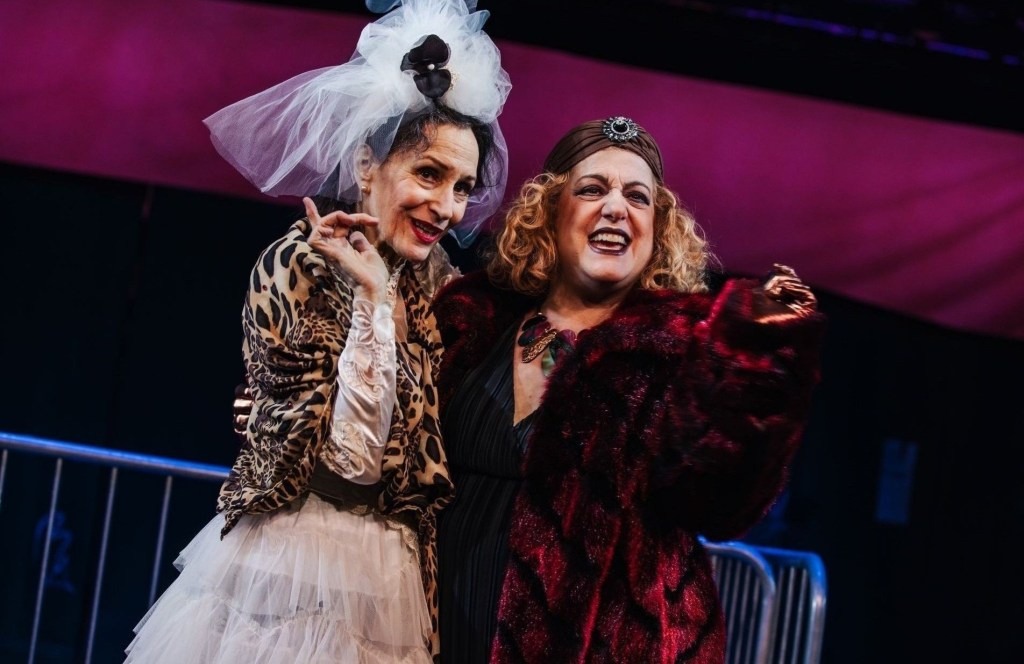
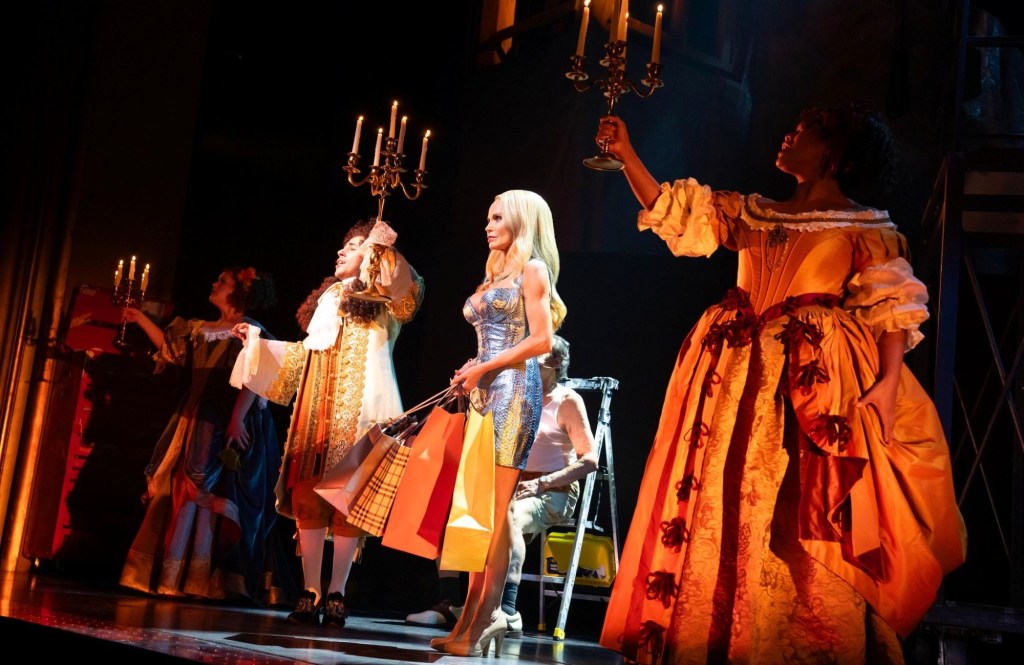
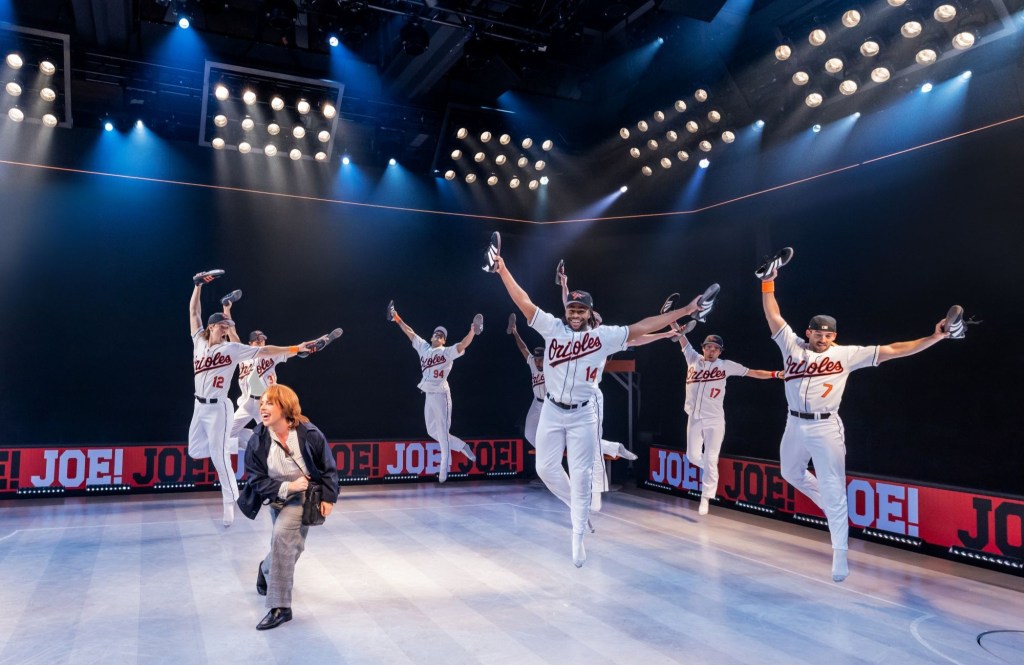
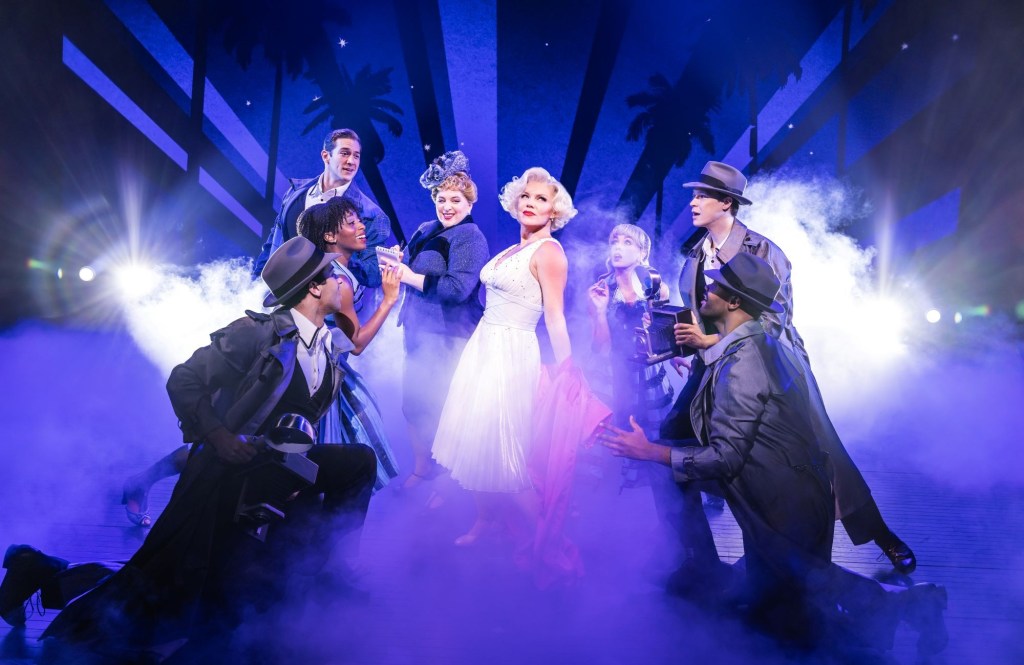
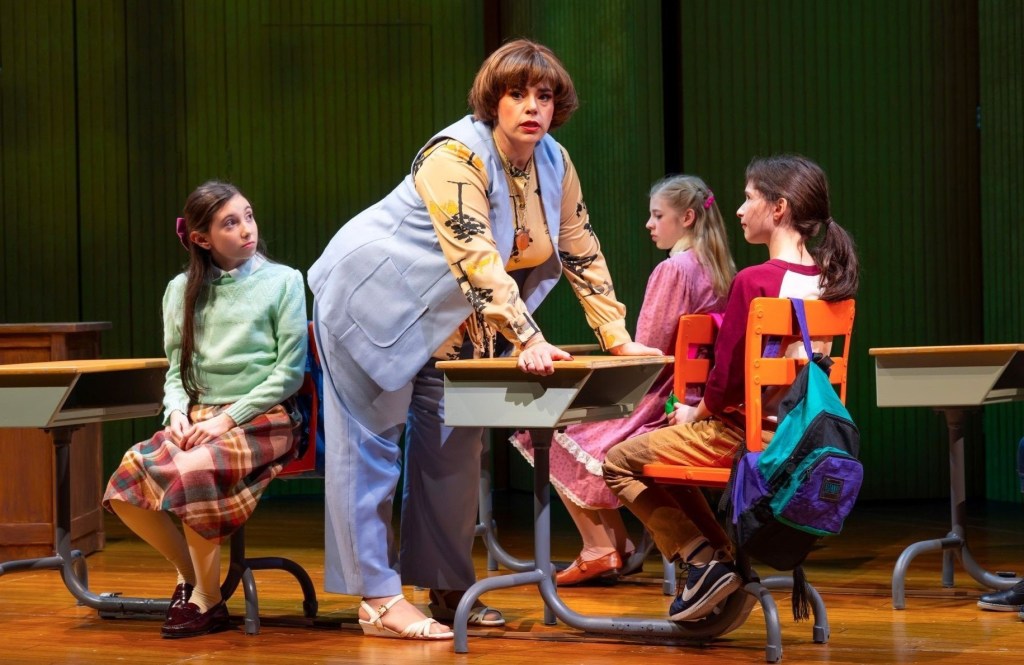
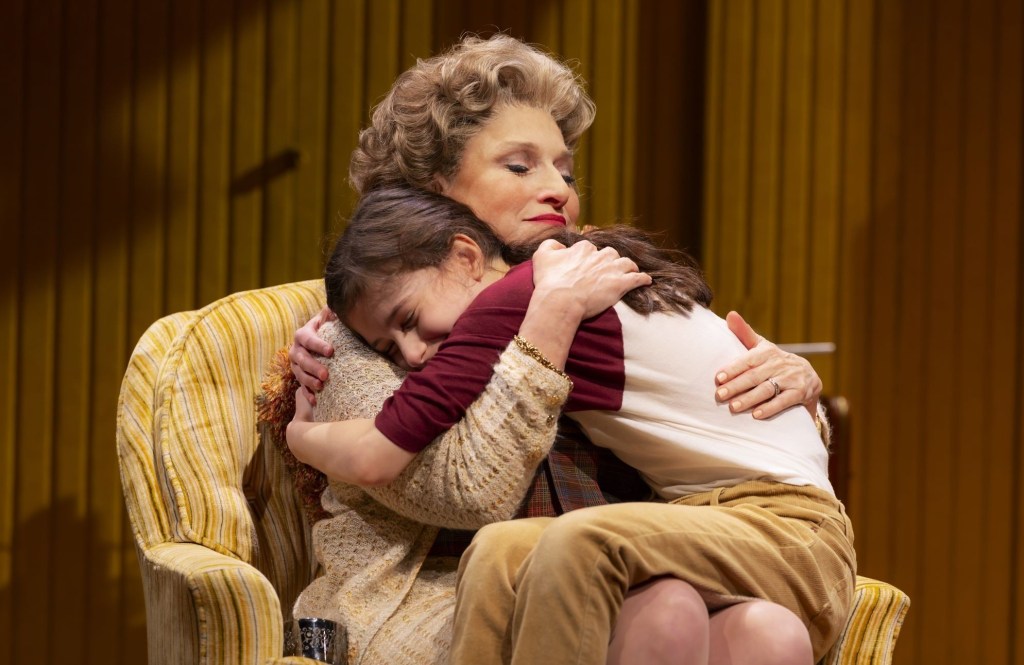
The Queen of Versailles closes today after a mere six weeks of performances, and much is wrong with the musical, artistically, even beyond the myriad items already detailed in my review. Take, for instance, the inconsistent use of a triangle to initiate testimonials. The poor sculpting of Victoria’s arc. The glamour shots that momentarily splash across the top of the proscenium. The dismal sequence in which Jackie auditions for Cats and then meets her first husband standing in front of the Wall Street bull. The theoretically inspired moment – isolated and ineffectual – in which Jackie shouts “cut” immediately prior to being attacked by her first husband. The slide show Sofia evidently gives during her testimonial. The obvious body double in “Watch.” The frenzy of musical modes and the tacky choreography in “Show ‘Em You’re the Queen.” The nondefinitive routining, back-to-back, of two solos for Victoria and Jonquil. The six other children who never materialize. Etc.
But The Queen of Versailles has a thrilling, complex subject with a thrilling, complex story, and its unfortunate end-state, in material and production, speaks to an unavoidable – and perhaps inconvenient – truth that many or most current members of the industry and its pipelines do not seem to recognize. Or choose to disregard. Let us discuss, in tandem with other properties from the past year, on Sunday, January 4 in a special year-end issue of the Report.
FOR YOUR CONSIDERATION…
An adaptation of the 2009 film City Island, perhaps with a book and lyrics by Nick Blaemire and music by Brian Feinstein. Or perhaps, by Blaemire and Feinstein, a different deeply human, slightly eccentric tale that fuses comedy and drama. Bottom line: the combination of Blaemire and Feinstein would seem to be, on paper, hugely promising.
PRESS ANNOUNCEMENTS
Here is a list of select press announcements from the past week. Each headline is clickable for more information.
• Jessica Vosk & Kelli Barrett Will Lead Beaches on Broadway
• Titanique Will Open on Broadway at the St. James Theatre
• Dallas Theater Center Names Jaime Castañeda as New Artistic Director
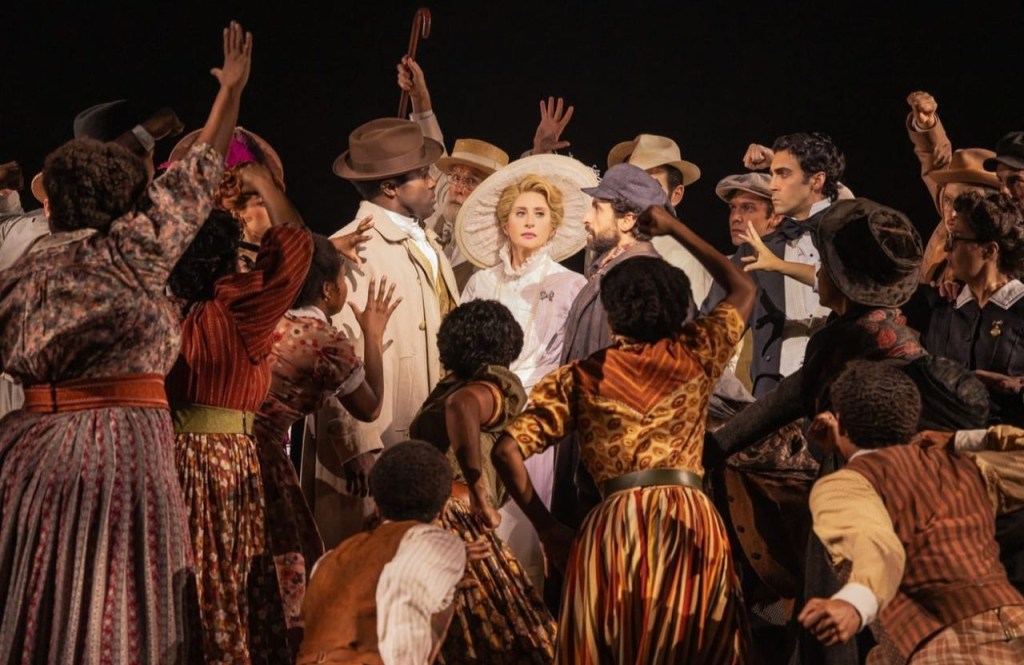
• Frederick Douglass-Inspired Musical Performance to Play Off-Broadway’s Irish Arts Center
PREVIEWS AND OPENINGS
Here is a list of the new musicals and revivals either opening or beginning previews during the upcoming week, specifically on Broadway and Off-Broadway. It contains, as well, select new musicals beginning performances regionally, and select new musicals and revivals beginning performances in New York City. Each title is clickable for more information.
Monday, December 22
Tuesday, December 23
Wednesday, December 24
Thursday, December 25
Friday, December 26
Saturday, December 27
Sunday, December 28
Photo of Kristin Chenoweth in The Queen of Versailles by Julieta Cervantes.



















 The Musical Theatre Report
Leave a comment