A journal for industry and audiences covering the past, present, and future of the musical stage.
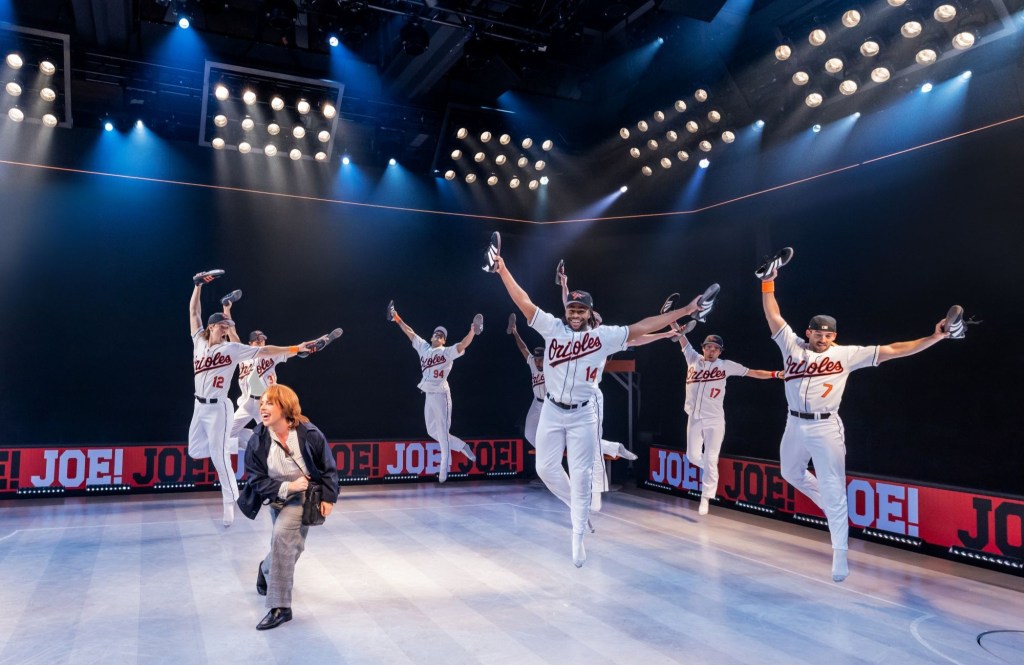
Damn Yankees, a new production of the 1955 musical, is currently playing a pre-Broadway engagement at Arena Stage in Washington, DC. It has a book by Will Power and Doug Wright, adapted from the original by George Abbott and Douglass Wallop, lyrics and music by Jerry Ross and Richard Adler, additional lyrics by Lynn Ahrens, and direction and choreography by Sergio Trujillo. The piece is surprisingly promising, and, with many necessary refinements, it just might develop into a sleek, sparky, and tremendously enjoyable stage show.
The musical, a romantic fantasy, follows a fifty-something baseball fan, Joe Boyd, who is desperate for the Baltimore Orioles to acquire a long-ball hitter, such that the losing team might have a chance of beating the New York Yankees and winning the pennant. Thus, he leaves his wife, Meg, and makes a deal with the devil – a man named Applegate – who transforms the fifty-something fan into a youthful baseball phenom named Joe Hardy. The Orioles start winning games, and Joe starts missing his wife. Gloria Thorpe is a wily sports reporter who picks up the scent of deceit. Lola is an ageless seductress who works for Applegate and attempts to keep Joe from thinking about his wife. And the plot, held together by a thin and fraying strand of homespun yarn, involves an escape clause, a midnight deadline, a refurbished fence, a sleep machine, a doping scandal, a press conference, a hearing, and a happy ending – in which Joe, during a pivotal game, gets transformed back into his fifty-something self and reunites with Meg.
Power and Wright have made numerous changes to the original version of the show, notably shifting the locale from Washington, DC to Baltimore, and shifting the time period from 1955 to 2000 – which registers as rather arbitrary, especially considering that the contemporaneous dominance of the New York Yankees goes completely undiscussed. But 2000 is merely the name that Power and Wright have given to an imagined time in the relatively recent past, backed by orchestral sounds built upon woodwinds and brass, peppered with comic sensibilities crystalized decades ago, seasoned with mythical American innocence, accented with an openly gay couple, and run through with references to gangsters, craps, “old girls,” “old boys,” a 21st century political convention, and the names of contemporary ball players. While the resulting narrative world is seemingly anachronistic and occasionally strange, it simultaneously, bafflingly, somehow works. (This is not to say that it might not be bettered or brought into sharper focus.)
A new Negro League storyline, for Joe Boyd, and a new queer storyline, for Gloria, are nicely and thankfully understated. But the new end of the first act is not punchy. The hearing is not punchy. The additional means by which Joe and Lola might void their respective contracts with Applegate is introduced quite late in the proceedings. And though the not insignificant restructuring of the show is generally effective, Power and Wright still have some repercussions with which to deal.
The idea and decision to present Damn Yankees in the round was inspired, despite the piece having been presented as such in the same theatre 20 years ago, and Trujillo has done, on a macro level, a stupendous job of utilizing the space. He has, furthermore, realized a fantastic and individual onstage world – a neatly glossy, neon-drenched fantasyland, accented with vibrant colors, sonic fizz, and swift, stylish scenic transitions. (One late-show transition cross is done at a 90-degree angle, but it should be done in a straight line.)
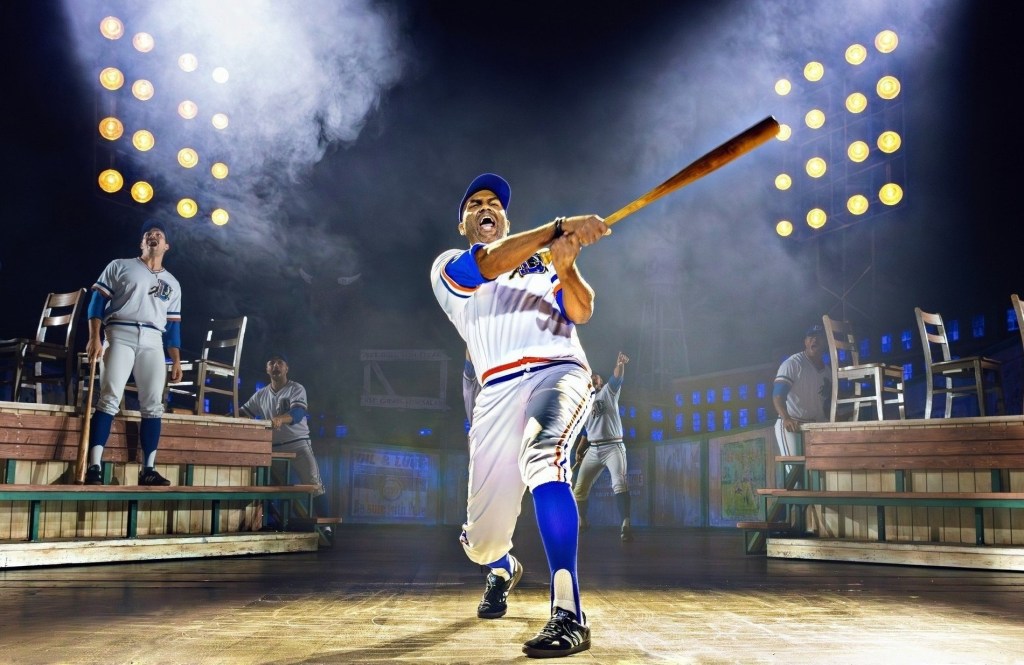
The excellent scenic design, by Robert Brill, transforms the intimate theatre into a miniature, multifunctional ballpark, with entrances in each of the four corners of the field, wonderfully theatrical elevators in two corners of the baseball diamond, knee-high video screens wrapping around the perimeter of the playing space, and stadium lighting hanging above it. Lighting designer Philip S. Rosenberg and projection designer Peter Nigrini have, no doubt, been integral to the creation of the glorious, cohesive, and tasteful environment, and each has done great work in his line – though one wishes for sharper and more clearly defined snaps between the interior and exterior of the Boyd home, and sharper and more clearly defined snaps in and out of scenes. (This is a matter of staging and music as well.) The costumes, by Linda Cho, are quite strong, but the outfits worn by Applegate and Gloria do not seem to be ideal. Walter Trarbach has done a fine job with the sound design, effecting a nice balance between actors and orchestra. (The lyrics, often neatly worded, are audible at all times.) And the illusions, by Paul Kieve, are acceptable, if occasionally labored.
George Abbott, the show’s original book writer and director, was a titan of the musical theatre, and instrumental in its maturation in the middle of the 20th century. He focused especially on farce, comedy, satire, and burlesque, and he noted, “A helluva lot of directors think you get fun by being funny. If it’s a good show, you get fun by being real.” Trujillo must be commended for cultivating real fun, though the characters might still grow bigger and brighter, and the extent to which Damn Yankees might be considered a good show must be credited, in part, to Abbott and his inimitable touch.
The new production of Damn Yankees is passably solid. But it could quite easily be great, and perhaps even terrific. Here, to that end, is a detailed punch list that the creative team might consider as they prepare to make improvements prior to the production’s arrival in New York.
• Damn Yankees is a property that, as written, contains, in principal, earned and dramatically effective encores, and “Those Were the Good Old Days,” specifically in terms of the material, including the orchestrations by Doug Besterman, is a sensational vaudeville-esque razzler that earns an encore. Trujillo & Co. should consider giving it one, perhaps with screaming brass and a delayed final vocal. “Those Were the Good Old Days” serves as an eleven o’clock reckoning of sorts for Applegate, and regardless of whether or not it receives an encore, Applegate should be holding the stage alone for the entire number. There is absolutely no reason for Lola to be lounging in the corner, flipping through a magazine, and nodding her head from time to time. Her purposeless presence is severely dampening the power of what was specifically designed as a showstopping soliloquy. Dampening the song’s power, as well, is the unfocused, unspecific staging – which includes a schlocky hat that pops up out of a chic circular settee.
• “A Little Brains, a Little Talent,” too, should be a showstopping soliloquy, and Trujillo & Co. have provided no clear or valid reason for Applegate’s dim atmospheric presence during the song. Why has he not been given an exit line such that the stage is left to Lola? And why is the song not treated as an empowerment number, with Lola preparing to put the make on Joe? Such an approach might have had the added benefit of a smoother entrance. (The temperature of the scene does not currently match the temperature of the song, and the original song cue, “don’t make me brag,” is notably immature and dramatically unhelpful.) And, if Trujillo & Co. view the song as Lola getting Applegate to give her the job, they need to reexamine the execution, and perhaps the preceding dialogue, and consider that there is currently no real resistance against which Lola is working. Separately, the staging of the piece needs to be more specific and deliberate, with a clearer focus and intent. Lola, at present, merely scampers about the stage, undressing down to a dazzling white undergarment, wrapping herself in a dazzling black sheer robe, and then, for the climactic button, removing the dazzling black sheer robe to reveal the same dazzling white undergarment that we have already seen. What is the point? Trujillo’s staging of this number – and some others – breaches the bounds of unskillfulness, and it robs the song of a fresh and exciting finish, and a definitive arc. “A Little Brains, a Little Talent,” by the way, has a clever listicle lyric that fairly steadily builds to – and opens up on – “bring on the boy,” with a shrewd twist on the title line along the way.
• The action of the show moves at an appropriately fast pace, but some of the dramaturgical beats are being skipped, rushed, or blurred. Applegate, for instance, appears immediately after Joe’s first mention of the Orioles needing a long-ball hitter. (The original script contained a couple of long-ball references that built up to Applegate’s entrance and anchored Joe’s reality.) Meanwhile, Joe is suddenly tired of being pestered with questions from Gloria, but the authors offer no suggestion that he has ever been pestered with questions from Gloria. Joe suddenly misses Meg, Lola suddenly confesses to having fallen in love with Joe, and so forth. Plus, Power and Wright have made a small technical blunder in failing to identify Lola by name on her first entrance. (The original script did.) And not all of the dialogue is as crackly as it might be; not all of the characters as idiosyncratic or as strikingly individual.
• The nature of the Orioles’ season is currently nondescript, with the Yankees often seeming to be the only team that the Orioles play. And, as a small matter of continuity, the dialogue leading into “Shoeless Joe from Hannibal, MO” suggests that the Orioles are currently playing the Yankees, but the team’s first opponent to appear onstage during the song is a pitcher for the Boston Red Sox.
• Trujillo currently has Joe leave the stage when Joe first demonstrates his baseball swing for the Orioles – which leaves the audience watching reactions rather than action. This is not necessarily a problem, but the sequence is, at present, dull and ineffective. Perhaps precisely timed underscoring is needed to sustain the tension and the momentum, effectively serving to tighten and propel the moment – with style. And the cat screech is cheap and unnecessary.
• In his effort to embrace the round, Trujillo has muddied the focus of some lines and lyrics. Meg’s opening dialogue, for instance, drifts around in space, and she looks, momentarily, like she is speaking directly to the audience.
• The first instance of “A Man Doesn’t Know,” a solo for Joe, might benefit from a short breath before the music comes in, thereby setting up the song as an introspective soliloquy, and the appearance of Meg on the platform situated above one of the voms might benefit from the support of a tasteful musical flourish.
• “Who’s Got the Pain?” now opens the second act, and it finds Lola, at the top of the song, doing a striptease in a nightclub. But the stripping is done in a hurried and perfunctory fashion, and it is supported by zero orchestral accents – at least none that was audible on the evening of September 19. Trujillo & Co. should either commit to the stripping, or dump it. And they might consider the purpose of the song – which would seem to be about Lola attracting Joe’s attention and reeling him in. But, as staged by Trujillo, Lola rarely looks in Joe’s direction, and Joe’s sudden appearance on the dance floor for the button is especially strange.
• “The Game” is currently holding up the show and serving no dramatic purpose. If Trujillo & Co. cannot find a way to make the number integral to the proceedings, and to goose it up, they should cut it. Immediately. In the original version of the show, “The Game” opened the second act. Now, it is buried in the middle of the second act, where the action should be accelerating toward the finish. The content of this number is extraneous.
• “Whatever Lola Wants,” a seduction number for the alluring femme, is a dud, due to the staging, which lacks focus and methodical development.
• The reprise of “Whatever Lola Wants” is near to being effective, but Trujillo & Co. might consider dropping the awkward title line, and making the song a more definitive decision-maker – into the mirror.
• Why, at the end of “Goodbye, Old Girl,” does Trujillo have Applegate taking Joe in an entirely different direction than the taxi he supposedly has waiting for them? And one dreams of a finish on the tonic. The moment has certainly earned a triumphant ending of the sort.
• “Shoeless Joe from Hannibal, MO,” which contains an abundance of busy, athletic choreography, has not been sculpted into a dramatically effective, meticulously calibrated, firing-on-all-cylinders, showstopping production number, despite harboring a handful of fine ideas, and despite generating raucous cheers from the audience. It needs, like much of the rest of the show’s musical staging, specificity and focus and crispness and precision and clear dramatic development – moment to moment. The entrance is deeply unassured. The boys immediately join Gloria as a group, leaving no room for the vocal to contribute to the overall progression of the number. And Trujillo, unbelievably, has Gloria hastily dump her bag in a bucket toward the top of the song. Were we not supposed to notice that?
• “Heart,” a stylized showpiece, lacks focus and development and perhaps style, and Trujillo & Co. have given it a flimsy launching pad, with no significant escalation, no significant resistance generating a need for song. This is a matter of the poor playing of the brief scene and the unnecessary additional dialogue. The scene should ramp up such that the coach might naturally pitch his song cue in a place that is more closely aligned with the pitch of the song. This will also help to activate the lyric. Plus, the encore of “Heart” is clumsy and poorly calibrated. And Trujillo & Co. should give it a proper button, using a playoff to transition to the subsequent scene.
• “Heart” does not seem to be effectively serving the press conference, in part because it does not match the emotional temperature of the moment.
• “Shoeless Joe from Hannibal, MO” does not seem to be effectively serving a doping-scandal interlude, in part because it does not match the emotional temperature of the moment. Perhaps it simply needs a new arrangement with a more restless, agitated accompaniment, suggesting the furious clickity-clack of a press room or a printing press.
• “Six Months Out of Every Year” needs a cleaner entrance. The female baseball fan is out of place and somewhat distracting, because of the very specific lyric. (Perhaps she can be given a crossover mid-song such that female fans are still represented.) And Trujillo seems to have muddied one of the wives’ new lyrics by having them direct the button of the respective stanza – “let’s go out!” – to their husbands.
• “Two Lost Souls” contains the show’s the most distinctive, most exciting, and most dynamic choreography, with Trujillo making excellent use of wedges, diagonals, and patterns. Still, the number might benefit from further refinement – specifically a cooler tempo for the body of the song that is more closely aligned with the tempo of the scene; a sharper transition into the dance; and a clever, inconspicuous way in which the company might catch its breath before going back into the vocal. And perhaps Joe should play piano throughout, freeing up Lola to lead the dance. A mention must be made of music supervisor and arranger Greg Anthony Rassen, who has done a swell job, especially with the dance arrangements, and excepting the music cues, the song entrances, and the incidental ins and outs, most of which need to be cleaner and more deliberate, more precise. Rassen has also crafted deliciously devious music for Applegate’s new reprise of “Six Months Out of Every Year” – which has adequate lyrics by Ahrens. (The scan on a line about home plate stands out as being rough.)
• The staging of the overture needs clarity and sharpening.
• The audio recordings played in the house during intermission consist of pop-rock songs released circa 2000. They do not necessarily help to maintain the world of the show, which has no sounds of that sort.
• The cast is uneven. Quentin Earl Darrington, as Joe Boyd, and Bryonha Marie, as Meg, are quite fine. Ana Villafañe, as Lola, would seem to be well cast, but she has not made the role her own – at least not yet. Rob McClure, as Applegate, is a lightweight devil, lacking gravitas, heft, and a commanding presence. Jordan Donica, as Joe Hardy, is stiff, processed, and often singing notes rather than lyrics. And Alysha Umphress, as Gloria, is deadweight: passionless and unenergized, despite the character being an aggressive hound and an avid lover of the game. The remainder of the cast is unremarkable, save Rayanne Gonzales in a scene-stealing turn. Trujillo must cultivate from Donica, McClure, and Umphress richer and more vibrant performances, or replace them prior to New York. I am on the fence about Villafañe.
Damn Yankees is being produced commercially by Julie Boardman and Haley Swindal. I hope that they will have the good sense to keep the production in the round, and I hope that they will give program credit to Jack Norworth and Albert Von Tilzer, the authors of “Take Me Out to the Ball Game,” which now opens the second act of the show. Norworth was a major figure in vaudeville, musical comedy, and original revue, and Von Tilzer was a major figure in Tin Pan Alley – which, during the first three decades of the 20th century, overlapped almost directly with the musical stage. The two authors of “The Star-Spangled Banner” should be program credited as well.
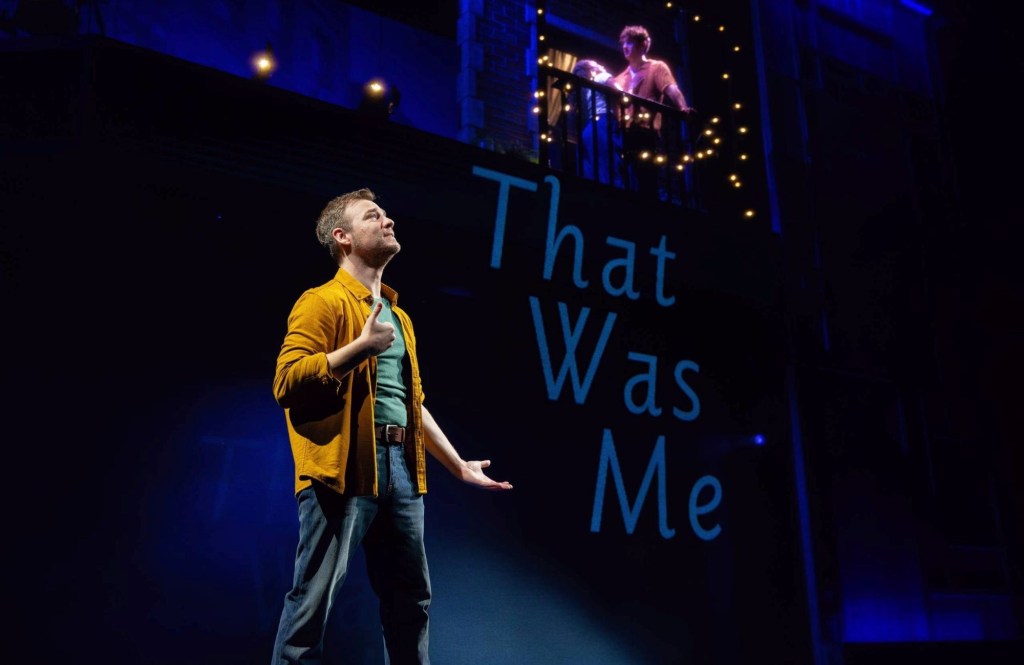
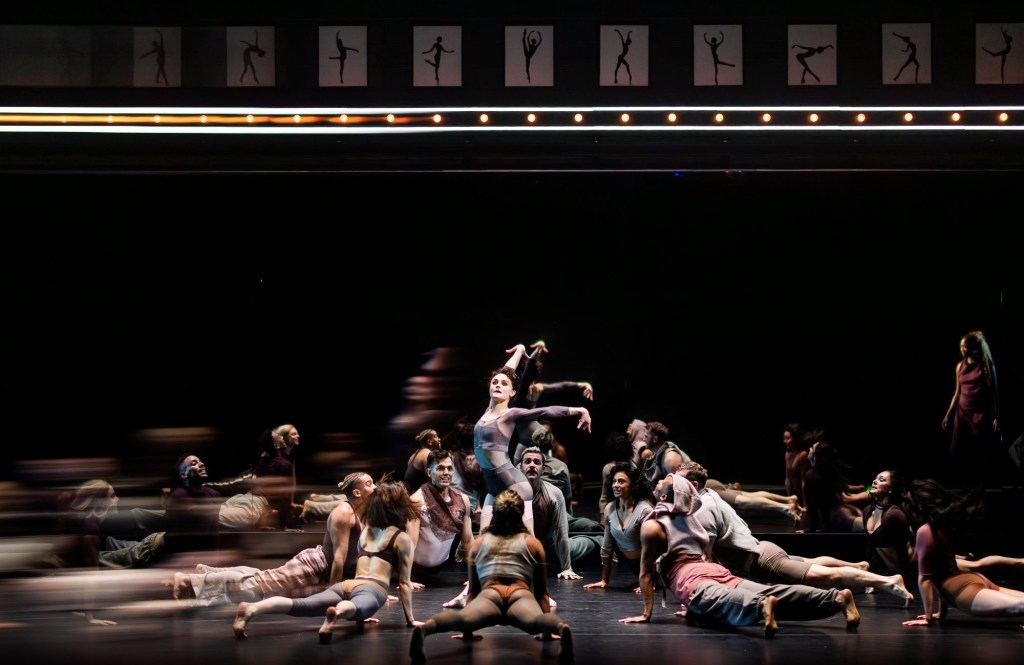
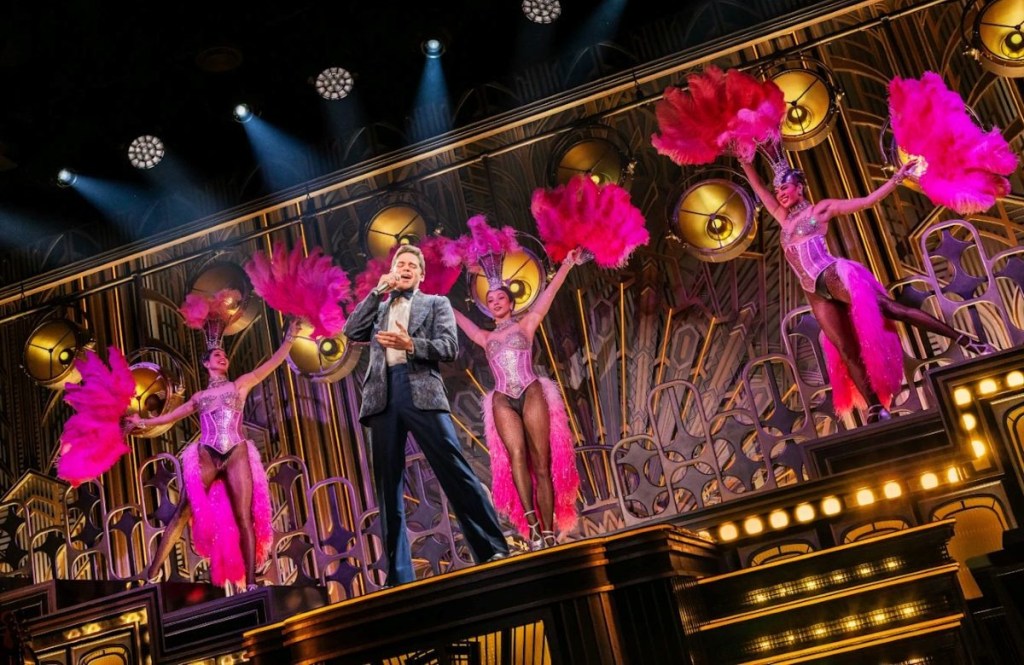
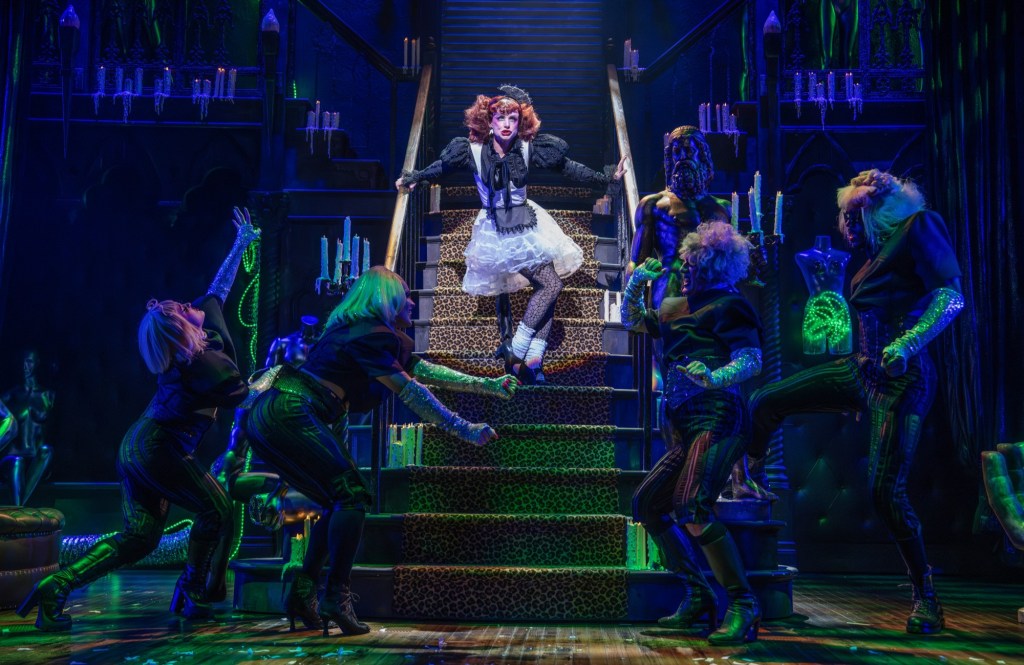
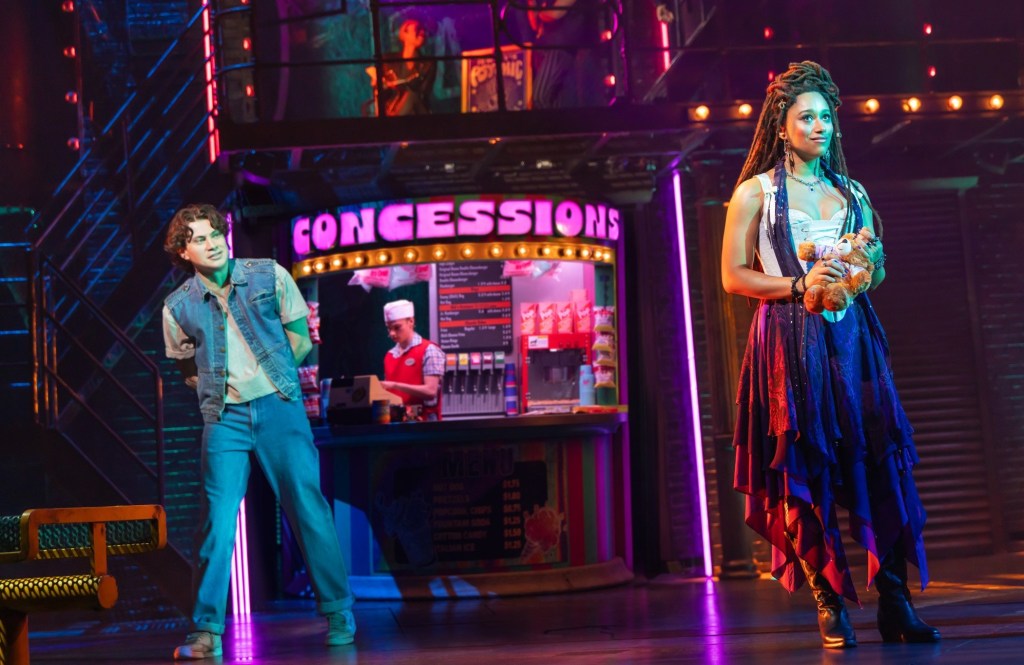
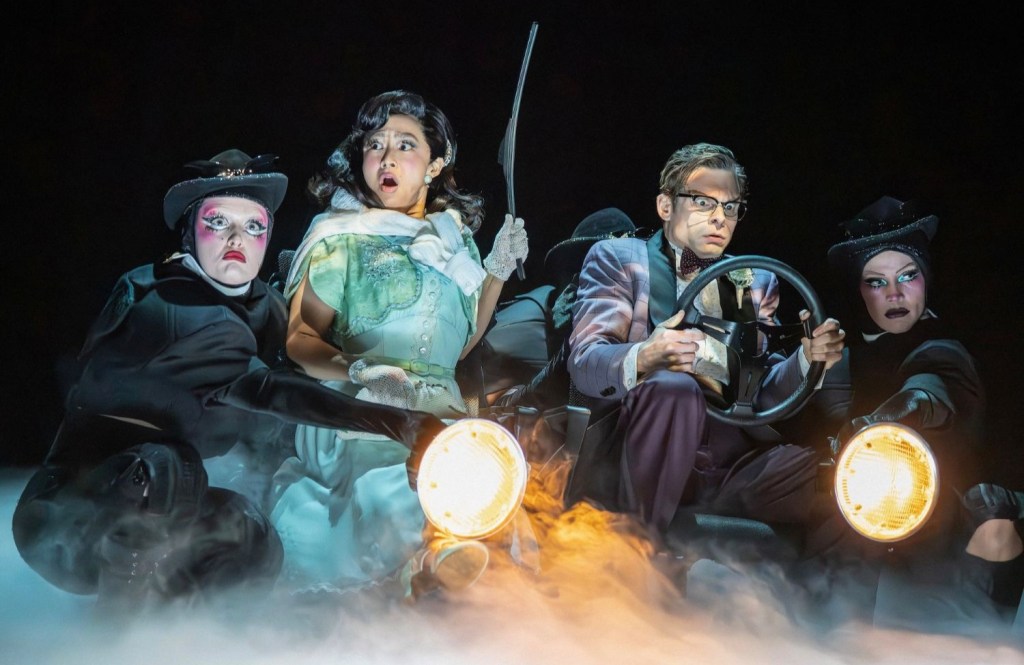
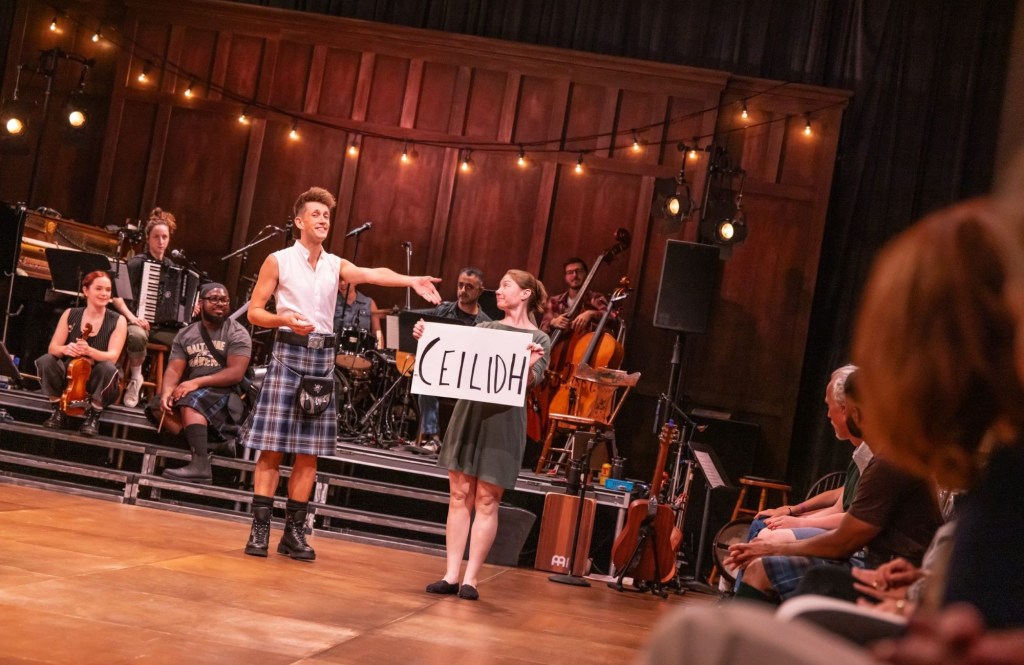
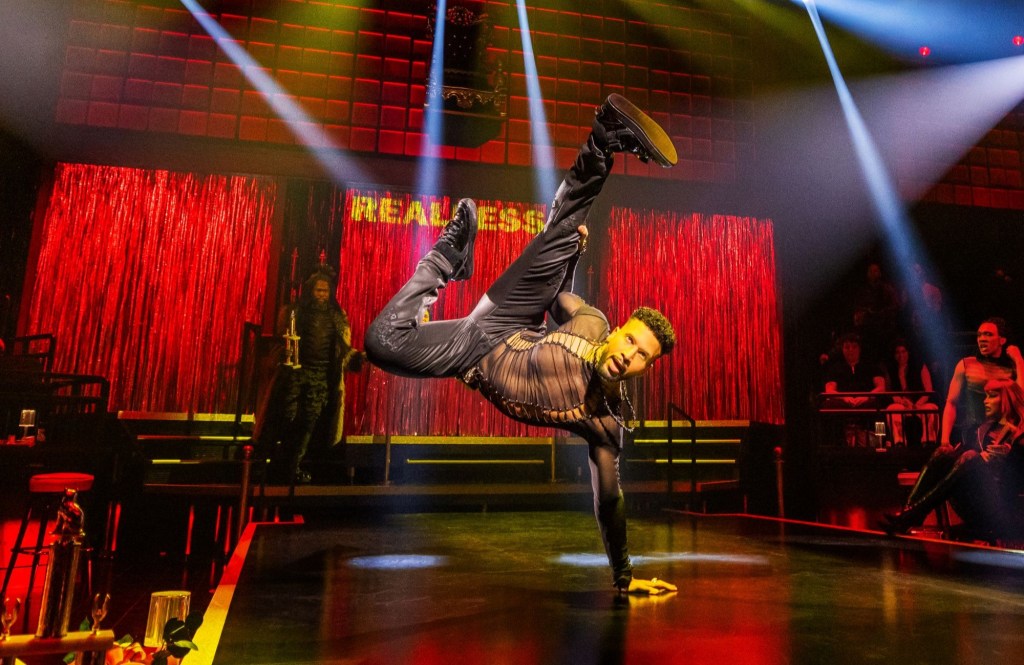
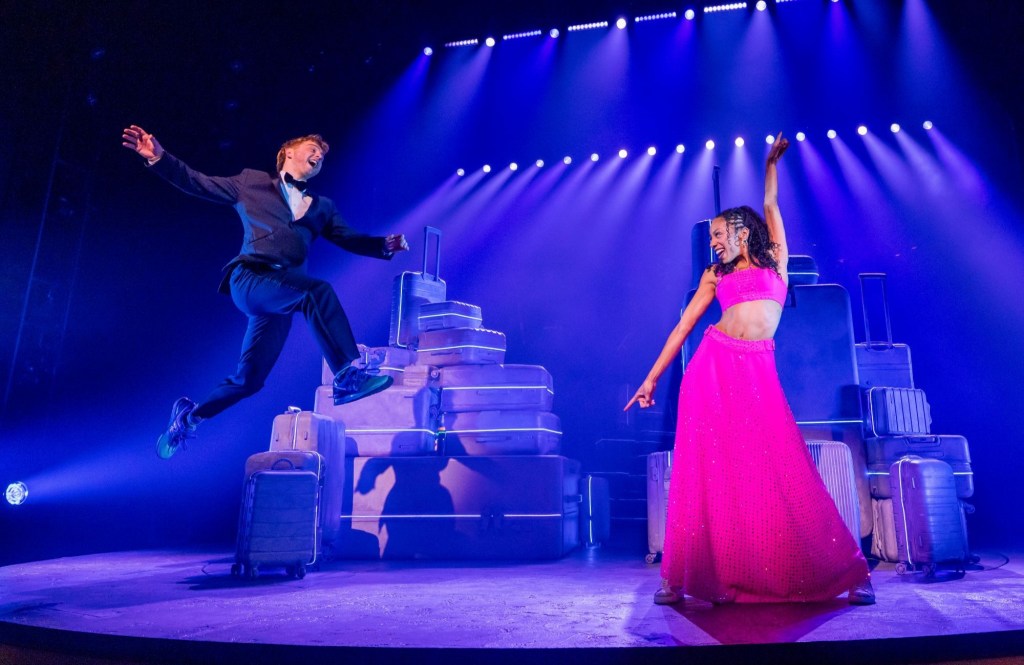
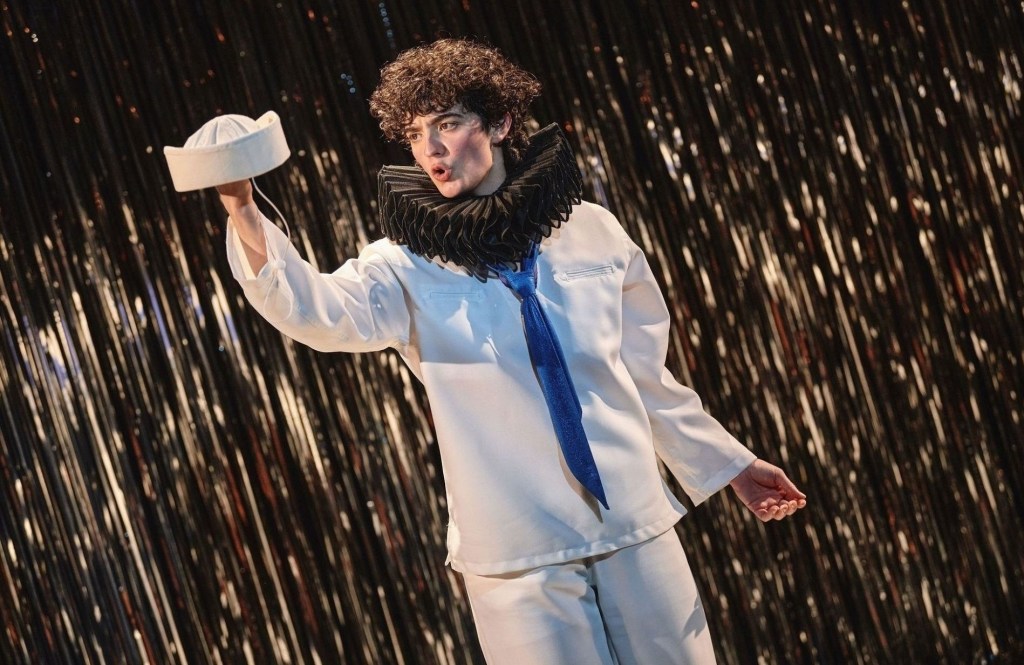
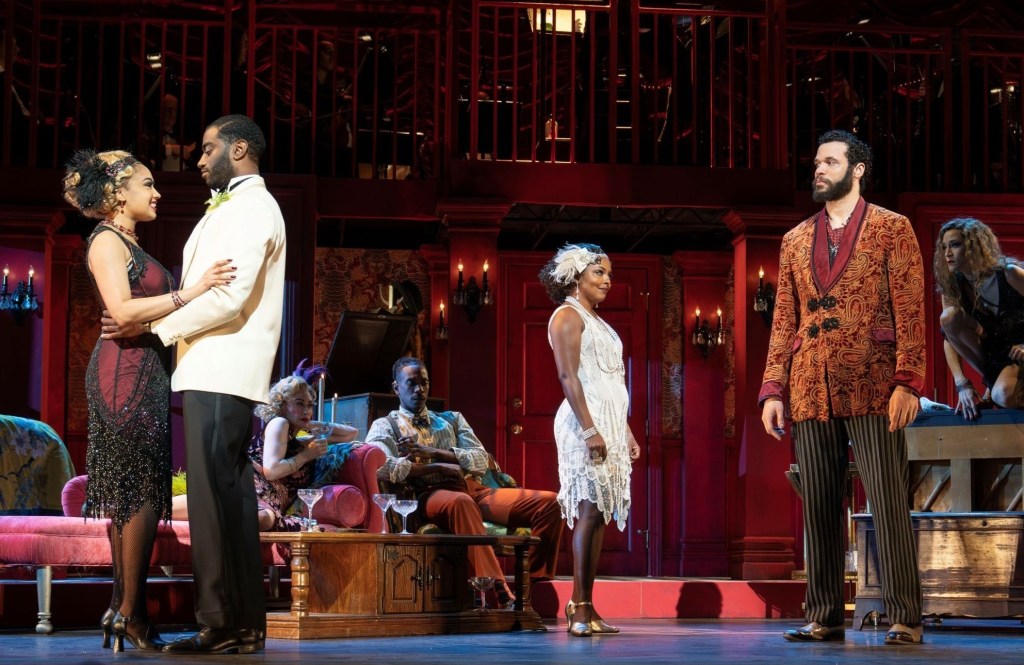
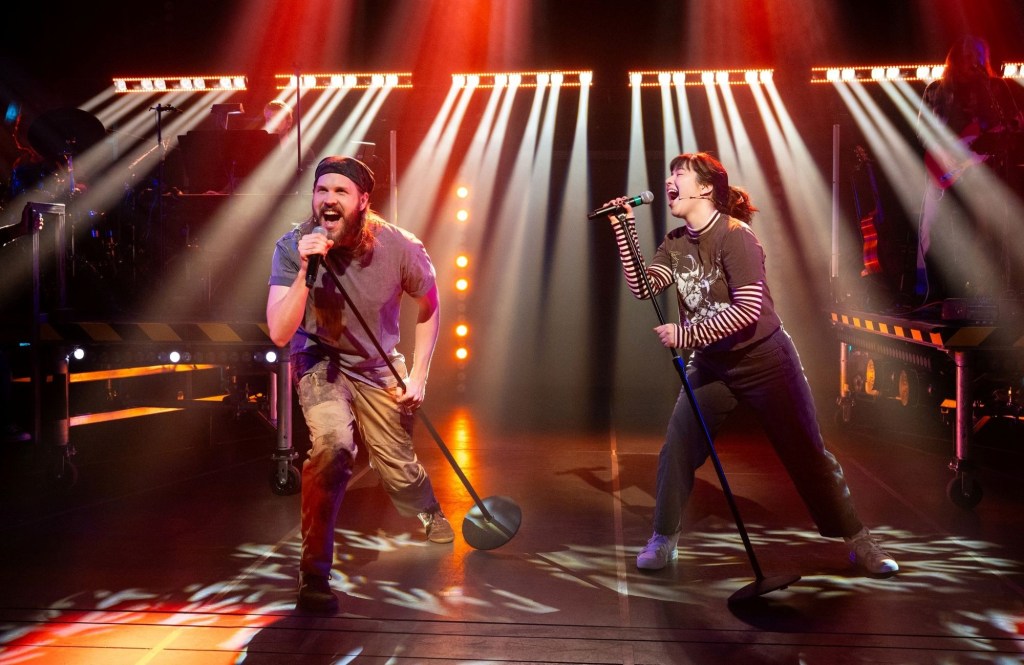
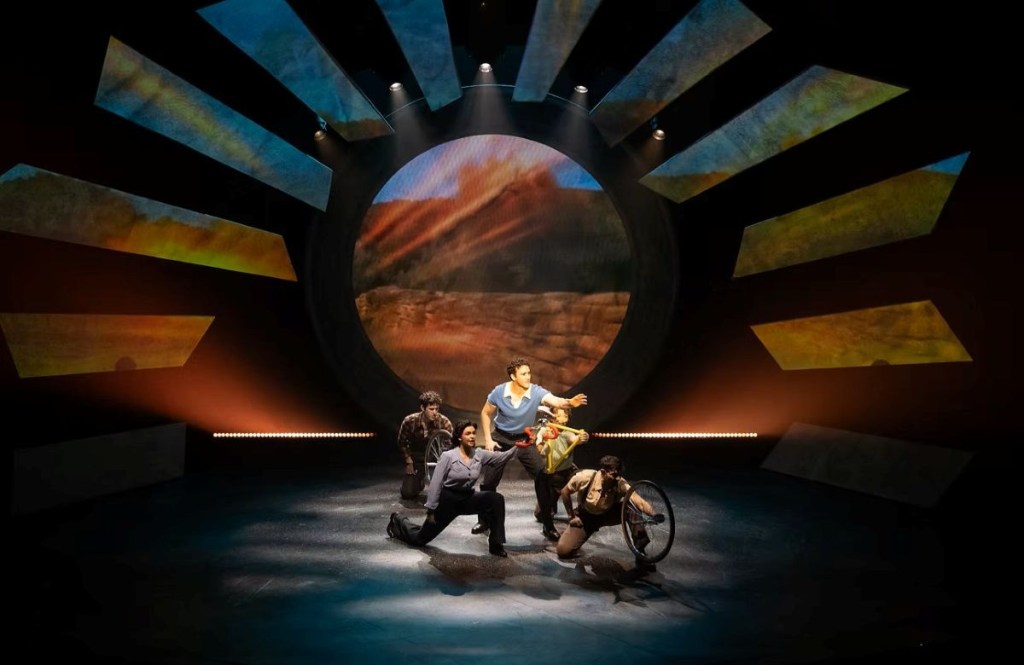
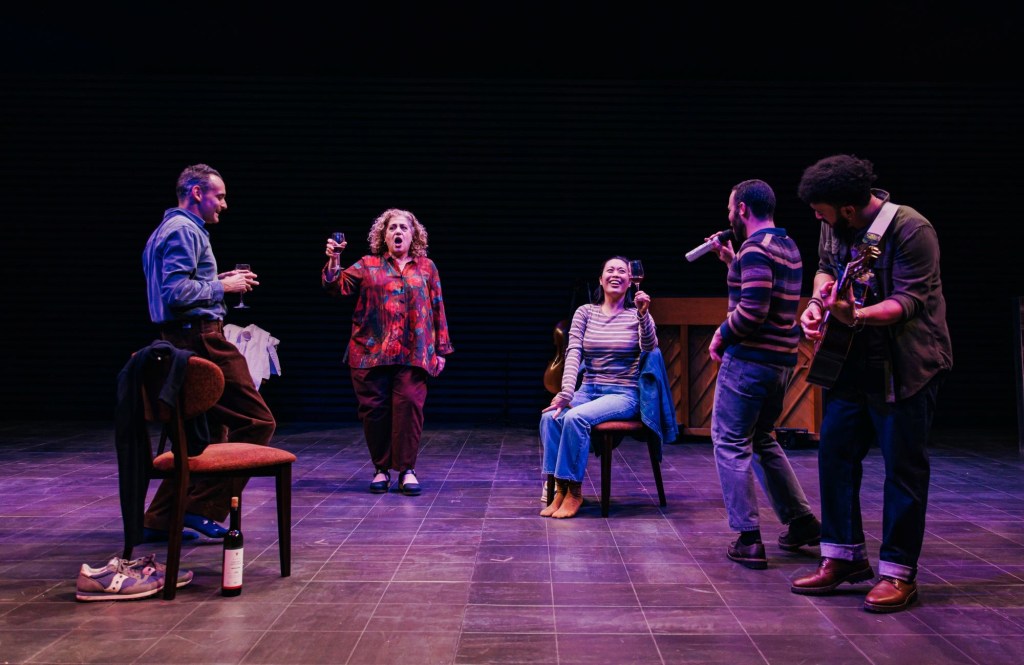
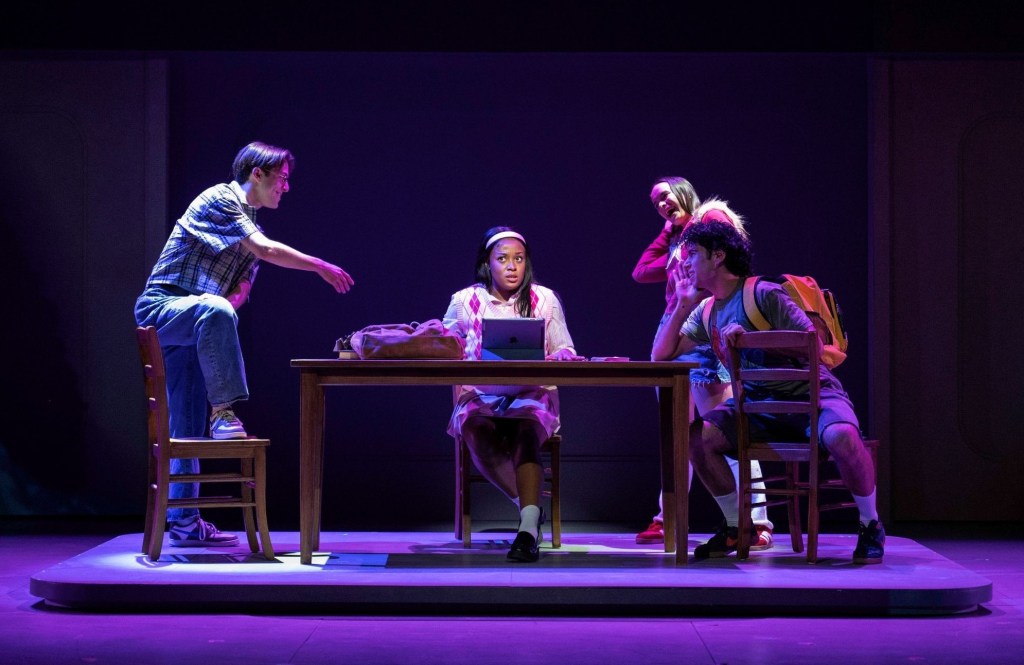
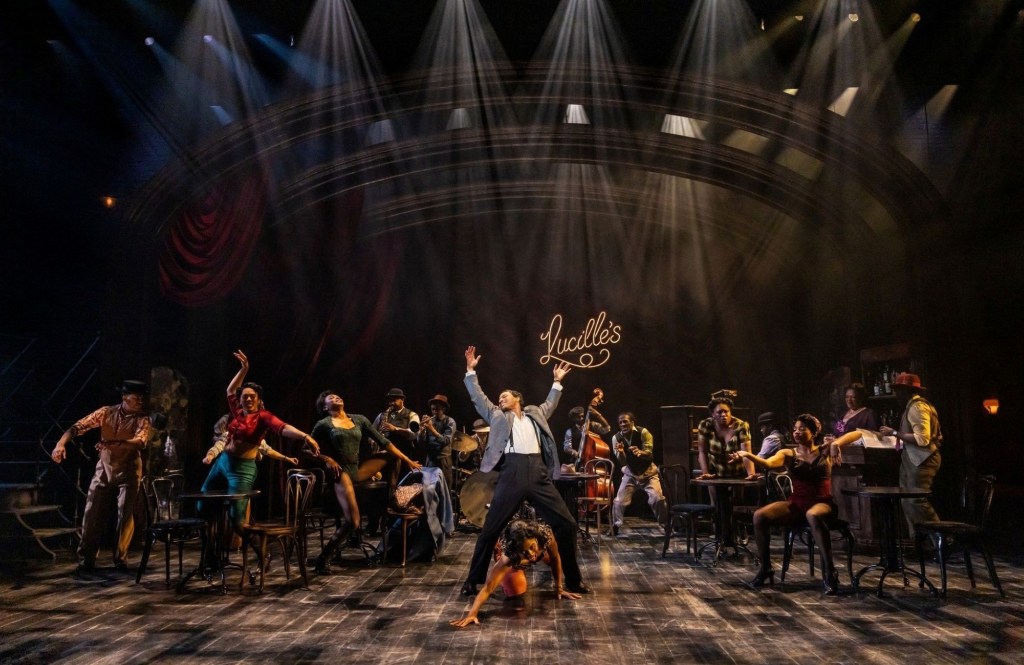
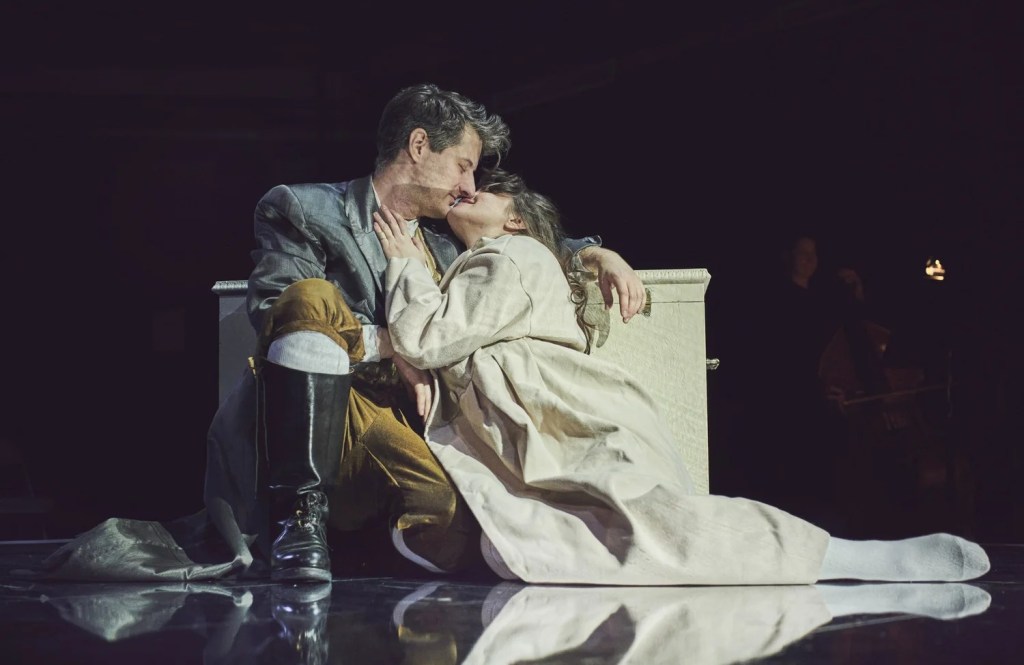
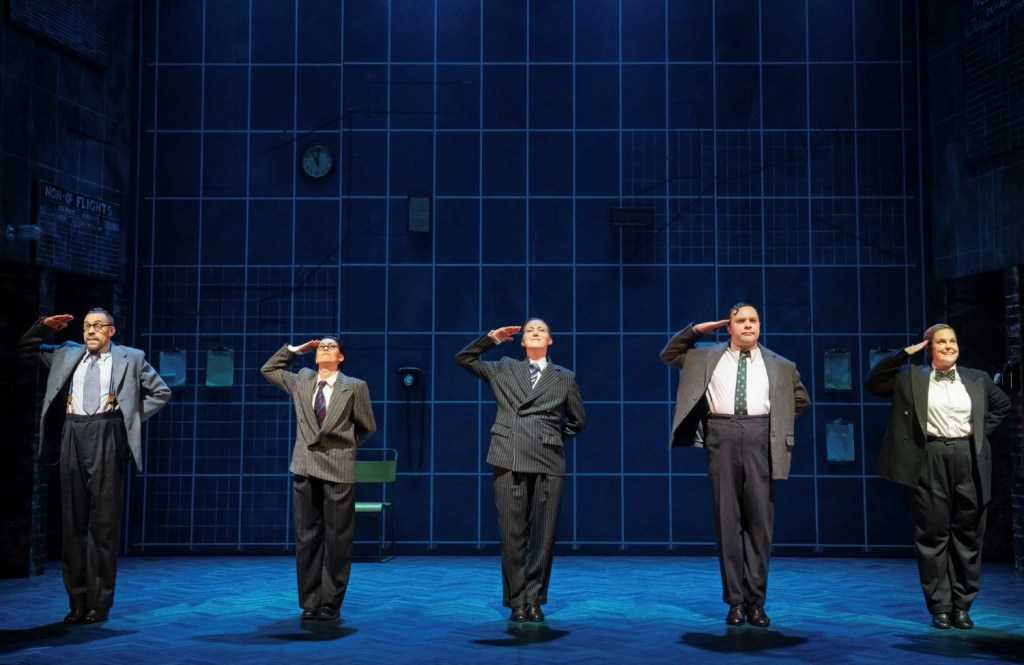
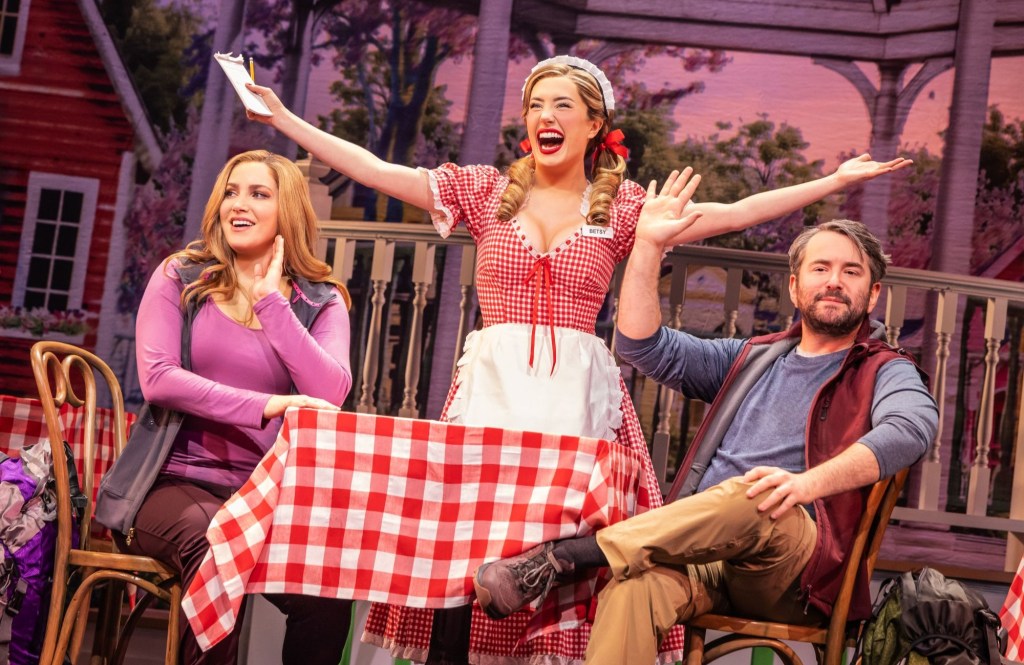
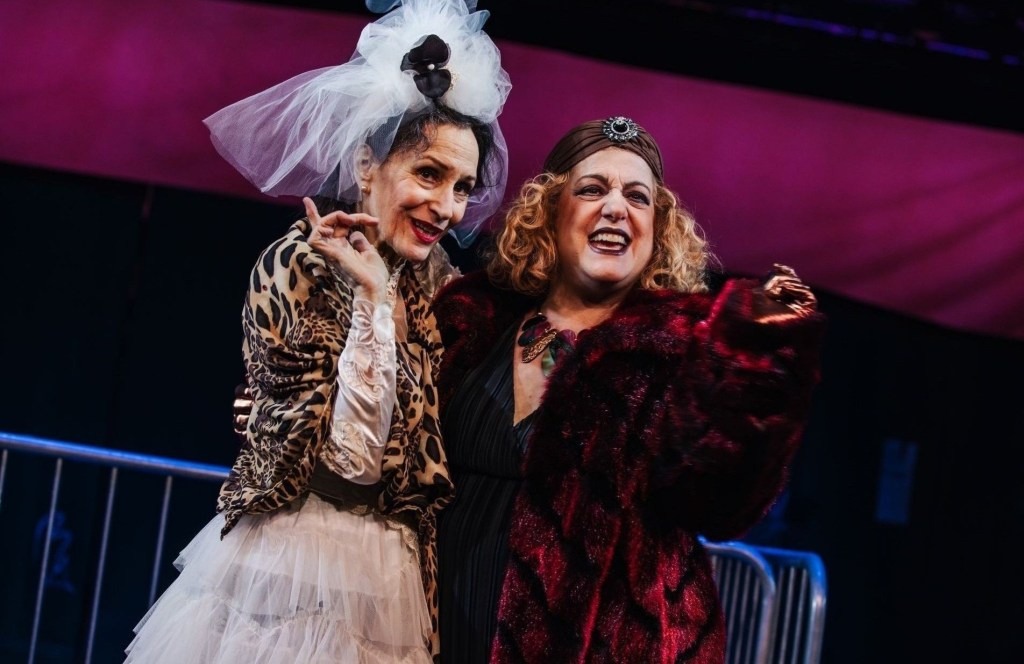
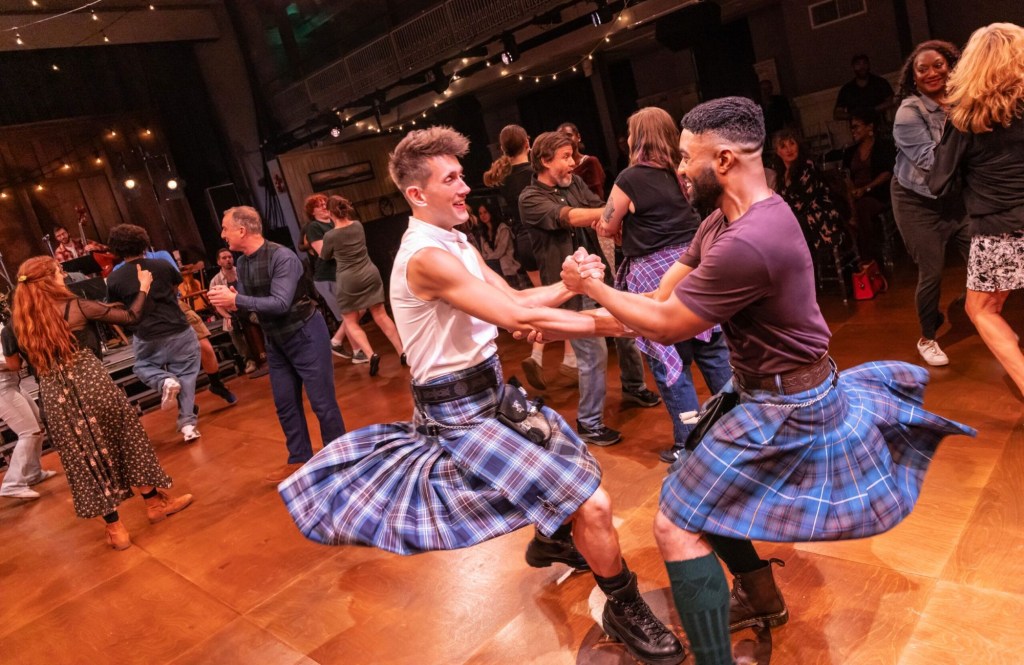
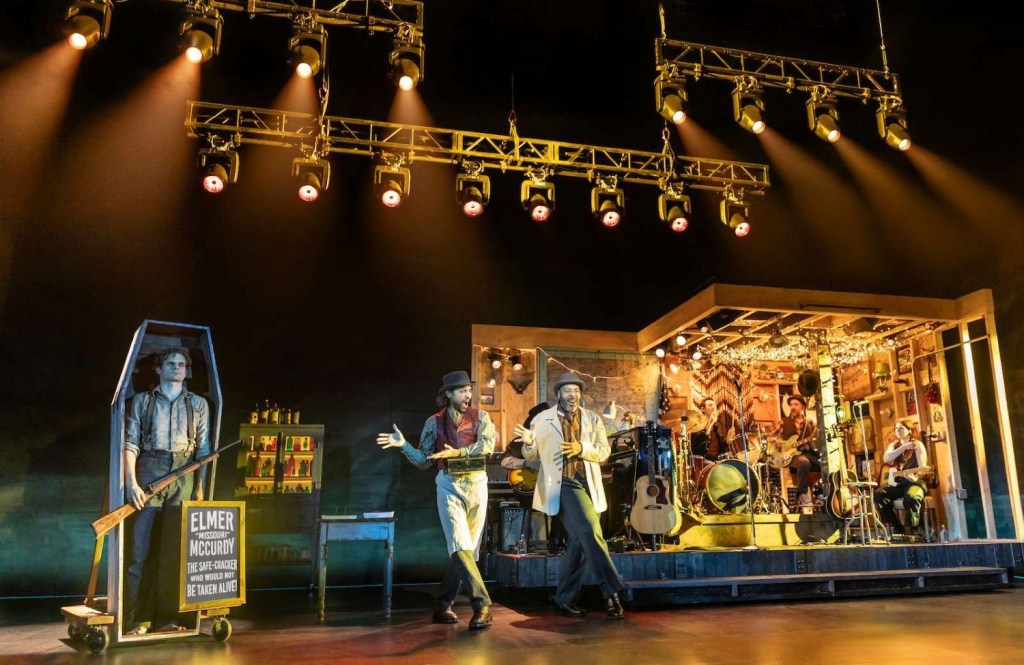
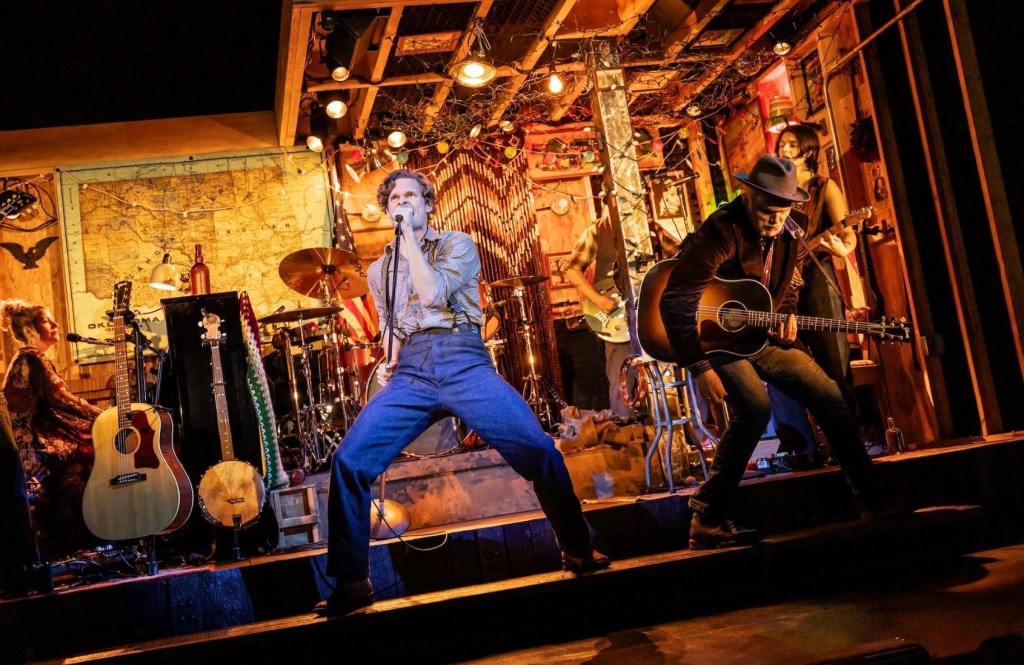
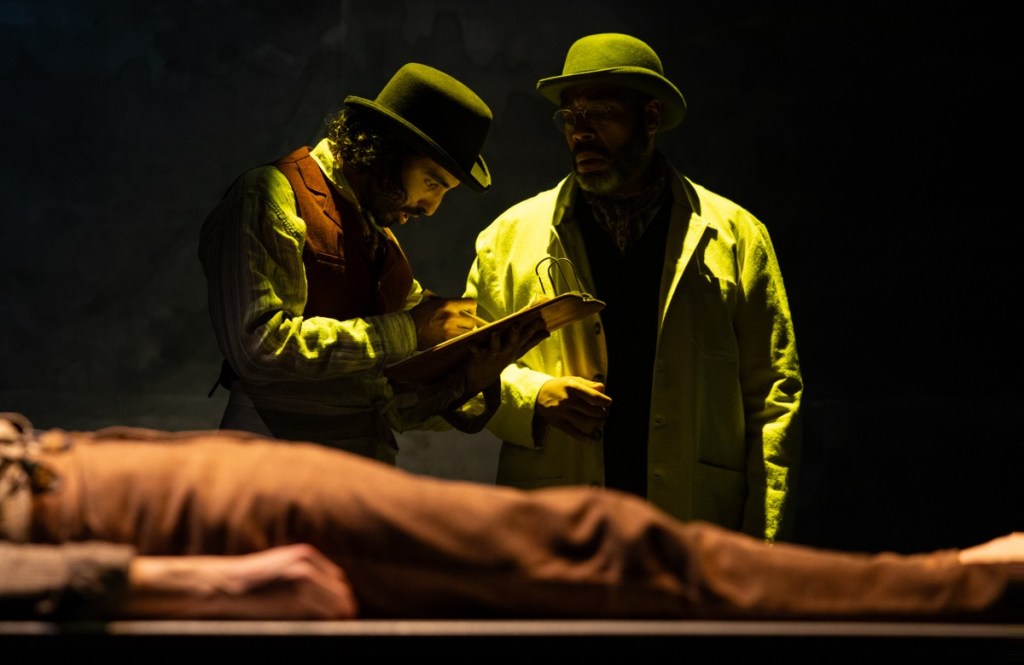
Photo of a scene from the Arena Stage production of Damn Yankees by Matthew Murphy and Evan Zimmerman.










Leave a Reply