A journal for industry and audiences covering the past, present, and future of the musical stage.
Today is Sunday, and this week’s Report features reviews of Bigfoot!, Chez Joey, and Little Miss Perfect; a preview of my forthcoming reviews of Glory Ride, Night Side Songs, and Starstruck; and a quick take on The Hula-Hoopin’ Queen. Plus, a quote of the week; select press announcements from the past week; and a list of the upcoming week’s previews and openings.
QUOTE OF THE WEEK
A letter from director and producer George Abbott to composer Sidney Lippman concerning Barefoot Boy with Cheek. The letter is dated December 2, 1946. The musical opened on Broadway on April 3, 1947.
Dear Sid:
Sylvia Dee is back in town, and she listened to Lee Grant with me this afternoon and shared my enthusiasm for her. We also had her sing (without a piano) and she has a strong, true voice. I don’t think there can be much doubt but what we have found our Yetta.
Sylvia also told me that she learned via Wm. Morris office that your voice had not been in shape to make the records. What I am writing to ask now is how soon will it be possible for you to sing. If you go to Rochester for Xmas, could you come down here first. I will, of course, pay the extra expense to which you will be put.
The theatre situation is easing up considerably, and I am hoping to get some definite action soon. I would like, therefore, to have been able to show these backers of Cullman’s what the score is like. Not that they will know, but that they will think they know. But between you and Miss Hanley, we can give them the impression that they want to receive. What I am trying to say is that it is ridiculous for them to presume that they can judge the music, but since such a formality seems necessary to get their dough, I’d like to go through with it. Since it seems rather essential that you be the principal actor on such an occasion, I want to plan it for sometime when you can be here. Since there is a possibility of earlier action than I had otherwise expected, I want to know the soonest practical time in which I could possibly expect you to be available.
Give my best to Max.
George
THE HULA-HOOPIN’ QUEEN AT THEATRE ROW
The Hula-Hoopin’ Queen is currently playing a world premiere engagement at Theatre Row under the auspices of New York City Children’s Theater. The 50-minute musical has a book and lyrics by Tia DeShazor, music by Derrick Byars, and direction by Jasmin Richardson, and it is based on the novel by Thelma Lynne Godin. The young children seated next to me, on the morning of March 7, gave the piece a literal thumbs up, and a nearby parent said, “I was not expecting it to be that good.” (The story is set in Harlem, but it is not about race, and the audience was not exclusively Black.)
The Hula-Hoopin’ Queen is, to be clear, not mainstage entertainment, and whether or not it aligns with its intended audience in terms of psychology, education, subjects, story, and attention span is outside my purview, but The Hula-Hoopin’ Queen would seem to be a dynamite show for introducing young children to the musical theatre, principally because its upbeat score has been written with character and intelligence and craft. The lyrics, in particular, are bubbling over with perfect rhymes, internal rhymes, twisty, involving phrases, and deliciously idiosyncratic motifs, beautifully synchronized with the attendant melodic line. (An inspired allusion to Hamilton did not go unnoticed by the adults in attendance.) Most of the songs are wonderfully playful, and most have a sustained dramatic development, from beginning to end.
Every institutional and commercial producer should immediately make their way to Theatre Row to acquaint themselves with the work of DeShazor. She, perhaps with Byars, should be hired to write a mainstage musical, stat.
Lastly, New York City Children’s Theater seems to have made the experience of attending their attractively designed production a personal one, with coloring pages in the lobby before the show, and a fantastic curtain speech, part of which should be delivered to adults who are planning to attend a Broadway show. (Sammy Lopez, of P3 Productions, is the company’s producing director.)
BIGFOOT! AT NEW YORK CITY CENTER
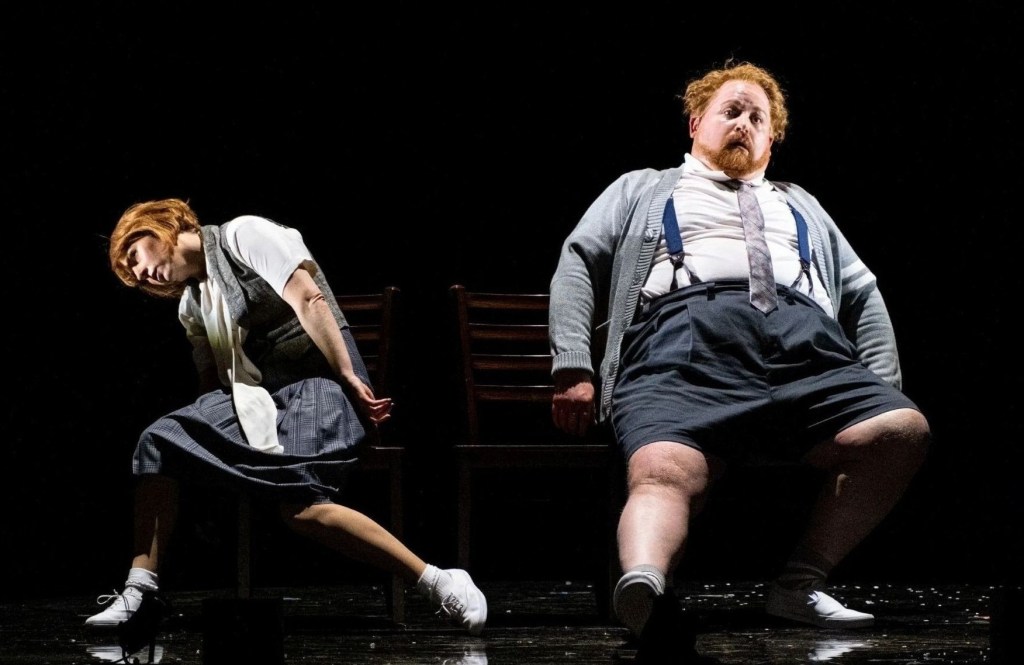
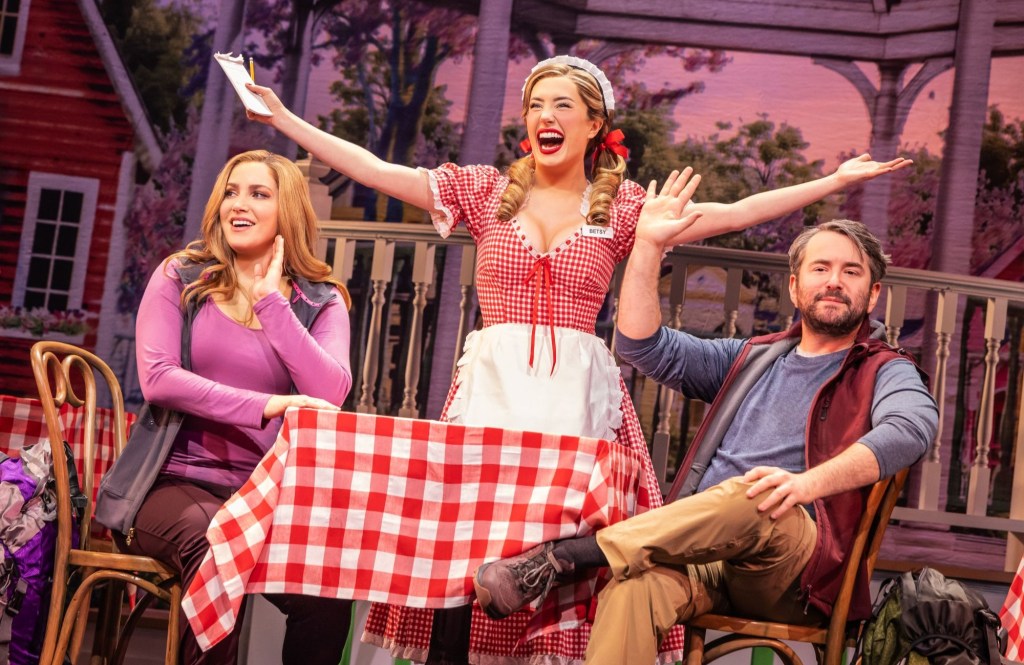
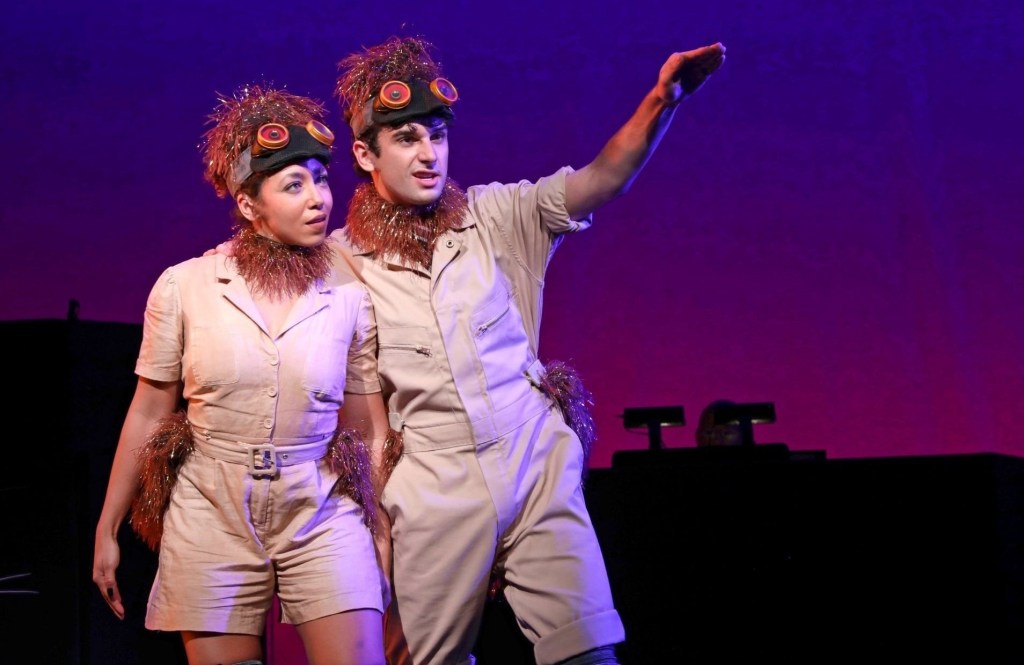
Bigfoot! opened a world premiere engagement last Sunday at New York City Center Stage I. It has a book by Amber Ruffin and Kevin Sciretta, lyrics by Ruffin, music by Ruffin and David Schmoll, and direction by Danny Mefford, and it is a vigorously inept affair, despite a nearly fantastic first 30 seconds. Even the cheaply comic program biography of co-producer Stark Sands is an overt failure, given its placement.
The musical unfolds in the 1980s, in a town called Muddirt, and it concerns an opportunistic mayor, a dying mother, a dancing doctor, a lesbian assassin, a greedy businessman, a chemical plant, a water park, a protest, a hunt, and a Bigfoot who lives on the outskirts of town and helps the town’s 114 or so citizens from afar. The piece has evidently, for one cannot be sure under the slipshod circumstances, been designed to serve as a comedic commentary, for one cannot even call this gobbledygook satire, on outsiders, immigrants, fathers, guns, crooked politicians and business executives, and disgruntled citizens looking for someone to blame for their problems – and blaming someone for their problems, with no questions asked. But the commentary is insignificant and exceedingly dull, and the piece, which runs roughly 90 minutes, is basically devoid of theatricality and dramatic interest. It has no crispness. No continuity. No nimbleness. No definition. No invention. No efficiency. No escalation. No tension. No particular style or personality. Or, to be fair, nearly none of each of these components critical to the distinction, the completeness, and the effectiveness of a stage musical, especially a comedy, which is what Ruffin & Co. have chosen, of their own volition, to fashion.
The cast of six spends almost the entire show either shouting one-liners at each other, while posing as characters; or talking to themselves, while posing as characters, for the express purpose of delivering, indirectly to the audience, information, including plot points that occur offstage, and or setting up their own solos. And one wonders why Ruffin & Co. expect to earn any sort of payoff from an earnest, if underdone, ballad like “Maybe,” when they have made little or no effort to carve out real characters?
The primary strands of plot remain perpetually and unproductively separate, operating independently, and failing to cohere. Scenes regularly tread old ground, sometimes reinforcing a plot strand that has disappeared. Some scenes are bizarrely, purposelessly, nondeliberately out of order, with the motivation for a particular scene occurring in the scene after the scene it motivates. Songs rarely serve a dramatic purpose, or receive a seamless entrance. The music is mostly generic. And some of the one-liners must be acknowledged as clever – specifically when taken independently, out of context, separate and apart from the stage story Ruffin & Co. claim to be telling.
A sight gag involving the reveal, during an erotic duet, of a large, toxic moon is terminally labored. A sound gag involving a curtain is wearisome. A trio of slaps is programmatic. A concert interlude in which Bigfoot sings about his dead mother while a fan blows about his body-hair is tired and humorless. A recurring gag involving “the hunt” is tired and humorless. And a split-personality episode in which one of the actors, Jade Jones, jumps back and forth between two characters is tired and humorless, in part because the musical has not effectively built up to – or laid the groundwork for – such a moment.
The purposeless straight lines, in the staging, are numerous. The final light cue is unclean. The button of “Splashtown” is unclean. Sound effects are buried in song. A man who has apparently never seen Bigfoot says nothing, unintentionally, upon finally seeing Bigfoot. Two solos end with the respective actor audibly exhaling for a deflating finish. Bigfoot disappears for long stretches of time, in part because he does not really center or drive the show, and he receives an abrupt reveal in the unsteady opening number, despite being revealed, separately, moments later, singing much the same thing. If a solution to the mud problem is immediately apparent to everyone, why has the mud problem persisted for years? And why is a small model of the town used in the opening number, if Bigfoot later reveals the model as being his creation? Indeed, a payoff is missing in the ill-considered execution (of the entire enterprise).
The physical designs and the cast are mostly poor. Alex Moffat, in particular, is delivering a showy performance seemingly designed to impress, but his mannerisms, his vocal inflections, his mayoral persona is entirely put-upon, not internalized, not grounded, not real, and his performance is, as such, entirely unimpressive. Grey Henson, as Bigfoot, is a ball of familiar gimmicks and line deliveries. And Crystal Lucas-Perry is the comparative standout, infusing her performance, as Bigfoot’s mother, with range and dynamics and grounding and attack, to the extent possible, given the bargain-basement material and staging.
The first 30 seconds, for the record, involve a musical riff; an upstage door slamming open in a fairly well-timed manner, dramatically backlit; and a funkified opening chorus (“Muddirt, Muddirt”) accompanied by super-serious, funkified choreographic gyrations, sharp and specific. (Where did this Danny Mefford go for the remainder of the musical?) The combination carries considerable interest, suggesting a particular point of view and a certain comedic gravity and even a certain skill. Alas…
LITTLE MISS PERFECT AT OLNEY THEATRE CENTER
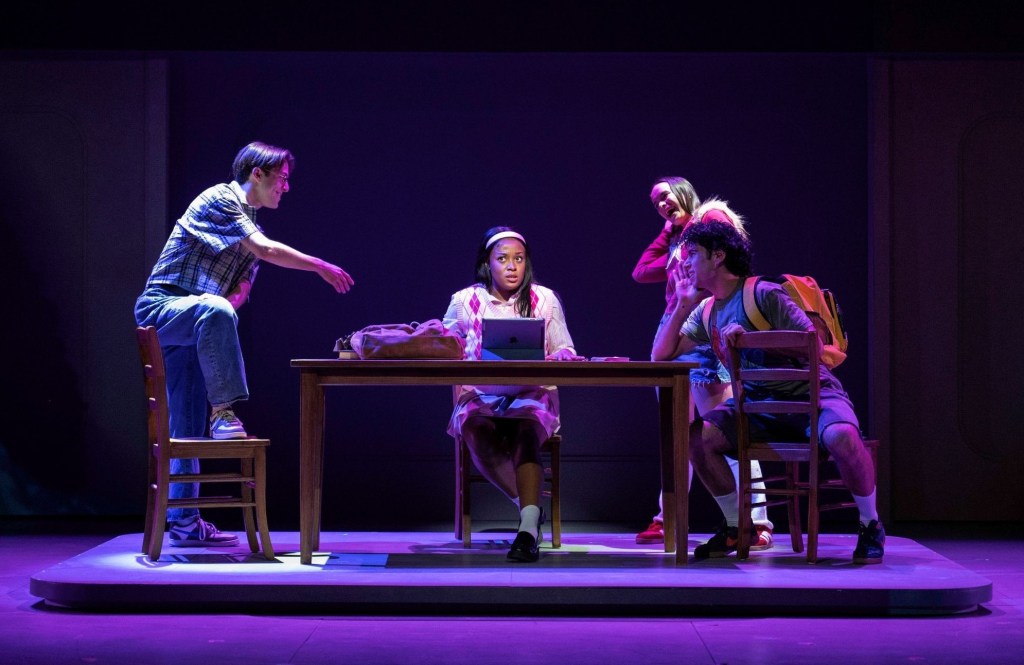
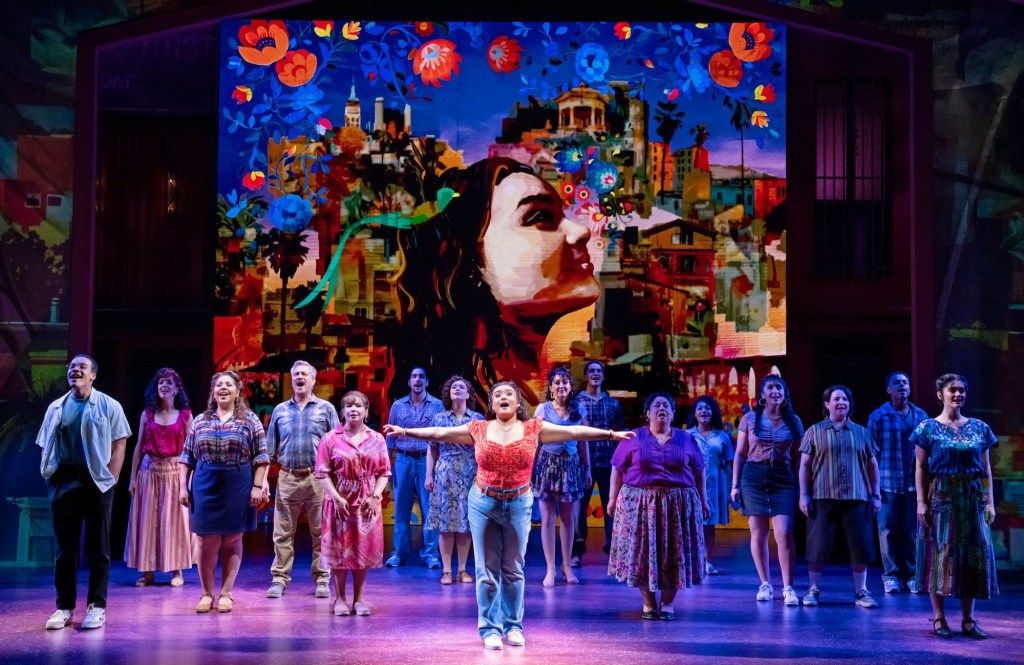
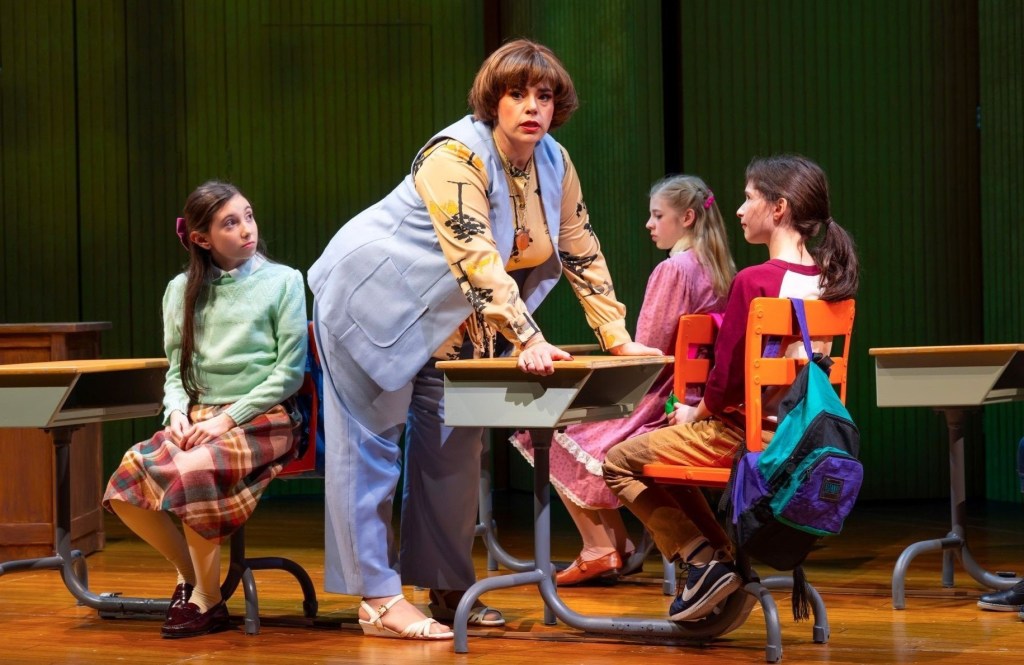
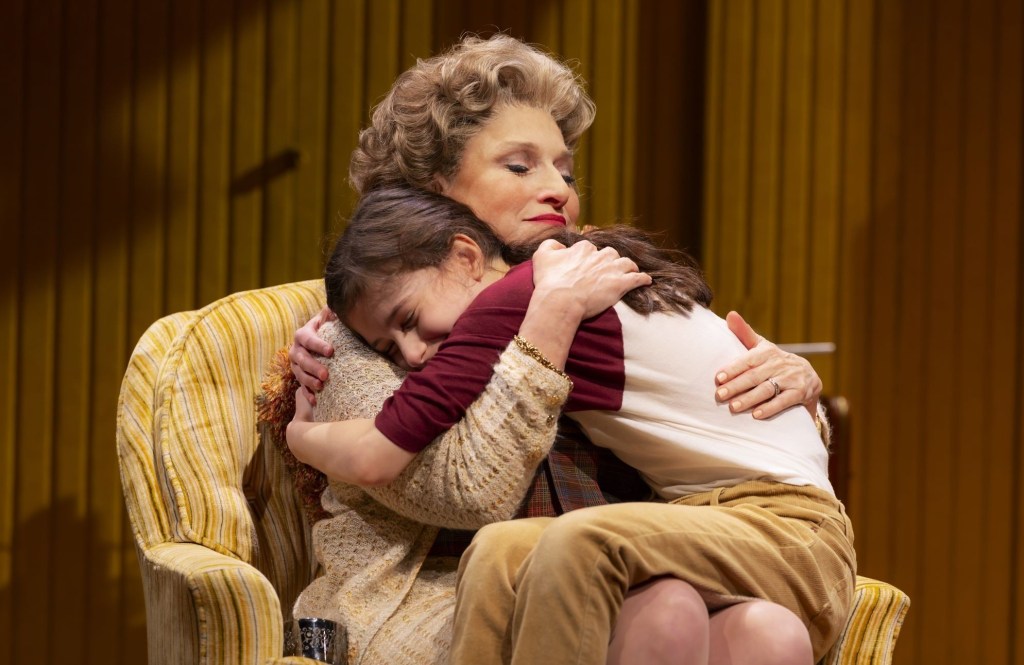
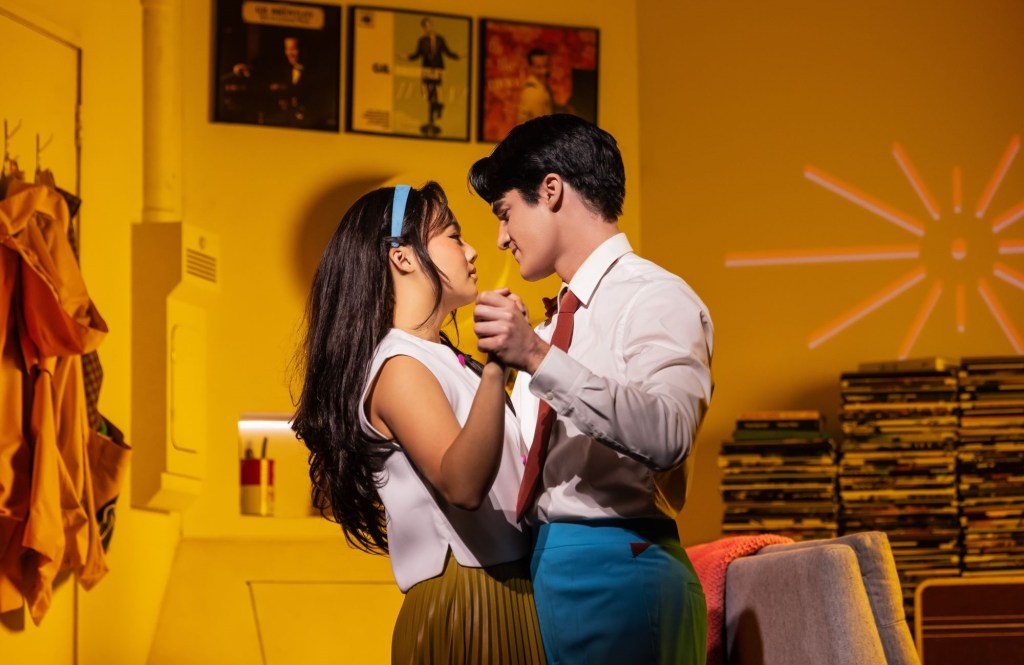
Little Miss Perfect, a new musical inspired by a song of the same name, is currently playing a world premiere engagement at Olney Theatre Center outside Washington, DC. It has a book, lyrics, and music by Joriah Kwamé and direction by Zhailon Levingston, and it is an exceedingly rough, strangely bland affair.
The musical unfolds in a predominately white town in Michigan, and it centers around Noelle Sanders, a closeted Black high-school senior who longs to attend Howard University. In an effort to procure a scholarship, she runs for class president, and, in the process, falls in love with Malaya, a foreign-exchange student currently sharing her bedroom. Plus, Noelle is adopted; her mother, Sylvia, is a pastor; and her adoptive father has recently passed away. Eli is a new student Noelle befriends. Gia is a popular girl running for reelection. And Leanne is one of Gia’s flunkies.
The setting, characters, and plot points have the potential to distinguish the story from other high-school, coming-out, coming-of-age stories of the sort, but the treatment is, at present, remarkably basic, and nothing about the way in which the musical operates is distinctive. The plot is poorly patterned. The selection of incidents is perhaps less than ideal. The secondary characters, especially Gia, Sylvia, and a jock named Vaughn, tend to appear only when convenient. (Eli and Leanne become romantically involved, in structural isolation.) The dialogue tends to be rudimentary. The lyrics, while active, tend to lack focus and continuous dramatic development, and they tend to cruise the surface of the situations and the characters. The music tends to lack character and individuality, with the score developing a sonic sameness. (“Gia’s Lament” stands out as a number that might have been much quirkier, much more idiosyncratic: lyrically and musically.) And the purposing and spotting of songs is highly suspect. (“Little Miss Perfect” closes the first act, but it fails to serve the moment or to send audiences into intermission on a high, largely due to the aimless lyric.)
The opening moment of the musical finds a social worker talking to a young Noelle, situated unseen in the audience, and it has real possibilities. But the corresponding song, “Perfect,” is the first of three, in a row, that are led by (teenage) Noelle, and the three songs, as the musical is currently structured, are dramaturgically repetitive, essentially serving the same function. The second, “Middle of the Map,” is, by far, the most exciting and dramatically effective of the lot, harboring an invigorating combination of personality and drive, with a dynamic, playful melodic line and a solid, playful lyric. In fact, “Middle of the Map” is probably the most exciting and dramatically effective song in the show, and it has the potential to become a showstopper. But that will require, at minimum, a stronger ending, and the show’s choreographer, Chloe O. Davis, to get out of the song’s way. (Why must the ensemble be present from the start, gathering, in the dark, on the deck of the stage, surrounding Noelle’s bedroom?)
Indeed, Davis nearly kills numerous numbers with her excessive, often extraneous choreography. She evidently has no interest in serving the story, and her manufactured movements can hardly be considered a defining aesthetic. Excessive, extraneous choreography, by the way, is a real problem throughout the contemporary musical theatre scene, not exclusive to Davis, occurring in part because the corresponding lyrics are often not strong enough to stand on their own.
The use of direct address is inconsistent and ineffectively introduced. (And perhaps unnecessary.) The final moment, deconstructing the set, exposing the band, breaking the fourth wall, and revealing the musical to be a musical, is pretentious and unearned. One wonders why Malaya does not make her first appearance when running into Noelle, rather than literally wandering across the stage in the moments prior. Two mobile locker units completely obliterate the pair’s meet-cute. An airplane interlude is ridiculous. A scene in the principal’s office is senseless. A couple of song entrances are telegraphed. “Legendary” is a mess. “Political Party” is a mess, despite a clever title line. And “Malaya’s Words” is a literal mess, leaving the stage littered, for no good reason, with dozens of white pages – which the company must hastily collect during the subsequent dimout. (Really?)
The staging is sloppy and unimaginative, and Levingston has not even been able to fully energize the stage, or to cultivate a sense of camaraderie and purposeful play. The scenic design, by Lawrence E. Moten III, is unattractive and impractical, consisting primarily of three palettes that track, relentlessly, upstage and down, otherwise parked behind three retractable slats in the upstage wall. Plus, an elevator center stage is not very effectively exploited. The lighting, by Abigail Hoke-Brady, is poor. The costumes, by Danielle Preston, are no more than passable. And the projections, by Zavier Augustus and Lee Taylor, are unremarkable and sometimes deadly, not having been effectively integrated into the narrative or the staging. They almost completely obscure, for instance, the central figure’s underwhelming eleven o’clock. (“Redefined.”)
Leanne J. Antonio, as Noelle, is nonetheless giving a wonderful, energized performance, and Little Miss Perfect is nonetheless still in development. Plus, Kwamé has already introduced or inadvertently suggested a handful of valuable devices whose further establishment and definition might assist in distinguishing the storytelling. Perhaps, for instance, “Perfect” becomes a song fragment, recurring throughout the show. Perhaps more is made of the video conferences between Noelle and the Howard Admissions Counselor. Perhaps more is made of direct address, or perhaps it is removed altogether. Perhaps…
CHEZ JOEY AT ARENA STAGE
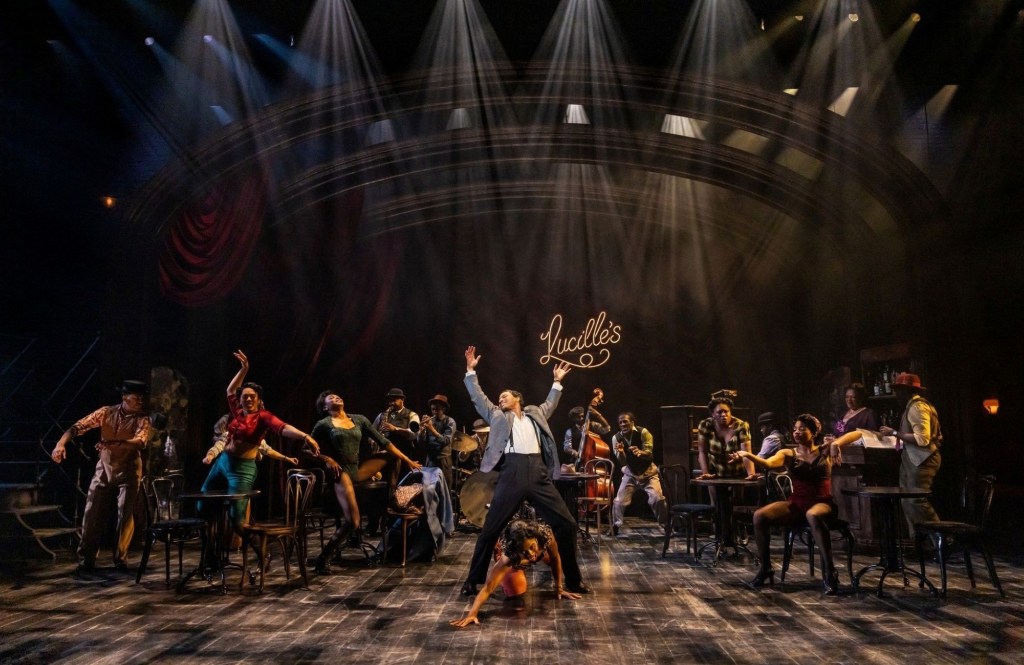
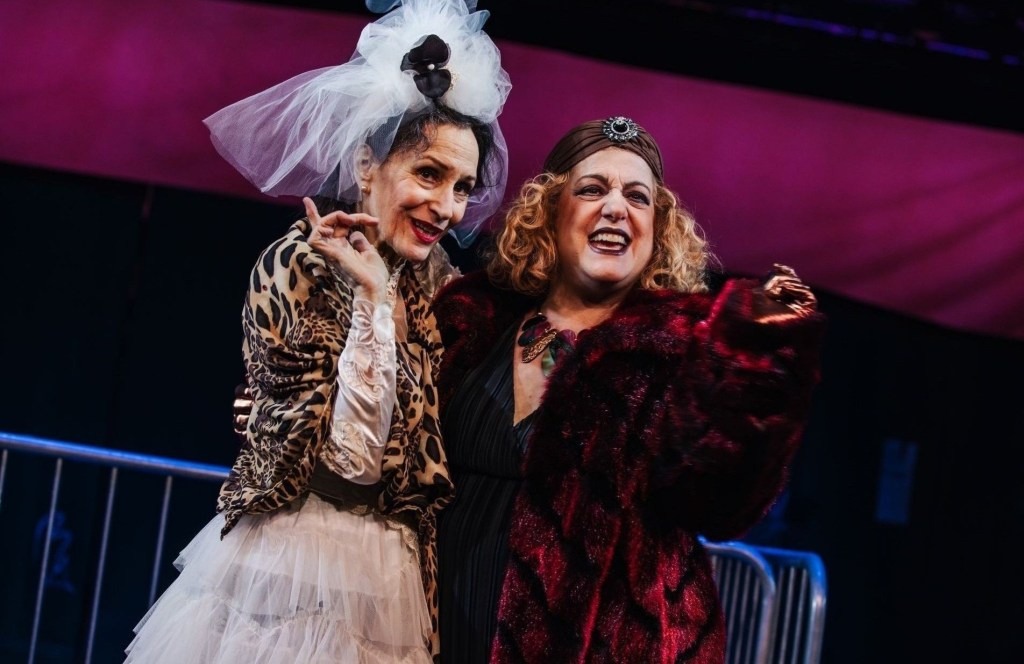
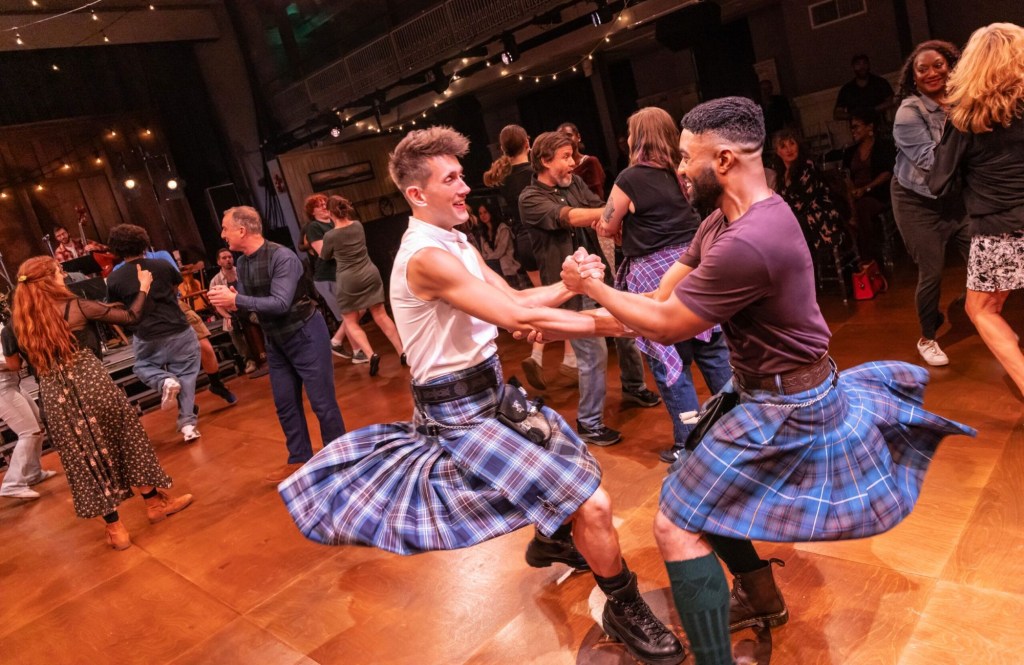
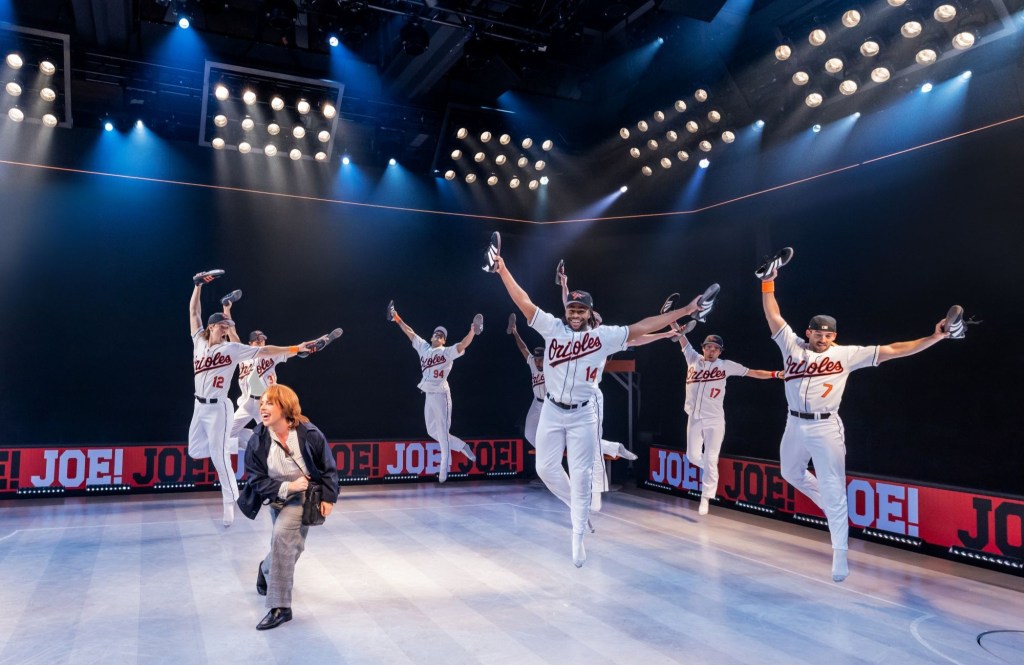
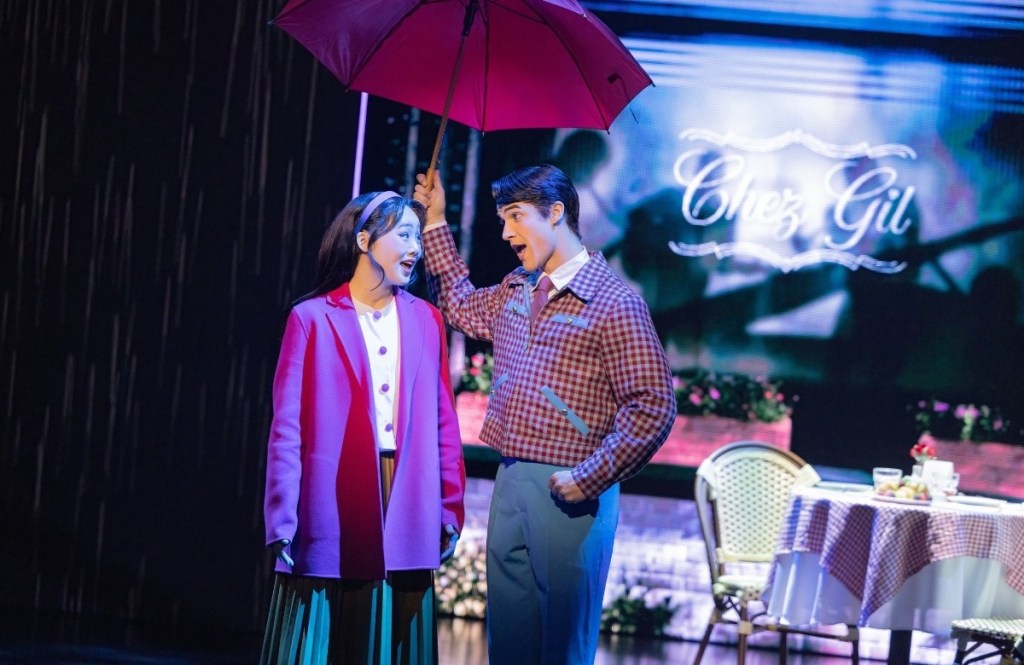
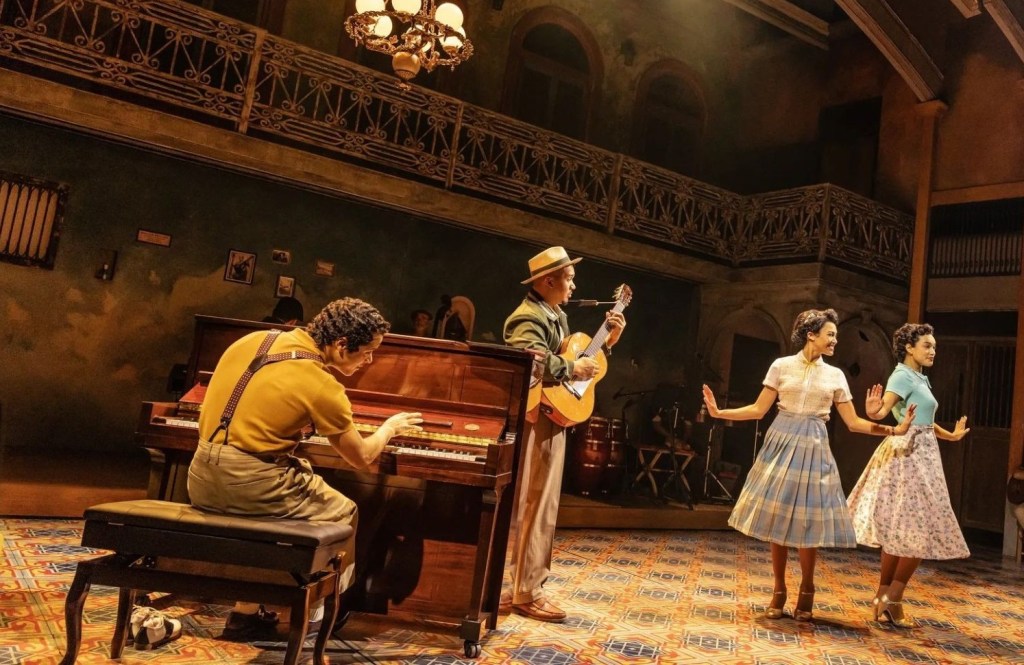
Chez Joey is currently playing a pre-Broadway engagement at Arena Stage in Washington, DC. It is a new musical based on the 1940 musical Pal Joey, inspired by a series of fictitious letters penned by John O’Hara. Chez Joey has a book by Richard LaGravenese, lyrics by Lorenz Hart, music by Richard Rodgers, and direction by Savion Glover and Tony Goldwyn, and it is a happy surprise, with the potential to be a great piece of theatre, pending a combination of refinements and revisions. My review was published on Friday, and it includes a detailed punch list that the creative team might consider moving forward.
NIGHT SIDE SONGS AT THE CLAIRE TOW THEATER
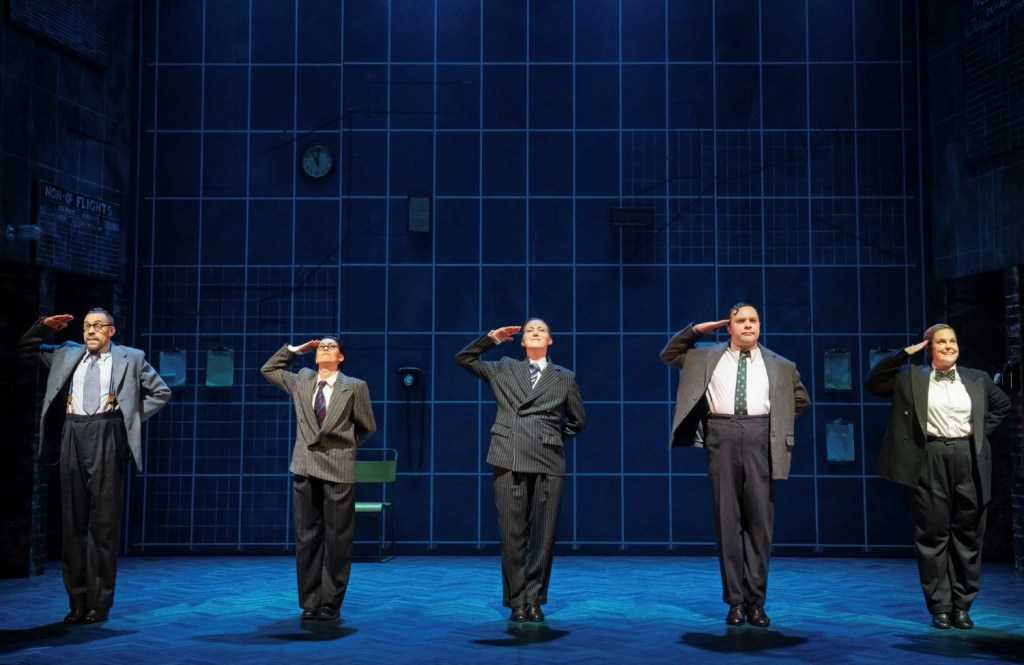
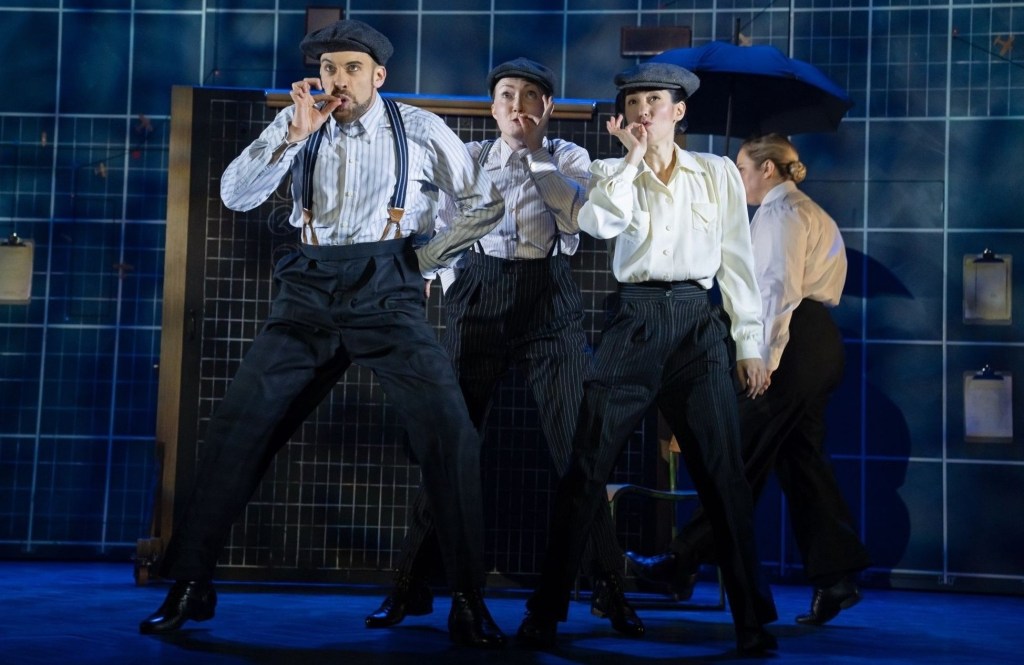
Night Side Songs, a new musical with communal singing, opened an Off-Broadway engagement last Sunday at Lincoln Center Theater’s Claire Tow. It has been written by Daniel and Patrick Lazour and directed by Taibi Magar, and the seismic positive changes that have been made since its unsatisfactory premiere engagements last year are astounding. And commendable. (I first encountered the piece at Lincoln Center’s Clark Studio Theater as part of Under the Radar, and then at Philadelphia Theatre Company.) Night Side Songs is still neither a complete nor a wholly effective work, suffering especially from song, but it has moments and items to appreciate, including a stronger (than before) sense of story and character. My review is forthcoming.
STARSTRUCK AT BUCKS COUNTY PLAYHOUSE
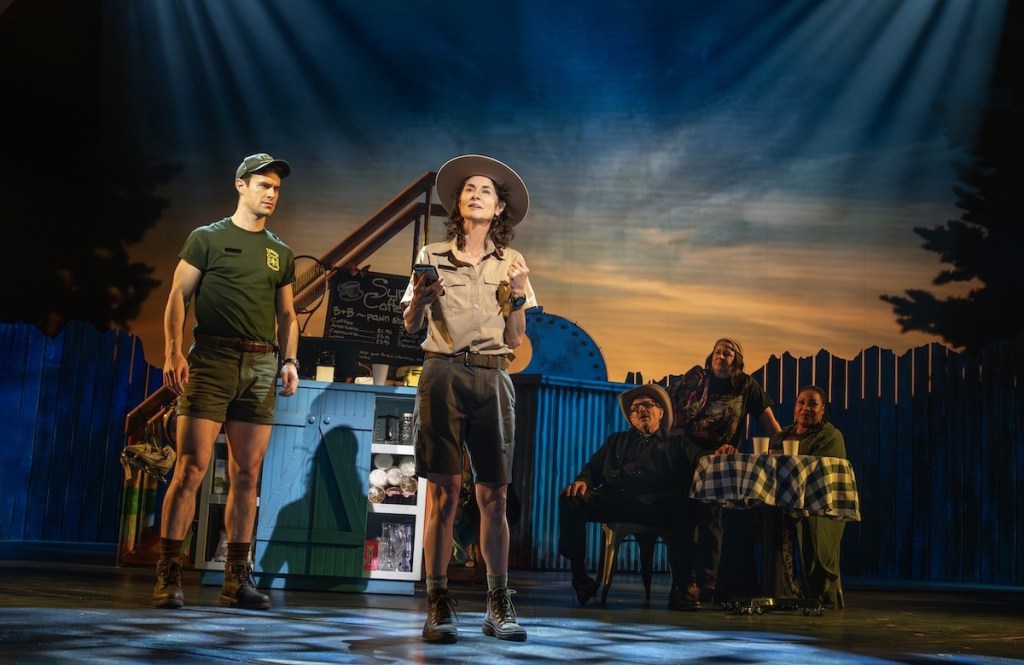
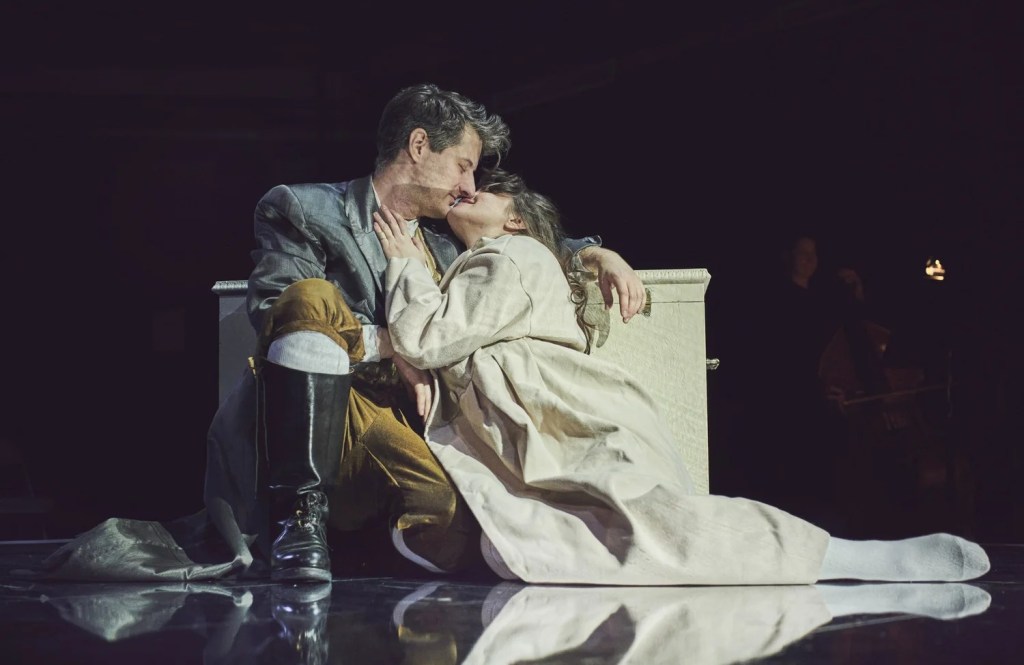
Starstruck, a new musical based on Cyrano de Bergerac, is currently playing a world premiere engagement at Bucks County Playhouse in New Hope, Pennsylvania. It has a book by Beth Malone and Mary Ann Stratton, lyrics and music by Emily Saliers, of the Indigo Girls, and direction by Lorin Latarro, and it is a dreary affair. My review is forthcoming.
GLORY RIDE AT DELAWARE THEATRE COMPANY
Glory Ride, a new musical about Italian cyclist Gino Bartali, is currently playing an engagement at Delaware Theatre Company in Wilmington, Delaware, after previously having been seen overseas. It has a book by Todd Buchholz and Victoria Buchholz, lyrics and music by Victoria Buchholz, and direction by Michael Bello, and it is disheveled, drowning in song. My review is forthcoming.
PRESS ANNOUNCEMENTS
Here is a list of select press announcements from the past week. Each headline is clickable for more information.
• McCarter Theatre Center Announces 2026-27 Theater Series
• Chez Joey, Reimagining of Pal Joey Starring Myles Frost, Extends Run
• Nick Offerman to Join His Wife, Megan Mullally, in Iceboy!
• Gotta Dance! to Be Presented Off-Broadway at Stage 42
• Emma Hunton, John Krause, Diana Huey Will Lead L.A. Millennials Are Killing Musicals
• Tyne Daly, Max Von Essen to Star in Alexandra Silber’s Revised Brigadoon
• Taylor Trensch to Replace Robin de Jesús at Select Performances of Night Side Songs
• Heartbeat Opera to Present Revised Vanessa at Baruch Performing Arts Center
• Blood/Love Extends Off-Broadway Run
• Debbie Gravitte, Carrie St. Louis Joining Just in Time This Spring
• Masquerade Extends Off-Broadway Through Summer 2026
PREVIEWS AND OPENINGS
Here is a list of the new musicals and revivals either opening or beginning previews during the upcoming week, specifically on Broadway and Off-Broadway. It contains, as well, select new musicals beginning performances regionally, and select new musicals and revivals beginning performances in New York City. Each title is clickable for more information.
Monday, March 9
Tuesday, March 10
Wednesday, March 11
Thursday, March 12
• NYC: Chasing Grace
• NYC: Monte Cristo
Friday, March 13
Saturday, March 14
Sunday, March 15
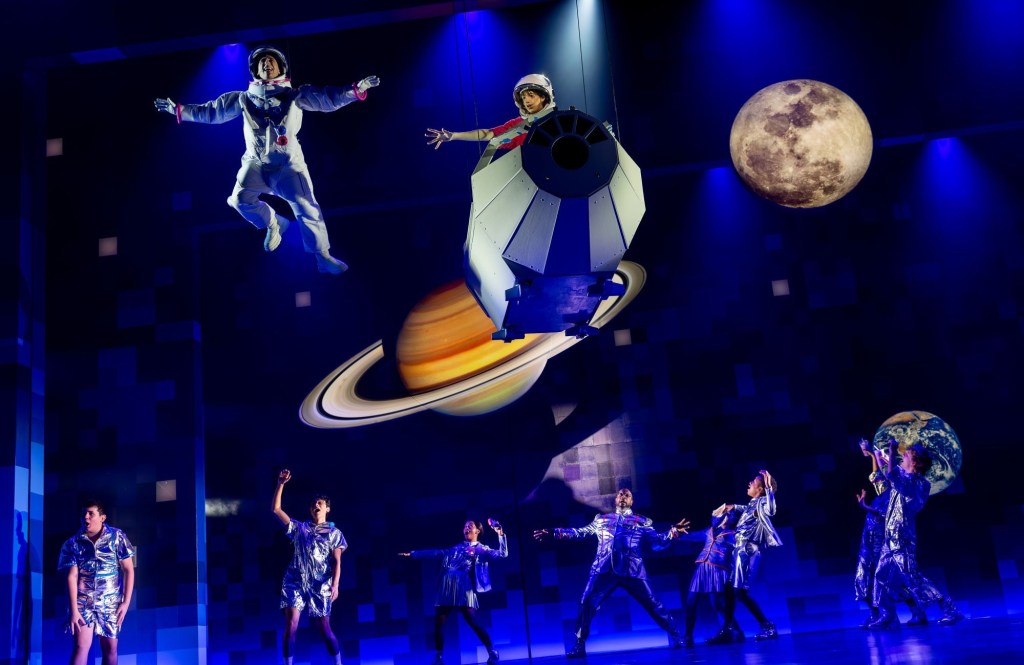
Photo of a scene from Little Miss Perfect by Teresa Castracane.












 The Musical Theatre Report
Leave a comment