A journal for industry and audiences covering the past, present, and future of the musical stage.
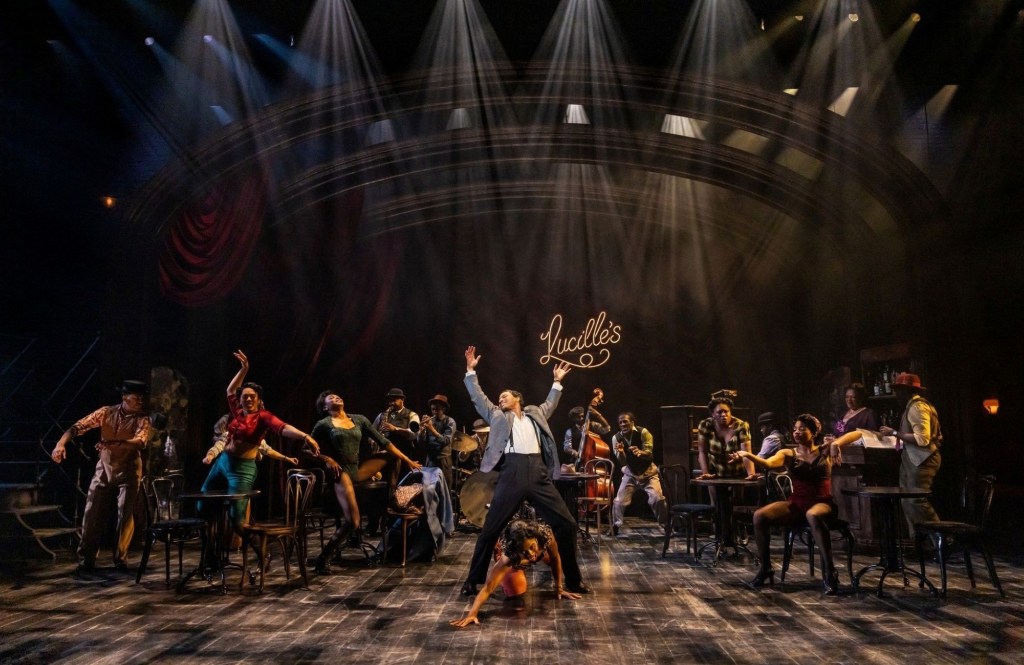
Chez Joey is currently playing a pre-Broadway engagement at Arena Stage in Washington, DC. It is a new musical based on the 1940 musical Pal Joey, inspired by a series of fictitious letters penned by John O’Hara. Chez Joey has a book by Richard LaGravenese, lyrics by Lorenz Hart, music by Richard Rodgers, and direction by Savion Glover and Tony Goldwyn, and it is a happy surprise, with the potential to be a great piece of theatre, pending a combination of refinements and revisions.
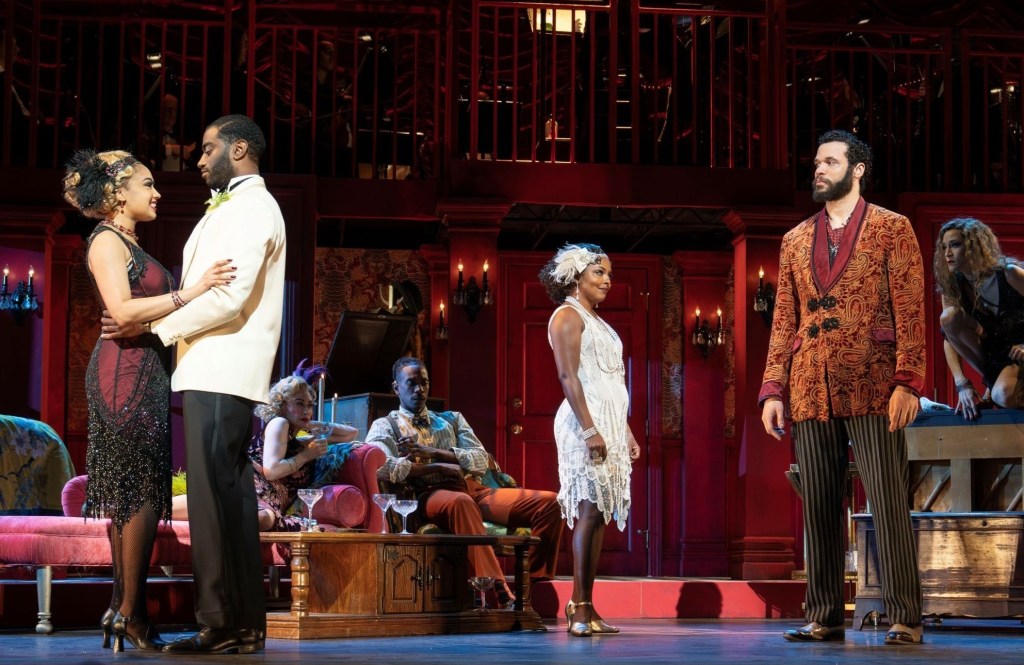
The musical is set in 1940, and it centers around Joey Evans, a charismatic entertainer and notorious ladies’ man who toplines the floor shows at a Black nightclub on the South Side of Chicago. The club is owned and operated by a former hoofer, Lucille Wallace, who has come to look upon Joey like a son, even allowing him to take up residence in the back of the club. One day, following a rehearsal, Joey strikes up a romance with the club’s newest singer, Linda English, and shortly thereafter, with the club set to close due to financial difficulties, Joey strikes up a romance with Vera Simpson, a socialite and former chorus girl whose husband lives overseas. Vera is initially brought to the underground establishment by Melvin Snyder, an influential newspaper columnist and friend of Joey. (Vera and Melvin are white.)
A plan is hatched by Vera and Joey, who longs for a club of his own, and it finds Vera buying the building, renaming the club, demoting Lucille, and dropping Linda – a dealbreaker to which Joey reluctantly agrees. Then, on the afternoon of the reopening, Joey and Vera argue over the repertoire, the updated decor, and the ritzy clientele to whom the club will now cater. Melvin breaks up the fight, and Joey subsequently seeks out Linda, who is now singing in a burlesque house. (Burlesque has, by 1940, become synonymous with striptease, and Linda has been hired to keep out the cops.) Joey and Linda reunite, and share a surprise duet at the opening of Chez Joey – whereupon Vera storms out, and, the next day, sells the building – to Lucille – for $1.
If the plot is straightforward and slender, Chez Joey is ultimately a character study, and LaGravenese has done a marvelous job of etching three, perhaps four of the five principal characters, unleashing upon the stage exciting, complicated human beings, tough and tender, sly and sexy, seasoned with idiosyncrasies. (The balance of the cast includes five chorus girls, four hoofers, one backup singer, and six onstage musicians.) Most of the dialogue, throughout the show, is crackly, playful, and neatly tailored to the individual personalities. The slick-talk, of the silver-tongued central figure, is sublime, whether he is trafficking in music, race, or romance. Three of the scenes, between Joey and Linda and between Joey and Vera, nearly catch fire. And the world of the show is downright exhilarating, marked by an individual manner and a distinctive personality, suggesting a shared vision across the creative departments.
All of the action takes place within the club, and the club, especially in the first act, is wonderfully, vitally alive. The interactions, the rehearsals, the performances, the momentary collisions between inhabitants tumble forth in a naturally fluid fashion, often occurring in real time, and endowed, on the whole, with a quiet dramatic tension. (Which does not absolve the three creators from the sharpening that need be done with regard to the narrative design and the staging.)
A rehearsal upstage deftly underscores a principal scene downstage. A tap rhythm deftly underscores a certain line of dialogue. Lucille attempts to talk on the phone while Joey conducts a rehearsal. Joey sits at a small café table while Linda, at the piano, rehearses a song for an upcoming audition, and Joey casually delivers his opinion of her audition song from across the room when she is done. (“That’s some bullshit.”) The hoofers weave in and out. The musicians weave in and out. The chorus girls weave in and out, occasionally delivering a priceless drive-by interjection. And the moments of hustle and bustle are often beautifully juxtaposed with moments of quiet intimacy, like Joey sitting at a table and dialing Vera, or Lucille sitting at a table and confiding in Linda.
The show commences with the club steadily coming to life, during off hours. The first act ends with Lucille, Linda, and the ladies bellowing a thumping rendition of “Take Him,” while Joey and Vera, in their first sexual encounter, make their way around the stage, knocking over tables and chairs along the way. And the striking transition out of the pair’s postcoital scene, at the top of the second act, finds Lucille, Linda, and the ladies slithering on stage, at timed intervals, alternately in motion and in tableau, during Joey and Vera’s final bit of dialogue, until the show snaps into the next scene. (The charged line of dialogue that launches that next scene recalls, favorably, the work of Arthur Laurents.)
LaGravenese & Co. have ransacked the Hart and Rodgers songbook to create the score for Chez Joey, and the arrangements of the nearly two dozen numbers are Absolutely Wild, Borderline Outrageous – a dramatic departure from the original treatment of the numbers, and extremely well suited, in principle, to the present proceedings. (No arranger is listed in the program.) Rodgers, as a composer, was melodic, calculated, eminently palatable, safe; these arrangements almost make him sound dangerous, or even hip. But one must acknowledge that some audience members may not take to the productively radical approach to these songs – even though the approach still falls under the heading of mid-century jazz. (Victor Gould is music supervisor, and Lafayette Harris, Jr., on an exposed upright piano, leads the six fine musicians.)
The choreographic vocabulary, of Glover, is similarly wild, and it is similarly well suited, in principle, to the present proceedings, making, like the wild arrangements, critical contributions to the exhilarating narrative and onstage world.
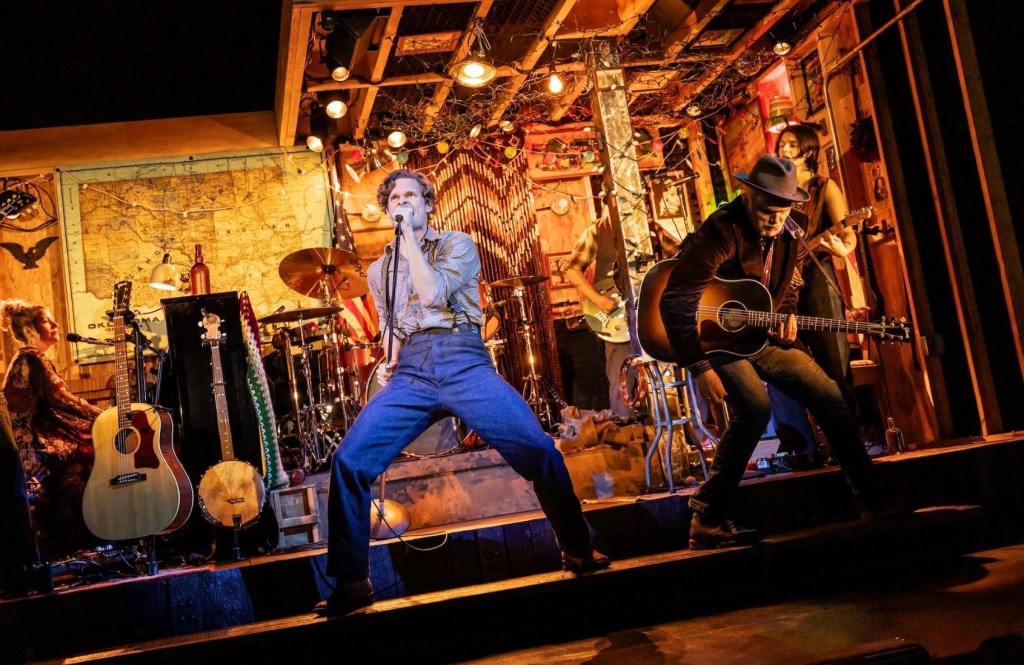
The excellent unit set, by Derek McLane, finds the vintage resort adorned with an arced ceiling, a wood-paneled floor, a small bar along the left wall, Austrian curtains along the upstage wall, a small lounge situated in the stage-left wing, and a staircase, leading to the street, situated in the stage-right wing. It emits the fragrant aroma of a storied past, and the absence of video, projections, elevators, turntables, and tracks is thoroughly refreshing. The absence of concert-mic headgear is similarly refreshing, but the sound design, by Dan Moses Schreier, suffers from the occasional imbalance, when the musicians and hoofers drown out the voices. The costumes, by Emilio Sosa, are quite fine, and the wigs, by J. Jared Janas, are outstanding.
Myles Frost, as Joey, is sensational. Awa Sal Secka, as Linda, is sensational. And Angela Hall, as Lucille, is sensational. Samantha Massell, as Vera, is not, and neither is Kevin Cahoon, as Melvin. Meanwhile, one of the hoofers is white, and one of the musicians is white, and one wonders how such casting supports the story and the specific lines of dialogue contained therein.
Chez Joey was previously seen, not by me, at New York City Center in 2023, prior to shrewdly adopting a new name. It is being produced commercially by Jeffrey Richards, and it has, at present, several advantages, but it needs work, if it is to arrive in New York as the blazingly fine affair it might. Here, to that end, is a punch list that the creative team might consider moving forward.
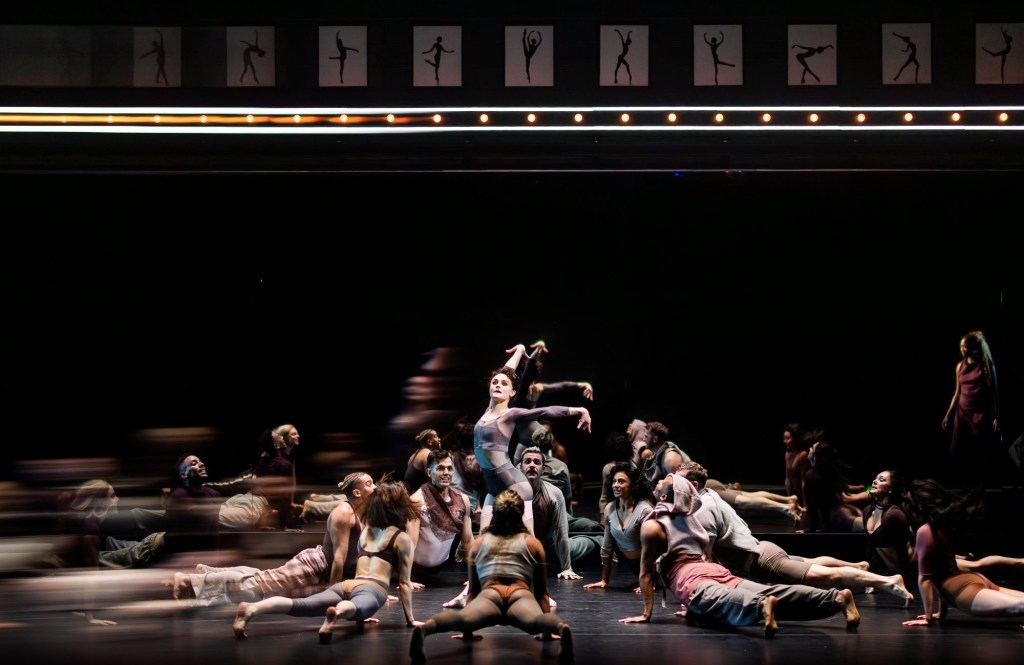
• The ballet, of sorts, does not work. It occurs toward the top of the second act, immediately after Joey informs Linda that her services are no longer desired, and immediately prior to Vera and Joey’s argument on the afternoon of opening night; and it fails to connect the dots, eating up stage time and stalling the story with what would appear to be an exploration of the central figure’s psyche, his sound, his truth, dipping heavily into his roots. Plus, it is scattershot, and so is the rehearsal into which it segues. One wonders why the creative team does not create an intricate, extended action sequence, for such a dynamic display might further distinguish the show’s composition, cover several narrative bases, and tackle, in an efficient and theatrical fashion, some of the dramaturgical beats that are currently missing in the musical, at large, and at the top of act two, in particular. Perhaps, in such a sequence, Joey works out new arrangements with the musicians. Perhaps he works out new routines with the girls, and the hoofers. Perhaps he works out a solo routine. Perhaps he works out his sound. Perhaps he has an exchange with Lucille, revealing their evolving relationship, given Lucille still works at the club even after having been demoted and double-crossed. (Her current reentrance, carrying a chandelier, is wasteful.) Perhaps he has a couple of exchanges with Vera, revealing their evolving relationship, with discussions of repertoire and decor, paving the way for their subsequent fight. (No explanation is currently given for Vera’s sudden aversion to Joey’s musical approach – which has not changed since she met him; if the team intends for Joey to explore something new, presumably more overtly connected to or reflective of his roots, the execution needs to be more clearly defined.) Perhaps he has an exchange with Melvin, revealing their backstory, and their evolving relationship. (Melvin is currently a convenient character with little to do.) Perhaps the club physically transitions from Lucille’s to Chez Joey. (This transition already exists, though unintegrated, and it is, independently, tasteful.) Regardless, the moment should be filled with something that drives story and character and relationships, connecting the dots with style and specificity and interest. And any lyric voicing a character’s thought should be dropped.
• Chez Joey has a number of wrinkles with regard to continuity of plot and motivation of characters, beyond those referenced above. Linda, for instance, has no moment at the end of the first act when Joey leaves with Vera, and her four-line solo in “Take Him” does not effectively serve as such. Why is Linda reduced to singing in a burlesque house, if her voice is, as we are told, so remarkable? How can “My Funny Valentine” be Joey’s mother’s favorite song, if Joey’s mother died when he was 13, and the song was written three years ago? (Hart and Rodgers are invoked, by name, in dialogue, so LaGravenese cannot pretend that his characters are living in a reality different than our own.) When and why does Melvin tell Joey about Vera, and was Joey looking for a benefactor? Does he, or anyone, feel a sense of urgency due to the financial difficulties of the club, and its threat of extinction? Has Joey looked for a benefactor in the past? Why, on the afternoon of the reopening, does Melvin warn Joey about wasting Vera’s husband’s money, if Vera got a divorce one week ago? Why does Vera sell the building to Lucille for $1? And why does she deliberately mislead Joey about the sale of the building, telling him, in no uncertain terms, that his club is closing after one night? Especially when she ends the respective scene with a genuine inquiry into his wellbeing. Etc. Etc. Etc. LaGravenese & Co. have some ironing to do if the musical is going to click, emphatically.
• “I Wish I Were in Love Again,” “This Can’t Be Love,” and “Where or When” serve as nightclub numbers, and they are, at present, merely adequate, failing to generate any substantial payoff, or, in the case of “This Can’t Be Love,” to set the club ablaze like Lucille promises it will in her introduction. The lyrics and music, of each, do not seem to be a natural fit for the respective character(s), and the lyrics and music, of each, are, to an extent, at odds with what would seem to be the team’s desired temperature for the respective moment. Not one of the three songs necessarily holds up the show, but neither does any one of them stop it. Or elevate it. The team would be well advised to replace – or, at minimum, rearrange – all three.
• The routine has a slight imbalance and repetitiveness – specifically with regard to the arrangements and their associated devices. To wit: a couple of solos begin as ballads, before receiving a pronounced tempo bump; “Lover” and “Where or When” culminate in a similar manner, with raucous musicality and raucous activity, despite being slotted back-to-back; and the only two numbers to employ scatting are similarly slotted back-to-back. While these are relatively minor points, the shaping of song and the devices employed in the shaping of song are the sort of details that separate a distinctive, roof-raising affair from a pleasant or passable one, and they are the sort of details that are especially noticeable in a project like Chez Joey, because most of the songs have the same circumstances: performance. The team would be well advised to amp-up the individuality of the arrangements, song-to-song, and to explore additional devices. A call and response between voice and saxophone, for instance, might be fantastic. It is hinted at in “I Wish I Were in Love Again,” but it fails to develop into a complete thought.
• “That Terrific Rainbow,” a showpiece, would benefit from a more pronounced theatrical shape. It is, at present, one-note, with the dynamite lyric getting lost in the shuffle. (Hart was a generally sloppy craftsman, and generally ineffective at voicing the thoughts of specific characters within a specific moment as part of a continuous narrative unfolding on the stage, but his lyrics tend to be awash in some combination of wit, sex, satire, and sophistication, and, when they stand alone, whether designed to or not, they usually offer something to savor.) Plus, the color-coded lighting, by Adam Honoré, is terribly obvious and unremarkable, as the lighting is almost throughout the show, relying heavily on down specials and stone gobos. But Honoré must receive credit for the snap transition toward the top of act two; and the general mood is acceptably smokey.
• “I Didn’t Know What Time It Was,” a showpiece, would similarly benefit from a more pronounced theatrical shape. The number ignites the romance between Joey and Vera, and Joey should almost certainly hold the stage by himself a touch longer at the top, before the chorus girls gather around him. This would allow the connection between Joey and Vera to better establish, fueled in part by Joey’s erotic playfulness, and it would allow the song to progress, to grow.
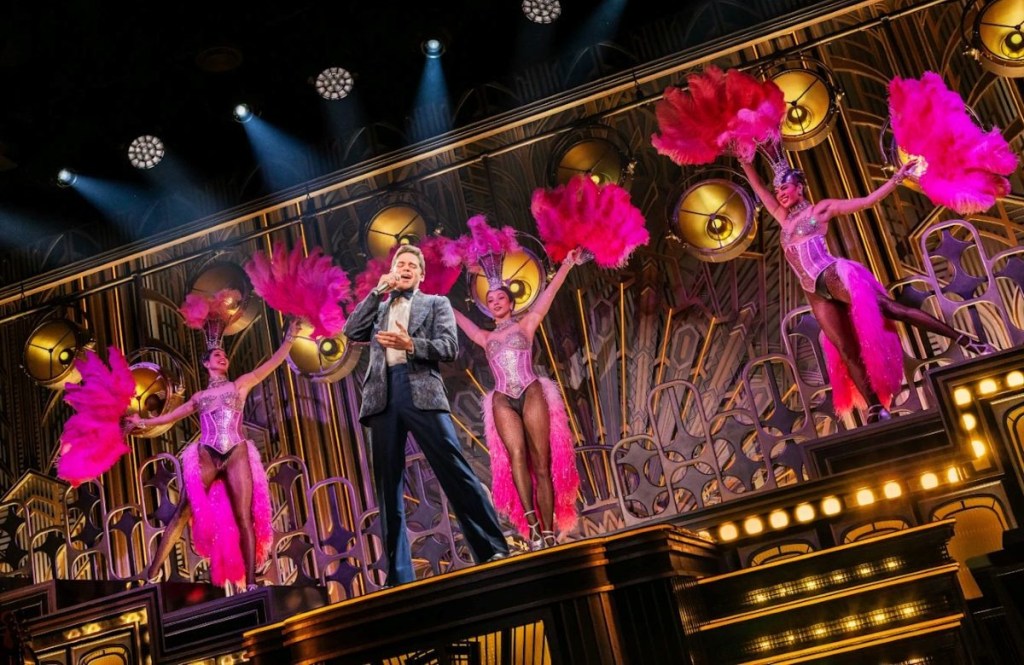
• “The Lady is a Tramp,” a showpiece, would benefit, as well, from a more pronounced theatrical shape, and, while some may understandably take issue with the team’s aggressive approach to the number, especially to the term “tramp,” the number has a delicious playfulness (at the expense of the lyric, a common theme in Chez Joey, found especially in the heavily rhythmic arrangements, like those of “There’s a Small Hotel”). Indeed, Glover has, in his choreography, taken playfulness to the limit, with seemingly maniacal glee, and he will surely see an even greater payoff when his playful numbers are more meticulously, theatrically sculpted. And mention must be made of the fine lead-in to “The Lady is a Tramp.” It finds Joey shouting, “Number nine,” and the chorus girls playfully bitching and stretching as they hastily prepare for their workout. These are the sort of seemingly spontaneous moments that make the world of Chez Joey so special.
• The first evident passage of time occurs roughly one-third of the way through the first act, after “That Terrific Rainbow,” and it might be more distinctive and clearly delineated. So might the second passage of time.
• “My Funny Valentine” makes for a nice moment between Linda and Joey, but it has a rather abrupt, nondefinitive ending. Perhaps tacking on a turnaround or building an extension will result in the song earning a greater payoff, and making a definitive statement.
• Most of the songs are, smartly, employed as songs, but six are employed as thoughts, and they are largely ineffective, succumbing to the limitations of the lyricist. “I Could Write a Book” might easily be repositioned as song, and it should be repositioned as song, with Joey roping in the musicians, perhaps here, too, tossing out some repertoire number. “Take Him” resides in limbo, which has the potential to work, but Linda should be eliminated from the number, because her four-line solo takes the number out of limbo and into the realm of thought. And the ending should be significantly stronger than the ladies casually saying, “Yeah, girl,” tossing their hands in the air, walking upstage, and essentially throwing away the number. “I Like to Recognize the Tune,” led by Melvin, should almost certainly be dropped. The lyric leading into and out of the ballet should similarly be dropped (along with the ballet). “This Funny World” is not effective, and I have, at present, no thoughts on how it might be made so. And “What is a Man?” is a conundrum. The lyric is passable as an inner monologue, but the song deviates from the musical’s established language of song – which is to say that it is the first overt thought number, slotted two-thirds of the way through the first act, and it is sung by an individual, Vera, unassociated with the club, and outside of the club. Plus, the top of the song, at present, leaves no room for the lyrical thought to develop. And one must further consider that the musicians playing for Vera are onstage – in the club. Perhaps Vera is listening to the radio and takes up the tune. Perhaps someone in the club sings the number. Perhaps it is allowed more of an intro, prior to the vocal entrance. Perhaps it must be cut for the sake of the musical’s completeness. Or…
• The manner in which “Bewitched, Bothered, and Bewildered” has been deployed is excellent, with Vera prompted, by Joey, to sing, during their postcoital exchange. LaGravenese has positioned Joey as a connoisseur of Sound, of Sonic Truth, with a gift for cultivating a vibrant, soulful musicality, in himself and those around him, and he is occasionally seen, throughout the show, arranging a number in real time. Such is the case with “Bewitched, Bothered, and Bewildered,” though the arrangement is, sadly, nondefinitive. Incidentally, one wonders if this should not be the first song we hear Vera sing, thereby reinforcing Joey as cultivator and connoisseur, orchestrator of the proceedings. Relatedly, the manner in which the reprise of “Bewitched, Bothered, and Bewildered” has been deployed is similarly excellent.
• Vera is a fairly well drawn character, notwithstanding the wrinkles in motivation, but one wonders if she has additional colors that LaGravenese has not revealed. She is, for instance, the daughter of a gambler, who lost everything and left his family destitute. Joey says she is “pure street,” but is the “street” ever manifested in her persona?
• The final moment of the musical is incredibly weak. It finds Joey dancing upstage right and off, with Linda having just done the same. Chez Joey has earned a distinctive ending. The team should give it one. Even if that ending is not of the full-company, slam-bang sort. Perhaps Joey simply stays on stage.
• Linda would almost certainly benefit from a new last name. English, pulled from Pal Joey, does not roll off the tongue, nor does it feel appropriate to the character, as she has been reconceived for this new musical. And anyone dead set on seeing a revival of Pal Joey, which Chez Joey is not, might consider that Hart and Rodgers themselves had a history of creating new musicals based on existing musicals. (See: Peggy-Ann, 1926.)
Correction: An earlier version of this article listed the title of “This Funny World” as “This Little World.”
Note: A reappraisal of Chez Joey was published on March 22, 2026.
Photo of a scene from Chez Joey by Matthew Murphy.
2 responses
-
Glad you liked it. I saw the Encores! version and I thought almost everything about it was terrible. I felt the worst aspect were all the arrangements which totally reworked the songs and removed their original specificity. That aspect reminded me of the musical version of 42nd Street which similarly treated the songs as one big goulash of sound, ignoring the specific qualities of each song.
LikeLike
-
Indeed, I heard very poor things about PAL JOEY at New York City Center in 2023. I did not see it, however, so I cannot comment. My understanding is that CHEZ JOEY is a significant departure from the 2023 offering. And, to note, Daryl Waters and Daniel Koa Beaty are among those no longer involved with the project. Several numbers have been dropped, shifted, and presumably rearranged. (One can compare song lists in the respective programs.) And I believe one character has been dropped. (?) I would surely detail the changes, had I seen the prior iteration, but alas… In any case, CHEZ JOEY, a new musical, is a happy surprise, with promise, and much work to be done.
LikeLike
-




















 The Musical Theatre Report
Leave a comment