A journal for industry and audiences covering the past, present, and future of the musical stage.
The Spring Issue: Five Musicals, Four Directors, Two Attacks on the Golden Age, and More
Today is Sunday, and this is a special spring issue of the Report. It features five musicals beyond the bounds of Broadway, four directors with much to prove, two attacks on the Golden Age, one song circle, 3Penny Opera, the return of Mexodus, and the rest of the lot. Plus, three of the Report’s regular sections: a quote of the week, select press announcements from the past week, and a list of the upcoming week’s previews and openings.
QUOTE OF THE WEEK
“The entire production will be capitalized at three hundred thousand dollars. Individual units will be six thousand dollars. We feel that this show will prove to be a very sound investment.” -A character modeled after Harold Prince, from the second scene of Say, Darling (1958)
FIVE MUSICALS BEYOND THE BOUNDS OF BROADWAY
The spring season is upon us, and the musicals set to open between January and April of this year comprise an eclectic, if not immediately exciting, lot. Here, in alphabetical order, are five of the most intriguing, on paper, each of which will open beyond the bounds of Broadway.
Chez Joey
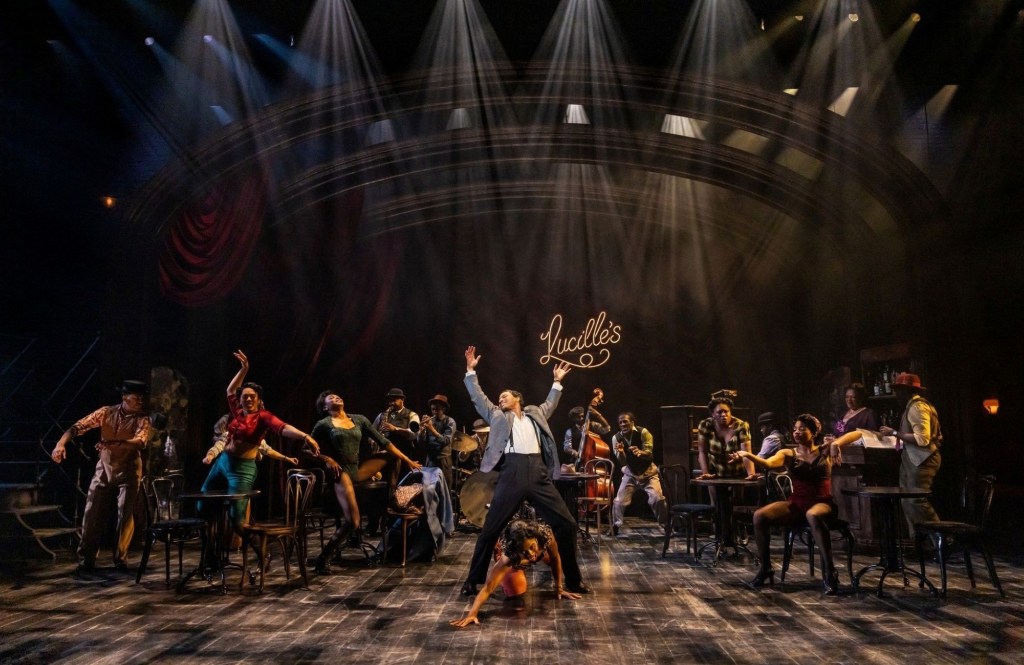
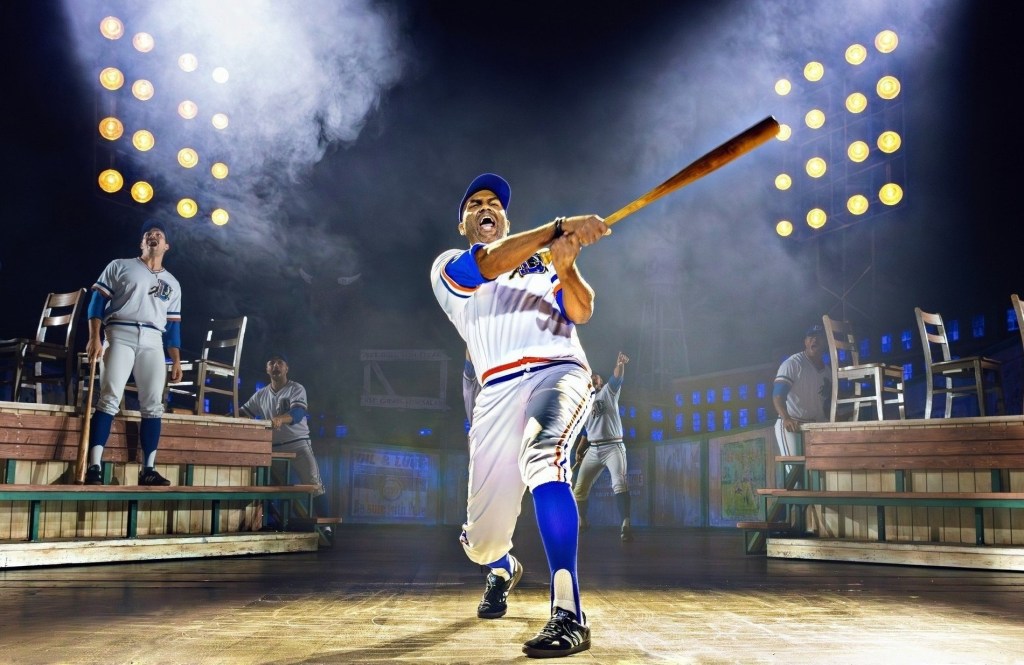
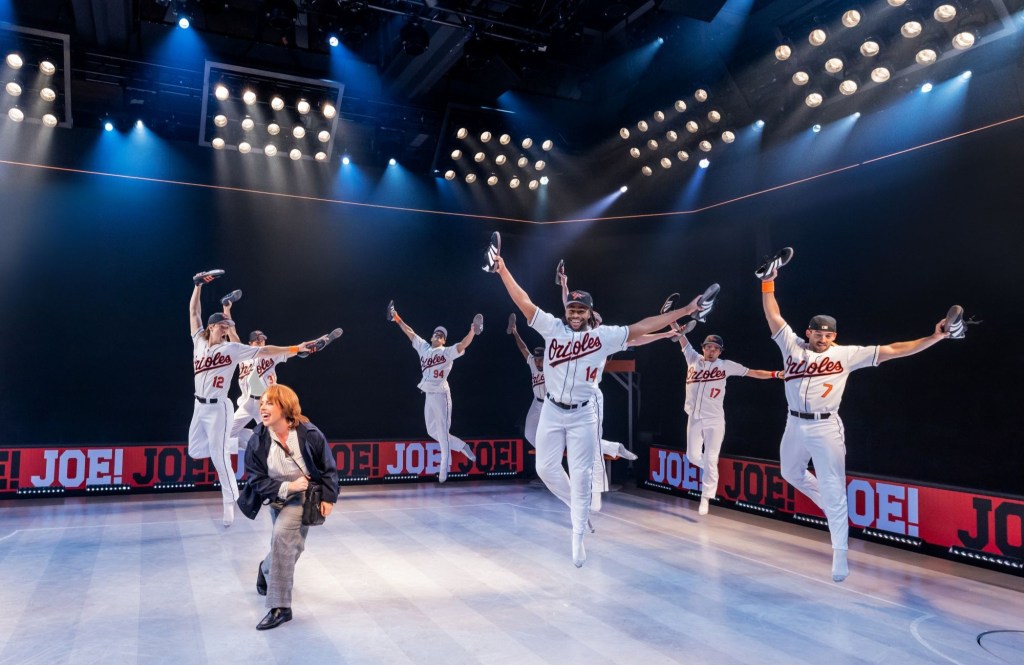
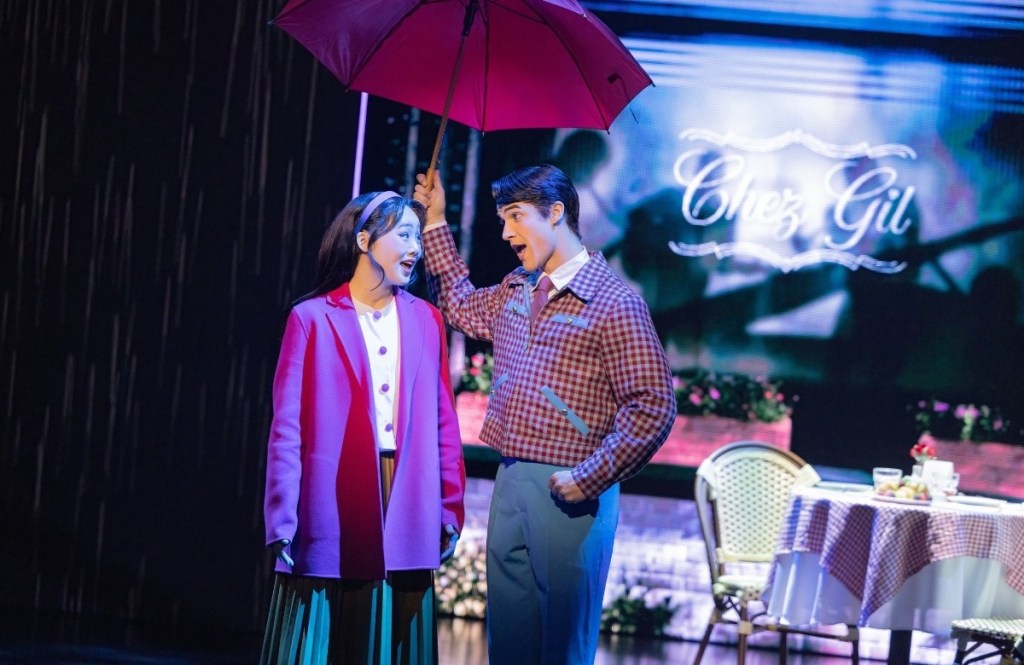
This free adaptation of the 1940 musical Pal Joey begins an out-of-town engagement at Arena Stage on Friday. It has a book by Richard LaGravenese and direction by Savion Glover and Tony Goldwyn, and it features the songs of Lorenz Hart and Richard Rodgers, including several written for other shows. Chez Joey has potent source material and the potential to be a scintillating stage show – complete, distinctive, and dramatically effective – but the extent to which the musical makes the grade will hinge, in part, upon how the creative team has decided to use the songs, because the songs are almost certain to be ineffective as extensions of dialogue. (The ineffectiveness of the original property is not exclusively the fault of the book!) Plus, using the songs strictly as introspective soliloquys and performance pieces might have the benefit of contributing to the realization of a profitably dynamic composition.
Chez Joey was previously seen, not by me, at New York City Center in 2023, prior to shrewdly acquiring a new name. I greatly look forward to taking in this latest iteration of the piece, which features among its principal cast Washington, DC favorite Awa Sal Secka. And a word must be said for the director and producer of the original property, George Abbott, whose impact on the development of the American musical cannot be overemphasized, though it often goes unacknowledged or undiscussed. In fact, Chez Joey will be the second musical associated with Abbott to play a pre-Broadway engagement at Arena Stage this season.
Complications in Sue
This new piece, based on an original idea by Justin Vivian Bond, traces one woman’s existence across ten decades, “through life and death,” and each of the ten decades features music by a different composer. Complications in Sue is being billed as an opera, and it is, on paper, incredibly exciting – though the 100-minute run-time concerns me, given the ground being covered; and the prospect of pretentiousness is palpably present; and the question of cohesion looms large. Not to mention the question of drama. The piece has a libretto by Michael R. Jackson and music by Andy Akiho, Alistair Coleman, Nathalie Joachim, Missy Mazzoli, Nico Muhly, Rene Orth, Cécile McLorin Salvant, Kamala Sankaram, Dan Schlosberg, and Errollyn Wallen, and it will play four performances, beginning February 4, at the Academy of Music in Philadelphia under the auspices of Opera Philadelphia. Bond leads the cast as Sue, and Raja Feather Kelly and Zack Winokur direct.
Little Miss Perfect
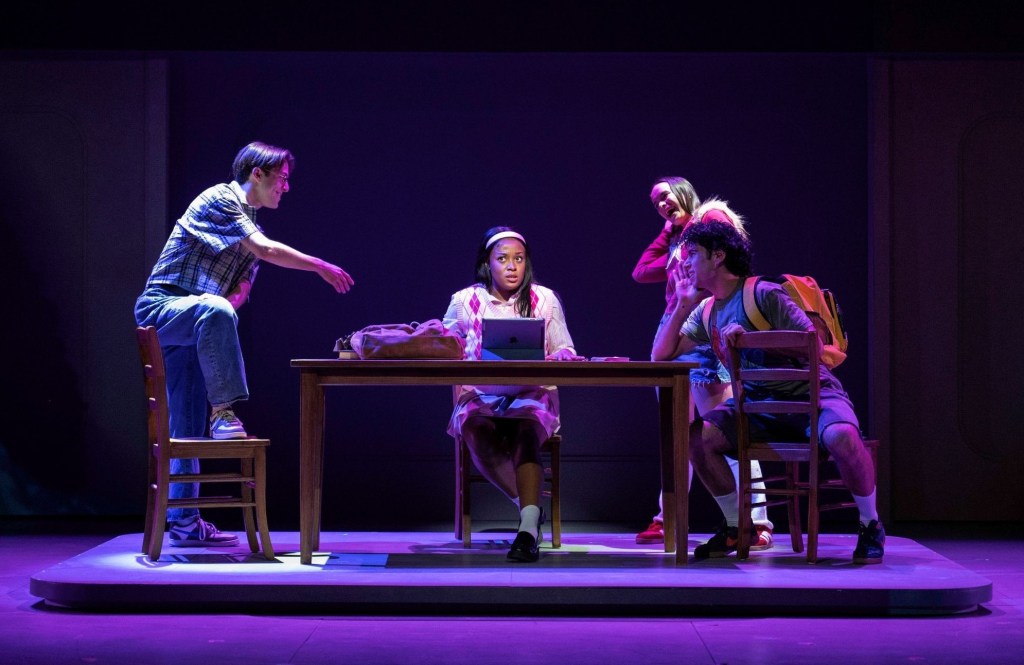
This new musical centers around a closeted Black high-school senior who longs to get out of her small, predominantly white Midwestern town. The piece has a book, lyrics, and music by Joriah Kwamé and direction by Zhailon Levingston, and it gives the impression of being an exuberant affair. Little Miss Perfect will play a world premiere engagement at Olney Theatre Center this spring, and I hope it reveals an invigorating combination of freshness and skill.
Music City
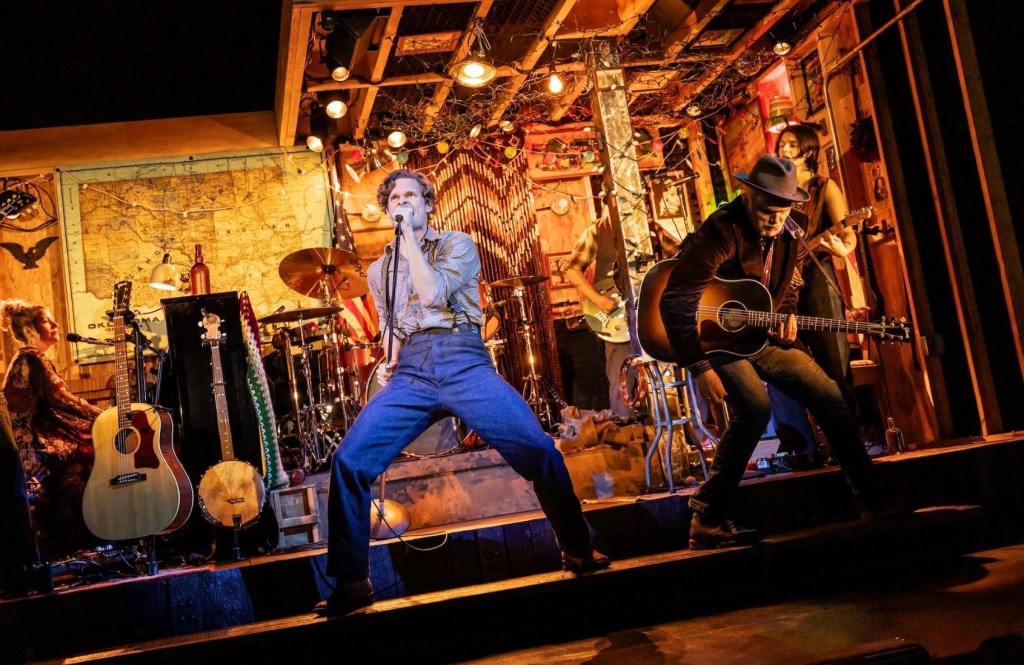
This new musical, by Peter Zinn and JT Harding, might be sensational. It centers around five country music artists at different stages of their respective careers, and it has an incredibly smart, if not unfamiliar, narrative conceit, whereby the (mostly) preexisting songs, a collection of topflight radio edits with untheatrical lyrics, are employed as actual songs, performed, within the context of the story, by the singer-songwriters, and often at the Wicked Tickle, an ever-present Nashville bar with an open mic. The songs have thus been effectively relieved from having to bear the inherent burden of songs written for the stage, particularly from a standpoint of lyric. But most of the songs nonetheless carry real dramatic weight – specifically amplifying and deepening the respective characters and their relationships – and the songs’ effectiveness onstage, within the context of the story, is a direct result of the shrewd manner in which they are being employed; the moment-specific lyrical themes; and the vibrancy and soulfulness of the recording-studio writing, disregarding the unsteady technical craft. (“For This Town,” “Rewind,” and “Smile” are knockouts, and “Somewhere with You,” among others, might be.)
Music City played a four-month engagement at Bedlam’s West End Theatre last winter, and it had, in addition to tremendous promise, numerous issues, which caused the piece to be incomplete and frequently ineffective, and not the least of which was the nondeliberate, unproductive deviation from its own incredibly smart conceit. This spring, the musical will take up residence at a west-side venue disguised as a Nashville honky-tonk, and one hopes that the authors and their director, Eric Tucker, have, in the interim, made the necessary adjustments to the material and the staging. If not, they have missed a major opportunity, and their musical will miss becoming a major affair. Nonetheless, the performance of Stephen Michael Spencer will be something to savor.
Safety Not Guaranteed
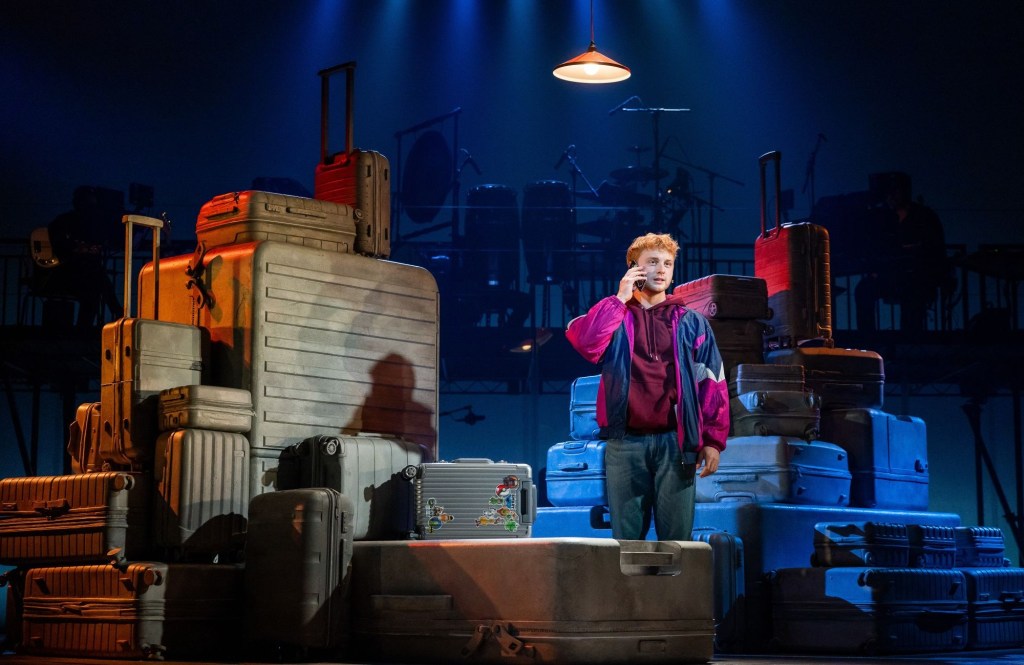
This new musical, based on the 2012 film, has a book by Nick Blaemire, late of Soon, and lyrics and music by Ryan Miller, of Guster, and it, too, might be sensational. The musical follows three Seattle reporters investigating a man who has just placed a wanted ad looking for a companion for his trip back in time. (“Must bring your own weapons.”) But the musical is ultimately a story of love, loss, longing, and regret, of humanity and human connection, of time, and it is blessed with a collection of complex, idiosyncratic characters and an involving, multistrand plot.
Safety Not Guaranteed premiered in 2024 as part of the Next Wave series at the Brooklyn Academy of Music, and it was, at the time, an exciting, enlivening affair, with work still to be done, especially in terms of the final 20 minutes and the lyrics and arrangements almost throughout. The latest iteration of the piece heads to Signature Theatre in Virginia this March in an entirely new production, with Oliver Butler replacing the show’s original director, Lee Sunday Evans, and with Bill Sherman joining the team as music supervisor. I greatly look forward to revisiting the piece, and I hope it has been carried closer to completion, or perhaps even all the way there.
FOUR DIRECTORS WITH MUCH TO PROVE
Michael Arden, Christopher Gattelli, Danny Mefford, and Sam Pinkleton must be acknowledged as hot hands, though their work to date has not exactly warranted such distinction. Thus, they have, in my view, much to prove, and will hopefully do so with their spring productions.
Arden, in particular, is a major talent with a knack for creating tasteful, individual, visually striking onstage worlds. He is, in essence, a director of production, and his work, in that line, is marked by intelligence and ingenuity. But Arden has shown little ability – or perhaps little desire – to stage the story, failing to precisely synchronize the multiple elements of the musical in the service of the same, and to meticulously calibrate the multiple elements toward the realization of a consistently charged, cohesive whole – specifically setting into motion actors, set pieces, props, and projections without regard for the attendant material, especially the text, whether spoken or sung. (His production of My Fair Lady at Bay Street saw a pretentious concept imposed upon the existing property.)
This spring, Arden returns to Broadway with The Lost Boys, based on the 1987 film. It has a book by Chris Hoch and David Hornsby, lyrics and music by the Rescues, and music supervision by Ethan Popp, and it registers, on paper, as highly suspect. But one hopes for the best, and for a staging that, at all times, serves the story, revealing a deliberate, rigorous union of material and production. Pay attention, for instance, to the use of projections, because the audience should never be required, without a specific purpose, to split its focus, with two narrative tools operating both separately and simultaneously, such as an image, delivering one piece of information, being projected on top of a line or lyric, delivering a different piece of information. Pay attention to the physical action and physical activity occurring during the lines and lyrics, because the lines and lyrics, in nearly every musical made for the theatrical stage, are, among other things, distinguishing the story, including character and plot, and the lines and lyrics should be supported, even enhanced by the physical action and physical activity. Pay attention to the movement from moment to moment, from incident to incident, from scene to scene, because the narrative energy should not drop or even dip during such moments. And pay attention to the buttons, bumps, and fades, to the tops and bottoms of scenes, and to the reveals, for every associated element should be working in tandem toward the same end, constantly propelling forward the narrative, and, in turn, the show.
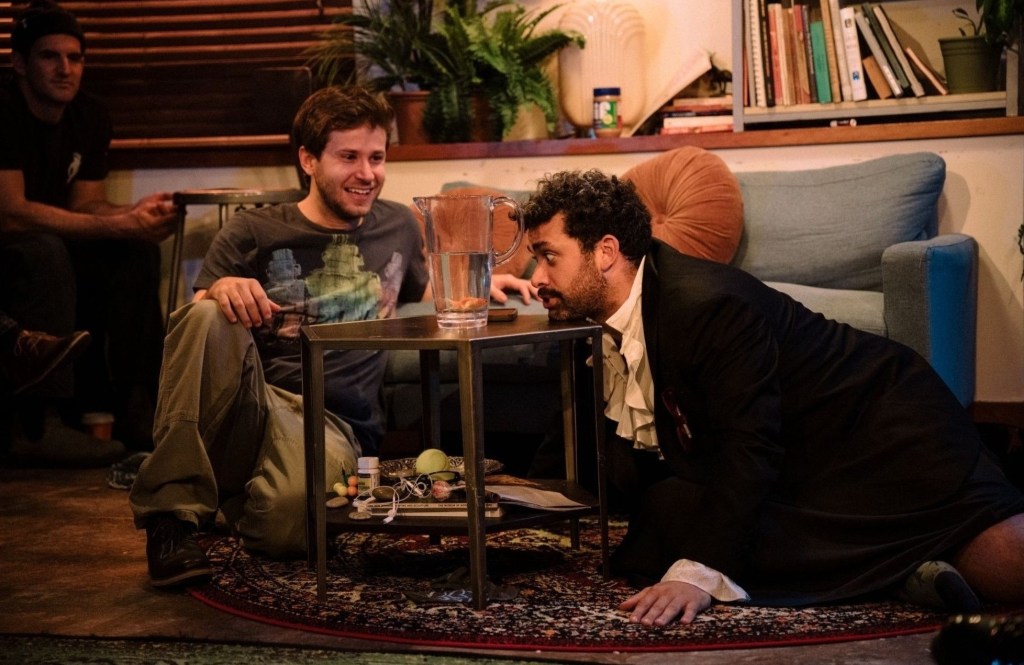
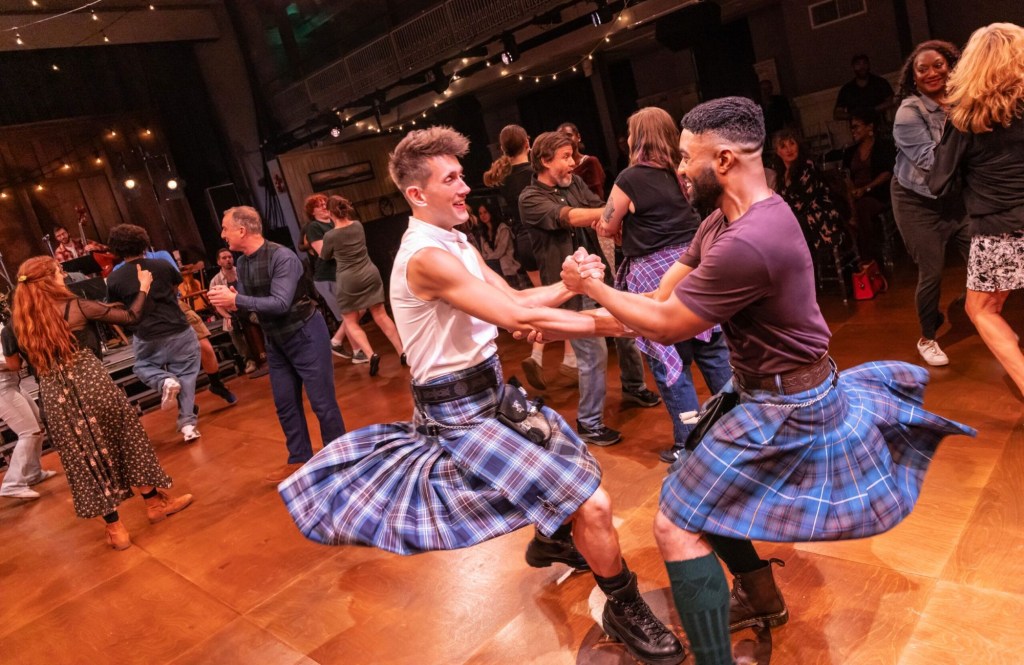
Pinkleton, too, has a profitable inclination toward individual worlds, and his musical projects, like Ceilidh, tend to carry, on paper, considerable interest. But he must learn to endow his staging with crispness and precision and detail and definition and cohesion and theatricality, especially in terms of a clear shape and dramatic development to each of the musical numbers, and to the piece as a whole. And a splash of invention would not hurt.
A revival of the 1975 musical The Rocky Horror Show heads to Studio 54 this spring, and it would seem to be an ideal project for Pinkleton, a stylish affair in which the director might luxuriate, and reveal the true extent of his talent. Let us hope that the production – regardless of the quality of the material – is sharp and dynamic, filled with rhyme and reason and dripping with distinction. The presence of dots on the design team is surely promising.
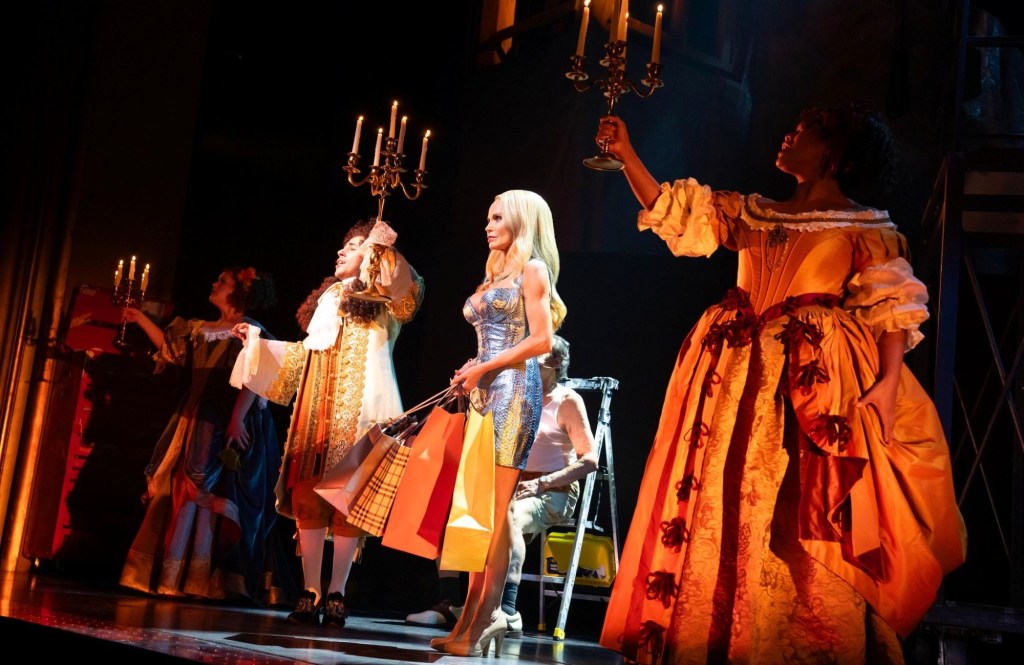
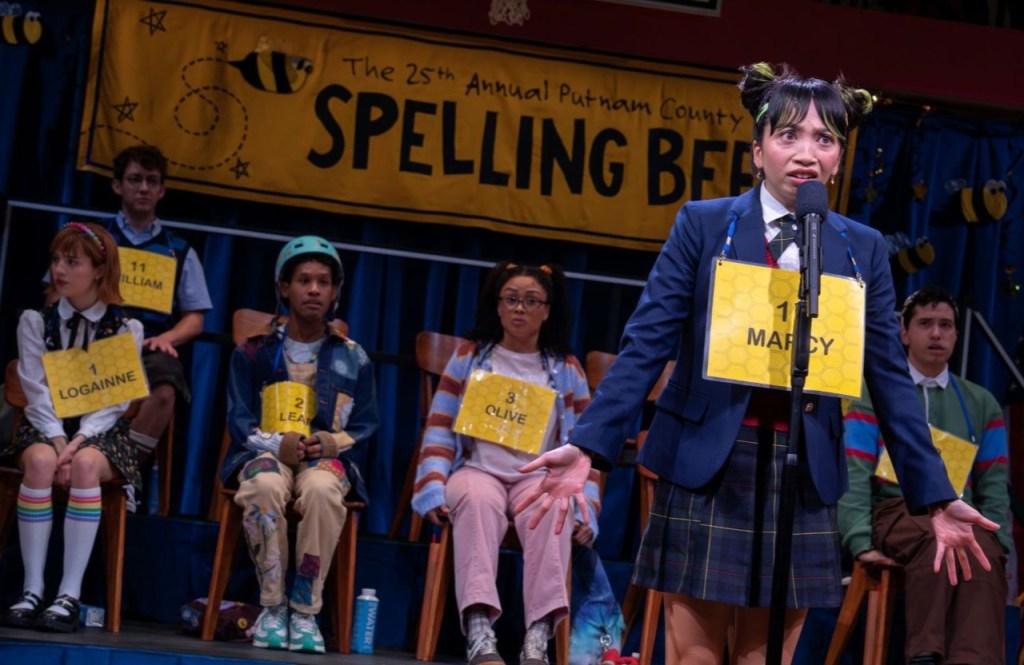
Gattelli and Mefford, meanwhile, seem to have become the crown princes of musical comedy, despite their work, to date, revealing little in the way of comic chops. Or a feeling for the musical stage. And this includes their work on the current productions of Death Becomes Her and The 25th Annual Putnam County Spelling Bee. But I continue to believe, perhaps foolishly, that every artist is capable of excellence, and I hope that Gattelli and Mefford’s upcoming productions of Schmigadoon! and Bigfoot! will be filled with expertly timed, dramatically motivated physical comedy, rooted in situation and character; expertly timed, dramatically motivated laugh lines, rooted in situation and character; finely etched performances; neatly sculpted scenes and songs; and crispness and escalation and freshness and attack. Plus, a point of view, a distinct personality, a sense of ingenuity and purposeful play, and the several other things crucial to the completeness of a musical and the effectiveness of a musical comedy.
TWO ATTACKS ON THE GOLDEN AGE
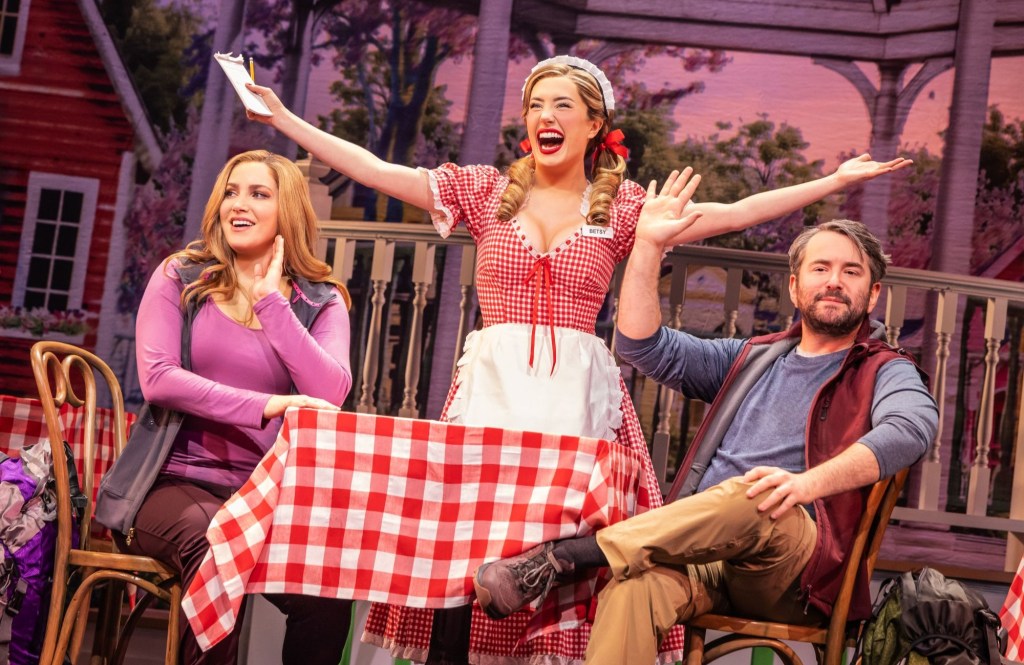
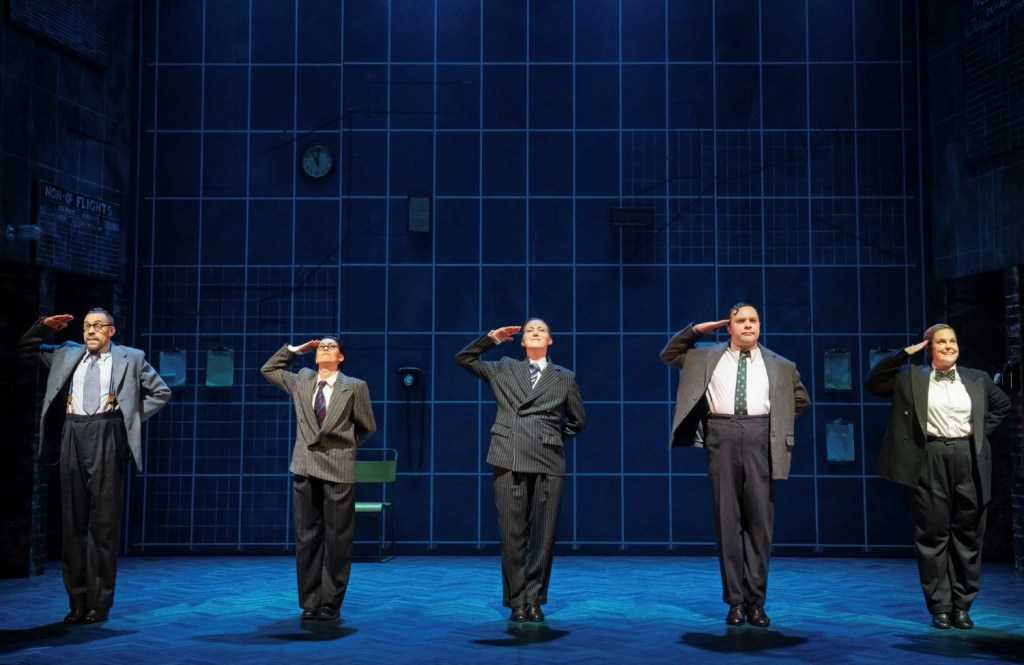
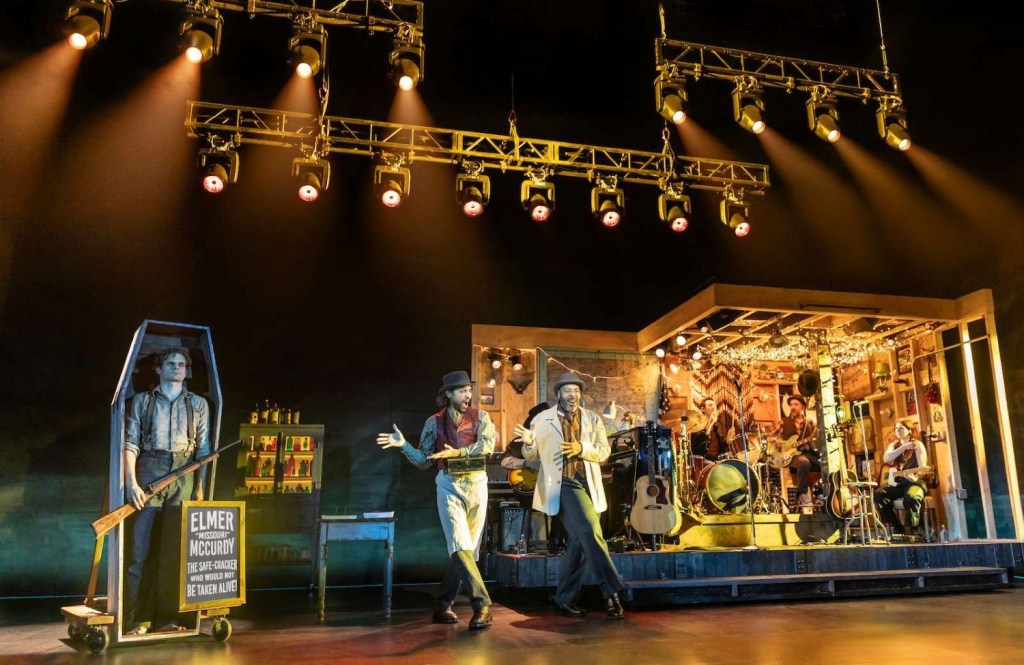
The “Golden Age,” from a standpoint of the musical stage, is a popular term for the middle of the 20th century, and the middle of the 20th century, from a standpoint of the musical stage, is a popular target for attacks. This spring will see two such attacks. No Singing in the Navy, in particular, is a three-actor, one-piano affair that follows “three silly sailors” on their 24-hour shore leave, pegging the mid-century musical stage as “problematic,” and purporting to ‘explode’ the myth of American innocence. Schmigadoon!, meanwhile, is a “love letter” to the period. It finds two New York doctors getting trapped in ‘a magical town that is a Golden Age musical come to life.’
And here is the problem: both pieces have been built upon false notions. The middle of the 20th century was not, for instance, defined by a single sound, a single setting, a single artist, or a single show. Nor was it defined by a single story, a single structure, or a single style of show. Nor was it unique or uniform in its depiction of innocence, optimism, or social customs and social sensibilities, culled from the American consciousness.
But these popular misperceptions nonetheless persist, monopolizing the conversation, likely because almost no one working in the industry and or its pipelines, for some time now, has a robust understanding – practical or historical – of the multitude of activity, incredibly diverse and exceedingly influential, that took place on the musical stage – i.e. vaudeville, burlesque, nightclubs, and legit – prior to that erroneously presumed “Golden Age” initiator, Oklahoma! (1943), perhaps apart from anecdotal items like Lorenz Hart, Ethel Merman, Porgy and Bess (1935), and Show Boat (1927), undoubtedly devoid of context; or, relatedly, an understanding – robust or otherwise – of the documented movement, begun about the 1910s and brought to a close in the 1960s, to better the art of musical storytelling, or an understanding of the standards of excellence in musical storytelling simultaneously established – not to be confused with the nonexistent rules of musical theatre. As Brooks Atkinson observed in the early 1960s, after a career spanning nearly four decades, “The musical theatre has come up to a mature age.”
Indeed, the middle of the 20th century, from a standpoint of the musical stage, has only one unique characteristic: the maturation of an art form. But that characteristic, admittedly complex, seems to invariably go undiscussed, unexplored, even perhaps unacknowledged, despite the ongoing creative implications associated therewith, being carelessly tossed aside in favor of easily digestible, historically inaccurate soundbites, suggested by certain aspects of certain shows, from the period, among the many shows, from the period, that endure – enduring in large part as a result, ironically, of the form’s maturation. The “Golden Age” is thus a convenient target, being filled with familiar shows, and our collective failure or unwillingness to discuss, to acknowledge, to understand the period’s only unique characteristic continues to be, one may reasonably presume, largely detrimental to the development of contemporary artists and the creation of new works, at the very least limiting one’s frame of reference and corresponding toolbelt.
And I should like to reiterate, as a matter of context and completeness, that not every musical written and produced in the middle of the 20th century is an artistic watershed. Nor does every musical written and produced in the middle of the 20th century reside in the top drawer, even without taking into account its story. (Story and craft are two different things.) Follow the Girls (1944), for instance, is a rudimentary revel, set against the backdrop of World War II, and filled with nautical nonsense involving sailors, strippers, imposters, and spies. It has a book by Guy Bolton, Eddie Davis, and Fred Thompson and a score by Milton Pascal, Dan Shapiro, and Philip Charig – which nonetheless contains one great personality piece with a few knockout phrases and a definite theatrical drive. (“I Wanna Get Married.”) Follow the Girls opened on Broadway the same year as On the Town (1944), which had a heap of modern, sophisticated material and a crackerjack creative team led by George Abbott, Jerome Robbins, Betty Comden, Adolph Green, and Leonard Bernstein, and Follow the Girls ran nearly twice as long. On the Town, incidentally, would seem to provide the basis for the first of this spring’s attacks.
No Singing in the Navy has a book, lyrics, and music by Milo Cramer and direction by Aysan Celik, and it will play a limited engagement at Playwrights Horizons. The piece is especially intriguing, on paper, and I hope that it will wind up being a smart, incisive lampoon: skillfully written, skillfully staged, and skillfully performed. Schmigadoon!, on the other hand, is almost certain to be a dour affair, if the Kennedy Center production is any indication. But Alex Brightman and Sara Chase gave winning performances in Washington, DC, and they will surely do so again, on Broadway.
ONE SONG CIRCLE
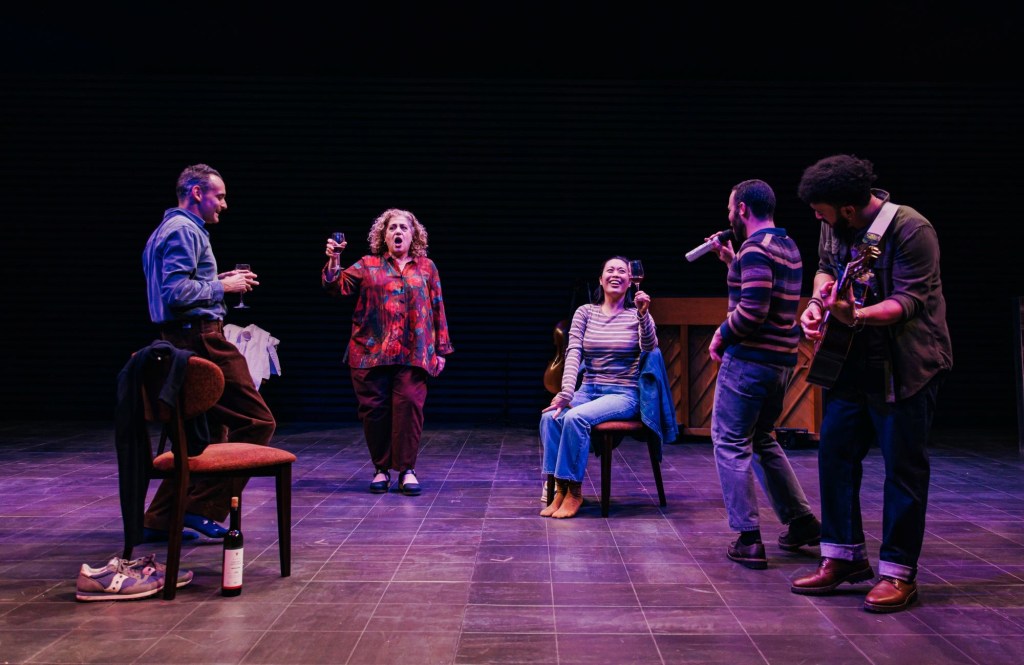
Night Side Songs, by Daniel and Patrick Lazour, commences an Off-Broadway engagement next month under the auspices of Lincoln Center Theater. It is an intimate exercise in story theatre, with five actors providing narration and playing multiple roles, and it centers around a 41-year-old woman battling cancer, intermingling chronological incidents, like her diagnosis, treatment, wedding, and relapse, with momentary flashbacks and historical interludes.
I encountered the piece twice last year – first, at Lincoln Center’s Clark Studio Theater as part of Under the Radar, and then, at Philadelphia Theatre Company – and I hope that the material, especially the book and lyrics, has been significantly improved in the months since its premiere engagements, because, while the piece is built upon a potent story, all the Lazours have put onstage, thus far, is an impersonal synopsis, largely devoid of drama, including the development and deepening of characters and relationships. And communal singing is not an inherent substitute for drama. Nor is it inherently theatrical. (Audience members are invited to sing certain sections of certain songs.)
But even if the material remains ineffective and mildly immature, the musical will have at least two things to appreciate: the stylish construct, with an intricate blending of narration, dialogue, side comments, and quick verbal baton tosses; and the skillful staging, by Taibi Magar, assuming Magar has once again situated the piece in a small, circular playing space, outlined with white chalk, and surrounded on three sides by audience seating; assuming she has once again sent her actors dashing about the playing space and through the two voms in the service of the story, with clarity, precision, and creativity, generating a sense of narrative propulsion in the process; and assuming she has once again effected a unity among the multiple narrators, and a clear introduction and demarcation of the multiple characters. Indeed, Magar’s staging of Night Side Songs is, strictly from a technical standpoint, quite exciting, though I hope she will better leverage the lighting in the Claire Tow, and Magar is a talent. She continues to sit high atop my watchlist, despite her recent out-of-town debacle.
3PENNY OPERA
George Abud has written a free adaptation of Bertolt Brecht and Kurt Weill’s Die Dreigroschenoper, set in a contemporary metropolis and centered around a collection of immigrants, whores, and crooked city officials, and though the Off-Brand Opera production closes a two-week engagement today, the piece must be accounted for in this survey of the season, because it is, as a matter of material, inspired and insane and insanely promising. Here, written with skill, relish, intelligence, and ingenuity, and studded with fresh ideas, steadily unfurled almost throughout, is a fantastically stylish affair, drenched in political and theatrical comment, seasoned with smoke and mirrors culled from a German rathskeller, and steeped – for days, for weeks, for months, for years – in vaudeville and burlesque, of the 1910s, 20s, and 30s. Joe E. Brown, Bobby Clark, Joe Cook, Olsen and Johnson, Shaw and Lee, Ed Wynn, and other “big-time” buffoons are surely smiling over the bang-bang, four-alarm sketchbook affair – which even contains, consciously or not, a monocled homage to Clark.
Abud has created, as a matter of material, a lacerating clown show that explodes with irony and satire and theatricality and interest. The dialogue is, on the whole, outstanding: smart, crackly, twisted, and playful, crafted with dynamics and rhythm and recurring motifs. The scene work has a general tendency toward escalation. The allusions to current events have a general tendency toward deftness and ease. The structural juxtaposition is exciting. The dynamic composition is close to divine. The frank, non-precious smashing of the fourth wall is delectable – a refreshing departure from the cheap, self-aware commentary so popular of late. The narrative world is vibrant and individual. And an intimate, philosophical piano duet is, like so many moments in the musical, near to terrific.
But 3Penny Opera, as a matter of material, needs considerable refinement, especially the opening, the transitions, the lyrics, the arrangements, the integration of projection, and the frequency of music and song. And the material, in turn, needs a crisp, electric staging, with actors who understand this specific, exhilarating style of entertainment. (See my review of the lousy Off-Brand Opera production.) 3Penny Opera, with the necessary refinements, will almost certainly be stratospheric, and I pray that the piece is given the opportunity to touch the stars (and flourish among them). In the meantime, let us savor what we can of the current script – which must be recorded as one of the most exciting scripts of the season.
THE RETURN OF MEXODUS
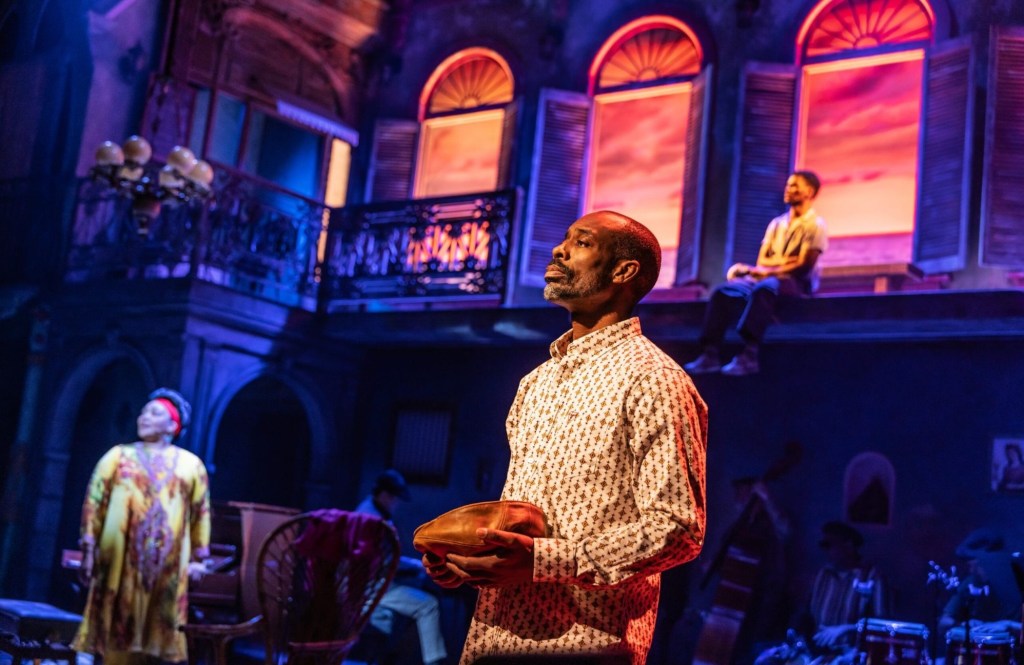
Mexodus, a new musical that employs live looping, recently closed an Off-Broadway engagement at the Minetta Lane Theatre, and it will not transfer to Broadway – at least not yet. Instead, it will move, laterally, to the Daryl Roth Theatre, and the producers, led by Ben Holtzman, Sammy Lopez, and Fiona Rudin, must be commended for the refreshing state of play. But they should have first suspended the piece for retooling.
Mexodus is written and performed by Brian Quijada and Nygel D. Robinson and directed by David Mendizábal, and it has much to appreciate. Quijada and Robinson have, for instance, fashioned a dynamic narrative world closely akin to a musical funhouse, adorned with hip-hop and Spanish guitar, in which all of the instrumentation – for the songs, the soundscape, and the ambient sounds – is produced live onstage in the playing of the show by the two talents, who employ a battery of musical instruments and industrial objects. The writing, especially in terms of the text, is often wonderfully intelligent, with clever, intricate wordplay, consonance, repetition, anaphora, internal rhyme, and multiple lyrical motifs that recur throughout the show. (The lyrics are, in essence, looped.) And Mendizábal has realized, with the assistance of scenic designer Riw Rakkulchon and lighting designer Mextly Couzin, a host of vibrant, theatrical stage pictures.
But Mexodus is not the explosive piece of theatre it might be. It is unfinished and unsteady, and it is not about the Underground Railroad that led south to Mexico. (See my review of the production.)
…AND THE REST OF THE LOT
About Time
This new songbook revue, by Richard Maltby, Jr. and David Shire, will set-up shop at the Marjorie S. Deane Little Theater on 64th Street for five weeks, beginning February 27. I do not have especially high hopes for the intimate affair, in part because songbook revues are extraordinarily difficult to make theatrical and dramatic and consistently engaging, consistently fresh, but Maltby and Shire are craft-oriented writers, and their latest parade may wind up being a happy surprise.
Beaches
This new musical, based on the 1985 novel, has been kicking around for more than a decade, and it has endured a revolving door of creatives. The piece finally arrives on Broadway this spring with a book by Iris Rainer Dart and Thom Thomas, lyrics by Dart, music by Mike Stoller, and direction by Matt Cowart and Lonny Price, and it gives the impression of a bomb – in part because lead producer Jennifer Maloney-Prezioso has booked it into the Majestic. (The recent production at Theatre Calgary had an onstage cast of 12.) Regardless, the orchestrations will almost certainly be snazzy, for they have been written by Charlie Rosen, and perhaps the musical will turn out to be snazzy as well. Even with a tag line like “A Love Story About Friendship.”
Cats: The Jellicle Ball
This revival of the 1982 musical moves to Broadway after previously having been seen, not by me, downtown. Cats is, strangely, a solid property. Even perhaps a cheeky, charming property. Its lyrics, lifted largely from T.S. Eliot’s original text, are, for the most part, literate and involving, and its music, an eclectic mix, is quite good – even if the melodic lines occasionally result in jagged, unnatural lyric scans. The original production, however, was dreadful, and the property has long felt, at least to me, like a contemporary take on a Music Box Revue or Hassard Short’s Ritz Revue, with no need for actors to be outfitted like literal cats. The new production, directed by Zhailon Levingston and Bill Rauch, seems to have a promising concept, inspired by Ballroom culture and complete with a runway, but does the concept fit snugly onto the existing material, leaving not a single wrinkle or a single hole?
Dear Everything
This climate-conscious “uprising” premiered, as Wild, at American Repertory Theater in 2021. Last year, it played one-night engagements in Atlanta, Miami, Los Angeles, Salt Lake City, and New York’s Terminal 5, and, on April 22, it will head to BAM’s Howard Gilman Opera House, with Jane Fonda serving as Narrator. Dear Everything centers around a small-town teenage girl who leads the fight to save a nearby forest. It is the work of V, Caroline Pennell, Justin Tranter, Eren Cannata, and Diane Paulus, and it would seem to hold considerable interest. I fear, however, that it is merely a concert masquerading as a musical.
Glory Ride
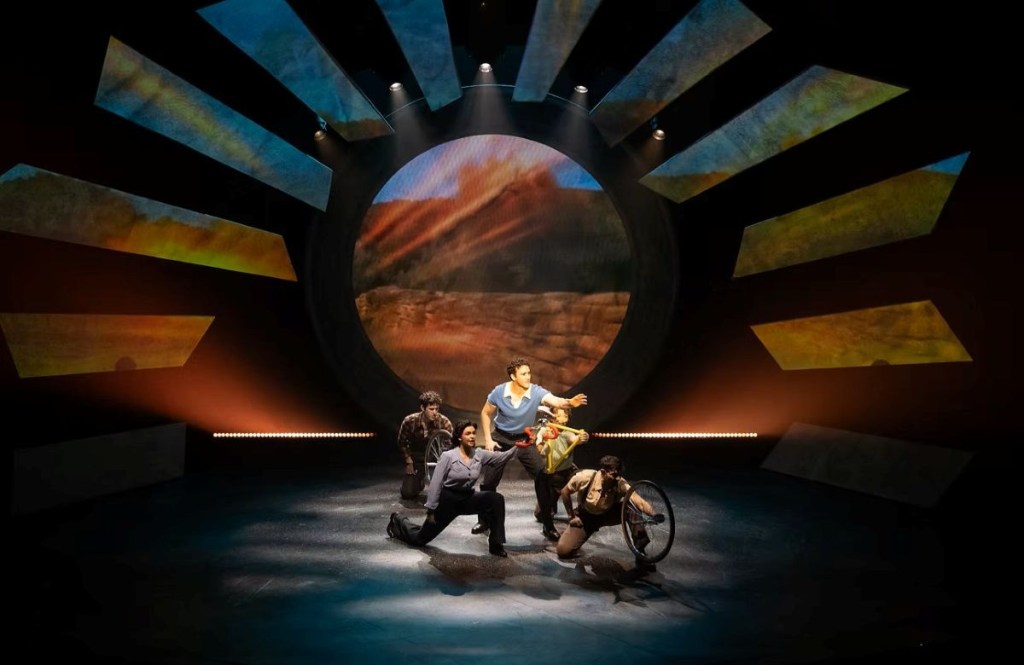
This new musical, by Todd Buchholz and Victoria Buchholz, will play a three-week engagement at Delaware Theatre Company, after previously having been seen in London. It tells the true story of how Tour de France champion Gino Bartali conspired with the Cardinal of Florence to save hundreds of lives during World War II. I am especially interested to experience the work of its director Michael Bello, and I hope that he and the authors have found a clever, theatrical way to depict the central figure’s cycling, if the central figure’s cycling is meant to be depicted in the musical.
My Joy is Heavy
This new musical memoir, written and performed by Abigail and Shaun Bengson, concerns the indie-folk duo’s recent experience with the loss of a pregnancy. The piece will play a limited engagement at New York Theatre Workshop this spring before heading to Arena Stage, where it premiered, in 2021, as a 27-minute filmed musical in a series entitled Arena Riffs. The subject-matter is certainly potent, but one wonders if the Bengsons and their director, Rachel Chavkin, have fashioned, from the potent subject-matter, a piece that is dramatic and theatrical. And one hopes the answer is yes.
Starstruck
This new musical, inspired by Cyrano de Bergerac, finds a female astronomer, in Sawtooth, Idaho, attempting to secure Dark Sky Reserve status for her town, and suddenly courting an NPR podcaster who has arrived to cover the story. The piece has a book by Beth Malone and Mary Ann Stratton, lyrics and music by Emily Saliers, of the Indigo Girls, and direction by Lorin Latarro, and it has greatly piqued my interest. I hope that the team is stirring up a strong, substantive affair, with a vivid personality and a theatrical bent, not an evening of quaint nothingness. Starstruck will premiere at Bucks County Playhouse next month, and, if nothing else, the orchestrations will surely carry interest, for they have been written by Tom Kitt.
Ten Brave Seconds
This new musical, by Jeff Talbott and Will Van Dyke, charts the coming out and coming-of-age of a 16-year-old boy over the course of a single day. It will play a three-week world premiere engagement at Pioneer Theatre Company under the direction of Ellie Heyman. Since the story would seem to be familiar, one hopes that the authors have set about telling it with a fresh perspective. I look forward to encountering the piece at a future date.
Titaníque
This pop-culture parody enjoyed an Off-Broadway run of three years before closing last June, and it moves to Broadway in March. Why? Tye Blue, Marla Mindelle, and Constantine Rousouli have penned the piece, which ransacks the song catalogue of Celine Dion, and Mindelle leads the cast as the Canadian superstar – who evidently hijacks a tour at the Titanic museum.
Other musicals opening in New York include Blood/Love, Just Desserts, Manon!, Monte Cristo, The Paparazzi, and the Encores! productions of High Spirits and The Wild Party. Other musicals opening out-of-town include The Chequerboard Watch, The Tale of the Gifted Prince, and That’s Love!
PRESS ANNOUNCEMENTS
Here is a list of select press announcements from the past week. Each headline is clickable for more information.
• Acclaimed Music City Musical Plans Move to Off-Broadway Space Refashioned as Nashville Honky-Tonk
• Robin de Jesús, Jonathan Raviv, Mary Testa, More Will Lead Night Side Songs Off-Broadway for LCT
• New Maltby and Shire Musical Revue About Time Will Premiere Off-Broadway
• Mexodus to Return to NYC This Spring at the Daryl Roth Theatre
• Jeremy Jordan Will Be Broadway’s Next Bobby Darin in Just in Time
• Ben Crawford and More Complete the Cast of The Lost Boys on Broadway
• Grace McLean Completes the Cast of Cold War Choir Practice
• Quentin Earl Darrington, Addie Morales, Ryan Vona and More Join Masquerade
• Blood/Love Unveils Full Cast for Off-Broadway Run at Theater 555
• Full Cast Set for Monte Cristo at the York Theatre
• Sinatra Biomusical Will Come to London’s West End
• Cast Complete for Matthew Warchus-Directed Pride Musical at London’s National
• Williamstown Theatre Festival Cancels Summer 2026 Programming
PREVIEWS AND OPENINGS
Here is a list of the new musicals and revivals either opening or beginning previews during the upcoming week, specifically on Broadway and Off-Broadway. It contains, as well, select new musicals beginning performances regionally, and select new musicals and revivals beginning performances in New York City. Each title is clickable for more information.
Monday, January 26
Tuesday, January 27
• NYC: Manon!
Wednesday, January 28
Thursday, January 29
Friday, January 30
• Regional: Chez Joey
• Regional: Ten Brave Seconds
• NYC: Just Desserts
Saturday, January 31
Sunday, February 1
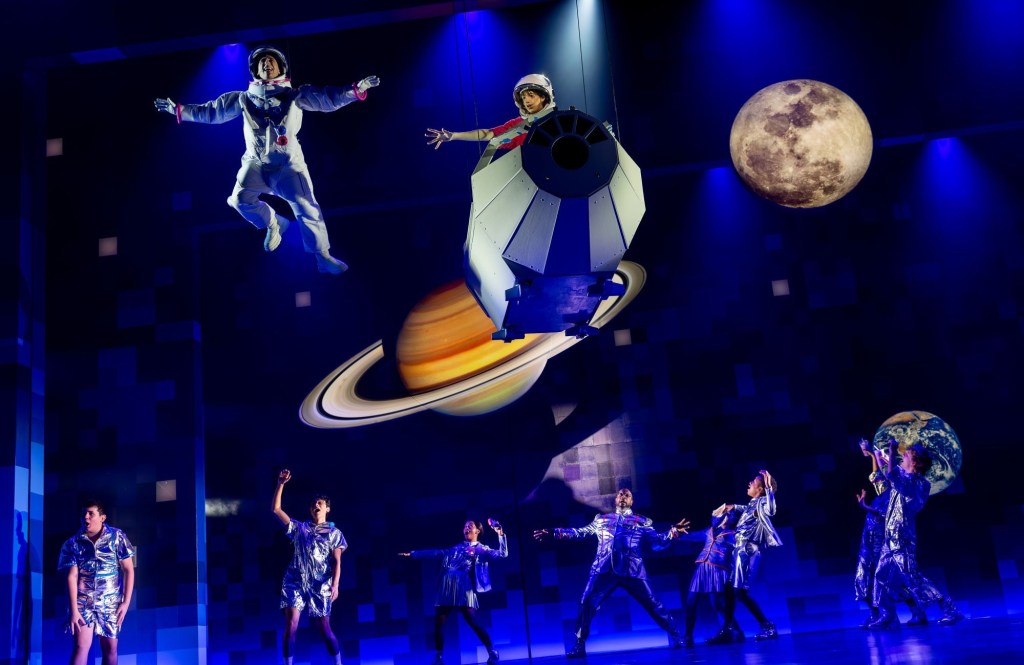
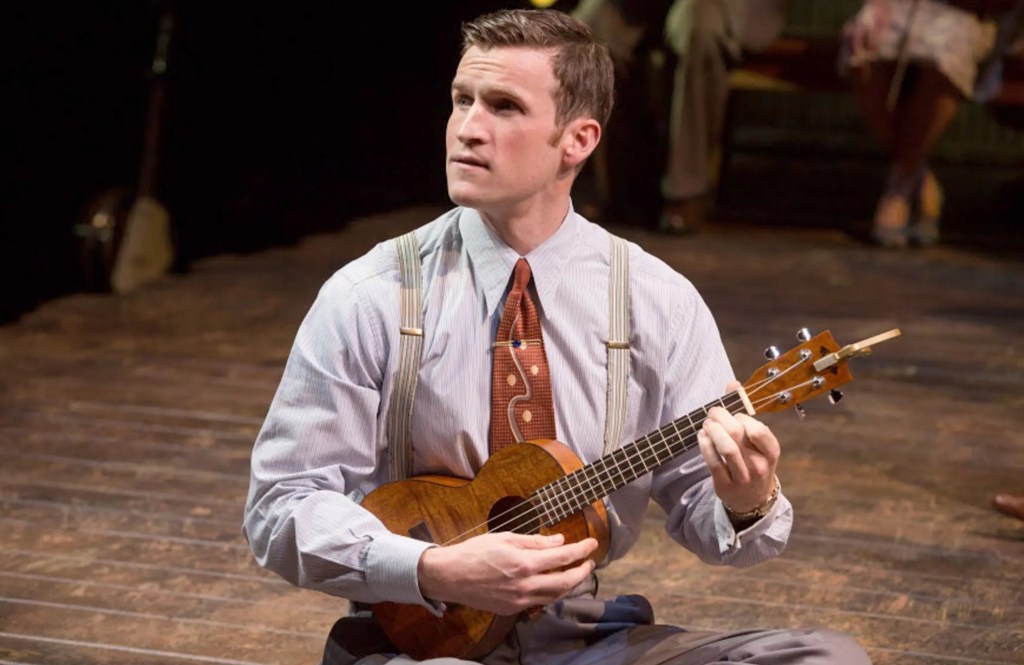
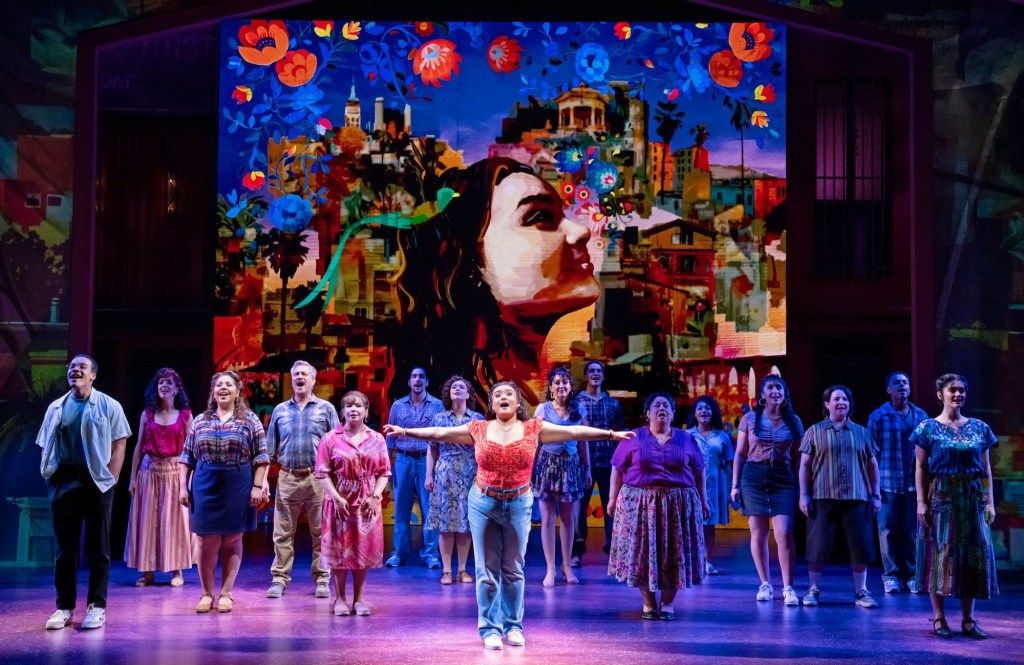
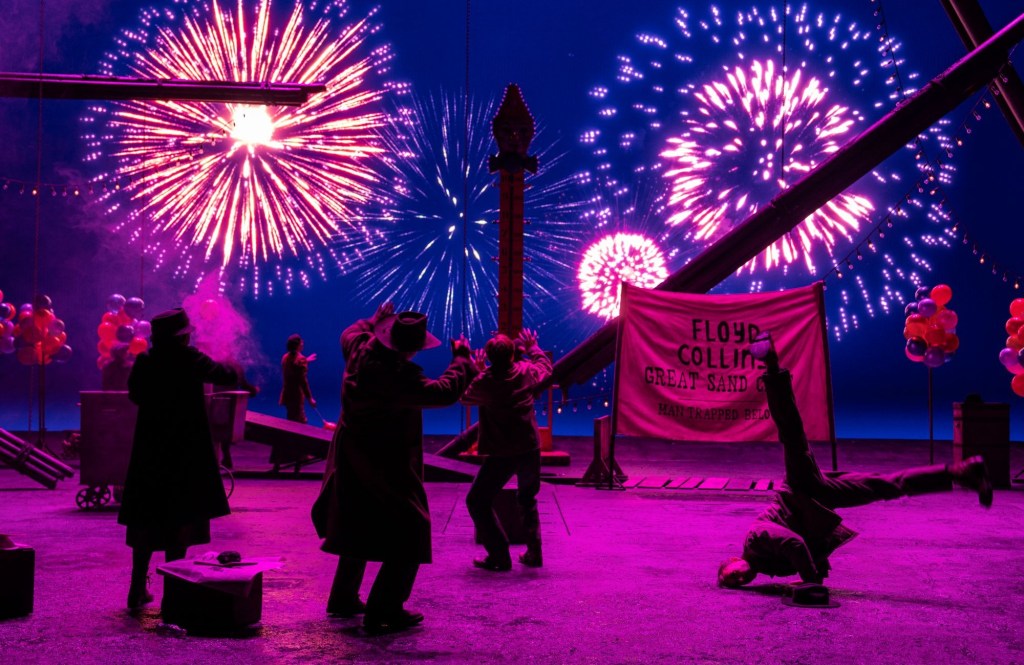
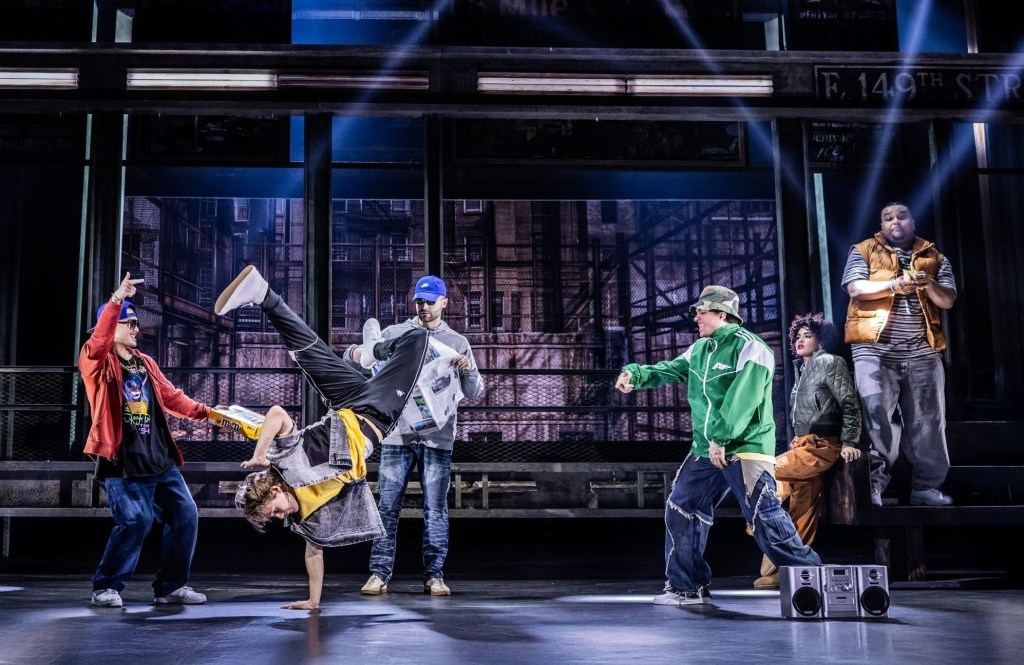
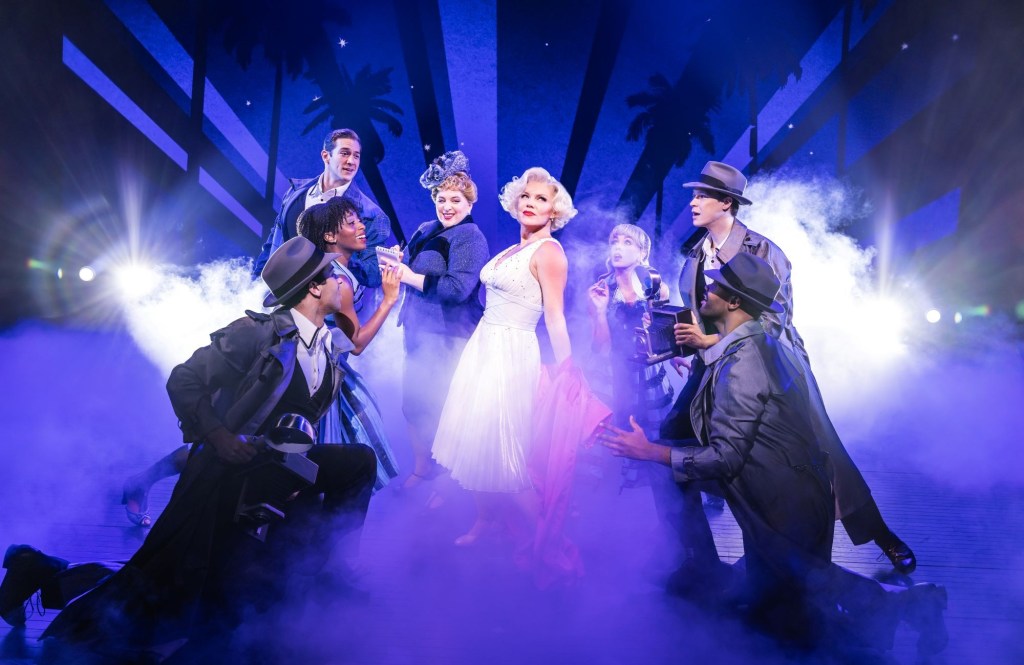
Photo of a scene from the Kennedy Center production of Schmigadoon! by Matthew Murphy and Evan Zimmerman.












 The Musical Theatre Report
Leave a comment