A journal for industry and audiences covering the past, present, and future of the musical stage.
Today is Sunday, and this week’s Report features reviews of About Time, Glory Ride, Night Side Songs, and Starstruck, and a preview of my forthcoming review of Safety Not Guaranteed. Plus, a quote of the week; select press announcements from the past week; and a list of the upcoming week’s previews and openings.
QUOTE OF THE WEEK
An excerpt of a profile, published in The New York Times in 1925, on the team of Harlan Thompson and Harry Archer – whose progressive musical comedies include Little Jessie James (1923), My Girl (1924), and Merry, Merry (1925).
“They agreed, for instance, that the book of a musical ought to be as carefully written as a straight play, and that it should be able to stand alone. They agreed that the musical numbers should come naturally into the action of the piece and not be dragged in with obvious song cues for no good reason. They agreed that good performers were more desirable than well-known names, and that legitimate laughs were more precious than the nifties a comedian carried over from his last show. They agree that eight clever chorus girls who could do specialty dances would be better than eighty clothes racks. They thought it a good idea to have the chorus come in and out through doors in the set, instead of leaping down from the flies or up from the cellar through trap-doors. They agreed (this was Harry Archer’s obsession) that, modern music being what it is, a good jazz band in the orchestra pit would be better than an oompah-oompah orchestra of twice the size. They agreed that they could probably do an intelligent, interesting, and novel show in collaboration.”
SAFETY NOT GUARANTEED AT SIGNATURE THEATRE
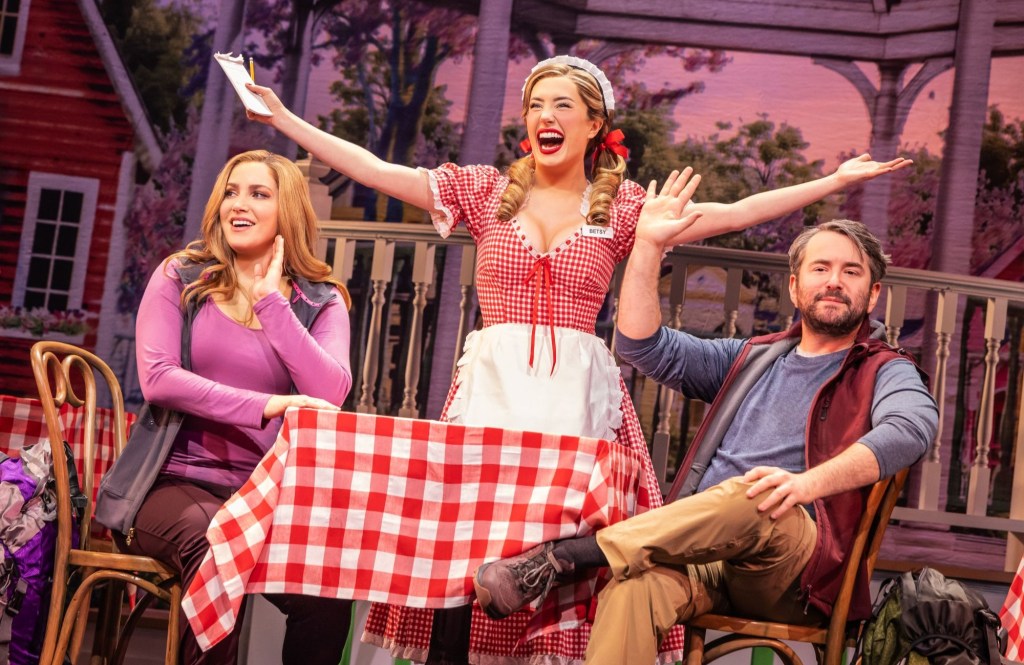
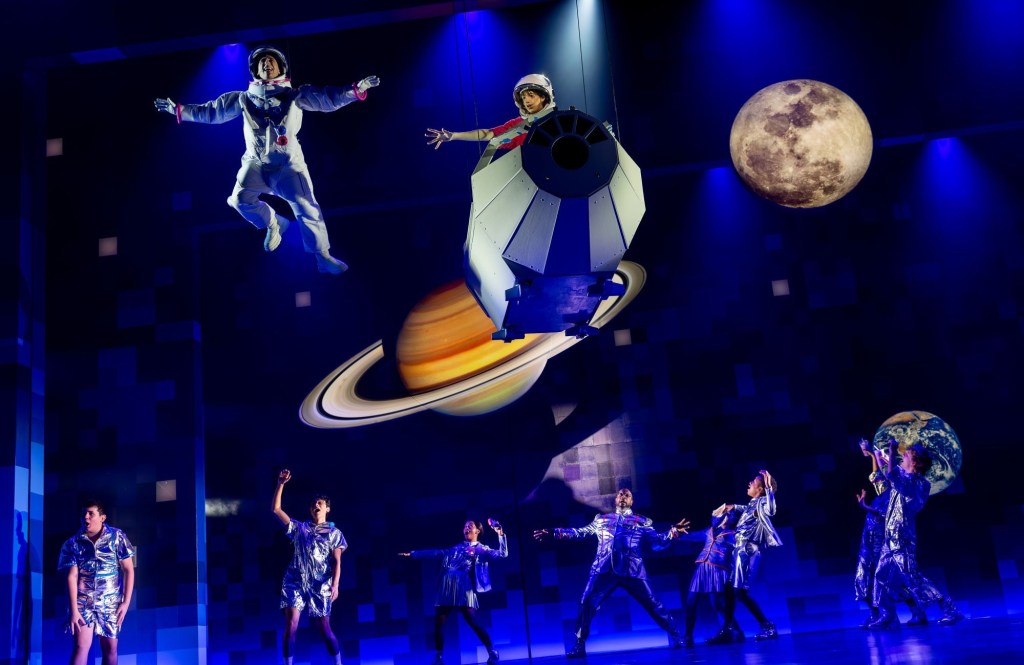
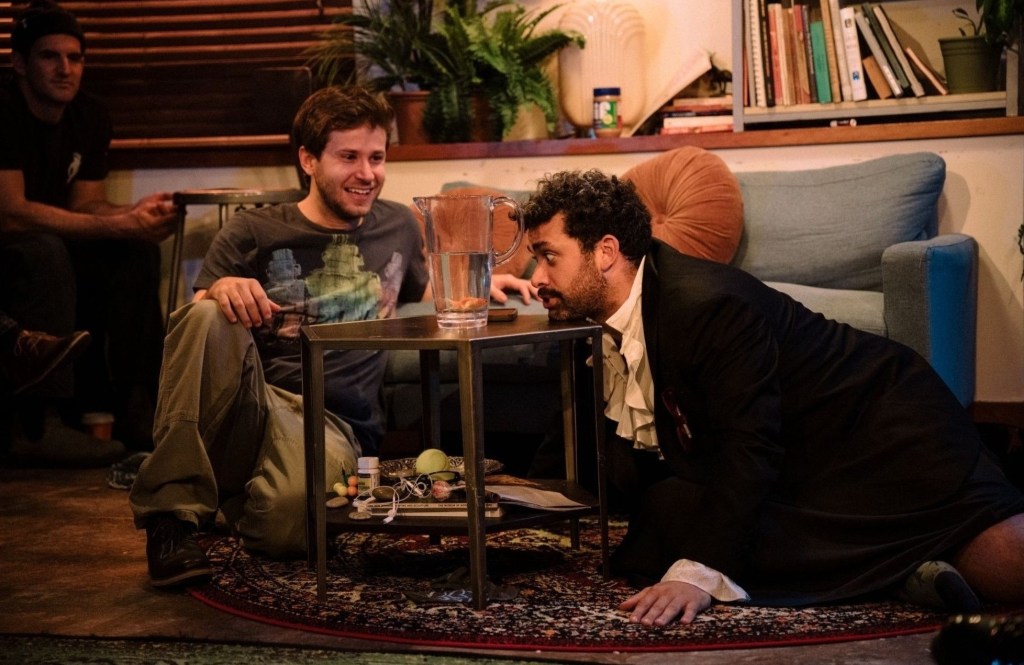
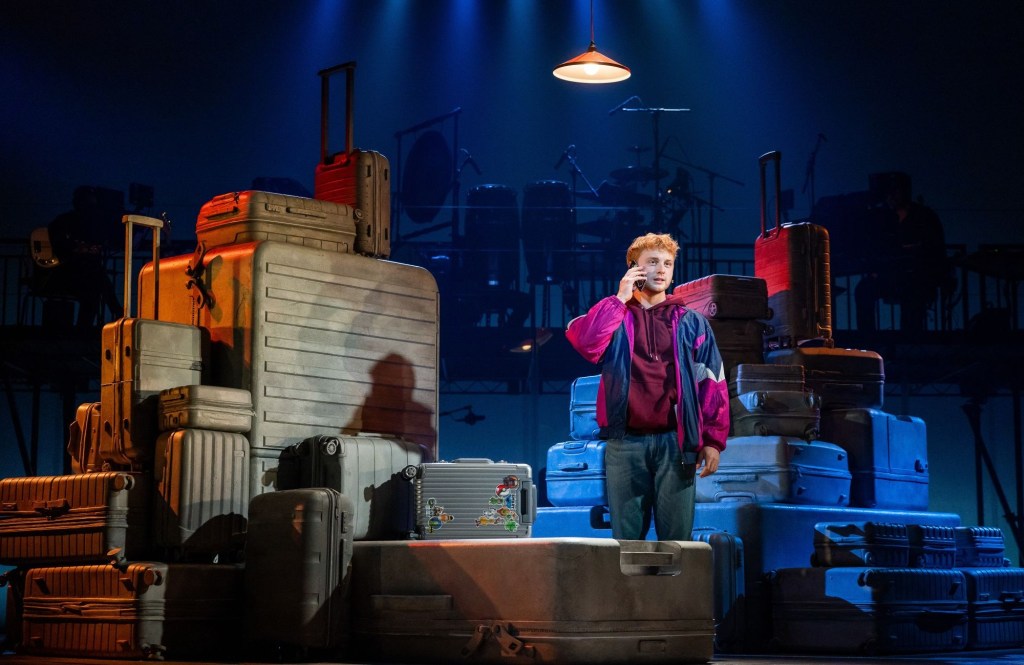
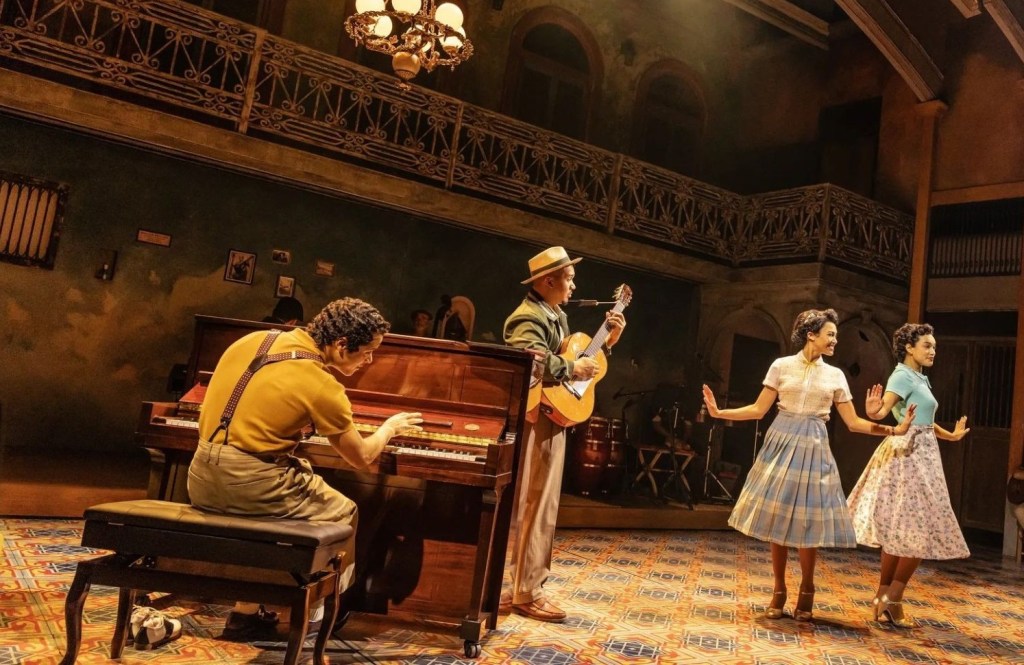
Safety Not Guaranteed, a new musical based on the 2012 film, is currently playing an out-of-town engagement at Signature Theatre in Arlington, Virginia. It has a book by Nick Blaemire and lyrics and music by Ryan Miller, of Guster, and it is, with the necessary refinements, almost certain to be a vital, thrilling stage show, for it is already filled, from beginning to end, with tremendously fine moments, occasionally explosive. And the improvements made to the score since the prior iteration of the piece are absolutely incredible, especially in terms of the lyrics, arrangements, and orchestrations. Plus, the new eleven o’clock is dynamite. But, sadly, one must look beyond the incredibly poor performances of the current cast to see the potency and the promise of the material and the physical production. My review is forthcoming, and it will include a punch list that the creative team might consider moving forward.
ABOUT TIME AT THE MARJORIE S. DEANE LITTLE THEATER
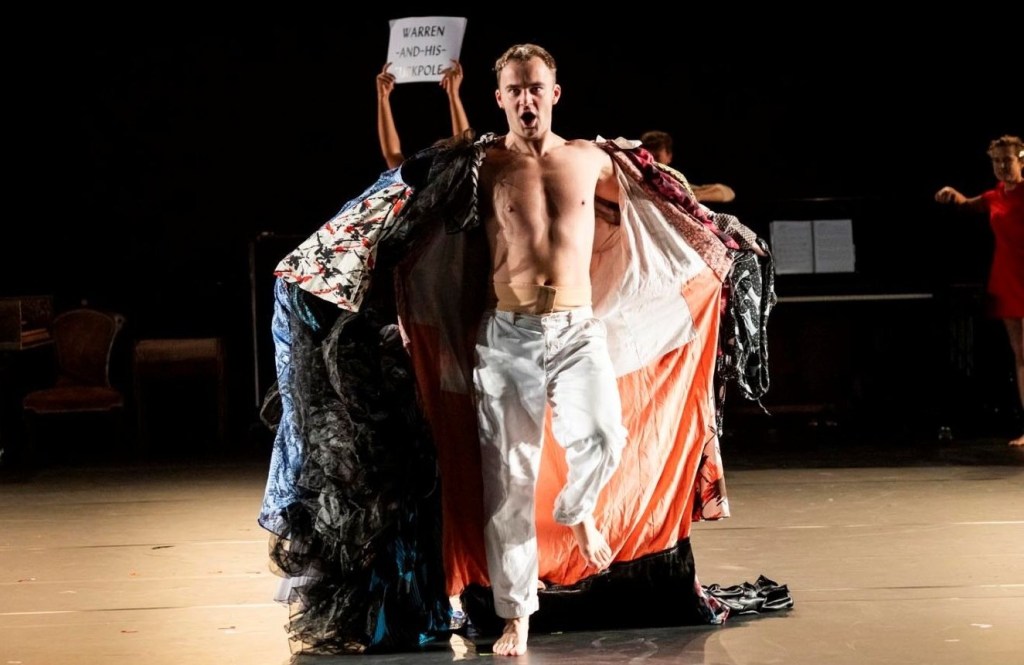
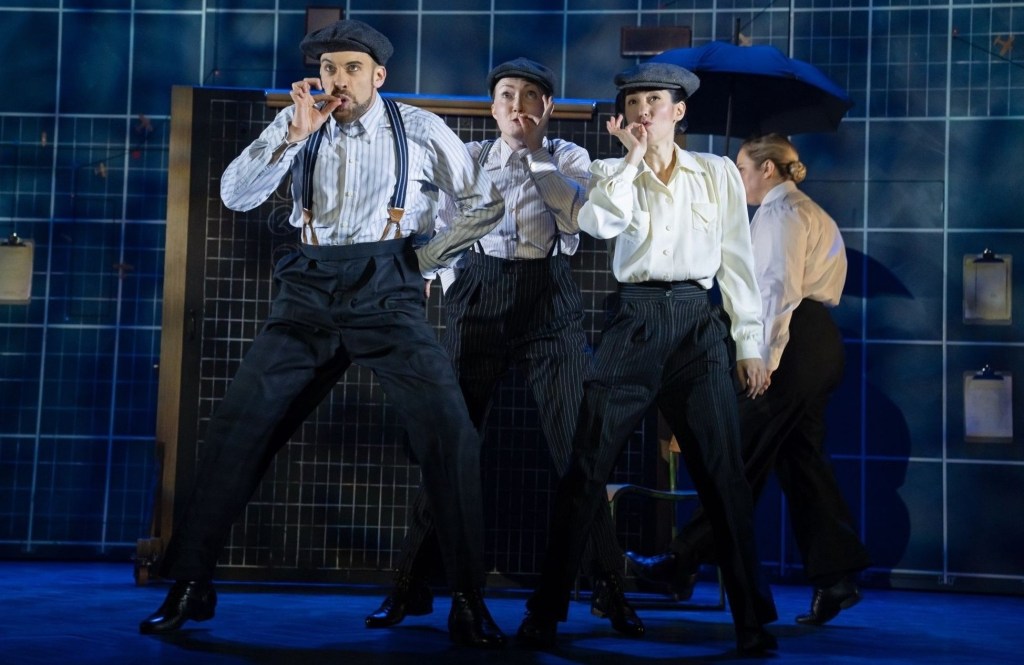
About Time, a new songbook revue, is currently playing an Off-Broadway engagement at the Marjorie S. Deane Little Theater. It has lyrics and direction by Richard Maltby, Jr. and music by David Shire, and it is an inferior affair, assembled with notably faulty and ineffectual material, marked by cheapness, blandness, clumsy dual definitions, and imperfect rhymes – even though most of the roughly two dozen songs have been built upon profitable conceits, and fairly effectively designed to stand alone, to the extent that they stand at all. Three of the strongest numbers – “Lunch with Linda,” “Over-Ripe Fruit,” and “Smart People” – are crackpot comedy songs, done in by crackpot comedy lyrics that fail to continuously top themselves. (A devastating misstep.) Plus, “Smart People” has little or nothing to do with the musical’s theme of aging.
Some songs attempt, unskillfully and unsuccessfully, to cover swaths of time, with the lyric – and, to an extent, the staging – causing the performer(s) to reside in a series of moments, rather than residing in a single moment, even if recounting a series of moments while doing so, to the detriment of the drama. “Done” is entirely out of date, with repeated references to the 2015 musical Fun Home. The songwriter setup, introduced at the top of the show by actor Eddie Korbich, is senseless and quickly dropped. The three comic interludes are insignificant, though, to be fair, the first one lands well enough. The cast of six is unremarkable. The staging, including the choreography by Marcia Milgrom Dodge, is rough. And the two-act run-time is not earned. But the double accents that accent the opening number are delicious, and the use of two pianos is a nice touch.
GLORY RIDE AT DELAWARE THEATRE COMPANY
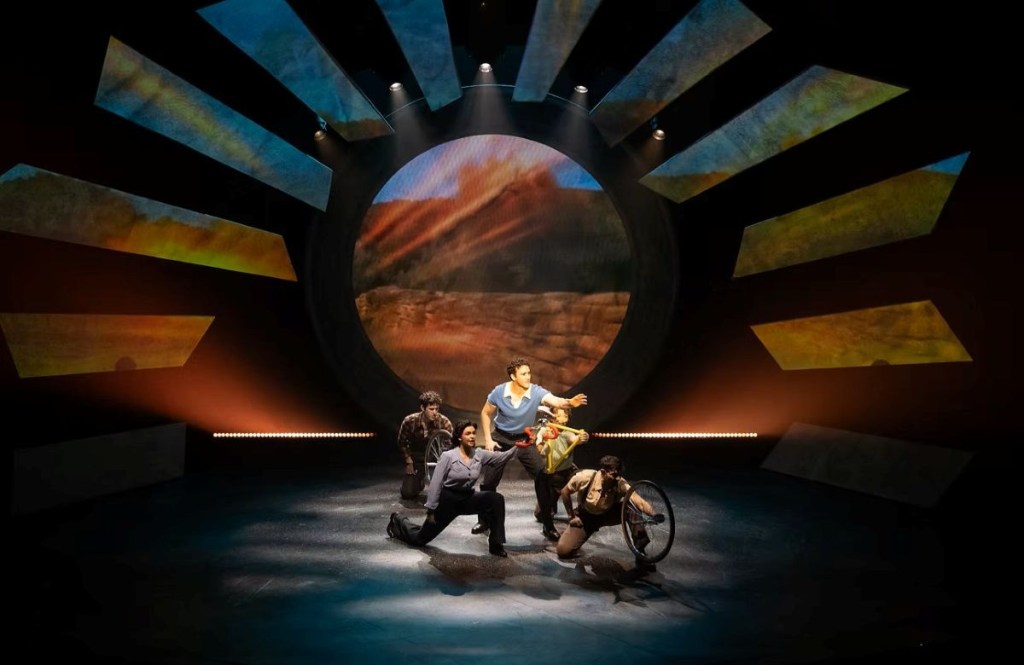
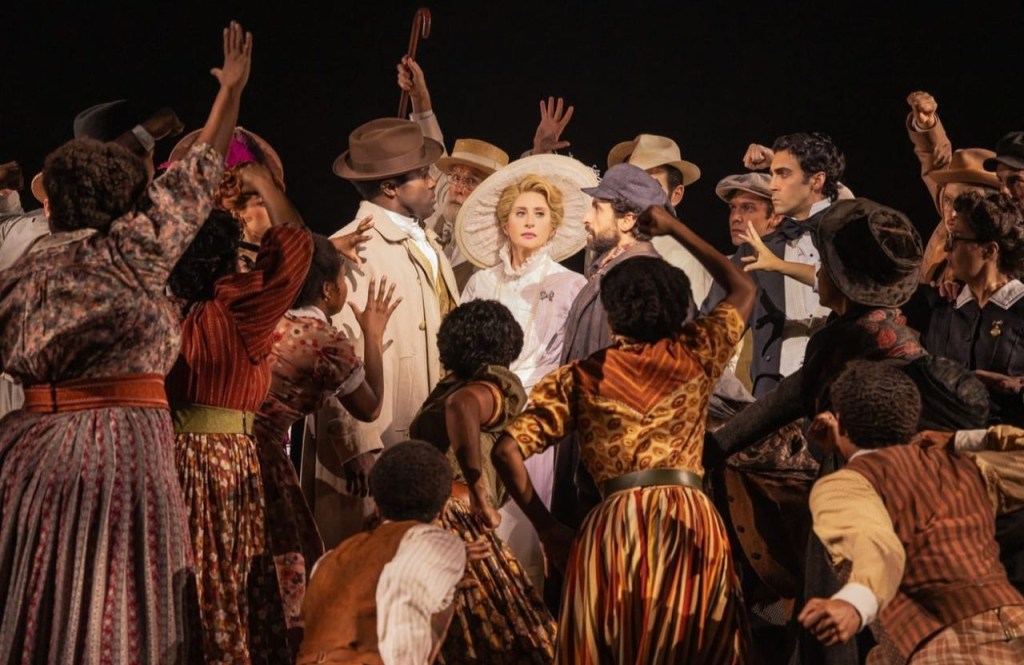
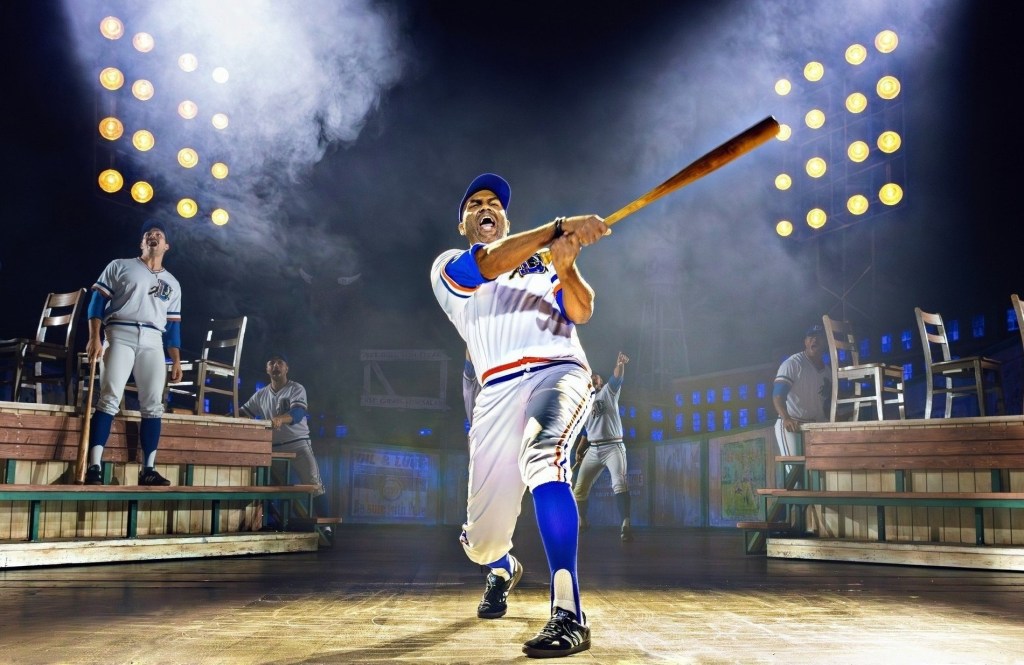
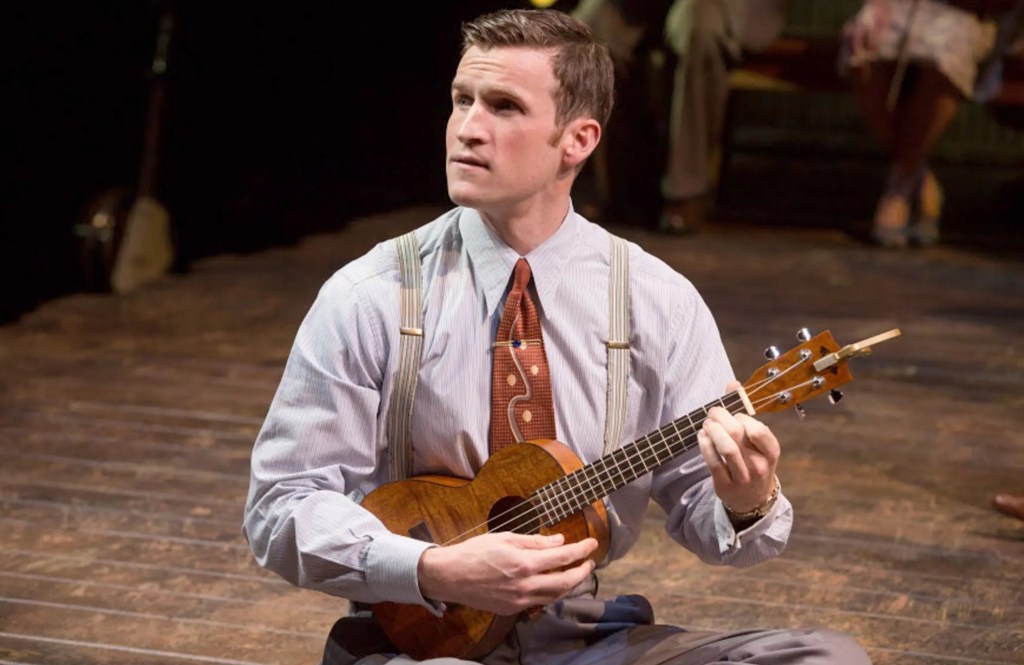
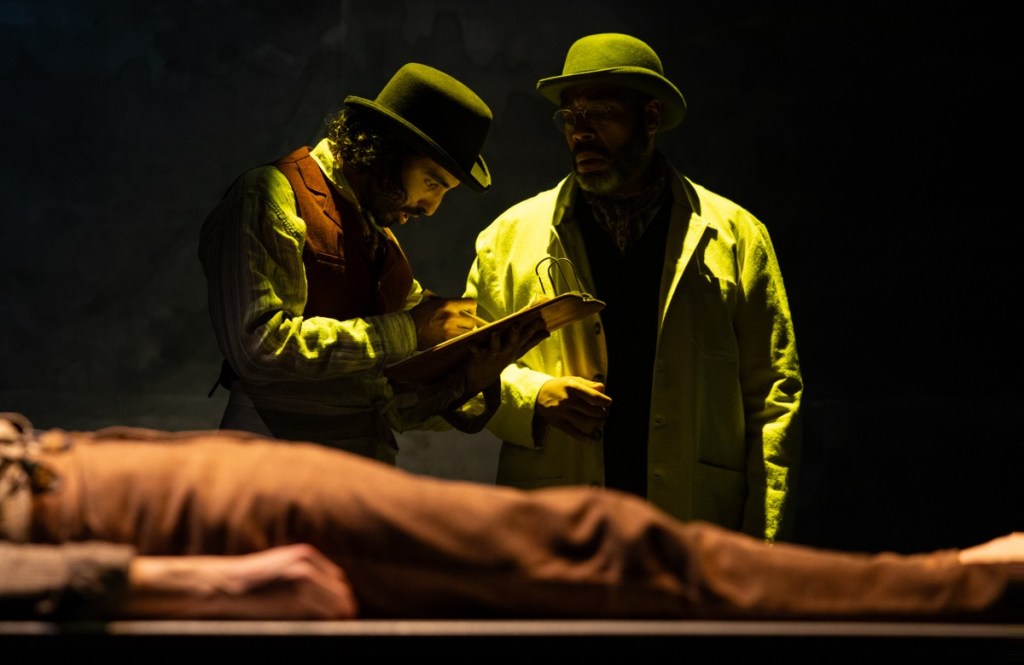
Glory Ride concluded an out-of-town engagement this afternoon at Delaware Theatre Company in Wilmington, Delaware, after previously having been seen overseas. It has a book by Todd Buchholz and Victoria Buchholz, lyrics and music by Victoria Buchholz, and direction by Michael Bello, and it is based on a true story, dramatizing the covert private affairs of Italian cyclist Gino Bartali during World War II.
The musical is not terrible, but it is, at present, inexpert, unfinished, and terribly, terribly unsettled. Perhaps the best advice that might be given the creative team is to Slow Down, for the execution of everything, in material and staging, must be much more considered, much more deliberate. The extended musical sequences, for instance, are currently overrun with small moments that fail to fully establish. The turntable is ineffectively introduced and, thereafter, haphazardly employed. The action that takes place onstage is almost frenzied, with entrances, exits, crosses, choreography, projections, upstage reveals, and automation, sans dramatic definition. (This is largely a result of the script.) And the tone of the show is inconsistent. “Green Eyeshades,” in particular, is a handclapping number, with gospel tendencies, that finds a small collection of papal accountants wearing green visors and dancing, once persuaded to by a Black nun, and while the turntable spins and spins and spins and spins; the number seems to have come from an entirely different production.
The songs, furthermore, are abundant, to the point of feeling excessive, even relentless, principally because they fail to consistently serve the story and the characters, moment-to-moment, line-to-line, melody-to-melody, feel-to-feel; and the musical, as a result, has the sense of being driven and charged by nothing and no one in particular. Not even Gino. (The evident opportunities for the central figure to deliver a major decision maker or to have a personal reckoning, in song, are missed, or, at best, side-swiped.) Thus, the chronological incidents of the story, which, in principle, carries interest, simply play on, toward who knows what end. And a couple of crucial characters and relationships are not effectively tracked or introduced. Plus, the lyrics, in several instances, are disconnected from the dialogue that precedes them. The music is mostly an intense sonic wash, with melody. And several emotionally high-pitched solos are suddenly interrupted by dialogue just prior to the finish, with the conclusion of the respective number, upon the vocal return, proving piddly. Slow Down. Even the fairly straightforward flag-tear tableau at the top of the show is out of sorts.
Bello and choreographer Denis Jones nonetheless deserve credit for the solidly theatrical manner in which they have realized the onstage cycling, employing a deconstructionist approach that finds a cluster of cyclists holding handlebars equipped with a headlight, or Gino standing amidst four members of the ensemble who hold, individually, a handlebar, a frame, and a pair of wheels; but Bello and Jones must simultaneously be taken to task for frequently abandoning this deconstructionist approach and resorting to a practical bike – which is, in the opening number, situated upon a small square stand such that Gino can peddle furiously in place, surrounded by the handlebar cluster. (Why?)
The scenic design, by Beowulf Boritt, is similarly deconstructionist, and it might be profitable under different circumstances. The costume design, by Alejo Vietti, is poor. The lighting design, by Cory Pattak, is poor, and the backlit buttons are repetitive. The projections, by Nicholas Hussong, are poor. And the cast is poor, though Gavin Gregory and Bri Javis have strong voices.
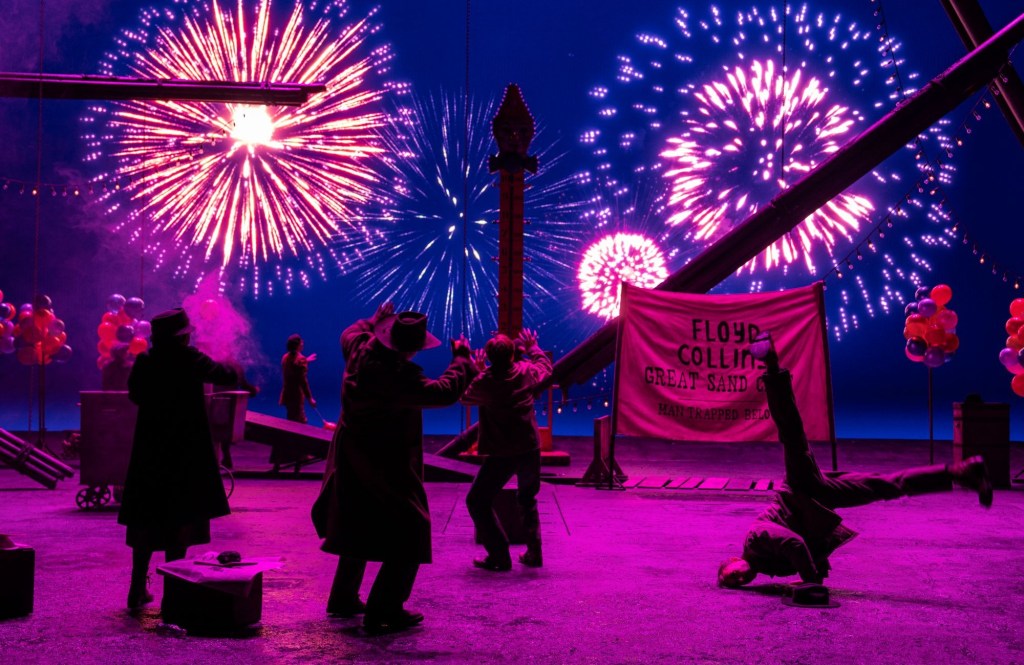
Glory Ride opens with Gino winning the Tour de France in 1938, and it closes with Gino winning the Tour de France in 1948, and even the musical’s seemingly valuable bookends do not pay off, as currently executed.
STARSTRUCK AT BUCKS COUNTY PLAYHOUSE
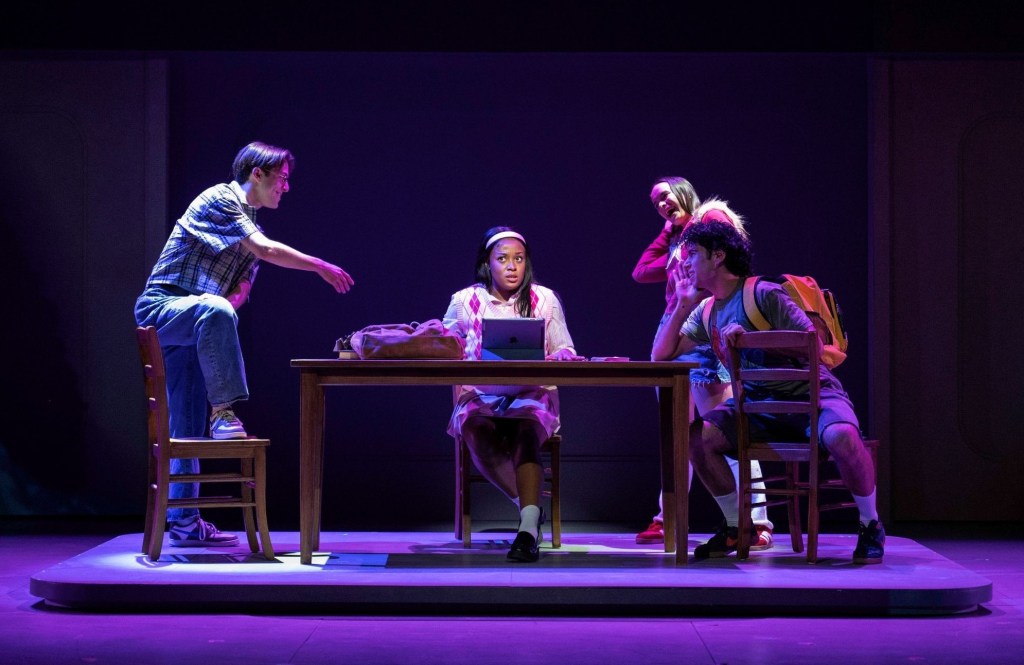
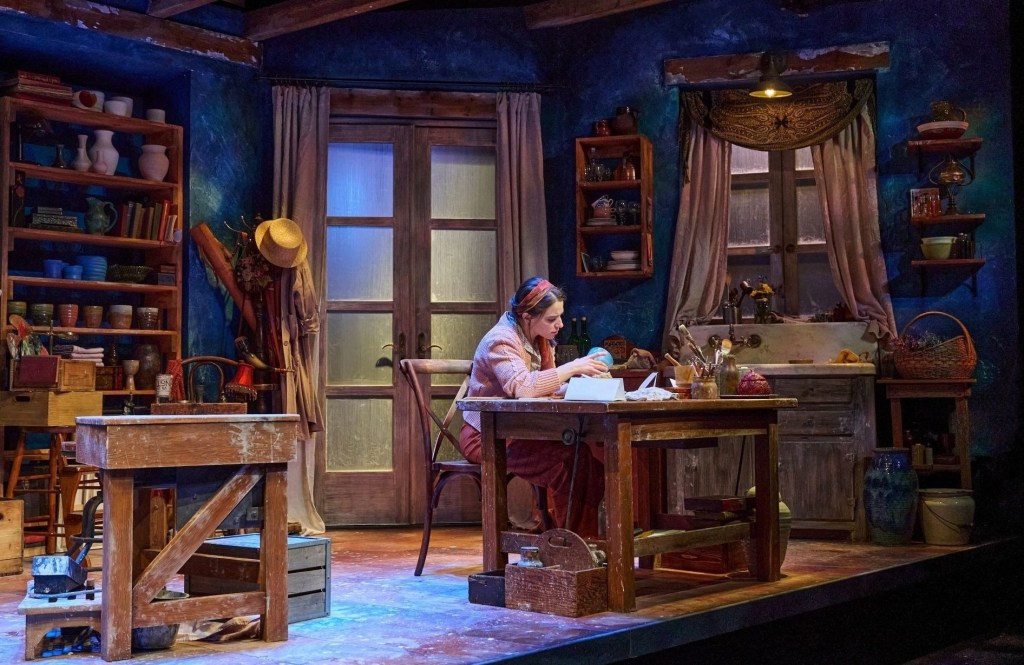
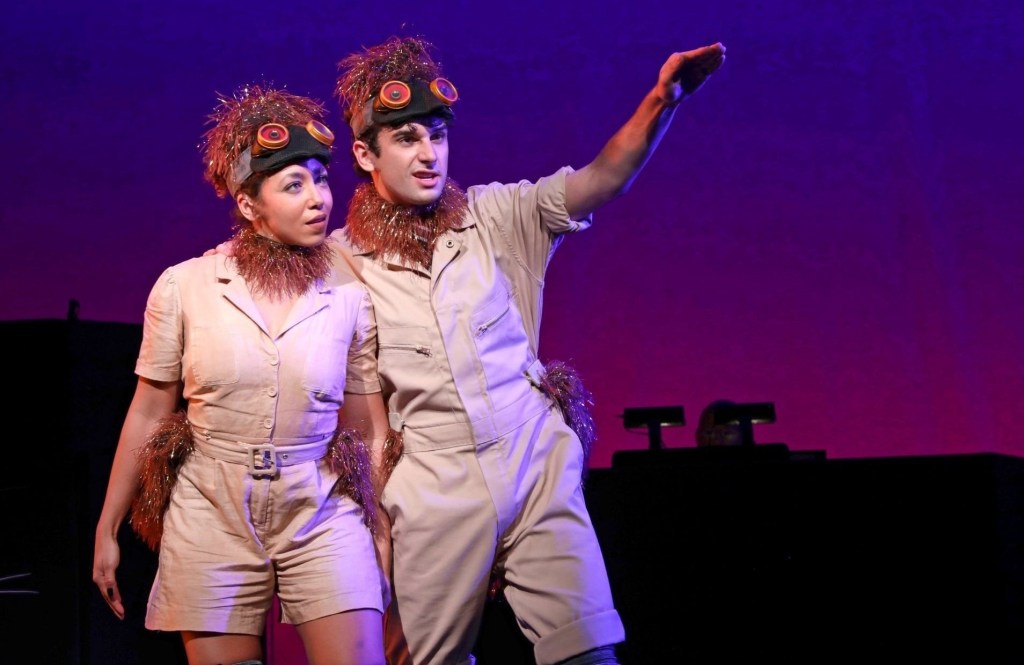
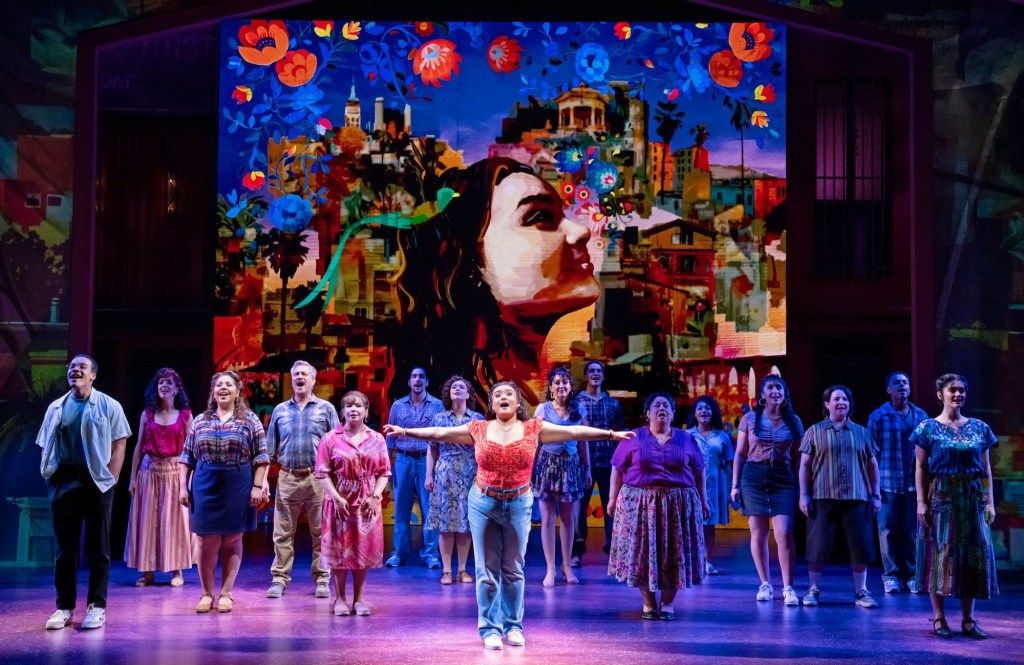
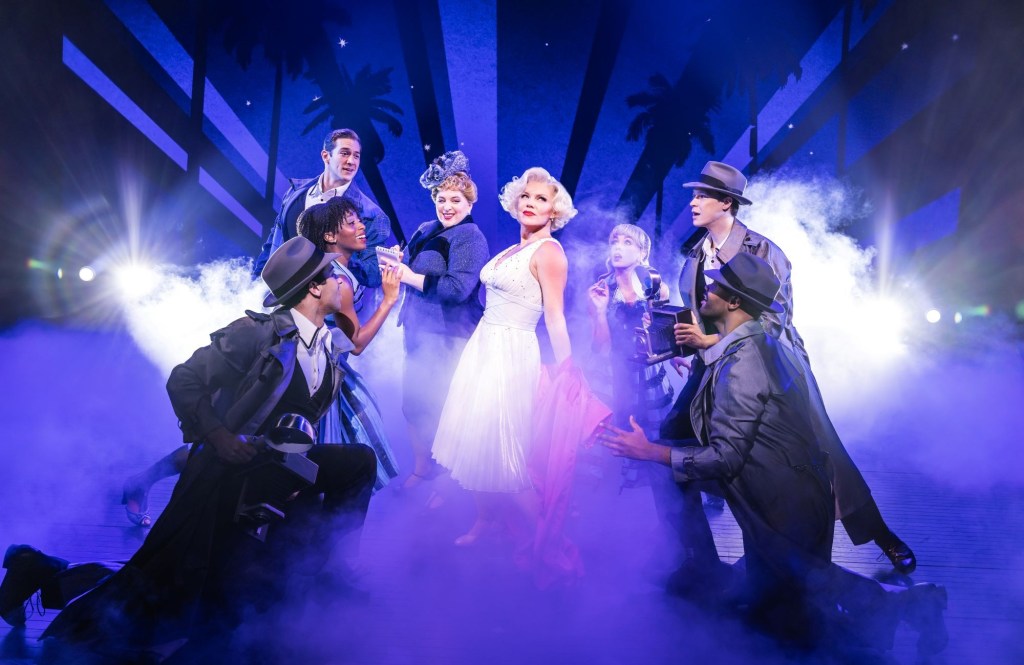
Starstruck, a new musical based on Cyrano de Bergerac, is currently playing a world premiere engagement at Bucks County Playhouse in New Hope, Pennsylvania. It has a book by Beth Malone and Mary Ann Stratton, lyrics and music by Emily Saliers, of the Indigo Girls, and direction by Lorin Latarro, and it is a dreary affair, despite an intriguing scientific backdrop and an intriguing female romance.
The musical is set in Sawtooth, Idaho, and it centers around an astronomer, Cyd, who is currently seeking Dark Sky Reserve status for her town, and a podcaster, Roxanne, who is in town covering the story. Cyd’s right-hand man, Chris, makes up the third point of the show’s love triangle, and the five other characters are mere filler, exploited when convenient, excepting perhaps a local businesswoman. (This is a major missed opportunity for a small-town, small-cast entertainment of the sort.)
The story is, at present, exceptionally loose, almost formless, spreading out in all directions, devoid of steady dramatic development and compositional definition, and most of the musical numbers are either preexisting radio edits that fail to serve situation and character, or mechanical “musical theatre” songs, evidently made following a step-by-step guide found in some “musical theatre” textbook, that sputter forth and die on the deck of the stage – like “Morning Song,” which dutifully introduces the townsfolk, or “Text-y,” which dutifully moves round the room, style by style, as the townsfolk, one by one, attempt to help Chris craft a text message to Roxanne.
But Saliers would seem to be a capable writer. “Just One More Note,” for instance, has a dramatically active, dramatically charged lyric that serves the moment well, despite harboring a musical temperament that falls short of doing the same. “We’re Famous” has an inclination toward character and individuality, despite the execution, again, being mechanical. And “Perfect Order” employs juxtaposed musical modes, to the musical’s advantage. Saliers would be well advised to do something similar in a new solo for Cyd, immediately following that first texting scene, for such a number might prove characterful, dynamic, dramatic, sensational. (Such a number is currently hinted at, but it does not materialize.)
Plus, the interruptions during “Galileo” are well done – though the preexisting song should be replaced with an original, and one wonders if the musical might get more mileage out of introducing the two female leads simultaneously. And Tom Kitt has crafted swell orchestrations, for keyboard, two guitars, cello, violin, bass, and drums, that currently provide the musical with its only real sense of personality and distinction.
The laugh lines are stale. The business about a neon sign disappears. The decision about the town’s Dark Sky Reserve status is a foregone conclusion. The series of eleventh-hour incidents, including a sign busting, a trip to jail, a breakup, a kiss, a departure, a badge stripping, and a badge restoration, are alternately disorderly and manufactured. The love triangle is imbalanced. The principal characters are not finely etched, due in part to the deficiencies of song. The staging is generic, with no particular approach or point of view. And the moment in which the sky supposedly comes alive, on the upstage cyc, is anticlimactic, because the sky has been alive since practically the start of the show.
The cast, led by Beth Malone and Krysta Rodriguez, is merely adequate, and the physical production is unremarkable. Starstruck is not a bad idea for a musical, but it will require heaps and heaps of work to bring it up to snuff.
NIGHT SIDE SONGS AT THE CLAIRE TOW THEATER
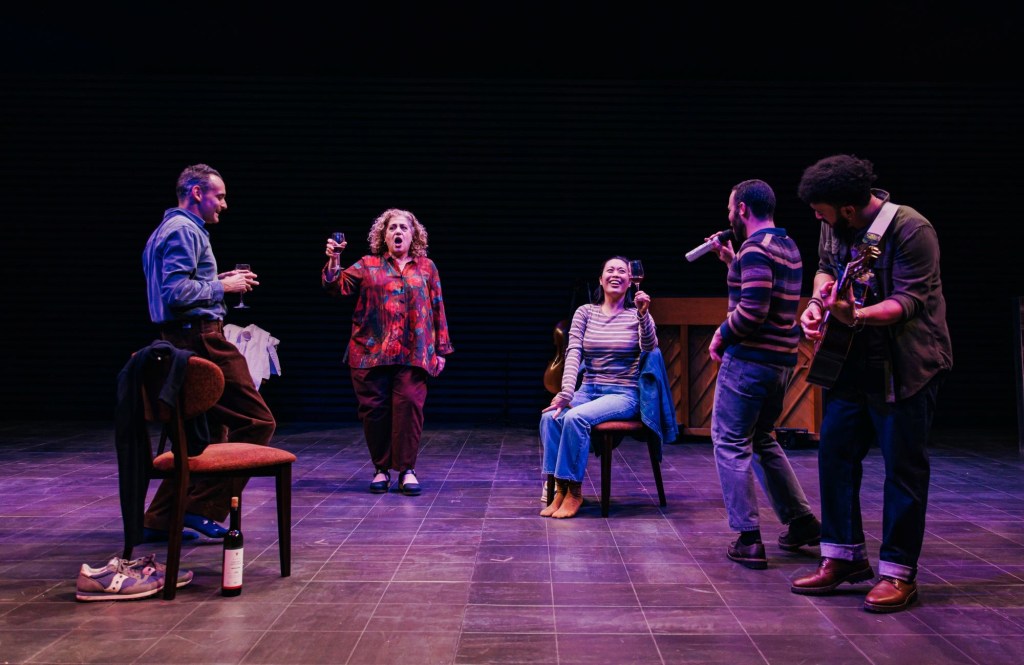
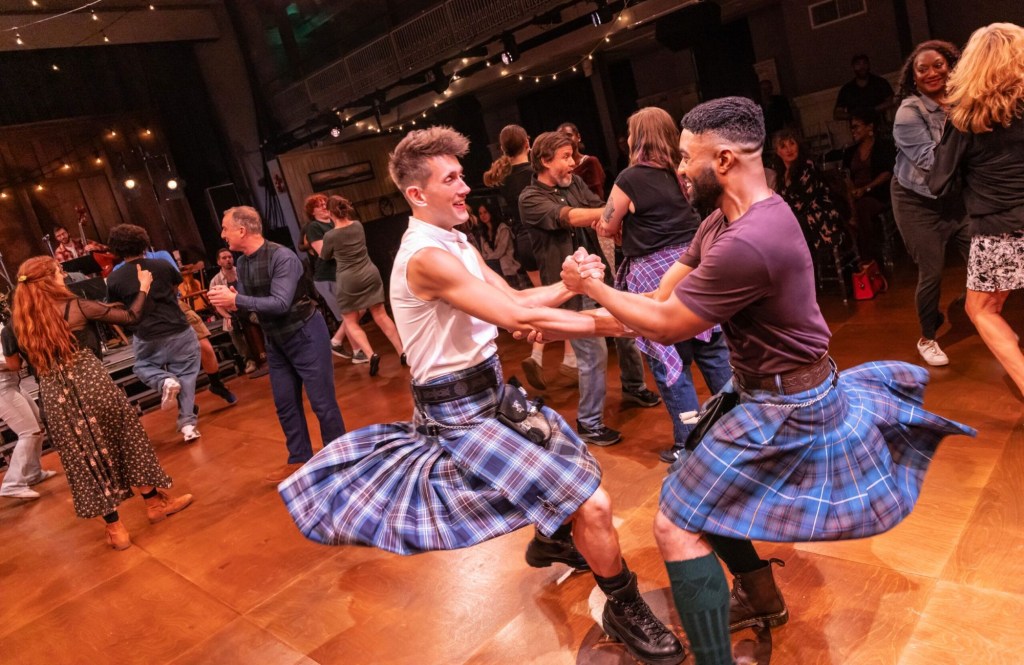
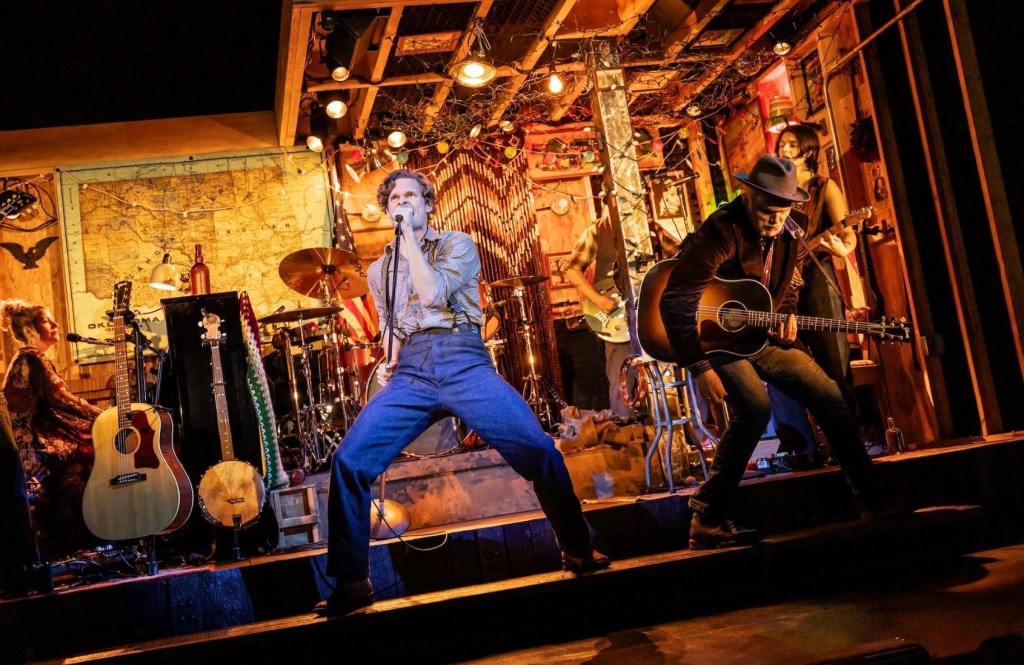
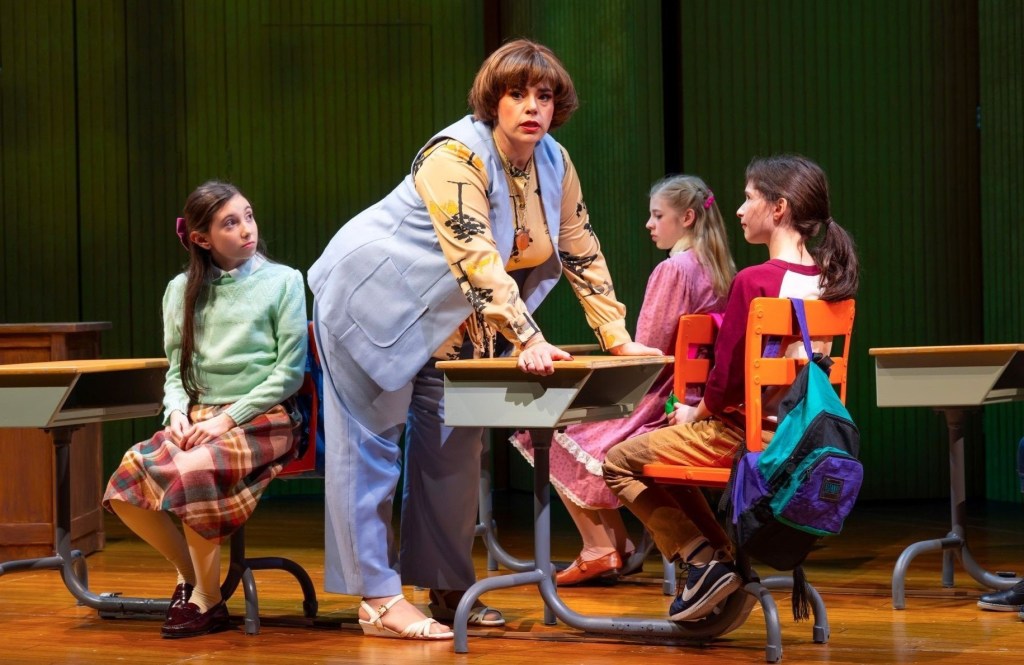
Night Side Songs, a new musical with communal singing, opened an Off-Broadway engagement earlier this month at Lincoln Center Theater’s Claire Tow. It has been written by Daniel and Patrick Lazour and directed by Taibi Magar, and it is a middling affair, suffering especially from song, but the seismic positive changes that have been made since the musical’s unsatisfactory world-premiere engagements last year are astounding. And commendable. And heartening. They are the sort of meaningful artistic improvements that give one hope for the future of the art form. Even though more improvements were needed. My review was published on Thursday.
PRESS ANNOUNCEMENTS
Here is a list of select press announcements from the past week. Each headline is clickable for more information.
• In the Heights to Launch New York City Center’s 2026–2027 Season
• Mexodus Gets Four-Week Extension at Daryl Roth Theatre; Audible Release Set for April
• Taylor Iman Jones to Star in World Premiere Musical Elephant Shoes at Two River Theater
• Writer Patrick Lazour Will Star in Select Performances of His Night Side Songs
• Maulik Pancholy Joins Broadway’s Schmigadoon!
• Operation Mincemeat Extends for an Eighth Time on Broadway
• The Pitt‘s Isa Briones Will Join Just in Time on Broadway
• American Psycho: The Musical Will Return to NYC Next Year
• Susan Soon He Stanton and Nathan Tysen Join Chimney Town Team
PREVIEWS AND OPENINGS
Here is a list of the new musicals and revivals either opening or beginning previews during the upcoming week, specifically on Broadway and Off-Broadway. It contains, as well, select new musicals beginning performances regionally, and select new musicals and revivals beginning performances in New York City. Each title is clickable for more information.
Monday, March 16
Tuesday, March 17
• Opening: My Joy is Heavy
Wednesday, March 18
• Concert: The Wild Party
• Previews: Cats: The Jellicle Ball
• Previews: No Singing in the Navy
Thursday, March 19
• Opening: Monte Cristo
Friday, March 20
• Concert: Violet
• Previews: Gotta Dance!
Saturday, March 21
Sunday, March 22
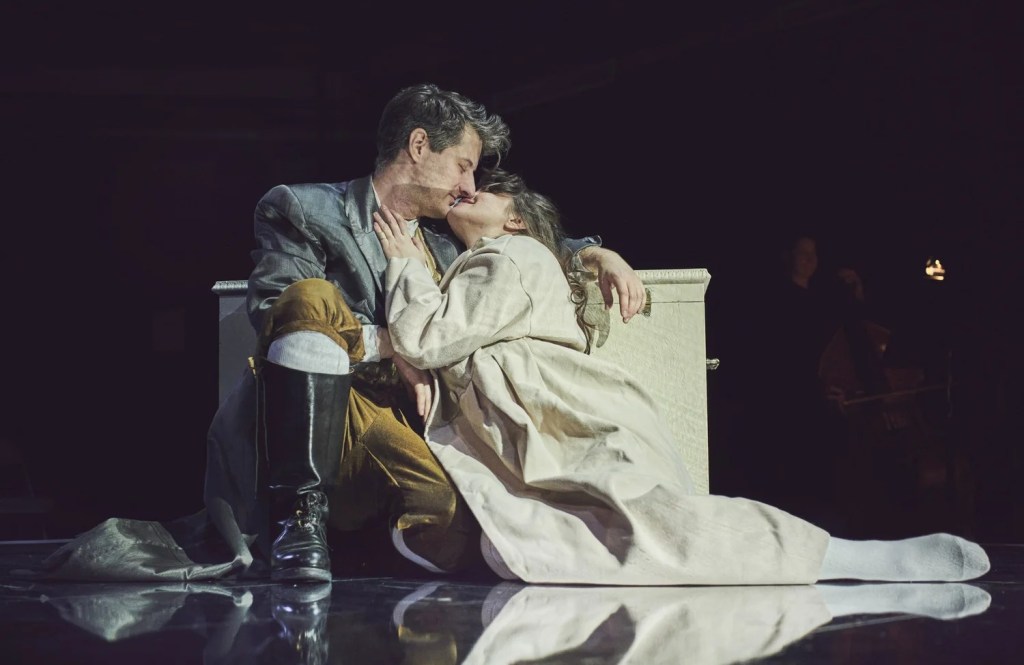
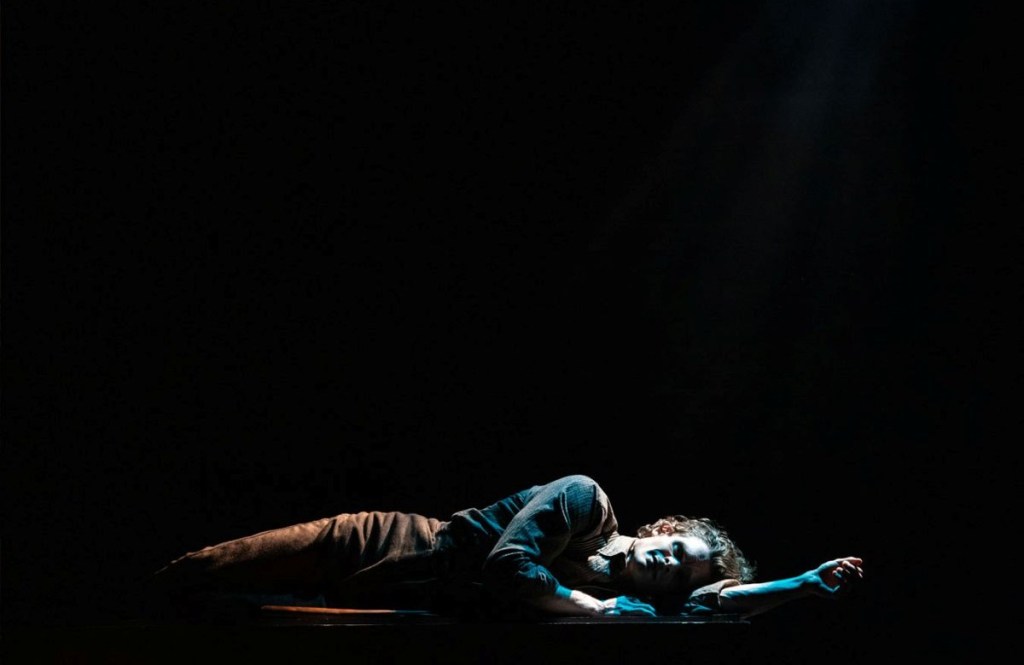
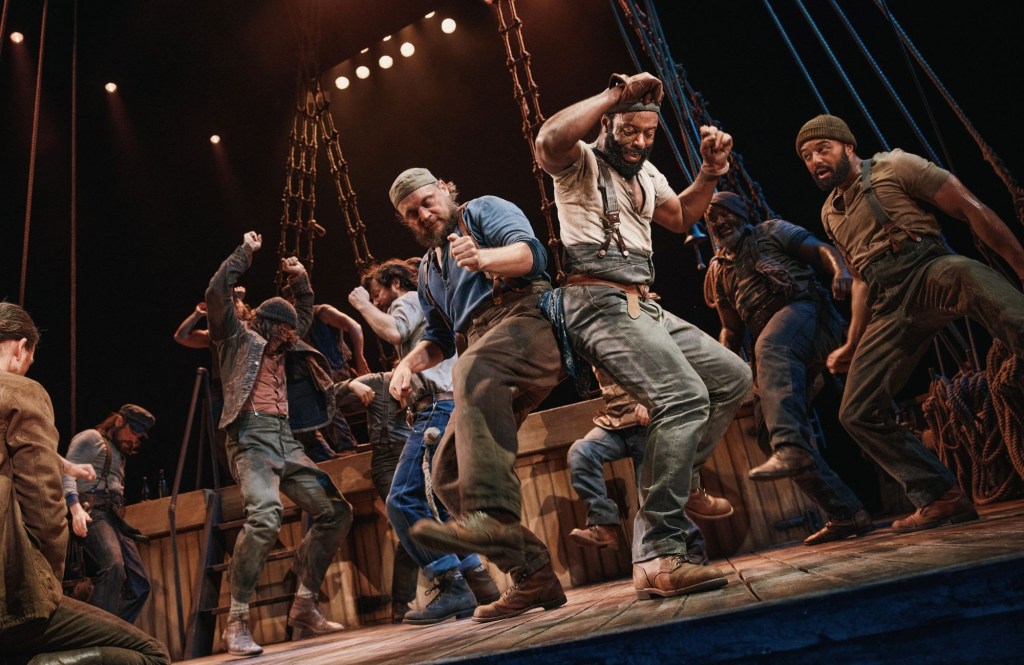
Photo of a scene from Glory Ride by Matt Urban.











 The Musical Theatre Report
Leave a comment