A journal for industry and audiences covering the past, present, and future of the musical stage.
Today is Sunday, and this week’s Report contains my detailed notes on Elephant Shoes at Two River Theater. Plus, a quote of the week; select press announcements from the past week; and the upcoming week’s previews and openings.
QUOTE OF THE WEEK
“As a man is kept alive by the flow of blood through his circulatory system, so is the theatre kept alive by the flow of audiences through its aisles. The heart that pumps this flow and keeps it constant is that dedicated group of playwrights, composers, producers, directors, actors, and all other artists and craftsmen whose own stage-struck hearts belong to the theatre, and as these grow old and die, there are always younger ones being born to take their places. The theatre is a self-renewing world. Its workers go on providing gaiety, sadness, tenderness, horror, romance, and all the elements of life which hold an audience’s interest. When the worker succeeds he is rewarded, and when he fails he is punished. And so he goes on, plodding through the cold swamp of failure, romping over the warm green meadow of success, never voluntarily deserting the only realm he was born to serve.” -Oscar Hammerstein II and Richard Rodgers
ELEPHANT SHOES AT TWO RIVER THEATER
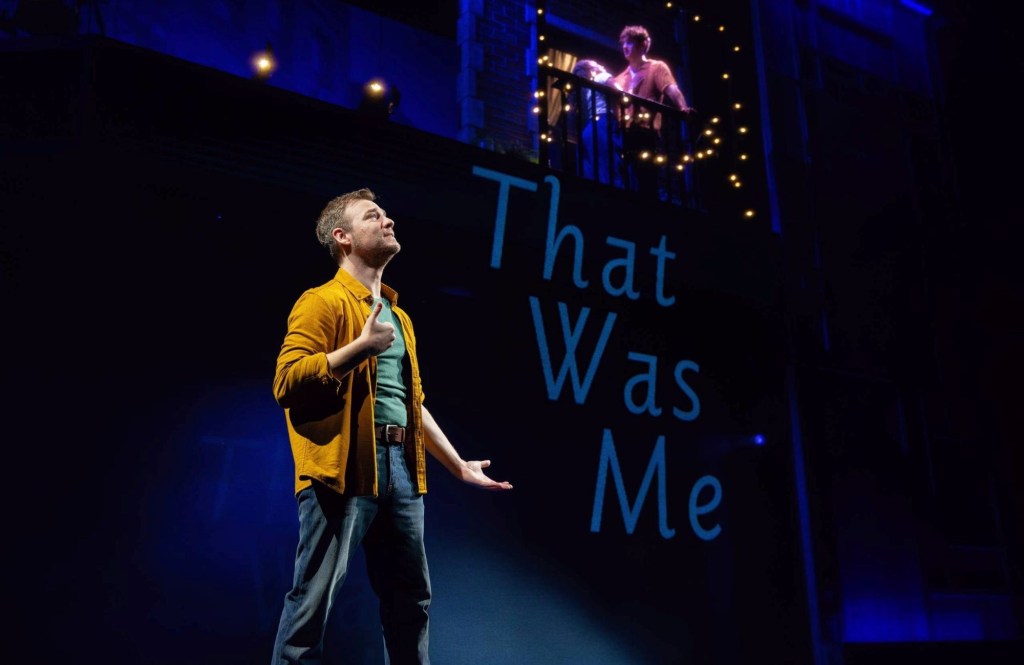
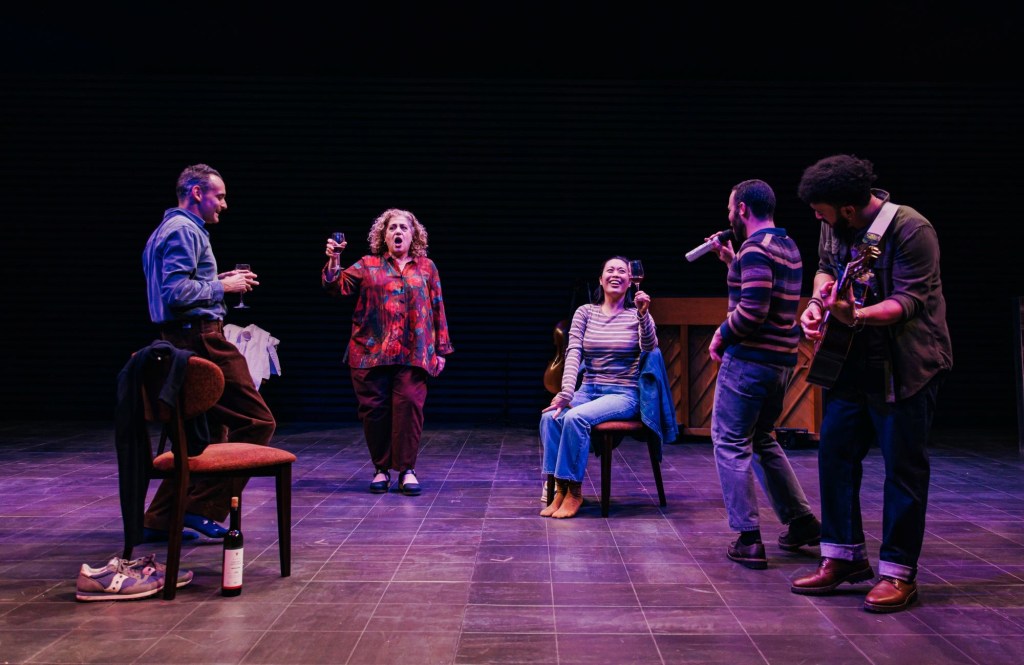
Elephant Shoes is currently playing a world premiere engagement at Two River Theater in Red Bank, New Jersey, in a co-production with Deaf West Theatre. It has a book by Ivan Menchell, lyrics and music by Caroline Kay, and direction by Jeff Calhoun, and it is a borderline synthetic affair, marked by appalling deficiencies in craft. If the deficiencies can be effectively addressed, though, the piece might develop into a fine, fresh romantic comedy with significant commercial appeal. (Kevin Ryan and Diane Scott Carter lead the commercial charge.)
The musical unfolds in two acts, and it puts a contemporary spin on Cyrano de Bergerac. Cy is a deaf tech developer who has designed glasses that will aid in the communication between deaf and hearing individuals. Roxy is a new employee who does not speak or understand ASL. Chris is Cy’s best friend, and currently dating Jenna. Chris’ father, Roy, is deaf, and an alcoholic who cannot hold down a job. Laurie, who is deaf, befriends Roy and offers him a job. Beverly and Wayne become Cy’s backers. And Bob, Liz, and Simone are Cy’s employees. Here are my notes.
• The story is, in principle, remarkably potent and wonderfully human, with a fine blend of comic and serious incidents, and an appealing adult personality located near the intersection of Charm and Quirk, and down the block from Smart and Cheek. But Menchell & Co. have thinned-out and cheapened the story with their evident aversion to consideration and rigor, exemplified by their disinclination to cultivate or maintain any sense of reality, relying heavily on convenience, and regularly serving up manufactured, unmotivated, and or poorly articulated moments, of the “musical theatre” persuasion, several of which are discussed in detail below. Plus, the structure of the story, including the patterning of the plot, is partially out of whack, leaving stunted the development of characters and relationships. We are, for instance, told, on multiple occasions, that Cy is falling for Roxy, and Cy even has a duet, with Bob, halfway through the first act in which he admits to falling for Roxy, but his falling for Roxy does not actually play out onstage, for Menchell & Co. have slotted in the first act not a single definitive private – or, for that matter, public – moment that finds Cy and Roxy coming together. And the moments in which Roxy and Chris come together, some of which involve Cy, are undernourished.
• Elephant Shoes consists of scenes, scenelets, sequences, segues, and stage splits, some of which contain texting, and, given the nature of the story, some of the scenes are exclusively signed, some are exclusively spoken, and some are spoken and signed, with the signed and spoken translations incorporated into the action. Plus, projections, of dialogue and lyrics, are utilized almost throughout. The musical has, as such, a certain structural variety and a certain compositional complexity, and the combination of the two has the potential to be tremendously exciting, but it is, at present, tremendously defective – specifically lacking in detail and definition – which are essential to effectively realizing such a crisply fluid narrative design, and to reaping the benefits of such a strong elemental medley. (Transitions! Transitions! Transitions! Or, more appropriately, dramatic progressions!)
• The lyrics, despite a presumably earnest effort, are incredibly faulty to the point of being disastrous: sophomoric, clunky, untheatrical, impairing, at nearly every turn, the deepening and development of story, situation, and character, even if some of the situations are, in and of themselves, suspect. But “Onion” and, to a lesser extent, “Forgot to Tell You” suggest that Kay is capable of writing at least moderately effective stage lyrics, with character and playfulness and a clear development and a dramatic charge. Even with cleverness and humor. Most of the other songs in the show need to be rewritten accordingly, and some need to be replaced altogether. Several are discussed in detail below.
• The music is not unpleasant, but it is largely generic, and the score develops something of a sonic sameness. Most of the songs would benefit from a greater sense of character and individuality, moment to moment, and most have nonetheless already been marginally enhanced by the professional orchestrations of Tom Kitt, written for six musicians: a conga drum accents one number, a shaker and a tambourine accent another, and violin and cello are woven throughout. (Meghann Zervoulis Bate is music supervisor and arranger.)
• Some scenes of dialogue are quite strong, quite engaging, even exciting, with room to grow. Among the strongest, at present, are a pair of encounters between Roy and Laurie (notwithstanding the preceding pantomimes, which must be refined); an exchange in which Chris begs Cy for help; an argument between Chris and Roy; a balcony scene between Cy and Roxy (that contains a terrific laugh line delivered by a nosy neighbor); and the central couple’s final scene, even though their romantic union currently lacks support. And, in a shrewd creative twist, a couple of said scenes are underscored, deliciously, with the music precisely calibrated to the attendant emotional temperature, supporting, enhancing, propelling the action. (The program does not credit the incidental music, but it is presumably the work of Bate or Kitt.) Other scenes of dialogue, even those in need of a massive overhaul, due to matters of mechanics, motivation, and the like, tend to contain a splash or two of purposeful play. But Menchell might amp up the purposeful play, moving forward. And he might more fully exploit the idiosyncrasies of the, happily, individual characters. And he might trust the silence in the scenes that are exclusively signed, rather than having Chris all of a sudden voice a random line. (The voicing currently registers as a self-conscious insertion on the part of the author, not an organic, compelled utterance on the part of the character.) And Menchell & Co. must find a way to keep tight, propulsive, charged, alive the scenes that involve spoken and signed translations, especially those in the first act, because most scenes of the sort are currently experiencing deadly drops in the narrative energy.
• The choice to close the first act with an ASL solo, for Cy, is inspired, and the song has the potential to be a showstopper, due in part to the uniqueness and daring of its fundamental nature, and to the terrifically fertile launching pad it has been provided, in principle. (Cy helps Chris score an invitation to enter Roxy’s apartment, and Chris does.) Plus, the use of cello to voice the melody is tasteful, and so is the surprisingly theatrical manner in which the lyrics are projected, with the size of the type increasing, ever so slightly, as the song builds to a climax. (Caite Hevner is projection designer, and Colin Analco is ASL choreographer.) But the lyrics are deadly, lacking a clear purpose, a clear development, and a clear dramatic charge, and leaving Cy – and, in turn, the show – treading water for four minutes, immediately prior to intermission. And what is the payoff of having Chris and Roxy emerge – inorganically, presentationally – on the balcony during the number? Give Cy the stage. And give him lyrics that allow him to hold the stage.
• An early scene in which Cy supposedly interviews Roxy is ridiculous, and Roxy’s song, “Safety in Numbers,” is completely useless. The lyric fails to serve situation and character, and it does not even relate to the interjections that Cy makes during the number. But Roxy has not been given a reason to sing in the first place. Cy simply asks her, in one of the show’s inexpert song setups, if she would like to share anything about herself. (Really?) If Menchell & Co. want a song in this position, and if they want that song sung by Roxy, the song should almost certainly find Roxy getting Cy to hire her, prompted by some form of resistance or urgency or emphatic need, and the song should, like the dialogue, almost certainly better exploit the idiosyncrasies of the character. (“Safety in Numbers” is the same bland musical-theatre pop ballad that we have heard time and time again, drowning in preciousness and overrun with generalizations.) Why, furthermore, does Cy introduce Roxy to every member of the team before she is even interviewed? And why does he plop her down on a large moving box when a couple of unoccupied chairs are sitting four feet away? And why does Roxy commence a private reprise of “Safety in Numbers” at the end of the scene, after securing the job? The lyric, again, is irrelevant. (What a musical Elephant Shoes might be if the authors would write explicitly and skillfully for situation and character, in the service of a fleshed out story!)
• The strand of story concerning Cy’s glasses comes and goes, and it makes little sense along the way: the unrealistic pitch, the unrealistic negotiation, the unrealistic and random marketing discussions (including the second-act opening), the sudden announcement of a launch event, the sudden problem with the technology (after roughly ten years of development), the sudden solution to the sudden problem with the technology, and the sudden reconception of the glasses, suddenly announced at the launch event. And what exactly are Cy and his employees doing in the office anyway?
• Cy, at one point, sits at his desk stage left, texting Roxy, who sits at a table stage right. Both are in the office, known as the Loft, which occupies the full stage. Then, in real time, Cy crosses the stage (i.e. the Loft) to speak with Roxy in person, but the dialogue, when he arrives, begins in the middle of that in-person conversation. (Huh?) And Cy, at one point, calls Roxy over to his desk for a private discussion – which is brief and innocuous: an incomplete thought, and a missed opportunity.
• “Falling” is part of a late-night scene that finds Cy, as Chris, texting Roxy, without Chris’ knowledge. (Chris has run off to get back with Jenna, and he has accidentally left his phone in the apartment.) The idea is sound, but the lyric needs functional clarity (and subsequent rewriting): is it voicing text messages, or is it voicing internal thoughts? And why does Chris appear, in limbo, to voice Cy’s half of the lyric? His presence pulls focus, and is entirely unnecessary, because we are already aware that Roxy thinks she is texting with Chris. No reinforcement is needed. The scene eventually concludes with Cy falling asleep in a presentational position, and failing to move a muscle the next morning when Chris arrives and turns on the lights. The treatment of this moment is absurd, and, like so many others, destructive to the storytelling, smashing little holes in the world, to the extent that the world was fully formed in the first place, and, as a result, lessening the pressure and the stakes and the investment and the interest and the effectiveness and the potential excitement. Likewise Chris entering the Loft without anyone addressing his obvious presence (before he whisks Roxy away for a chat); and Roxy saying nothing when Chris briefly disappears under her balcony, for a private exchange with Cy; etc.
• The brief prologue consists of a succession of social media videos, filmed over several years, in which Cy discusses his long and difficult journey to find a backer. It is a dull and schlocky way to start the show, and, specifically, to establish the high stakes of Cy’s current meeting, with Beverly and Wayne. Plus, Menchell & Co. have, in employing such a prologue, wasted the opportunity to exploit Cy’s pent-up frustration, coupled with his resolve, onstage, in action.
• “Anxiety or Love,” sung by Roxy, has a terrible lyric and a terribly weak ending, but the song is, in principle, well spotted. Indeed, Elephant Shoes seems to suffer less from spotting than it does from purposing, execution, and setup.
• “Not for Me” is a fine idea, essentially framing the first date between Chris and Roxy. But such an intricate sequence of this sort requires, to be effective, extreme precision and specificity – which “Not for Me” does not currently have. And why does Roxy end the song saying that Chris is the guy for her, when, in the following scene, she essentially tells Cy he is not?
• “Stubborn and Difficult Dad,” sung by Chris, is begun without purpose, and its culminating lyrical turn, despite making sense, earns little payoff as a result. Plus, the lyric is rough, and somewhat forced. A reprise of “Stubborn and Difficult Dad” is signed by Roy late in the show, and one wonders if Menchell & Co. have not robbed Chris of a moment in having him sing the translations for Roy, because his singing for Roy suggests that Roy has already won him over, offstage, prior to the scene, rather than Roy being forced to win him over, onstage, in song, with Chris eventually feeling compelled to sing (for himself). Nonetheless, Chris and Roy have, at present, the shapeliest arcs, and Chris has, at present, the strongest narrative presence. His pursuits, conflicts, and personal struggles are comparatively pronounced, and his trajectory repeatedly intersects with – and, to an extent, powers – those of Cy, Roxy, Roy, Jenna, and Laurie. Even if his personal struggles, especially concerning Roxy and Jenna, might benefit from greater exploration.
• Beverly and Wayne run dangerously close to caricature. Jenna and Laurie are not making a definitive mark. And the three employees are afterthoughts. But they need not be.
• Elephant Shoes is, on occasion, preachy, and “Treat Me Like a Man” is one such occasion. But a running list of infractions is a fine idea, and it may reap huge rewards, if the execution is refined.
• The staging, like the material, lacks detail and definition. Entrances and exits are frequently sloppy. Actors loiter or stand in lines. The blocking in the Loft is uniformly poor. A glass of alcohol is preset prematurely. And one wonders if there is not more room for physical comedy – which is ultimately a matter of material, but which will demand crispness and precision on the part of Calhoun.
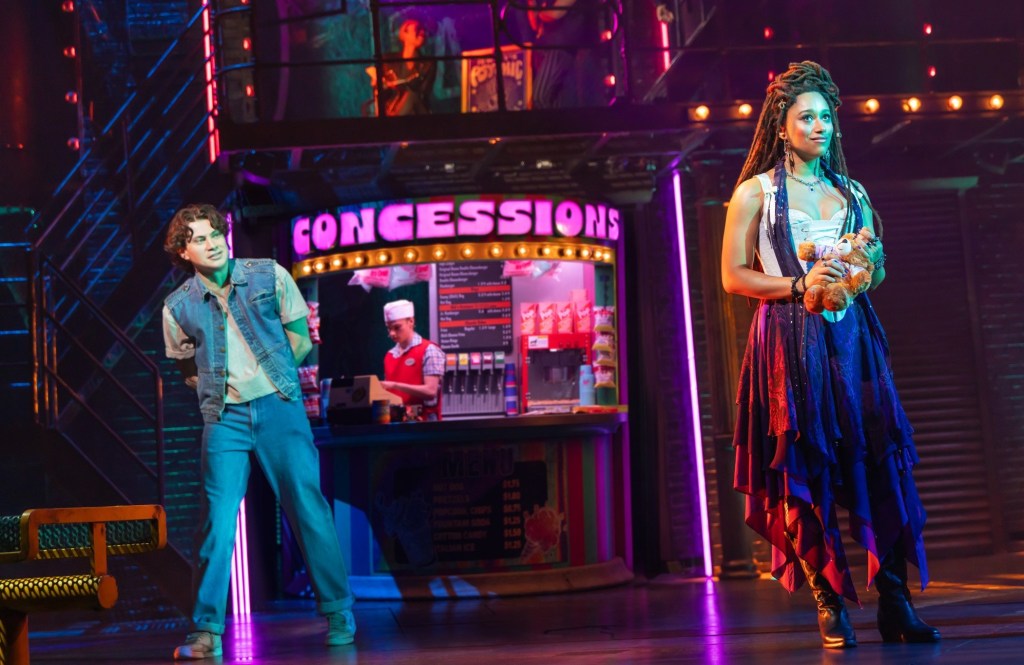
• The physical world of the show is sleek, colorful, and attractive, if something shy of distinctive, and the set, in particular, is generally functional, but why has the band been situated onstage? (The musicians sit on the second tier of the two-tier set.) Tobin Ost is scenic designer, Annie Wiegand is lighting designer, Sarafina Bush is costume designer, and a word must be said for the sharp, tasty solid-color top combos worn by Cy – presumably on purpose, given his means of communication.
• Daniel Durant, as Cy, is certainly likeable, but he is not entirely in his body, and he has not carved a definite character, physically. Taylor Iman Jones, as Roxy, is no more than serviceable, perhaps hampered in part by the material, but she has a strong vocal instrument. James Olivas, as Chris, is very strong. And the balance of the cast ranges from solid to unremarkable.
• Lastly, for the record, my husband liked the show – a lot.
PRESS ANNOUNCEMENTS
Here is a list of select press announcements from the past week. Each headline is clickable for more information.
• Paddington Stage Musical Confirms 2027 Broadway Bow
• Sherie Rene Scott Will Join The Rocky Horror Show as Magenta
• MCC Theater Will Host World Premiere What’s Eating Gilbert Grape Musical in 2027
• Todrick Hall’s Midnight Musical to Have New York Premiere This Fall
• Just in Time Extends Additional Six Weeks on Broadway
• Waitress Will Embark on 10th Anniversary North American Tour This Fall
• Masquerade Extends; Austin Colby, Derrick Davis, and More Join the Cast
• Paula Vogel, Michael Maso Unveil Cape Cod Center for Playwrights and Theatrical Composers
• Scott Kaplan Named Associate Artistic Director of Manhattan Theatre Club
• One Day Musical Will Transfer to London’s West End, Starring Jamie Muscato and Sharon Rose
PREVIEWS AND OPENINGS
Here is a list of the new musicals and revivals either opening or beginning previews during the upcoming week, specifically on Broadway and Off-Broadway. It contains, as well, select new musicals beginning performances regionally, and select new musicals and revivals beginning performances in New York City. Each title is clickable for more information.
Monday, June 22
Tuesday, June 23
Wednesday, June 24
• Opening: Music City
Thursday, June 25
Friday, June 26
Saturday, June 27
• Regional: Marielitos
Sunday, June 28
• Previews: Giulia
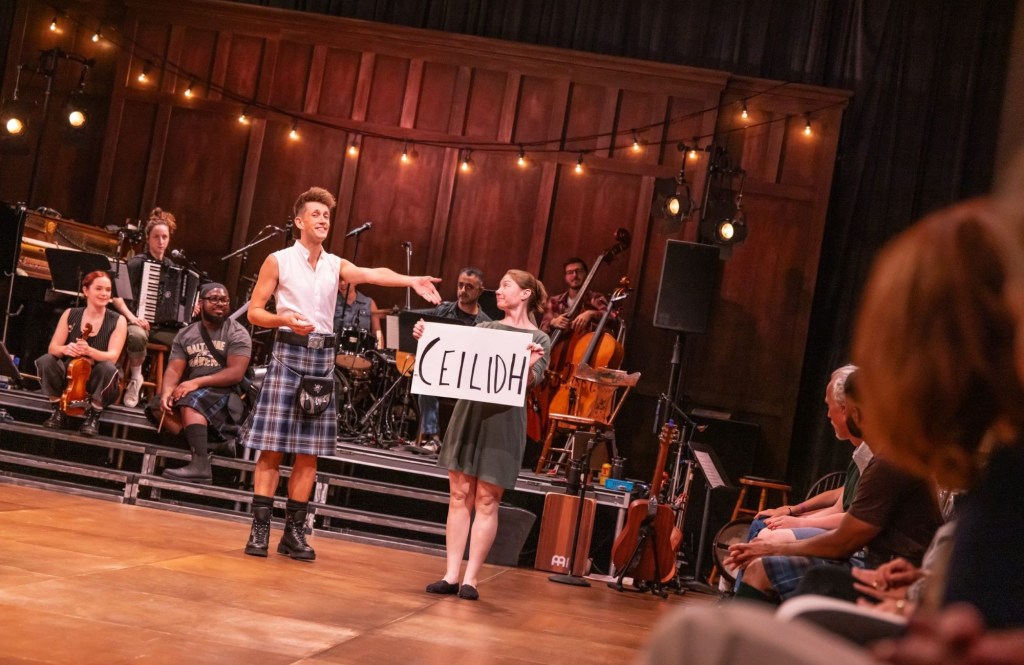
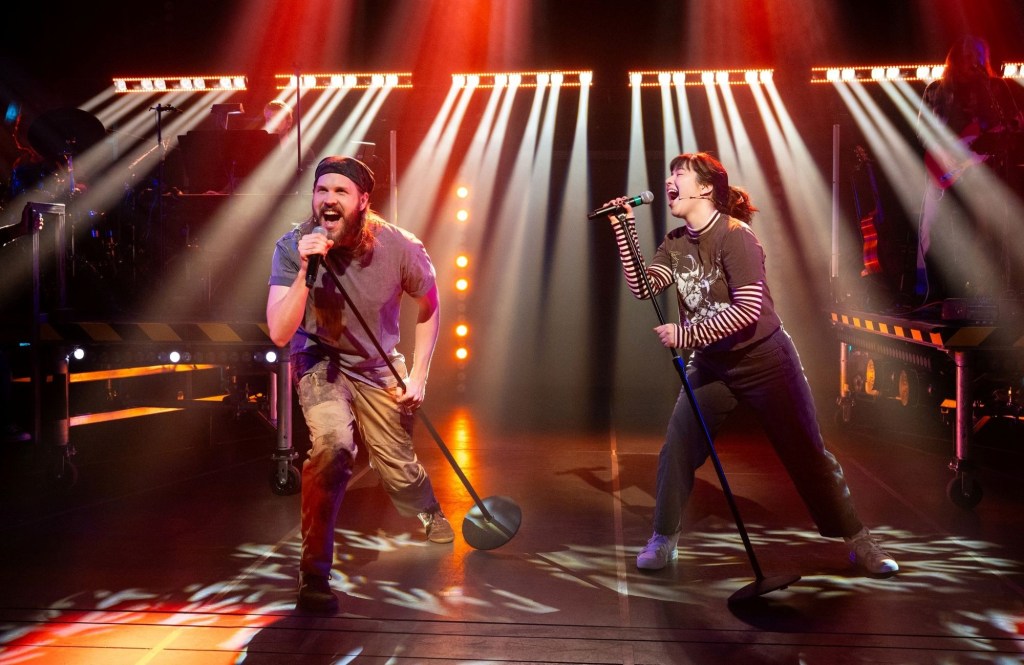
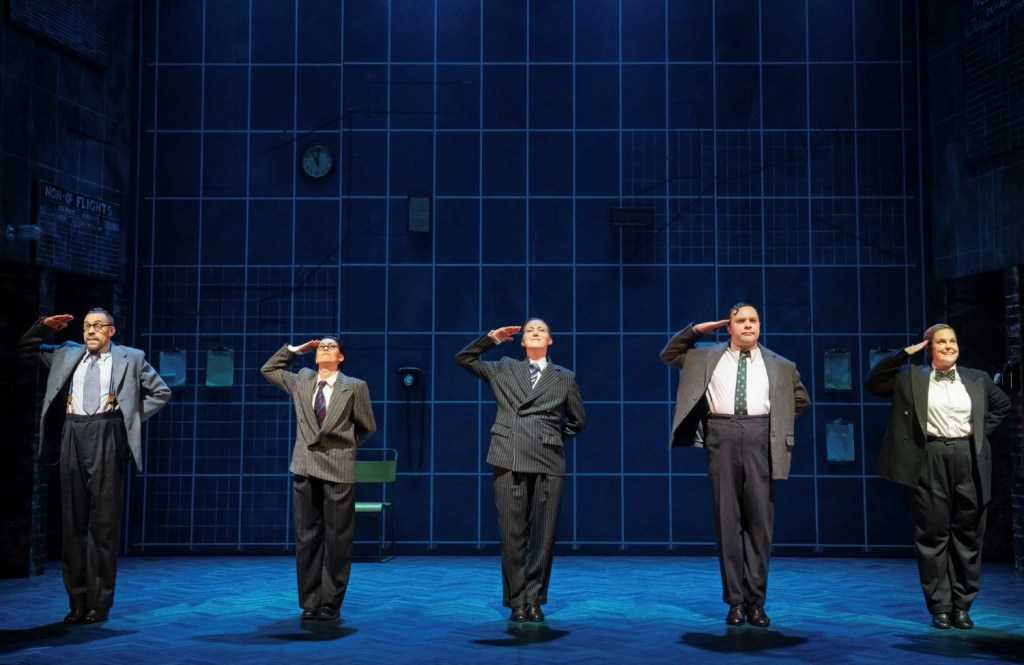
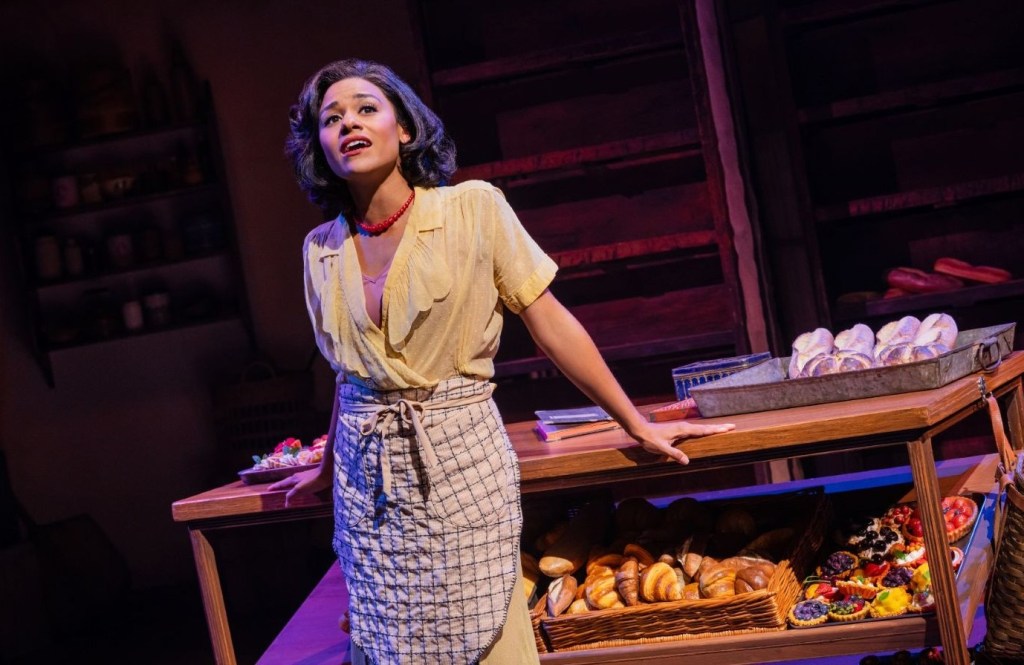
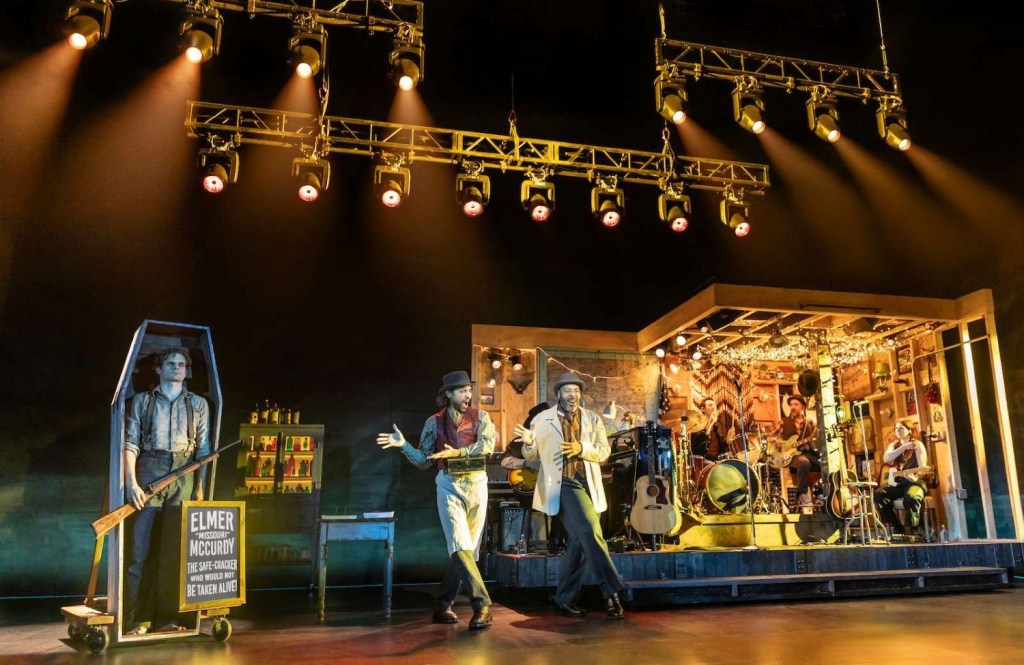
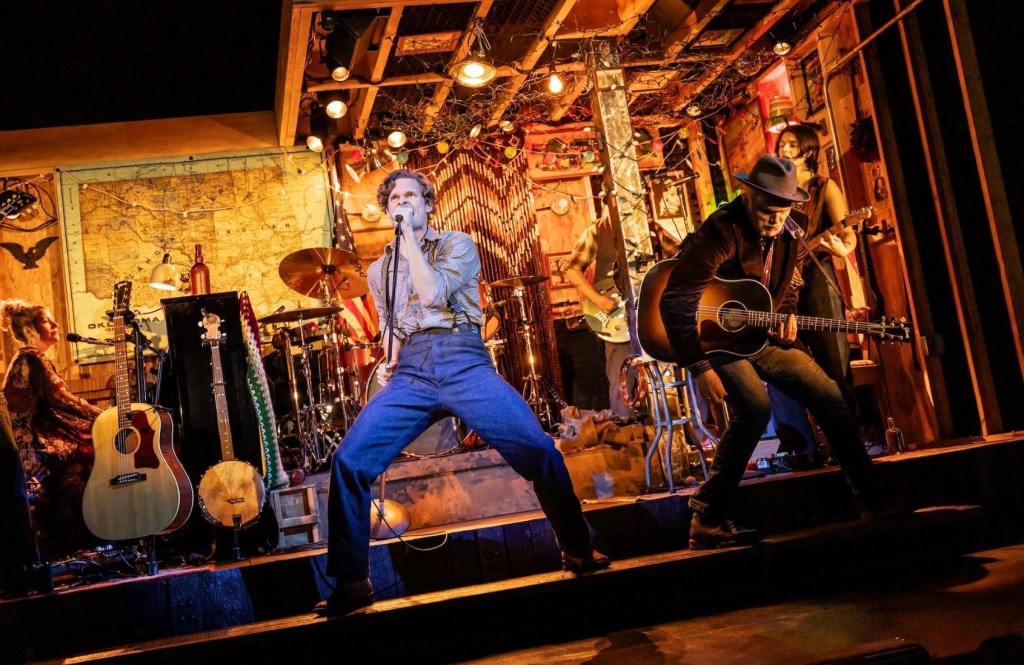
Photo of a scene from Elephant Shoes by Curtis Brown.










Leave a comment