A journal for industry and audiences covering the past, present, and future of the musical stage.
Today is Sunday, and this week’s Report contains detailed notes on The Lunchbox at Berkeley Rep and Freak The Mighty at Cleveland Play House; and abbreviated notes on Girl, Interrupted at the Public Theater. Plus, a quote of the week; select press announcements from the past week; and the upcoming week’s previews and openings.
QUOTE OF THE WEEK
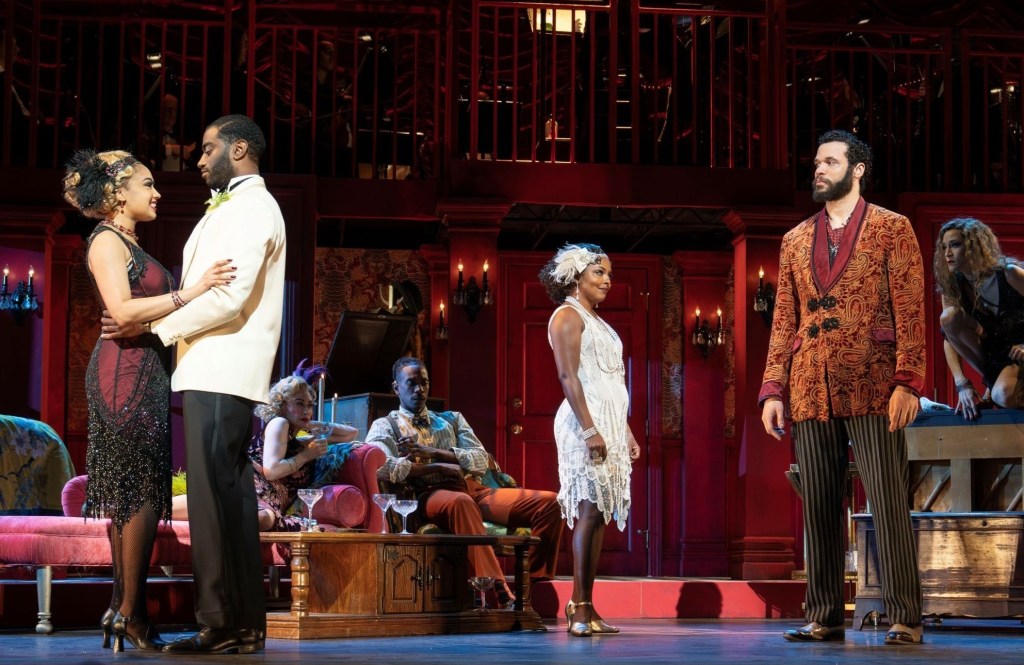
The lyric, by Howard Dietz, for “The Hottentot Potentate,” performed by Ethel Waters in the 1935 revue At Home Abroad. The revue is conceived as a classy world cruise, and its episodes (i.e. global stops) are connected with projected cablegrams. The cablegram that immediately precedes this particular item reads, “AFRICA SPEAKS BETTER THAN JOHNNY WEISSMULLER STOP TRIBAL TOM TOM DRUMMERS ASKED TO BE REMEMBERED TO DUKE ELLINGTON STOP CAPTURED LION WHO SAID HE ONCE WORKED FOR METRO GOLDWYN MAYER.”
All the crowned heads of Europe
Have trouble with their thrones
But I’ve got a kingdom in the hollow of my hand
I’m the Empress Jones
Hailed from Harlem, settled here
Knocked the Congo on its ear
I came, I saw, I conquered a nation
With my trickeration
My witchcraft made ’em make a crown for me
The natives do a lot of bowing down for me
And every one of them would go to town for me
The Hottentot Potentate
I brought my bottle of Chanel with me
I took along a script of Lulu Belle with me
I win them all, but, oh, it raises hell with me
The Hottentot Potentate
I fool ’em – playing a part
I rule ’em – I’ve got an art
I gool ’em – right from the start
I gave ’em that hotcha, je ne sais quoi-cha
The new name for the Congo stamping ground
Is Empress Joneses Africana vamping ground
I don’t allow no camping on my camping ground
I’m hot and potent
Potent and hot
The Hottentot Potentate
The jungle now has lots of chic to it
A touch of Cloisonne and of Lalique to it
And who put all this drawing room technique to it?
The Hottentot Potentate
This wild and savage open-airy land
With lions and with tigers was a scary land
Until I made of it a savoir-fairy land
The Hottentot Potentate
I slayed ’em – right from the start
Okayed ’em – when they were smart
I made ’em – copy my art
I gave all their movements modern improvements
The Congo’s not what one supposes now
The heathens sleep upon a bed of roses now
And Cartier rings they’re wearing in their noses now
For the hot and potent
Potent and hot
Hot
Potent
Hottentot Potentate
THE LUNCHBOX AT BERKELEY REPERTORY THEATRE
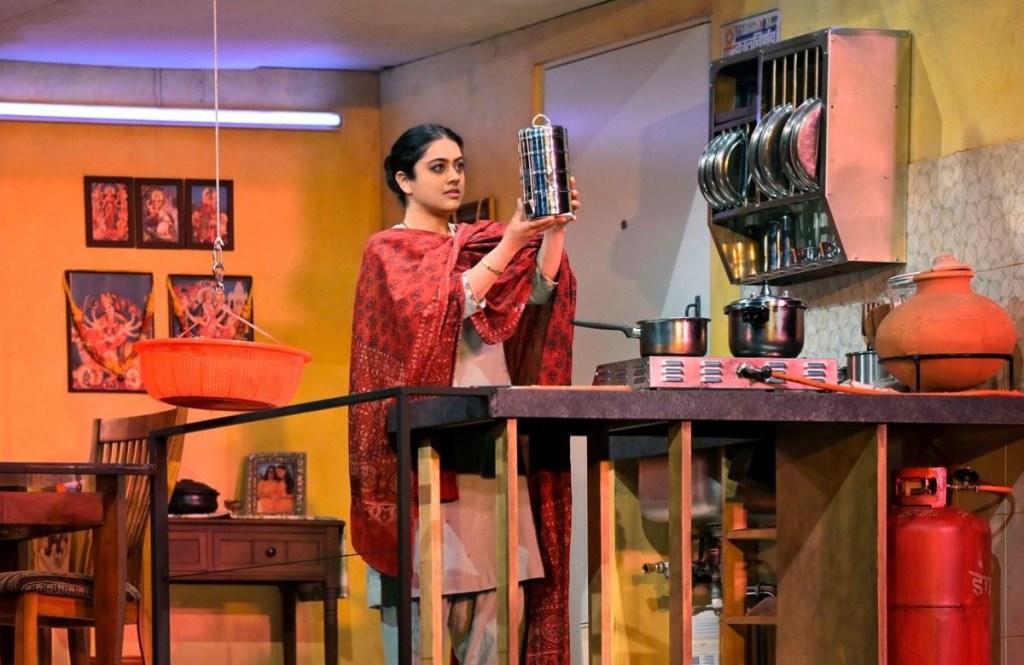
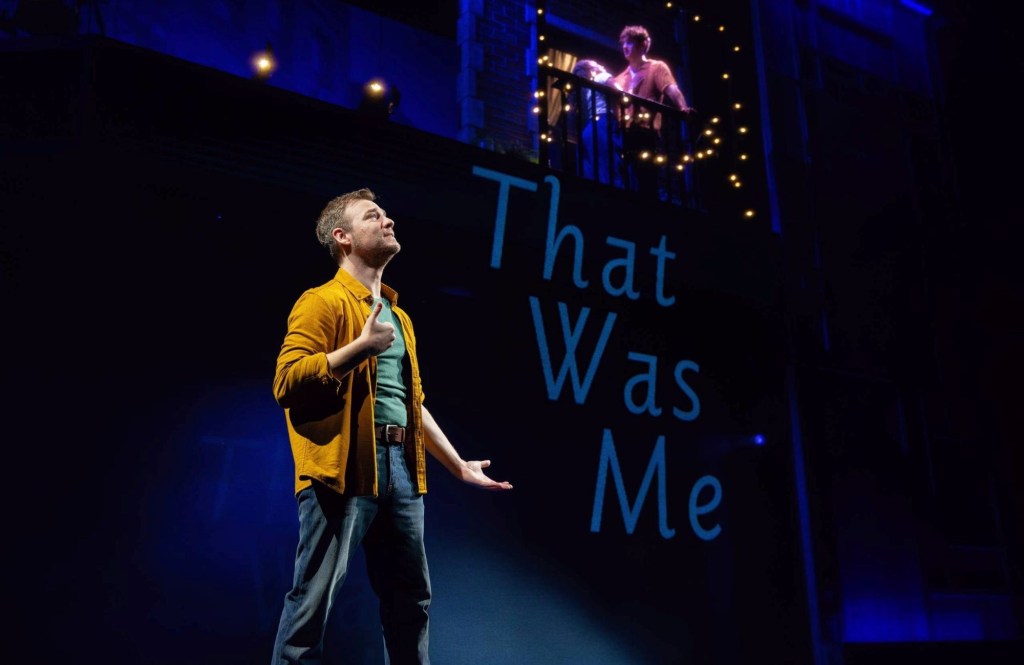
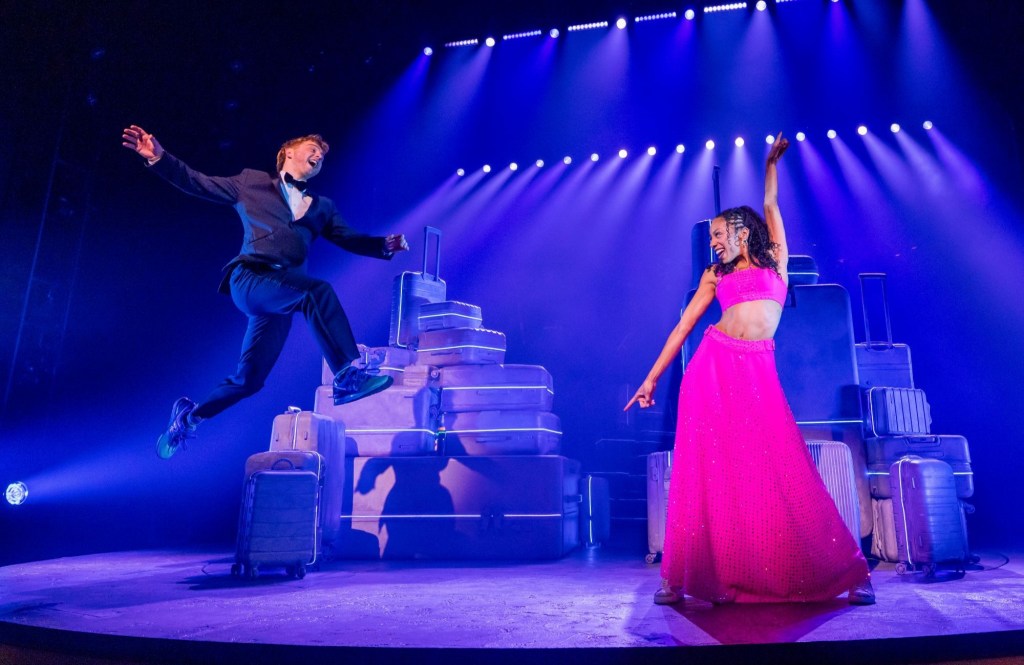
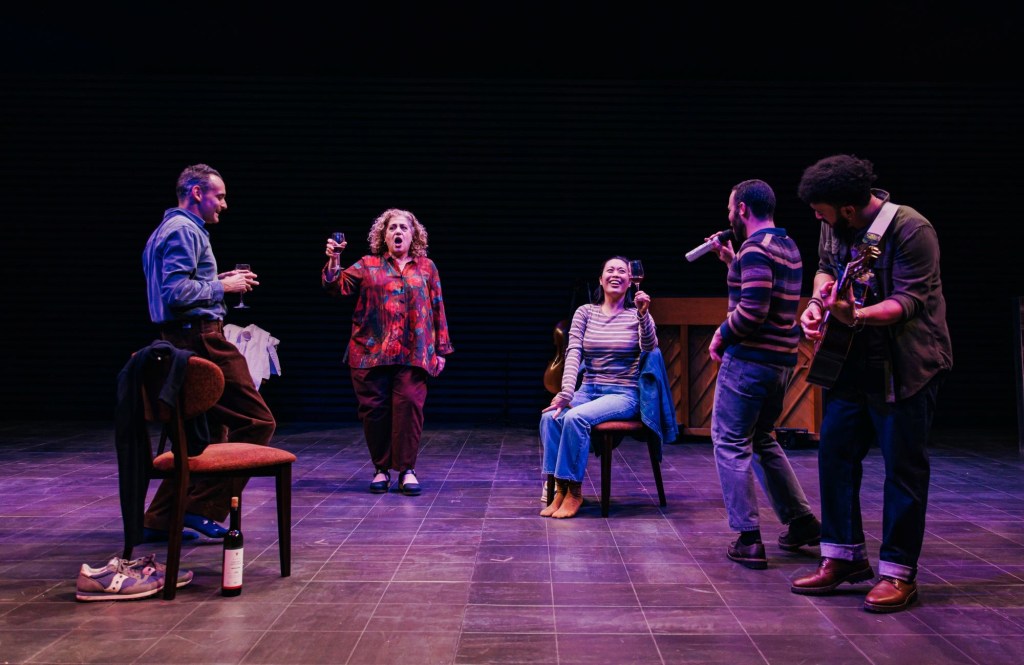
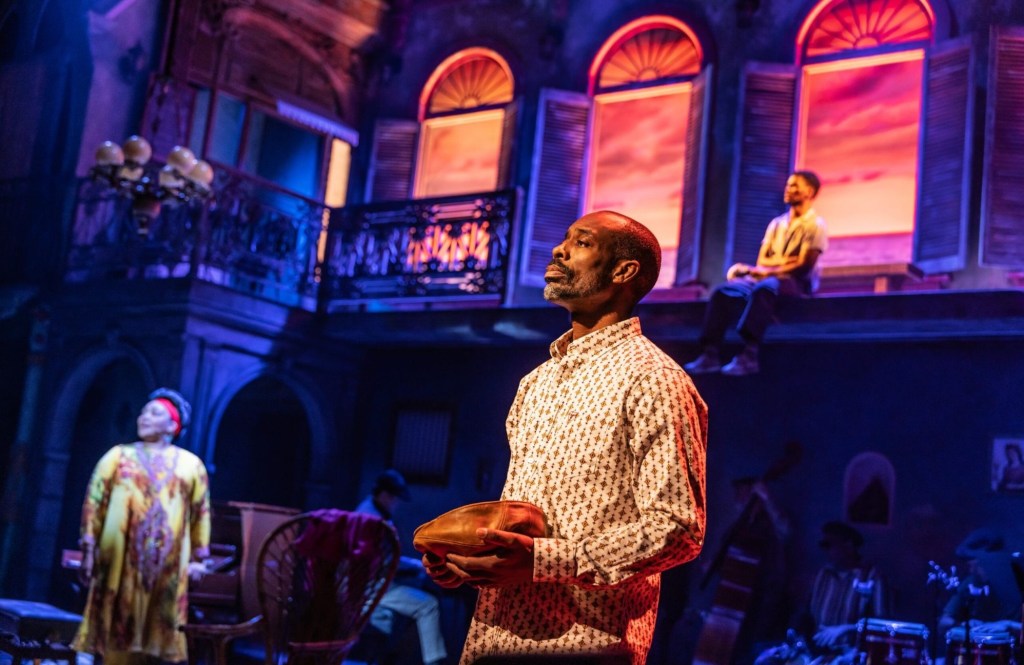
The Lunchbox, a new musical based on the 2013 film, is currently playing a world premiere engagement at Berkeley Repertory Theatre in Berkeley, California. It has a book and lyrics by Ritesh Batra, lyrics and music by Daniel and Patrick Lazour, and direction by Rachel Chavkin, and it is a wonderfully promising piece, with work still to be done. Every co-producer and investor should make plans to inspect the intimate affair, for it could be a quiet moneymaker. (Mark Lunsford and Nik Dodani are leading the commercial charge.)
The musical, which runs roughly 105 minutes, unfolds in Mumbai, and it centers around a young wife, Ila, who begins corresponding with a middle-aged widower, Saajan, after her husband’s lunchbox is delivered to the wrong address. Mrs. Deshpande lives in the apartment above the unhappy couple, and Shaikh is an eager young man who has been hired to replace Saajan when Saajan takes early retirement. Here are my notes.
• The score has the capacity to become, with further development, one of the finest theatrical scores of this century: smart, crafty, distinctive, thrilling. The lyrics and music are already exploding with character, and, on the whole, beautifully tailored to the respective moment, revealing, among other things, a stylistic individuality (each style part of a cohesive sonic tapestry), and the interplay between the lyrics and music is skillful and frequently exhilarating, with melodic jumps, internal mode shifts, juxtaposed phrasing (short vs long), ascending rhythmic motifs (especially in “Preparations”), and the like that evoke the emotionality and amplify the drama of the attendant lyrics. And the lyrics are, on the whole, dramatic and active and flavorful – a succession of continuously developed thoughts, often neatly articulated, and tinged with poeticism. The traditional vocal ornamentations, especially the murki, are gorgeous and purposeful and deliberate. Some of the melodic and harmonic choices are excitingly unexpected. (See: “In Bhutan.”) The accents and fills, in the music arrangements, regularly complement the attendant lyric. (See: “Only Hungry.”) And the orchestrations, by Nathan Koci, Rohan Krishnamurthy, Daniel Lazour, and Arun Ramamurthy, are incredibly fine, written for eight musicians. (The steady raps on what seems to be a concert bass drum in “Courage” are pure gold, and the ever-popular arpeggiated piano runs somehow manage to carry a sense of freshness.) But Batra & Co. must address a number of matters, like truncation, buttons, redundancy, song assignment, and temporary loss of focus or intent, discussed in detail below. (Sheela Ramesh is music director, and Nathan Koci is music supervisor.)
• The story is, in principle, involving and deeply human, and though it is, at present, being fairly clearly told, Batra & Co. have not given it a definitive theatrical treatment, at least not yet, and its humanity is muted. A large part of the problem is the insufficiently defined and perhaps underdone narrative language and composition – specifically the weaving throughout the piece of ensemble members, musicians, and expressionistic movement, by Reshma Gajjar, and, relatedly, the transitions involving the shifting of furniture. The movement, in particular, is unassured, indistinct, nondescript, and, on several occasions, the mere use of movement is inexpert, impeding the storytelling by pulling focus from the action: “Just Words,” “The Chili Bomb,” “Ila’s Thank You,” etc. Even the straightforward appearance of Ila’s daughter toward the top of the finale, during Ila’s solo, is terribly distracting, terribly unproductive. (This is an exceedingly frustrating phenomenon, particularly given the high quality of the lyrics.) Meanwhile, the team has chosen to employ random ensemble members in significant tertiary roles, essentially asking the audience to engage successively with strangers, which is yielding, at present, no impact and no payoff, only diluting the storytelling, rather than the team employing a single individual – a single featured player – who might cultivate a relationship with the audience, inviting the audience into the story at the top of the show, singing the street-song crossovers, and so forth, becoming a key component of the connective tissue that the creators, smartly, seem intent on having. (A waiter might be eliminated from his associated song altogether, to be discussed below.) The team’s current use of musicians is measly and similarly unassured, similarly unessential. And the scenic transitions do not currently have the desired effect, likely due in part to the timing of the execution, and, again, the movement.
• The structure is fairly strong, but it would benefit from rejiggering and refinement (and the clarification and definition of language and composition will require as much). An early succession of letters, reactions, and responses, for instance, contains momentary losses of tension and focus and precision and narrative development, essentially from “The Chili Bomb” through “Just Words.” “Here I Am” and “The Café,” meanwhile, are situated back-to-back, despite the two songs essentially serving the same narrative purpose, causing something akin to a prolonged or a double beat. (Plus, the former would surely benefit from a more active, wrestling lyric, and the latter would surely benefit from the elimination of the aforementioned waiter as a primary vocal participant.) And so on and so forth, for structure inherently touches virtually every facet of a stage musical, and several subsequent notes are structurally related. Including internal structure.
• The songwriters have a tendency to splice songs together or to end them abruptly, and the execution of the abrupt endings, in particular, is well done. But these two structural and dramaturgical techniques, while quite valuable, are currently overused in The Lunchbox, and, in several instances, the authors seem to mistake a purposefully abrupt ending for a premature one – unearned, purposeless, sans payoff – which is to say: several of the songs in The Lunchbox are currently prevented, by the authors, from developing into a complete dramatic thought, a complete dramatic statement, robbing the story and the audience of a rich, robust, fully sculpted moment – a stunting, deflating effect, with dramatic and theatrical repercussions. “Courage,” in particular, could and should be a showstopper, particularly as performed by Kuhoo Verma, who plays Ila, beautifully. It is not. “I Got a Lunchbox” dribbles into the finale. Etc. Etc. Etc.
• The characters are individual, but Saajan has not been given a definitive narrative presence or a definitive launch, in part because he does not really sing, in any substantial way, until the end of the show – which would not necessarily be a problem, but Batra & Co. have not accounted for that fact in dialogue. (Manu Narayan, as Saajan, is solid, but he has a way to go, perhaps hampered in part by the material.) Ila’s daughter is an afterthought, and, worse, so is Ila’s husband, and his convenient, fleeting presence is almost certainly undercutting the power and the emotional release of Ila’s eventual departure. Shaikh briefly drops out of the narrative following his introduction, but his disappearance might be naturally remedied with the structural refinement – and resulting efficiency, increased focus, and fullness – of the intermediate scenes. (Aathaven Tharmarajah, as Shaikh, is strong.)
• “Only Hungry,” sung by Mrs. Deshpande, is a difficult, dynamite number, and the use of quasi-free spoken words for the third stanza is inspired. But the song needs a stronger ending, a definitive ending. And Anisha Nagarajan’s performance of the song needs to be better calibrated. (Nagarajan seems eminently capable of doing so.)
• “Old Things” is stalling the story, and nearly grinding the show to a halt. It does not deepen Ila or Saajan, and it does not deepen their relationship.
• The language of the letters is acceptable, but the team might give it greater definition and a meticulous progression. The central figures’ joint voicing of a certain line, for instance, currently registers as early or out of place, and it is hampering the comedy of the respective line. Elsewhere, certain instances of back-and-forth lines feel unsteady, perhaps even unnecessary, but certainly unsupported at present. One of the strongest letter moments occurs late in the show, when Saajan, underscored, speaks his letter while Ila sits alone in a café. This also happens to be the most effective, at present, bending of time – a device the use of which is, in principle, a nice touch on the part of the show’s creators. (Batra deserves a special mention, considering The Lunchbox is, to my knowledge, the screenwriter and director’s first excursion on the musical stage.)
• In “If You Get a Letter You Reply,” sung principally by the ensemble, why does Saajan sing the final three lines, instead of singing only the final line? What is the narrative or theatrical benefit of having him do so? (None that I can see.)
• The wedding scene is awkward. And anemic, especially considering we have been explicitly told that the bride has a large family. Perhaps the wedding dance, a beautiful bit of structural juxtaposition, should be elaborated and exist as an independent interlude, eventually opening onto the principal scene, with the ensemble promptly leaving the stage.
• The opening number has swell and sweep, and it pulsates with life, nearly reaching remarkable heights. The vocal layering is tremendous, and so is the opening line, instantly grounding the story and reeling in the audience. But the movement, especially at lights-up, is indistinct, and the mid-song mode shift might be sharpened or enhanced.
• The closing number, too, has swell and sweep, and it, too, pulsates with life, nearly reaching remarkable heights. But the final moment, as a technical matter, is not working, likely due in part to the busyness of the stage and the preceding proximity of the central figures. And Ila should almost certainly be given a longer solo vocal at the top of the song, at least double the current length, allowing her thoughts to fully develop, her transformation to fully establish, her being to soar (and the show with her), before the song opens outward to include the entire company.
• “Golden Years,” sung by Shaikh, is well spotted and well begun, but what begins as Shaikh pleading for Saajan to train him quickly goes adrift, losing focus and leaving the storytelling muddled. The lyric must be refashioned for a specific dramatic purpose, and if the piece is to be a plea, the authors might incorporate greater resistance on the part of Saajan – which might help to give greater detail and definition to his character, supporting the launch of his arc. Plus, the song needs a proper ending.
• “Better Here,” sung by Shaikh, is presently purposeless. The authors have not given Shaikh a reason to sing, though I understand the technical value of having a rousing uptempo in that position. If the song is retained, necessarily with new dramatic support, the internal dance break should be permitted and encouraged to grow, and the button of the song should end the associated scene. Batra & Co. have made a poor, poor “musical theatre” move in allowing a senseless dialogue addendum, particularly given Shaikh’s costume change and his closing position.
• “Preparations” has been built with an exceedingly clever dramaturgical trick, effectively launching Ila’s arc in a dramatically active manner that simultaneously establishes, in a dramatically active manner, Mrs. Deshpande, who explicitly, repeatedly tells Ila what she (Ila) wants. But a small dramaturgical beat would seem to be missing immediately prior to the song.
• The verse of “Bird of Gold” does not match the emotional pitch of the preceding scene. (The movement between dialogue and song in The Lunchbox is nonetheless smooth and strong, on the whole, and the dialogue, on the whole, is acceptable, with room to sharpen and grow.) And if “Bird of Gold” is to be retained, the authors might consider a reprise later in the show, to justify the song’s existence in the first place. (The three restaurant workers are, at present, never seen or heard from again.) Plus, a reprise of “Bird of Gold” and or a second visit to the restaurant might allow the authors to deal with a gaping hole in their story: why does Ila’s lunchbox continue to be delivered to Saajan, especially when we are explicitly told, at the top of the show, that the Dabbawallahs never deliver to the wrong address? Separately, the chorus lyric of “Bird of Gold” has a rough start, little helped by the fact that the start is sung by all three men. And, incidentally, the song is not really needed to set-up Saajan’s use of the titular phrase at the end of the show, especially since Saajan is not even present for the song.
• Why does Ila ask Saajan his name so late in the proceedings?
• The movie sequence is insubstantial, but a fine idea with a fine start, courtesy of Mrs. Deshpande.
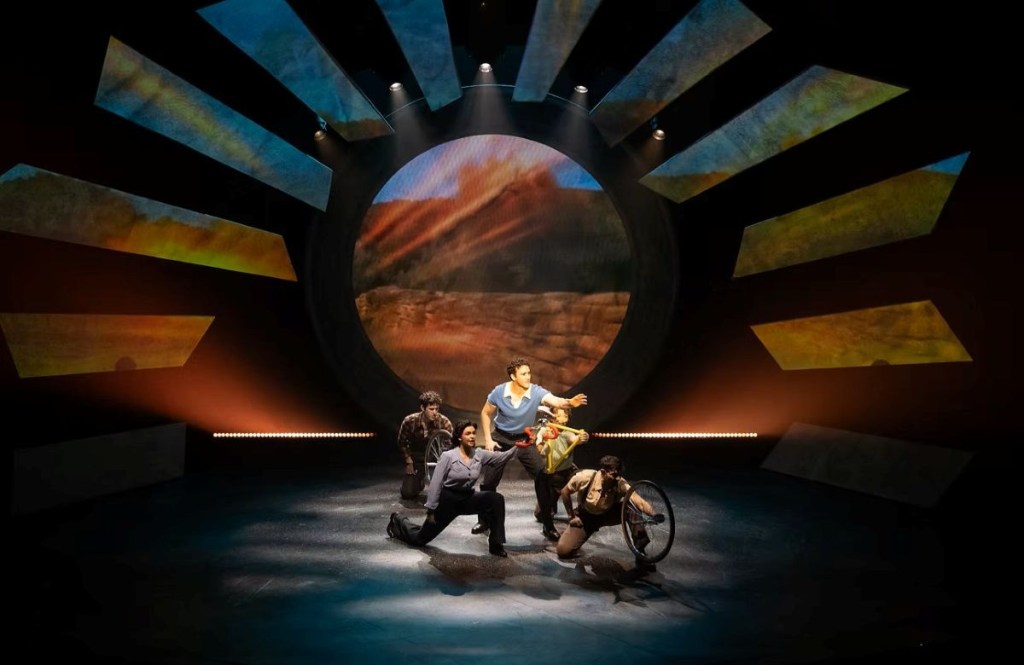
• Chavkin exhibits a firm hand, and she uses the stage well, despite the major issues with language and composition, and she and the authors are well on their way to realizing a quiet sustained tension and an individual world. The blocking and the technical elements are, in certain instances, nicely synchronized. The bus is nifty. And the descending fans creates a striking image.
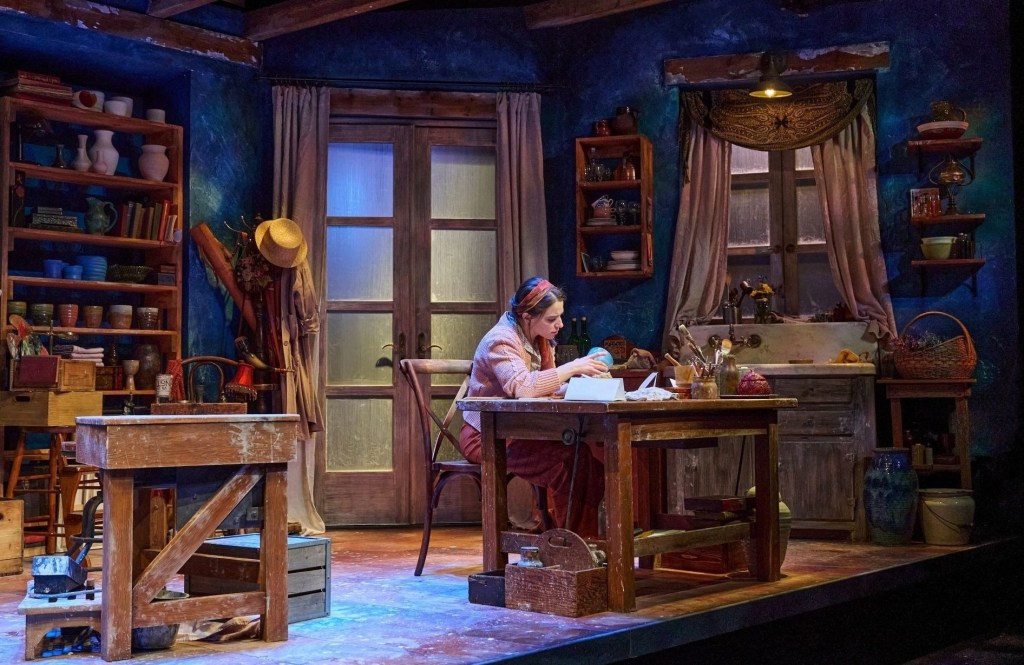
• The sky-high unit set, by Mimi Lien, is tasteful, fabulous, and functional, with the free-standing, three-story housing structure shrewdly exploited by Chavkin, who has used judiciously the turntable upon which the housing structure stands. The lighting, by Bradley King, is solid, but it is short on sculpting and dynamism. (The red wash for “The Chili Bomb” is dull and obvious.) The costumes, by Arjun Bhasin, are especially fine. And the show has been comfortably amplified by sound designer Justin Stasiw, whose opening street effects are well done. But Stasiw and Chavkin must be taken to task for outfitting the actors with concert headgear – and especially for such an intimate and human property as The Lunchbox.
FREAK THE MIGHTY AT CLEVELAND PLAY HOUSE
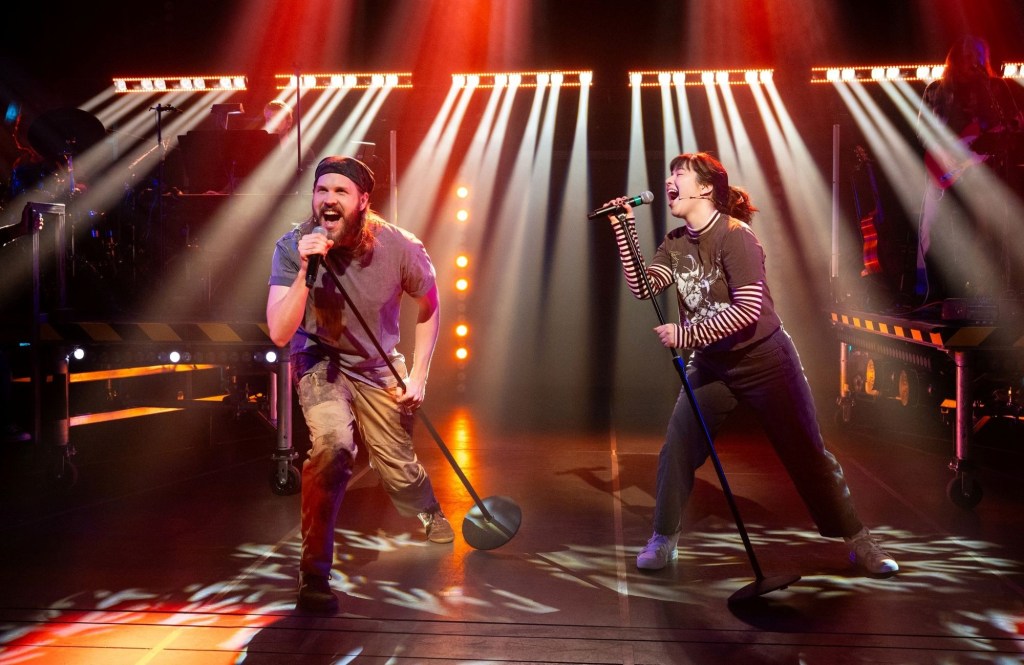
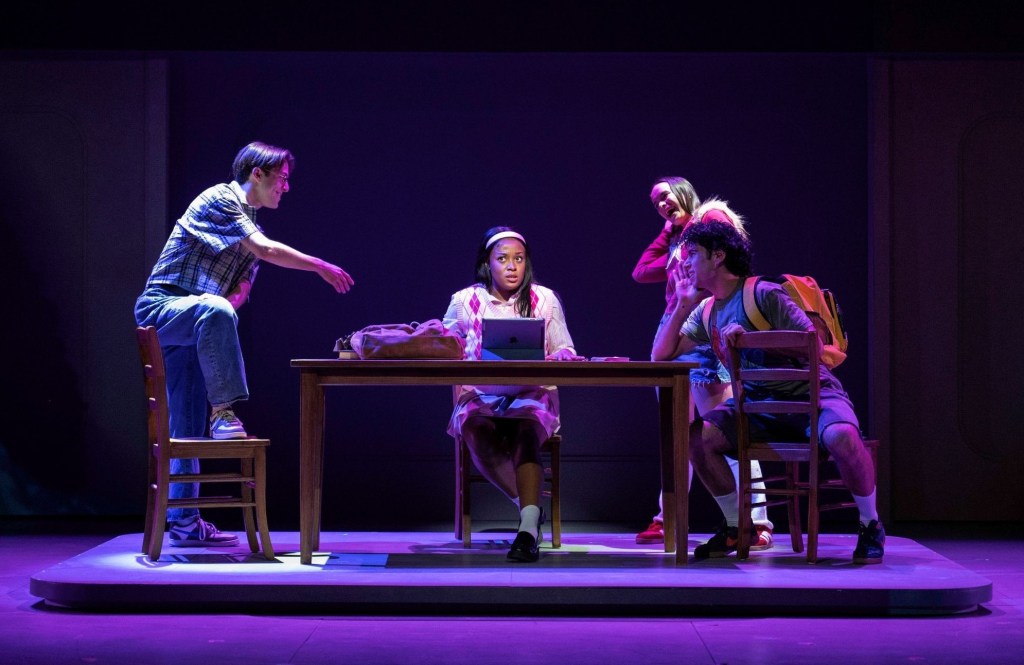
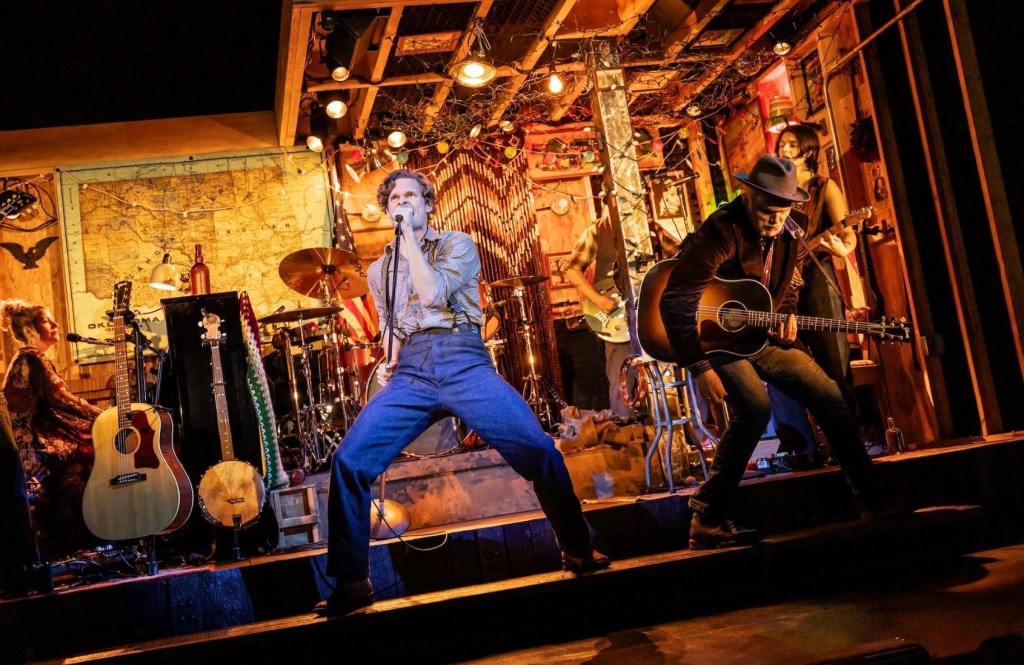
Freak The Mighty, a new musical based on the 1993 novel, is currently playing a world premiere engagement at Cleveland Play House in Cleveland, Ohio. It has a book and lyrics by Anthony Drewe, music by Ryan Fielding Garrett, and direction by Michael Barakiva, and it is a bland, sloppy affair. Sue Frost and Randy Adams lead the producing team, and Freak The Mighty heads to Seattle Rep next month, but the pre-planned move may prove wasteful, given the large-scale problems, in material and production, already identified, and the little time available to address them. Here are my notes.
• The structure, including patterning of plot, spotting of songs, continuity, and narration, needs to be overhauled, such that the story, onstage, has a clear, central thrust, a consistent development, and a continuous, motivated charge, building to a single, definitive ending. (Both acts currently have a false ending, due in part to the emotional pitch of “Before You” and “Walking High” respectively, and due in part to the meandering, stop-and-start nature of the narrative.) The narration, at present, adds absolutely nothing to the proceedings, in terms of either drama or theatricality; nothing is being said by Max or Kevin that does not play out onstage, or that could not easily be incorporated into a few dramatically active lines of dialogue. The continuity is out of sorts. Why, for instance, are Iggy and Loretta all of a sudden helping Kenny at the top of act two, and why, at the top of act two, does Max speak about his father as though he did not just see his father at the end of act one? And the spotting – and purposing – of songs is quite unsteady. Indeed, nearly every number seems to be searching for a dramatic reason to exist.
• The lyrics, relatedly, are largely untheatrical, serving, in most cases, no active, dramatic purpose, and regularly filled with generalizations. (“Life’s Too Short” and “You Can Do It” are among the small number of possible exceptions, but nowhere near topflight numbers.) Plus, numerous lyrical thoughts have been inexpertly broken across melodic phrases. And some rhymes are highly suspect.
• The characters and dialogue tend to be stocky. The laugh lines tend to be cheap. And if all of the material, including the songs, were more focused and efficient, Drewe & Co. would almost certainly be able to fully excavate and arc all nine of the principal characters.
• The authors seem to want to position the physical town of Portsmouth as the tenth principal character, but the lines suggesting as much are few and jarring, and the town is ultimately an afterthought. Even though the preset look has a large sign saying, “Welcome to Portsmouth.”
• Why does Max pull Kevin, in his wagon, in circles around the apron of the stage, going nowhere in particular? Repeatedly! Certain aspects of Freak The Mighty register as amateurish, and this is one of them. The aimless circling, by the way, is a matter of both material and staging. And so are the awkward split-stage moments. And the awkward transitions.
• Some of the songs have a valuably individual musical style, but much of the music feels generic. And the muddy, indistinct orchestrations, by Scott Wasserman, make the situation worse. Even the percussion flourishes are unexciting.
• The opening, “A Day in the Life of Maxwell Kane,” involves the same idea being repeated over and over again for roughly five minutes, disregarding an insubstantial interlude sung by the central figure, and the title line has an unproductively presentational bent.
• “Better Off Without Him” might work, notwithstanding the wandering focus of the lyric, if Drewe & Co. have Max pestering Iggy and Loretta with questions about his father in the leadup to the song, but Drewe & Co. currently do not. (The conflict, the resistance, the drive, the attack, the push and pull and give and take in the current iteration of the musical is disadvantageously minimal.)
• One wonders if Drewe & Co. have fully considered, in terms of the stage, the image or the act of Kevin sitting atop Max’s shoulders, for the current visual, the current execution is notably lackluster and unimpactful. And one wonders if Drewe & Co. have fully exploited, fully activated the coming together of the two characters, revealing to the audience the same.
• The staging is incredibly poor. Scenery flies in and out without any rhyme or reason. Door frames and pieces of furniture are rolled around the stage in the midst of scenes. Characters enter and exit the same scene from different locations, and sometimes wander around the stage in the interim. And so forth. Where is the specificity, the definition, the precision, etc.? Let alone the freshness and the invention. (Patrick McCollum is choreographer.)
• Freak The Mighty unfolds in an unattractive world, devoid of personality. The scenic design, by Wilson Chin, is cheap-looking, and the costumes, by Suzanne Chesney, and the lighting, by Miriam Nilofa Crowe, are barely passable. At least sound designer Ken Travis has had the good sense to use inconspicuous body mics as opposed to headgear.
• Drewe & Co. are lucky to have Cornelius Kittrell in the role of Kevin, and Ryah Nixon in the role of Loretta. The remainder of the cast is a mixed bag.
• The underlying story has commercial possibilities, and surprisingly, appealingly dark hues, but it has not been effectively translated to the stage, at least not yet. In fact, an unnecessary synopsis in the program is considerably more exciting than the musical.
GIRL, INTERRUPTED AT THE PUBLIC THEATER
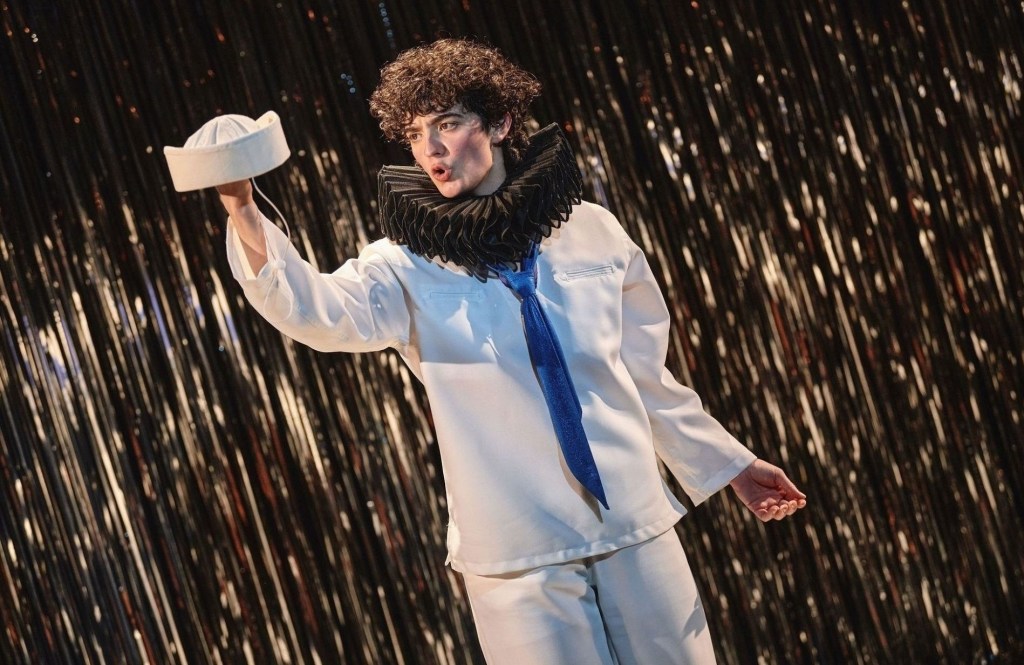
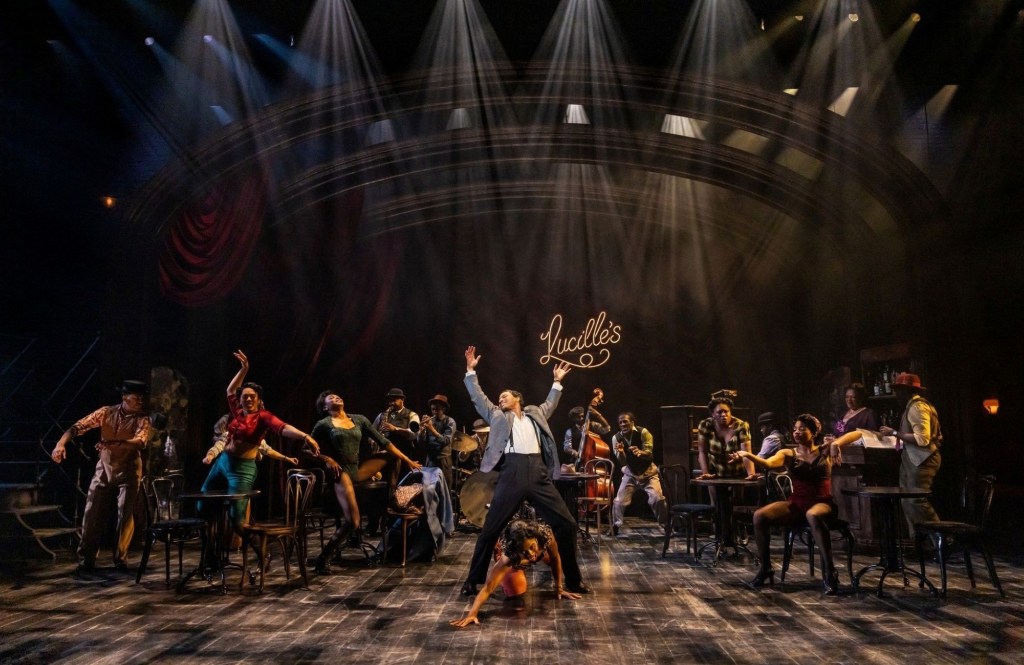
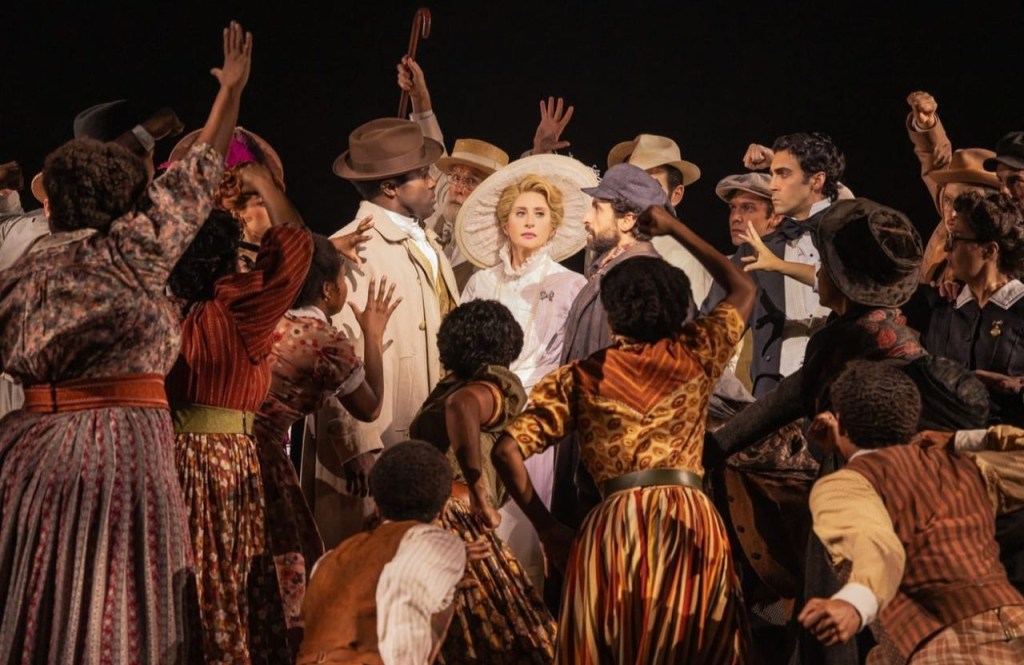
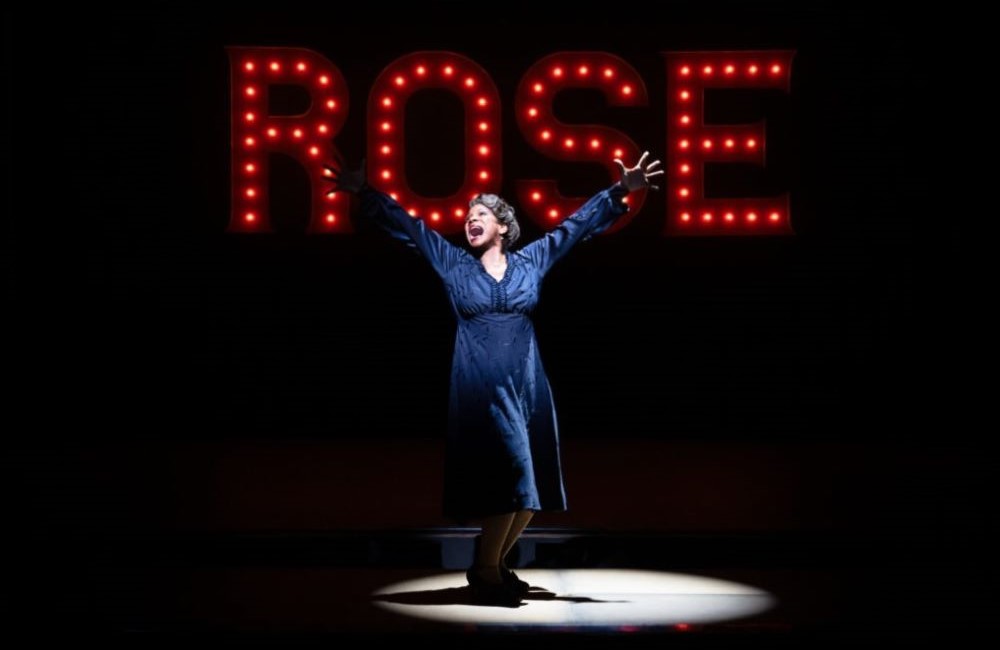
Girl, Interrupted, a stage adaptation of the 1993 memoir, opened a world premiere engagement last Thursday at the Public Theater. It has a book by Martyna Majok, lyrics and music by Aimee Mann, and direction by Jo Bonney, and it is a lifeless, inept affair with no particular identity. Did Majok, Mann, and Bonney put any thought into what they were doing? And did they communicate with each other during their supposed collaboration? And why have producers Barbara Broccoli, Angelica Zollo, Patrick Milling-Smith, Brian Carmody, and Level Forward moved the piece into production?
Nearly everything about Girl, Interrupted – relationships, structure, staging, composition, song, etc. – is in an understated state of disarray. Only one moment truly, firmly stands out as having some semblance of definition and viewpoint and theatricality and deliberate execution, in material and production. The intimate, dimly lit sequence involves three separate two-character scenes unfolding in direct succession, with each scene situated at a separate point on a single turntable, all six character simultaneously visible. But said sequence is hardly without issues, and Girl, Interrupted is a thoroughly depressing enterprise, artistically. If my detailed notes are required or desired, please indicate as much in the comments.
PRESS ANNOUNCEMENTS
Here is a list of select press announcements from the past week. Each headline is clickable for more information.
• The Fantasticks and Gloria Will Make Broadway Premieres from Second Stage
• Purpose, Prima Facie, Nikola Musical, and 2 Works from Step Afrika! Will Be Part of Arena Season
• NextStop Theatre Company Announces Its 2026/27 Season, Reimagining Resiliency
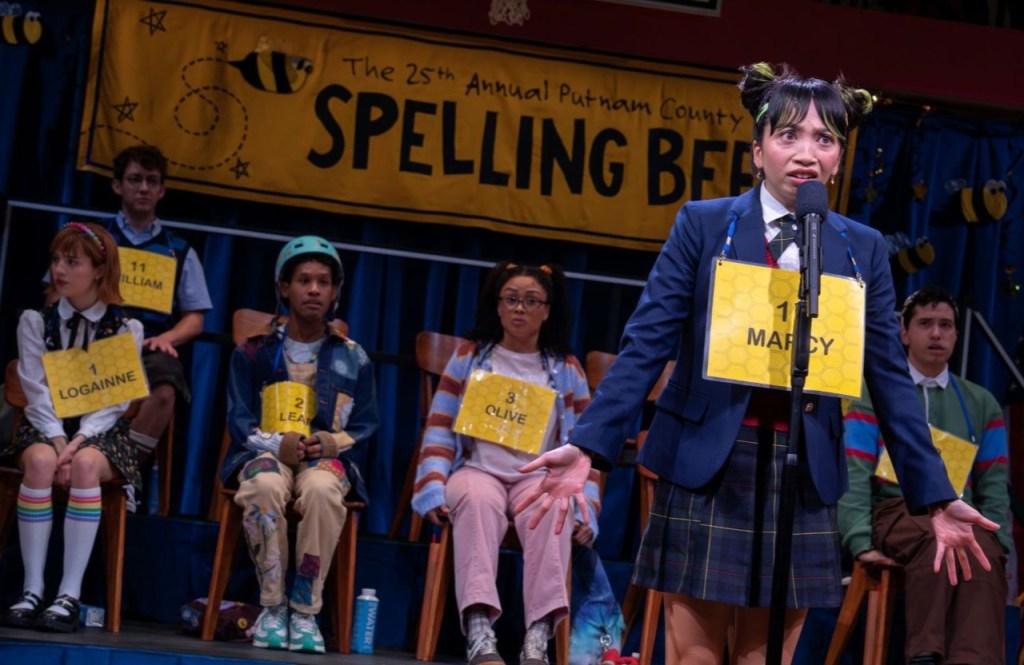
• Disney Channel Favorite Laura Marano Will Join Spelling Bee Off-Broadway
• Joey Fatone, Paulo Szot Will Return to Broadway’s & Juliet
PREVIEWS AND OPENINGS
Here is a list of the new musicals and revivals either opening or beginning previews during the upcoming week, specifically on Broadway and Off-Broadway. It contains, as well, select new musicals beginning performances regionally, and select new musicals and revivals beginning performances in New York City. Each title is clickable for more information.
Monday, June 8
• Concert: My Fair Lady
Tuesday, June 9
• Opening: I’m Almost There
• Regional: How Shakespeare Saved My Life
Wednesday, June 10
• Previews: label•less
Thursday, June 11
Friday, June 12
• Regional: CrazySexyCool
Saturday, June 13
Sunday, June 14
Correction: An earlier version of this Report incorrectly referred to the song “I Got a Lunchbox” as “The Lunchbox.”
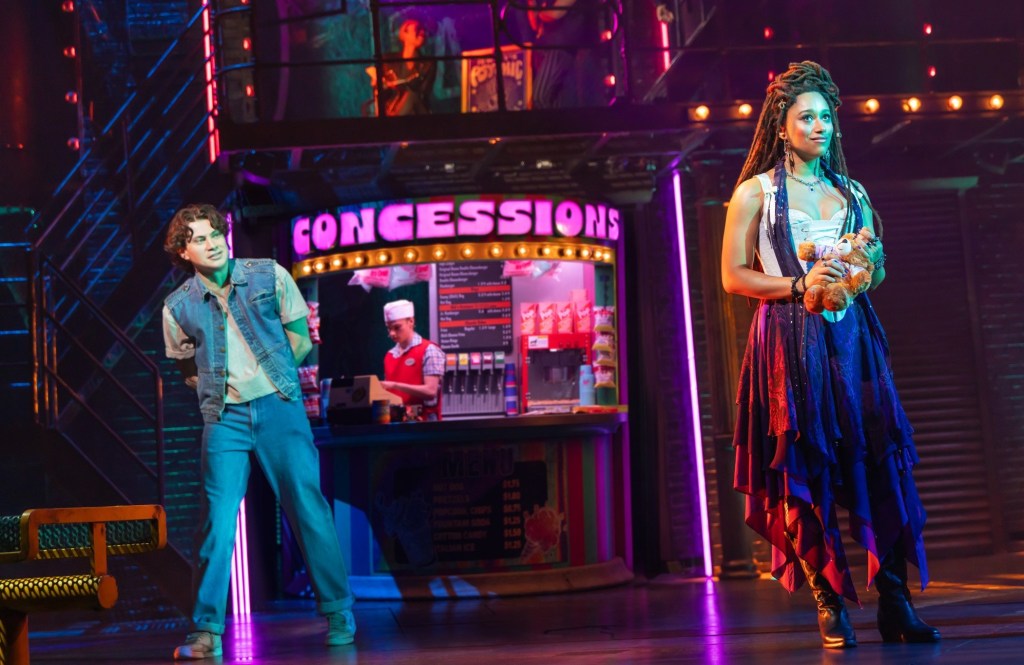
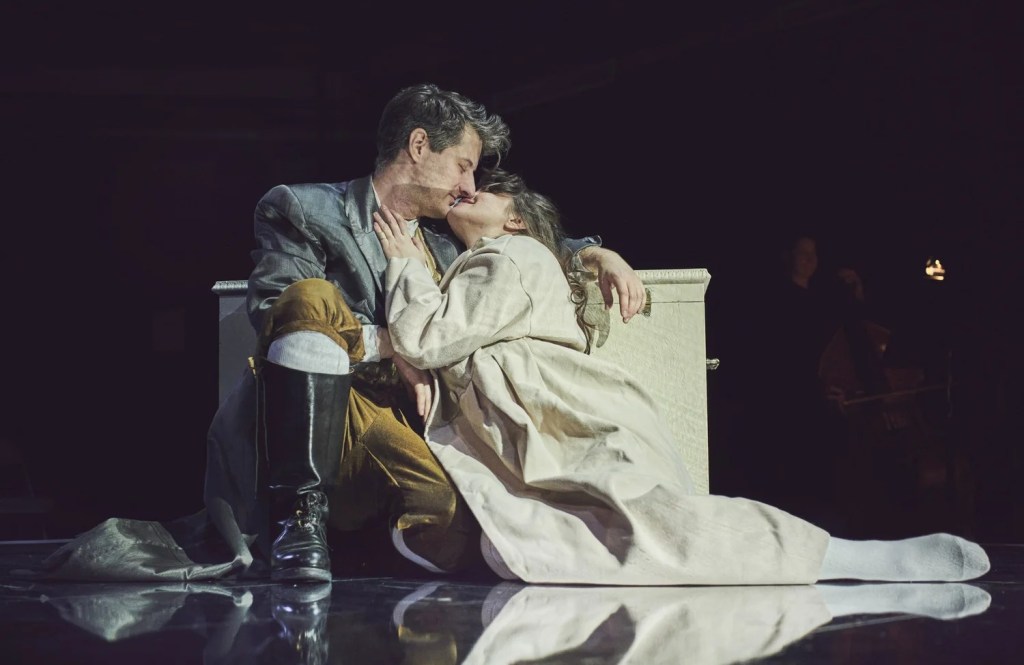
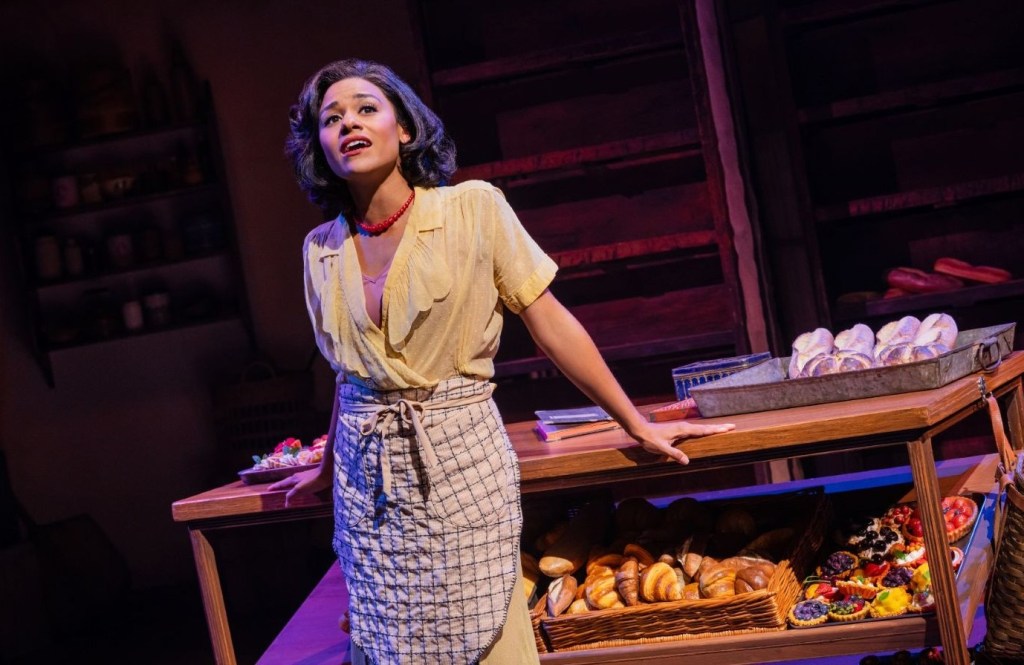
Photo of Kuhoo Verma in The Lunchbox by Kevin Berne.












 The Musical Theatre Report
Leave a comment