A journal for industry and audiences covering the past, present, and future of the musical stage.
Today is Sunday, and this week’s Report features “Jeremy Jordan: Robbed!,” “Thomas Floyd: Culture Critic!,” “Premature Workshops,” “Reasons for Song,” “The False Limitations of the Musical Stage,” “Goodbye, Beaches,” and an abbreviated review of I and You. Plus, a quote of the week; select press announcements from the past week; and the upcoming week’s previews and openings.
QUOTE OF THE WEEK
The lyric, by J.P. McEvoy, for “Tabloid Papers,” from the 1926 revue Americana. The song was originally written as “Sunday Papers” for the 1925 musical The Comic Supplement – which paints a satirical portrait of present-day America, revealing, over the course of several years, the ordinary incidents and everyday adventures of one typical American family, without a linear plot, essentially operating as narrative revue. The Comic Supplement was produced by Florenz Ziegfeld, Jr., and it closed out of town.
(Girl dressed as Newsboy starts from back of the house running down the center aisle with newspaper under her arm.)
NEWSBOY
Tabloid papers, tabloid papers
Get your tabloid papers here
Get your pitcher papers, your pitcher papers
Get your pitcher papers here
All de red hot juicy new murders
Oh, baby, I got ’em for youse
Get your Evenin’ Mornin’ Daily Sunday
Graphic Mirror News
(Newsboy climbs up on stage and curtains open on a screen which is a composite of all the tabloid papers. The faces of our singers are poked through the slits on the layout. There is no effort to match up men’s and women’s faces with the bodies. The fact that they are mixed up makes it all the funnier. Each man or woman calls out one of the following headlines.)
TABLOID CHARACTERS
Famous movie pitcher star shoots his wife in court
Henry Ford endorses God – promises support
Landlords swear de cost of living forces higher rents
Rockefeller gives to art – raises gas tree cents
Doctor lifts Jack Dempsey’s face – puts him on de shelf
Limerick contest editor goes nuts and shoots himself
Chinese storming Ting Ting Ling – capture Ah Poo Poos
Get your Evenin’ Mornin’ Graphic Daily Mirror News
NEWSBOY
Tabloid papers, tabloid papers
Get your tabloid papers here
Get your pitcher papers, your pitcher papers
Get your pitcher papers here
All de red hot juicy new murders
Oh, baby, I got ’em for youse
Get your Evenin’ Mornin’ Daily Sunday
Graphic Mirror News
TABLOID CHARACTERS
Parson caught with pretty blonde – blames her perfect ear
Critic jumps off Brooklyn Bridge – frantic thousands cheer
Bandit loots an automat – steals synthetic gin
Check from Otto Kahn received – saves a girl from sin
Wayne B. Wheeler calls statistics just a pack of lies
Gilded youth shoots ma and pa – all in fun, he cries
Ostrich murdered – broker held – Buckner seeking clues
Get your Evenin’ Mornin’ Graphic Daily Mirror News
(Tabloid characters sing a whisper chorus as Newsboy goes into dance. Then, curtains close in behind Newsboy. Dance break to finish.)
JEREMY JORDAN: ROBBED!
Jeremy Jordan was robbed while on the way to record his vocals for the recently released EP of Just in Time. Though he had $254 in his wallet, the thief only stole his diction.
THE FALSE LIMITATIONS OF THE MUSICAL STAGE
For decades, individuals in our industry have professed, with emphasis and awe, that making a musical about this subject or that subject will not work or should not work, and that making a musical based on a film is “seemingly impossible.” But, in fact, the musical theatre has no limitations in terms of story, subject, or theme. Or, for that matter, the sourcing of the same. Suggesting otherwise is foolish and harmful, and I, for one, am quite tired of such blatant nonsense, regardless of the reason it is being peddled. The quality, the dramatic effectiveness, the completeness, the artistic success of a musical is not ultimately a matter of “what”; it is a matter of “why” and “how.”
GOODBYE, BEACHES
Beaches is a fine example of “why” and “how,” and it closes on Broadway today after a mere 38 performances. But let us pay our respects with a mention of the incredibly fine flash-black button on “Show the World Who You Are,” and the intermittently fun material written for Little Cee Cee.
THOMAS FLOYD: CULTURE CRITIC!
The Washington Post’s Thomas Floyd recently proffered the notion that The Lost Boys “pushes the musical form forward with its rockin’ score and high-wire ambition” – which sounds exciting and means nothing, at least nothing as written. Floyd might be described as a “culture critic,” and a “culture critic” might be described as an individual, often college educated, who evaluates, among a relatively wide range of other things, works of musical theatre despite evidently having little or no practical or historical understanding of the art form.
I am not, in principle, opposed to the opinions had by “culture critics,” for everyone is entitled to their opinion, nor am I, in principle, opposed to the puff-pieces penned by “culture critics,” for every commercial production must sell tickets to survive, save perhaps The Ladder, which survived on Broadway for 107 weeks in the red, but I am staunchly opposed to the uninformed artistic critiques and baseless artistic proclamations spouted by “culture critics,” for such critiques and such proclamations – positive, negative, or otherwise – are doing a disservice to artists, audiences, and the art form in question. Fortunately, the situation is one that might fairly easily be remedied.
For the record, I was, at one time, in a similar situation, as a young artist, despite having had, since my days in middle school, a great interest in past works, and despite having begun to develop, by the time I entered high school, a critical eye. (Every artist is inherently a critic, whether or not they choose to cultivate, embrace, or activate that aspect of their innate nature, and whether or not they choose, as I do, to expose that aspect publicly.)
Though I had, in my late teens and early twenties, a clear affinity for quality, intelligence, sophistication, and craft, being particularly enamored with the work of, among others, Carolyn Leigh, Cy Coleman, Stephen Sondheim, and David Yazbek, I had, as well, a strong interest in reviving lesser-known works, like The Act, Are You with It?, Arms and the Girl, At Home Abroad, Ballroom, Barefoot Boy with Cheek, Bless You All, Fade Out – Fade In, The Fig Leaves Are Falling, Gatsby, High Spirits, How Now Dow Jones, I Had a Ball, Juliet, Lend an Ear, Make Mine Manhattan, New Girl in Town, O Happy Me!, Peggy-Ann, Platinum, Revenge with Music, Say, Darling, Seesaw, Skyscraper, Top Banana, and Two on the Aisle. Five of these shows, one might note, fall under the heading of original revue – an exceptionally difficult, exceedingly influential form, of musical theatre, that flourished on Broadway throughout the first half of the 20th century; that every author, director, and producer currently working – or intent on working – in the musical theatre should, in my view, be forced to tackle, even if only as an exercise; and that I happen to love.
My strong interest in lesser-known works undoubtedly stemmed from some combination of curiosity, cast recordings, intriguing concepts, unbounded enthusiasm for the form, creative and critical faculties only partially developed, and or the challenge of “fixing” something presumed faulty with redeeming parts. But most of these properties are simply poorly made, artistically immature, irretrievably inferior, patently unworkable – which I steadily and importantly came to understand.
Indeed, my practical exploration, in my teens and especially in my twenties, of these and other works, like Gypsy, Into the Woods, Rent, and Sunday in the Park with George, digging into the “why” and “how,” feeling, principally in the playing of the piece, the effectiveness or ineffectiveness of a certain scene, a certain song, a certain transition (perhaps better termed dramatic progression), a certain routine, etc., experiencing, navigating, and marking the varying degrees of craftmanship and theatricality, and becoming intimately familiar with the mechanics of the musical stage, with an array of theatrical styles, with an array of musical styles, with an array of dramaturgical techniques employed in the shaping of song, demonstrably enhanced my creative and critical faculties, and amplified my interest in understanding, practically and historically, the evolution of the art form – which, like the matters of style, mechanics, theatricality, etc., was not taught to me in middle school, high school, summer camp, or college, or during the two years I spent assisting directors and producers on Broadway, Off-Broadway, and regionally.
Thus: my subsequent five-plus years of research – encompassing scripts, scores, copyright deposits, contemporaneous author correspondence and interviews, sheet music, lyric sheets, cast recordings, popular recordings, production notes given by Moss Hart to Harold Rome, show-going, and the like – increasing my frame of reference, expanding my toolbelt, deepening my understanding of and feeling for craft (especially in terms of character, structure, composition, lyric, synchronicity of lyric and melody, and dramatic charge), immersing myself in a cornucopia of artists and shows, delving into the adjacent worlds of minstrelsy, vaudeville, nightclubs, and burlesque, swearing my allegiance to the standards of excellence in musical storytelling (established in the middle of the 20th century and not to be confused with the nonexistent rules of musical theatre), and learning to be measured in my discourse, and specific, detailed, and rigorous in my analysis.
Mine was a long and winding path that I do not recommend following, at least not step for step, but the industry, including “culture critics,” must somehow, for the sake of the art, arrive at the same pit stop, at least in terms of artistic awareness and historical foundation, and, crucially, our training – at the high-school level, at the college level, at the graduate level, in rehearsal rooms, in apprenticeship programs, in professional programs, and elsewhere – must be built upon and deliver a comprehensive, practical approach to the musical theatre, with a clear acknowledgement and an active exploration of the decades-long movement, begun about the 1910s and brought to a close in the 1960s, to better the art of musical storytelling, and with an emphatic embrace of the musical theatre’s maturation in the middle of the 20th century as a result – which, to be clear, does not require an emphatic embrace of the stories told or the styles employed therein.
REASONS FOR SONG
Let us be clear: establishing or introducing a setting is not a reason for song, nor is establishing or introducing a character, nor is providing comic relief. A song may certainly establish or introduce a setting or a character, and a song may certainly provide comic relief, but that song, like every other song in the musical, with nearly no exceptions, nonetheless needs a dramatic reason for being, a narrative purpose. Some of the most common narrative purposes are empowerment (of self or others); getting something from someone or getting someone to do something (which is not the same as convincing someone to do something); inviting, seducing, or drawing into; and reckoning, explosion, or combustion (i.e. a character or characters must confront or wrestle with something internally, something that can no longer be contained).
Then, of course, there is the matter of executing the song, and the execution of song, within the context of a stage musical, necessarily encompasses a great many things, like musical style, music cue, button, setup, alignment of emotional pitch from setup to song, literal pitch of the opening line, lyrical thought articulated in the opening line, development of lyric, development of music, etc. If an individual claims to hate musicals because people break into song for no reason, the individual has almost certainly been attending musicals that are poorly written.
I AND YOU AT OLNEY THEATRE CENTER
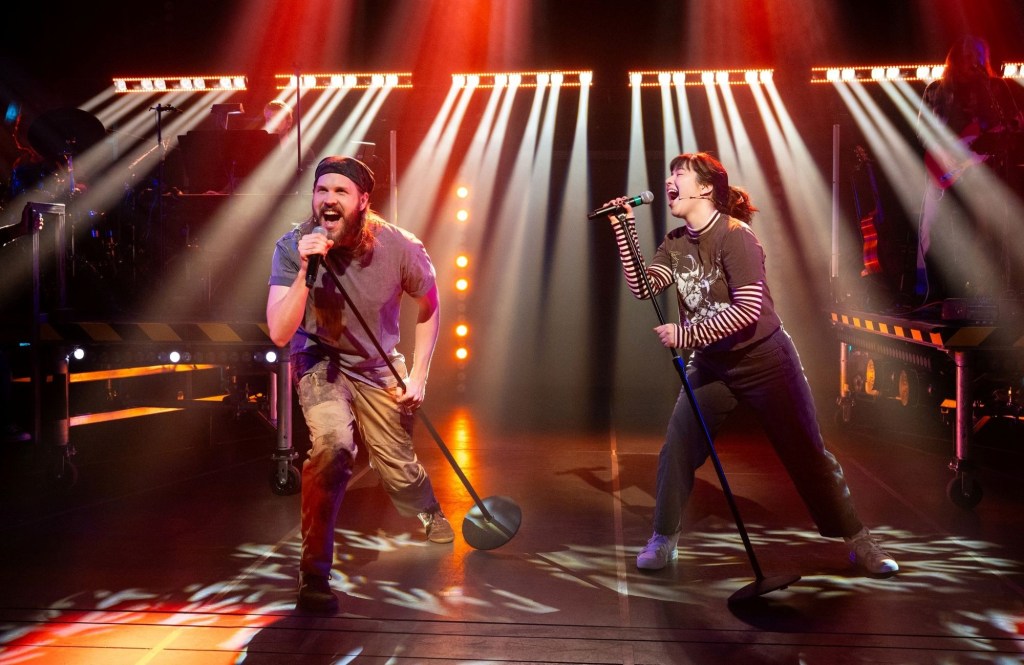
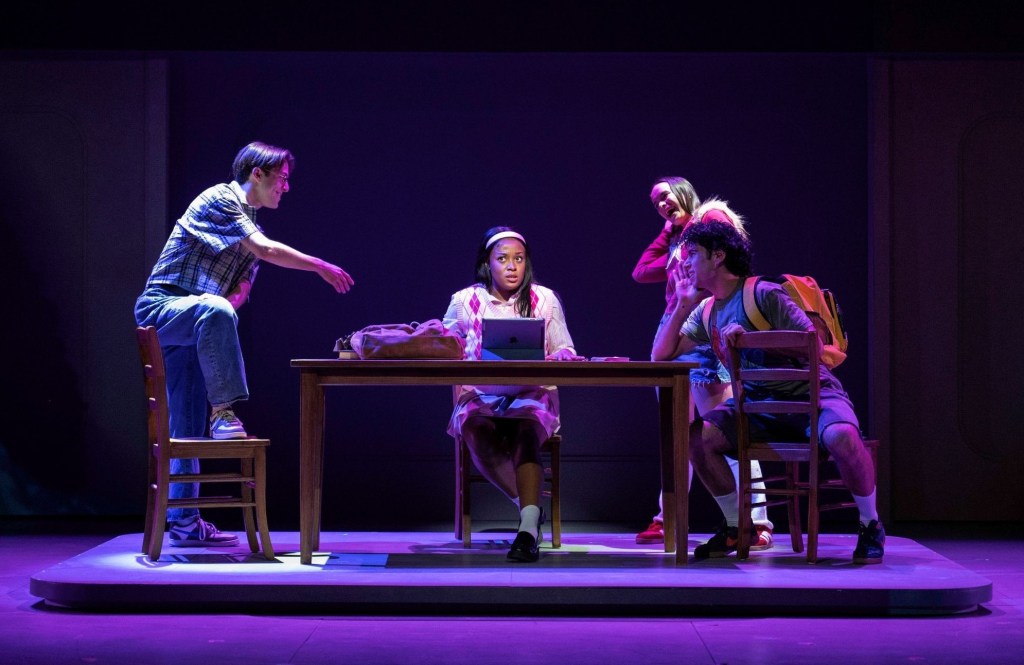
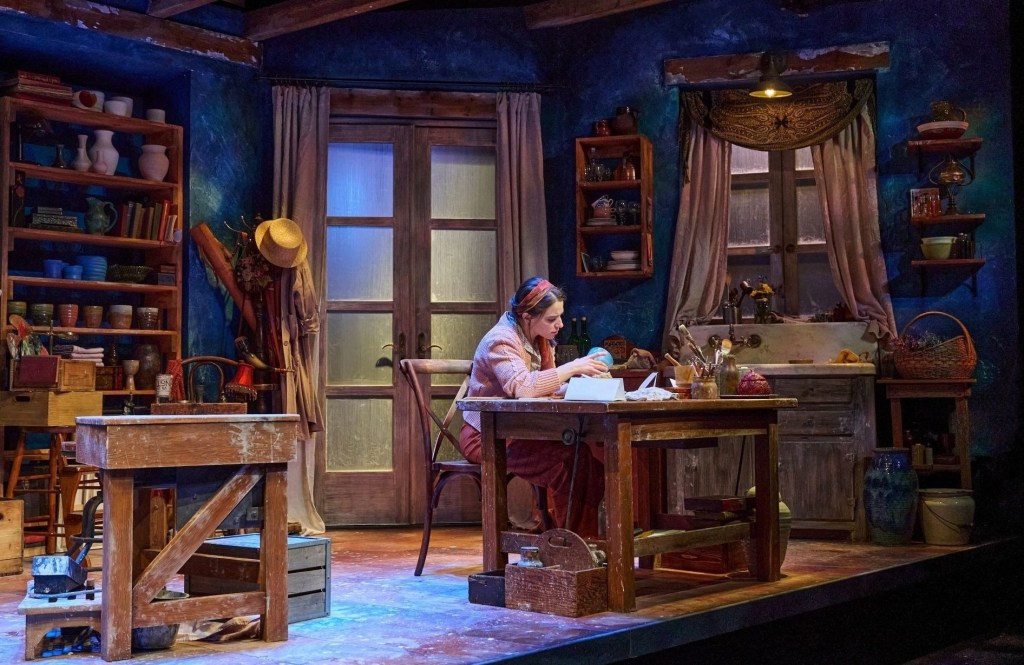
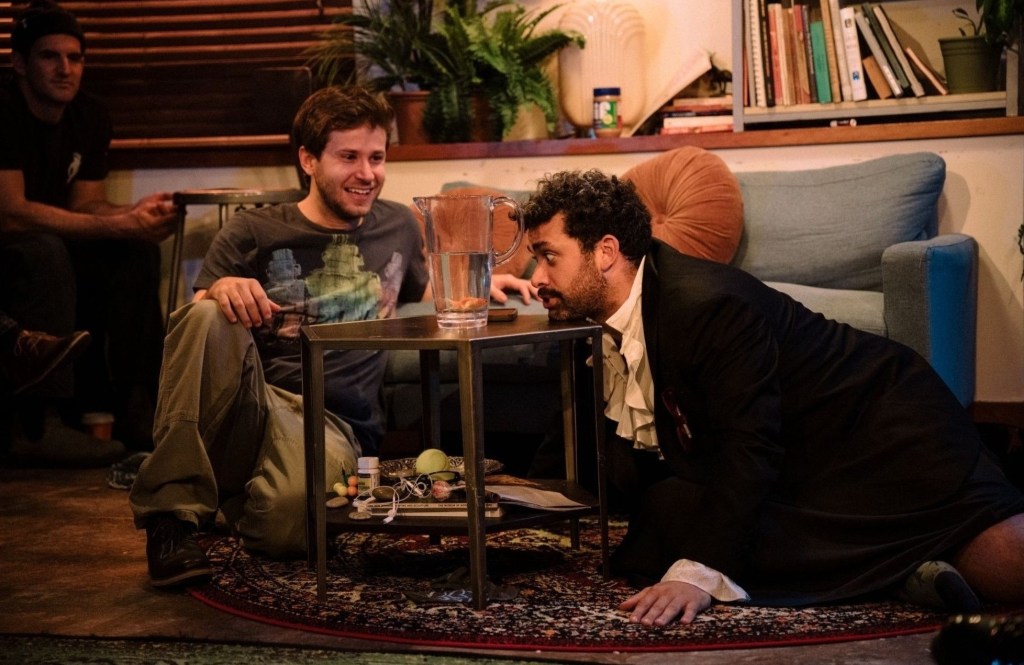
I and You, a new musical with two characters, concluded an engagement at Olney Theatre Center outside Washington, DC this afternoon. It has a book by Lauren M. Gunderson, upon whose play the musical is based, lyrics and music by Ari Afsar, and direction by Sarah Rasmussen, and it is comatose. Perhaps the best advice that might be given the creative team is to start over, from scratch – specifically detailing the arc of the story and the progression of events, ensuring the story and the events are endowed with a continuous motivation and a continuous dramatic charge, and simultaneously fleshing out character, defining the world, specifying the function of song, the reason for song, the narrative purpose of song, and deliberately spotting the same. The preset look for the production is nonetheless striking, with credit due scenic designer Beowulf Boritt and lighting designer Japhy Weideman. The movement, by Steph Paul, is utterly bizarre. And the cast, for the record, consists of Alex De Bard and J. Antonio Rodriguez.
PREMATURE WORKSHOPS
I attended multiple workshops over the past year, and most were premature – which is to say: the material was not ready to be staged and orchestrated – which is to say: the staging and orchestrations were not needed to illuminate the deficiencies, the dramatic ineffectiveness of the material (i.e. book, lyrics, music), resulting in the respective workshop seeming to be an overwhelming waste of time and money, if the goal was really creative development. And the money wasted, in each instance, almost certainly amounted to tens of thousands of dollars or hundreds of thousands of dollars, depending upon the tier, and this in a time when many individuals are screaming about the rising costs of production.
Every musical is inherently different, and necessarily has its own needs, including process, but creatives and producers would be generally well advised to spend significantly more time focusing, with extreme rigor, on the material, albeit with the staging in mind, solidifying structure, fleshing out characters, excavating moments, detailing and refining language and composition, etc., lest the creatives and producers wind up not only with a premature and costly workshop, but a premature and costly out-of-town production. (See: Wonder at American Repertory Theater.)
PRESS ANNOUNCEMENTS
Here is a list of select press announcements from the past week. Each headline is clickable for more information.
• Two Strangers (Carry a Cake Across New York) to Tour in 2027
• Raúl Esparza-Led Galileo Reveals Creative Team and Ticket Sale Dates; Plus New Art
• Beaches to Close on Broadway This Sunday
• Heathers Off-Broadway Revival is Going on Tour
• Tovah Feldshuh to Lend Her Voice to A Walk on the Moon Off-Broadway
• Titaníque Will Hit the Road with a National Tour in 2027
• Schmigadoon! Will Go on Tour in 2027, Joins Theatrical Rights Worldwide Licensing Catalogue
• Death Becomes Her Will End on Broadway in June
• Heath Schwartz & Michelle Farabaugh Acquire Boneau/Bryan-Brown; Will Rebrand as Aperture Public Relations
• Philip Quast, Rob Madge and More Join Les Misérables at Radio City Music Hall
• The Book of Mormon to Restart Performances on May 27 at the Eugene O’Neill Theatre
• Just in Time Recoups on Broadway
• The Outsiders North American Tour Recoups Investment
PREVIEWS AND OPENINGS
Here is a list of the new musicals and revivals either opening or beginning previews during the upcoming week, specifically on Broadway and Off-Broadway. It contains, as well, select new musicals beginning performances regionally, and select new musicals and revivals beginning performances in New York City. Each title is clickable for more information.
Monday, May 25
Tuesday, May 26
• Regional: Black Swan
• Opening: Heated Rivalry: The Unauthorized Musical Parody
Wednesday, May 27
Thursday, May 28
Friday, May 29
Saturday, May 30
• Regional: Basura
Sunday, May 31
Correction: An earlier version of this dispatch attributed “Tabloid Papers” to The Comic Supplement and “Sunday Papers” to Americana, but “Sunday Papers” was written for The Comic Supplement and subsequently rewritten as “Tabloid Papers” for Americana.
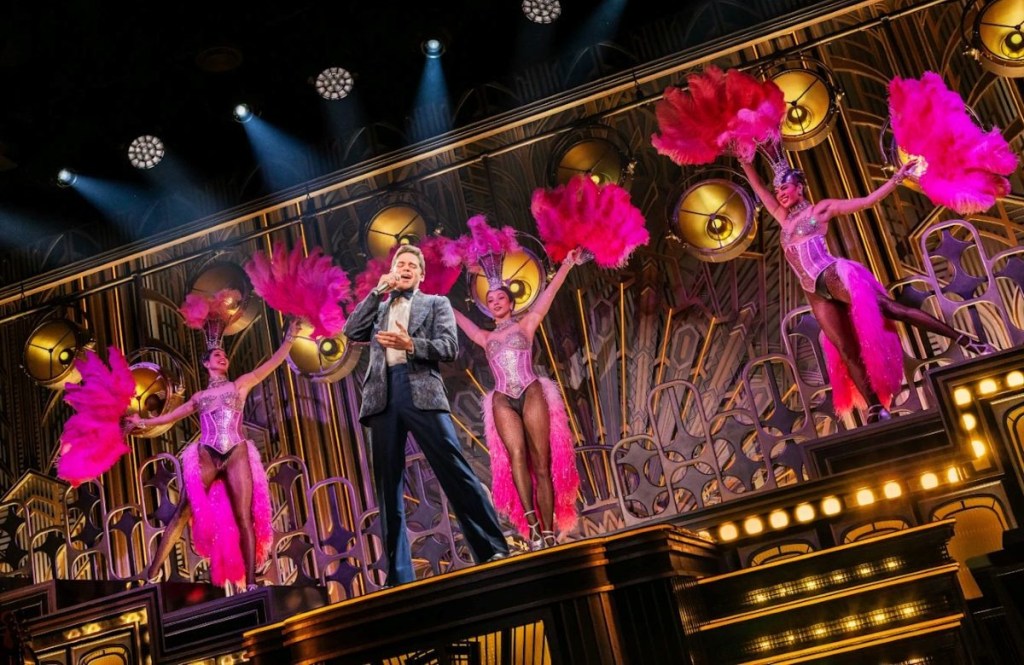
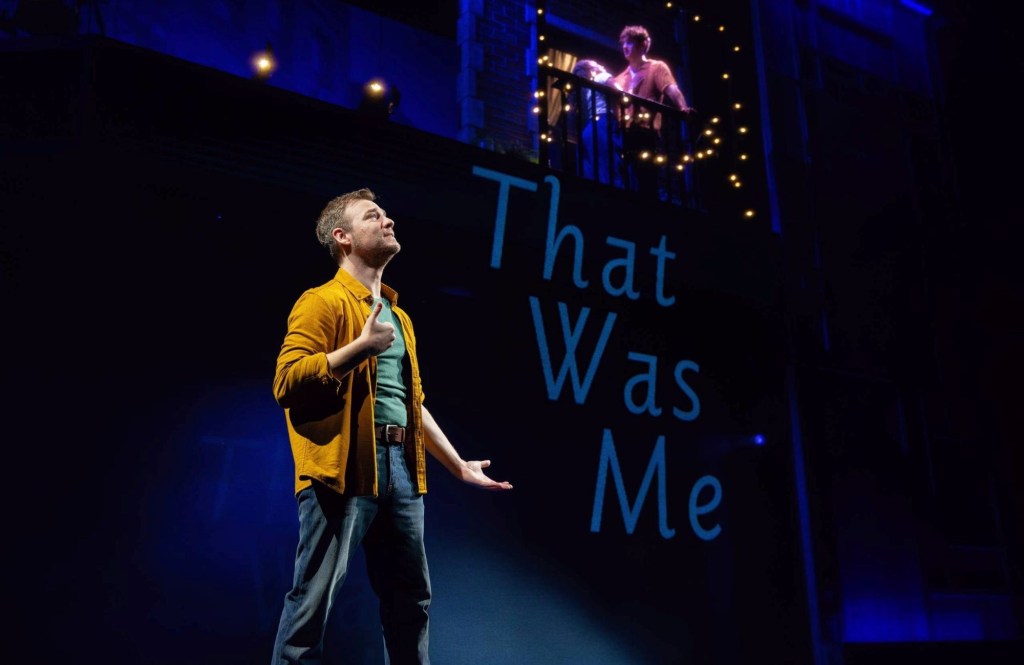
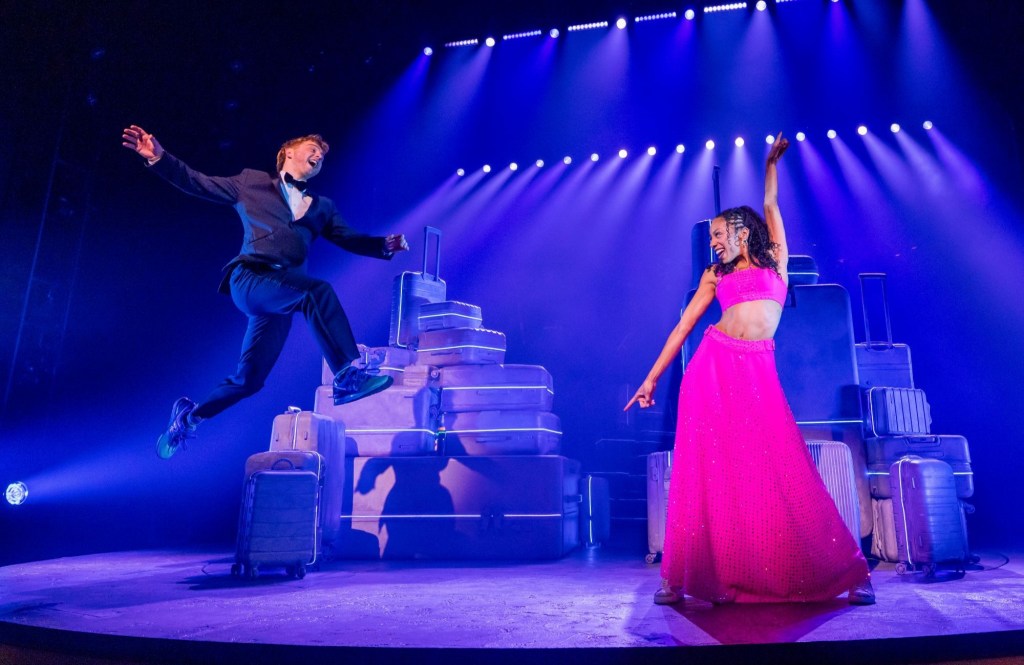
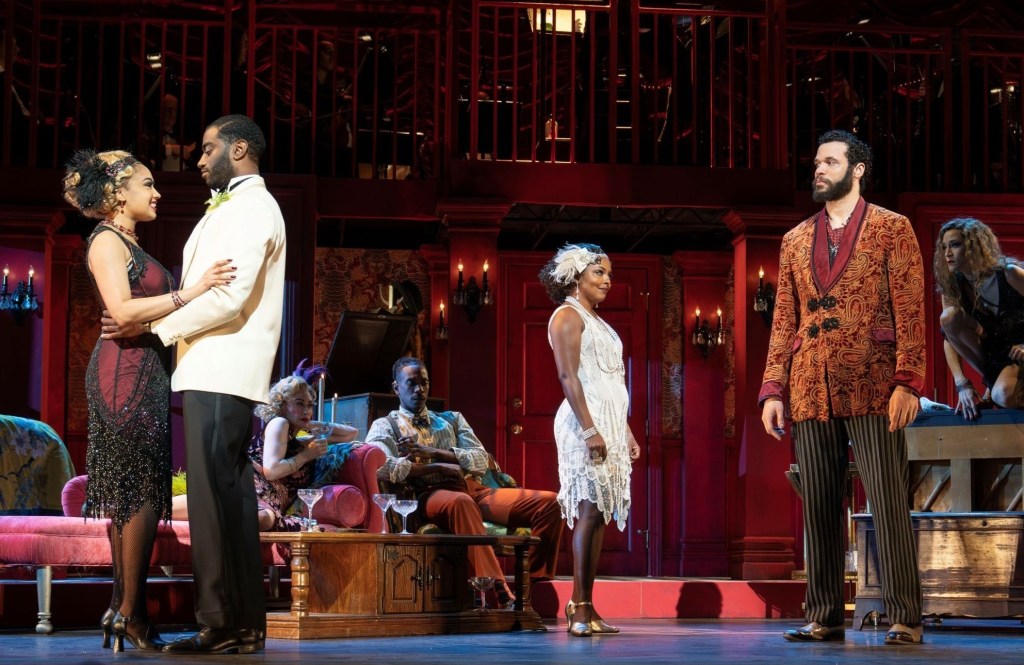
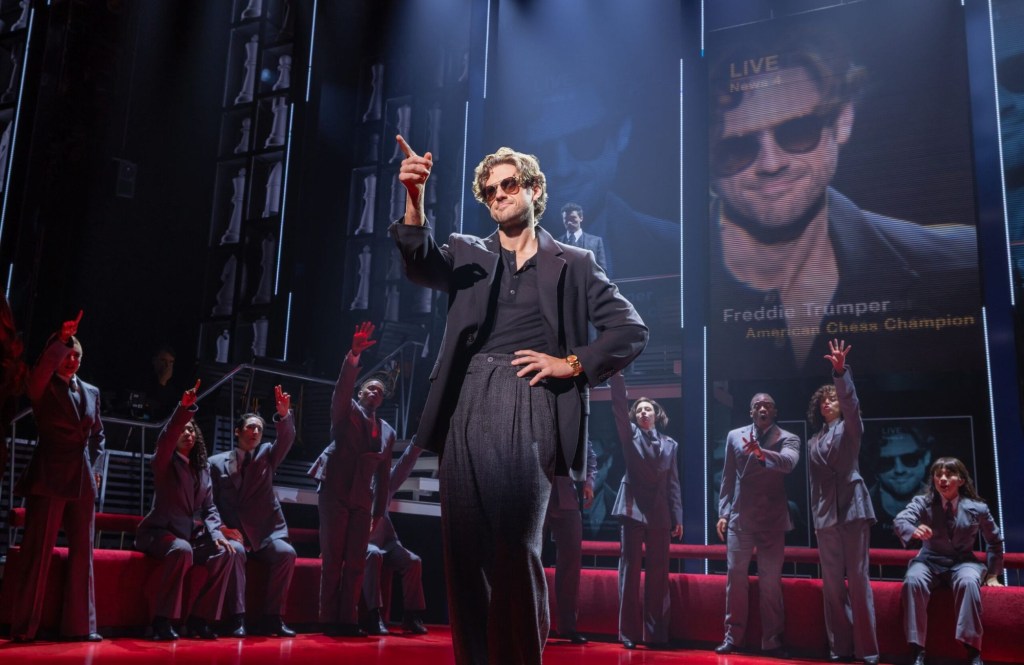
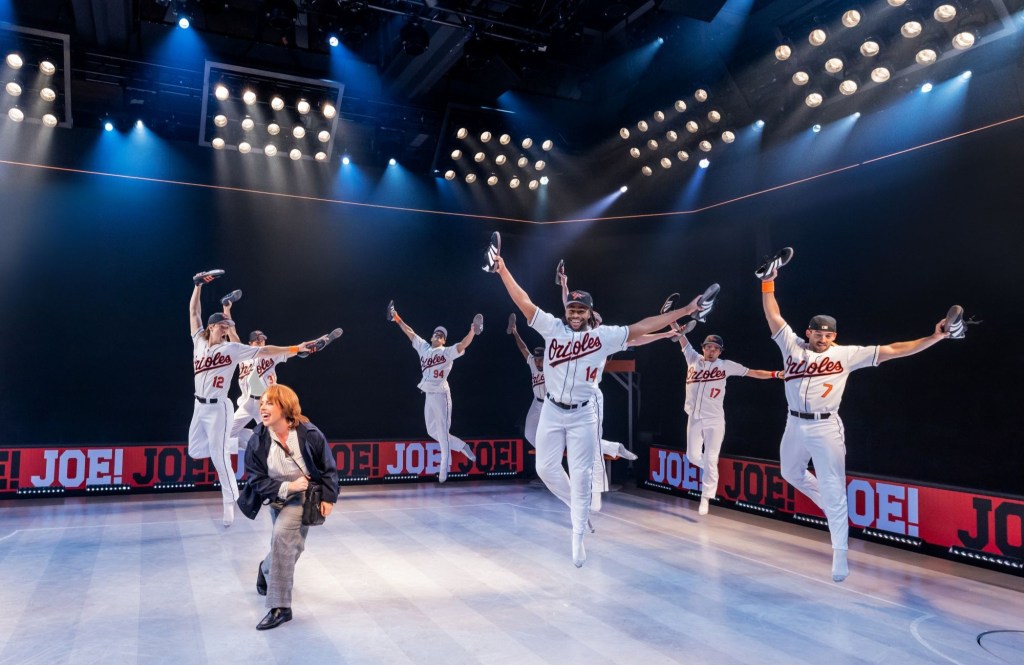
Photo of a scene from Just in Time by Evan Zimmerman for MurphyMade.


















Leave a Reply