A journal for industry and audiences covering the past, present, and future of the musical stage.

Today is Sunday, and this week’s Report contains my detailed notes on Basura at Alliance Theatre, and my abbreviated notes on La Cage aux Folles at New York City Center. Plus, a quote of the week; select press announcements from the past week; and the upcoming week’s previews and openings.
QUOTE OF THE WEEK
The lyric, by Harold Rome, for “Small World,” written circa 1947. The song is a solo, with interjections by a second voice noted in parentheses.
Sung.
If you put a string around the equator
And stretched it tight
Spoken with music under.
(Whoo! That would be a hard thing to do! Who did it?)
Listen, this is all theoretical – nobody did it.
(Well, if nobody did it, how do they know?)
Listen, this is science, they got ways, they know.
(Oh!)
Sung.
If you put a string around the equator
And stretched it tight
Spoken with music under.
(What if it broke?)
Quiet!
It would measure exactly to the dot, specifically, twenty-four thousand, nine hundred and two miles!
(That’s the circumference of the world!)
That’s what I mean.
(Gee, take something a little smaller, huh?)
O.K.
Sung.
Now if you put a string from New York to San Francisco
And stretched it tight
Spoken with music under.
(Is that the same string?)
Don’t interrupt!
That would be three thousand, one hundred and seventy-three miles, one eighth the distance around the world.
(O.K. We dig you Jackson.)
Now that would take a man walking three miles an hour forty-four days and nights.
(Some hike!)
It would take a train going 60 miles an hour two days and nights and eight hours.
(Boy that’s an express!)
And a bomber going 400 miles an hour would take eight hours.
(What about the anti-aircraft guns?)
Somebody sit on that guy!
And a telephone call just takes the time you need to get the operator.
(Don’t forget the time it takes to drop all those nickels!)
Sung.
And the radio takes no time at all.
That’s what we mean when we say the world is small.
It’s a small world!
It’s a very junior size.
It’s a small world,
If you open up your eyes.
It’s a small joint!
It’s a teeny weeny ball!
That’s the big point,
Ev’ry one lives down the hall.
So you can’t just sit back,
And you can’t say “pooh-pooh,”
For whenever something happens to anyone,
It’s happening to you!
‘Cause it’s a small world,
Just a hop from here to there,
And we’re all right next door to ev’rywhere!
Danish, Finnish, and Iranians
Are our next door neighbors
Pirates like the Spanish Mainians
Are our next door neighbors
Little dots that no map shows at all
Tropics where you need no clothes at all
Arctic lands where ice has froze it all
Next door neighbors!
Soviet Union, Philippinians
Are our next door neighbors
Giant lands and teeny weenians
Are our next door neighbors
Hindus, Zulus, Abyssinnians
People with the strangest opinions
Eskimos and Begin the Beginnians
Next door neighbors!
Oh the world ain’t as big as she used to be
The old world ain’t as big as she used to be
The old world ain’t as big as she used to be
Shoot the atom to me madam!
It’s a small world!
It’s a very junior size.
It’s a small world,
If you open up your eyes.
It’s a small joint!
It’s a teeny weeny ball!
That’s the big point,
Ev’ry one lives down the hall.
So you can’t just sit back,
And you can’t say “pooh-pooh,”
For whenever something happens to anyone,
It’s happening to you!
‘Cause it’s a small world,
Just a hop from here to there,
And we’re all right next door to ev’rywhere!
BASURA AT ALLIANCE THEATRE
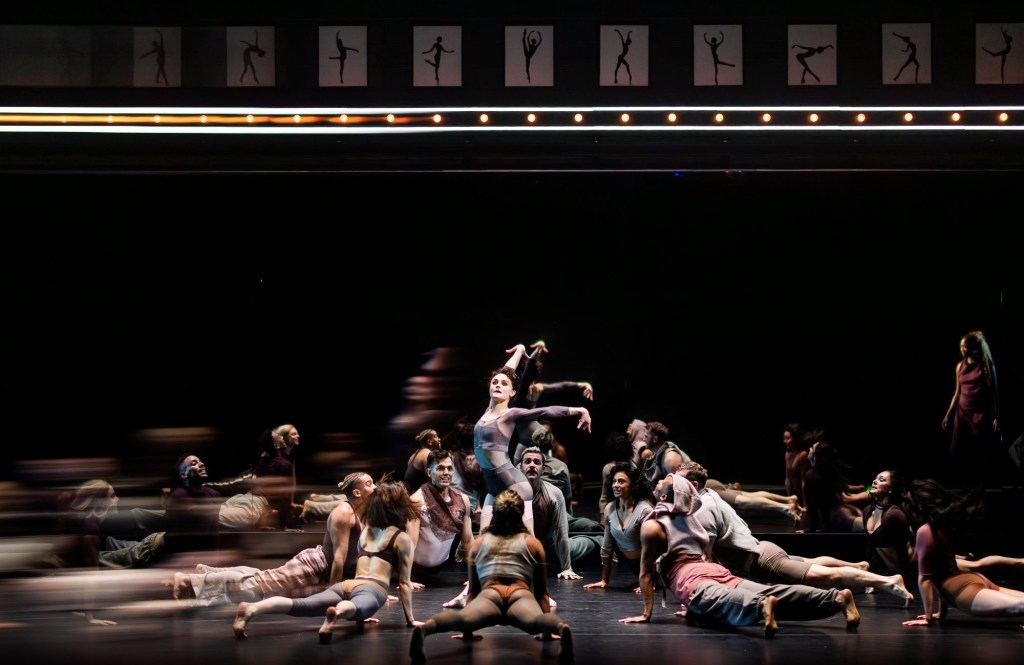
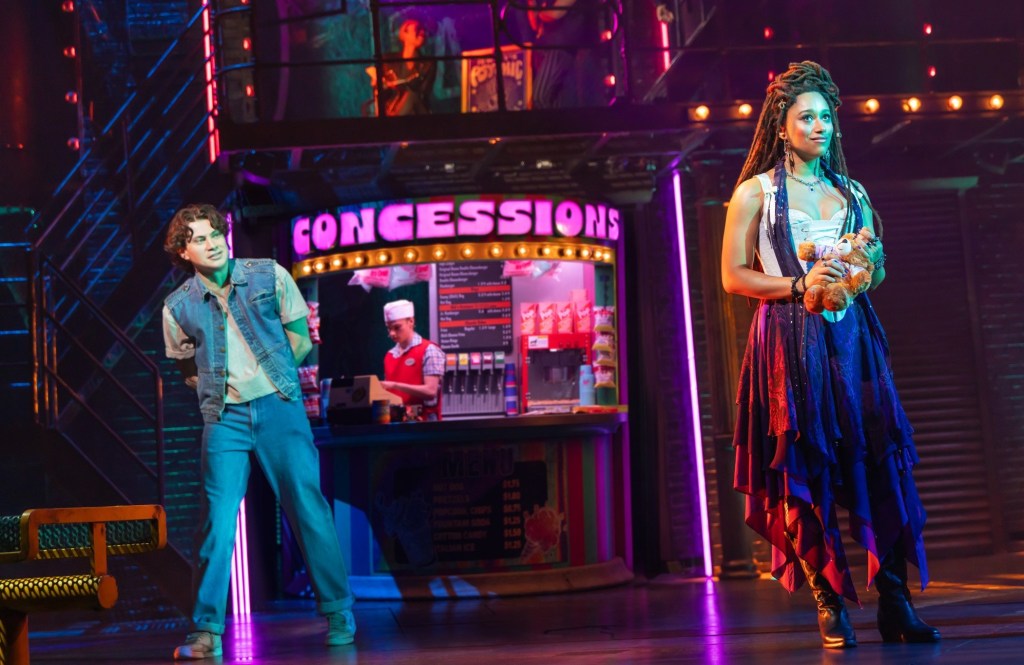
Basura, inspired by the true story of Paraguay’s Recycled Orchestra, is currently playing a world premiere engagement at Alliance Theatre in Atlanta, Georgia. It has a book by Karen Zacarías, lyrics and music by Emily Estefan and Gloria Estefan, and direction by Michael Greif, and it is an extraordinarily rough affair, with a reported development price tag of $5.5 million. Colin Callender, Michael Shulman, and Daniel Unitas are the commercial producers.
The musical unfolds in two acts, and it takes place in Cateura, a poor community on the outskirts of Asunción, adjacent to a landfill, in the early 2010s. Nambi is a young woman who loves classical music and learns to play the violin, and she is the show’s primary focus. Mónica is her single mother. José, Nunu, Danny, Sofía, and Blanca are among the members of the orchestra. And Mario is their teacher. Here are my notes.
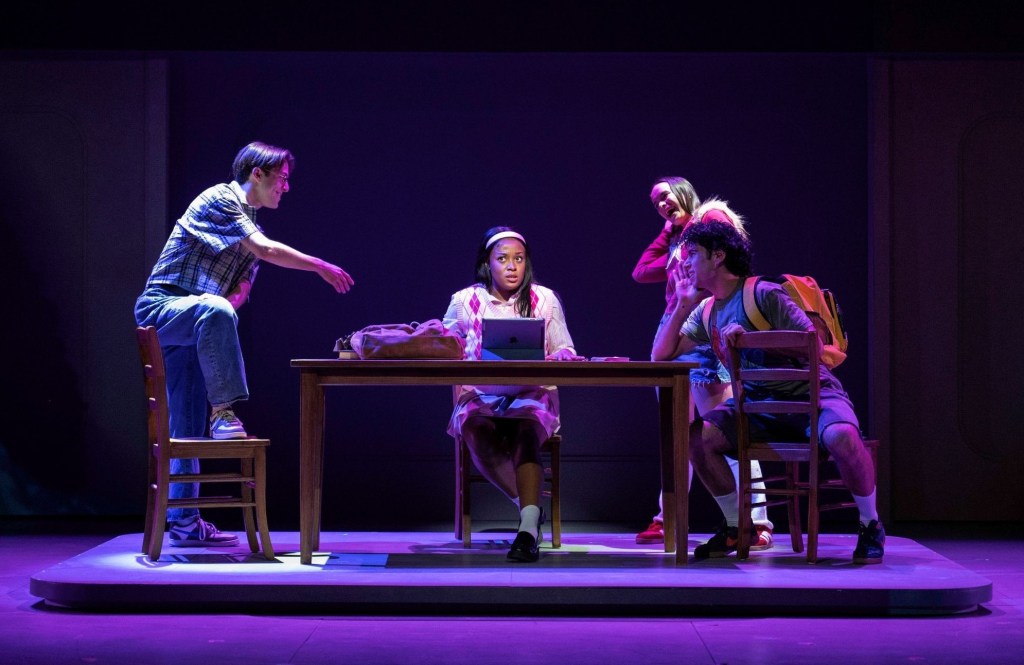
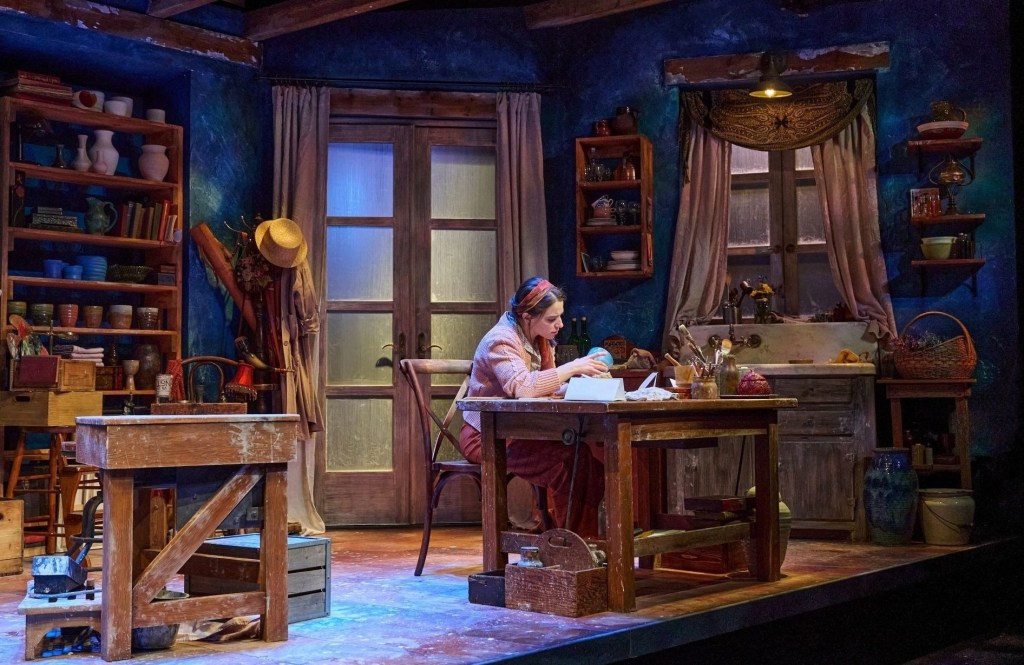
• Basura has, at present, a strange disconnect between dialogue and song – which runs deeper than the former ineffectively building into the latter. The disconnect, in Basura, is one of narrative, for the two elements are, at several points in the show, either telling different stories or duplicating the same. One scene, for instance, finds Nambi sitting alone at her and her mother’s tiny kitchen table, crying because the group’s instruments have just been stolen, possibly as a result of her actions. Mónica, upon entering the kitchen, sees Nambi, but does not physically or verbally comfort her crying child. In fact, she tells Nambi that she expected something bad would come of Nambi’s music class. Yet, the opening lines of the sentimental ballad Mónica sings at the end of the scene explicitly state, ‘I am here for you, I hate to see you cry, my arms are open for you,’ and so forth. Worse, the song is aimless, serving no clear dramatic purpose, and the authors have, to close the scene, tacked on to the end of the song a single line of dialogue – an inexpert addendum – that finds Mónica, immediately after rambling on about nothing in particular for three minutes, saying to Nambi, ‘I am going to find a way to get us out of here.’ Why did Mónica not say that in song? That is a reason to sing. Incidentally, Mónica does sing that song (“Lift Us Up”) late in the first act, but after having already found and put into motion what she believes is the way to lift them up, and after telling Nambi about the plan. In other words, the moment for such a song has already passed. Plus, the lyric for “Lift Us Up” is unspecific, failing to address said plan. “The 23rd of November,” sung by Nambi and other members of the orchestra, has similar issues of addendum and aim: the song, as currently spotted, should be doing the work of getting Danny to join the orchestra, but it does not, and Mario should not be coming onstage after the song solely to confirm that Danny is on board, but he does. “I Wanna Run,” meanwhile, has a truly bizarre setup: Nambi, after telling her mother about her new music class, exits their kitchen through a door stage center, and runs off stage left, leaving Mónica alone at the tiny kitchen table stage right; the music begins; and Mónica gazes up to the heavens, saying to her late husband a line to the effect of, ‘Look at our daughter,’ seemingly in preparation for a solo. But the lights blackout on Mónica, stage right, and Nambi runs back on, stage left, bursting into song – a song whose music was begun for Mónica. Etc. Etc. Etc.
• Ironically, Zacarías and the Estefans seem to have set about writing the individual lines, lyrics, and strains of music, in Basura, with care. And, if that is the case, too much care. The individual lines, lyrics, and strains of music, in Basura, are, by and large, terminally careful, absent the breath of life, absent vigor and vitality, devoid of dynamism and danger and excitement. So, as such, is the musical. Perhaps the authors need to give themselves permission to get momentarily messy, momentarily careless, momentarily what they might consider brash or brazen or reckless or rebellious, specifically in the interest of liberating their characters from the shackles of preciousness and sentimentality, streaking them with vibrant interior colors, with guts, with life, and exposing the same. Doing so would almost certainly enhance the potency, the emotionality, the theatricality of the story and the show.
• Relatedly, the musical routine is remarkably sedate, populated almost exclusively with ballads and mid-tempos (piling up on top of each other and, to an extent, canceling each other out). Where are the up-tempos? To be clear, every musical is inherently different and necessarily has its own needs, and no rule exists regarding the number of ballads, mid-tempos, and up-tempos a musical must have. The breakdown in Basura is simply not definitive; it is not serving the story. And, in several cases, the musical temperature of the song is at odds with the emotional temperature of the respective scene. “A Fork in the Road,” sung by Nunu and other members of the orchestra, is perhaps the clearest example of this situational incompatibility. Plus, the nature of the melodic lines in the show’s first up-tempo, slotted late in the first act, does not help. (“Lift Us Up.”)
• The language of the storytelling is undefined, indistinct; the composition is undefined, indistinct, messy; and the musical is without an individual identity. But some of the individual elements could, with deliberate blending, deliberate employment, and precise execution, eventually prove profitable – namely direct address, interludes in one delineated by a stage-width strip of downlight, and timelapse sequences. And the current attempt to weave musicians into the world – a potentially profitable idea – is disastrously basic: a violinist spends most of the show atop a random tower of stairs down left, while a harpist and a guitarist come and go, alternately and conspicuously, from a generic platform up right.
• What is propelling the story, what is driving the musical, and why are so many plot points, like the first public performance of the orchestra, sprung upon us, indirectly, sans setup, in a manner that suggests we already knew about them? Something is amiss in the structure of the story, including the patterning of plot, and something is amiss in the internal structure of the scenes, including the dialogue addendums.
• “Basura,” which means “trash,” is surely the most vibrant, distinctive song in the show – an incendiary anthem that nearly sets the stage ablaze, burning with an insistent rhythmic pulse. The number, delivered by the company, has a direct-address lyric interwoven with direct-address spoken lines, and the repetition of the title is fantastic, fueling the fire. But, even if one forgives the occasional clunky line of lyric, the first instance of the song, halfway through the first act, is jarring, coming completely out of nowhere, and begun by two random ensemble members we have never met. (The preceding scene is songless and shapeless.) The second instance of the song opens the second act, smartly, but it contains two dismal interstitial scenelets. And the third instance of the song is sung by José. It carries little impact. The effectiveness of “Basura,” within the context of the show, would seem to hinge upon the authors defining the language of the storytelling and refining the structure of the story. And, to that end, one wonders if the first instance of “Basura” should not be repositioned to open the show.
• Basura is currently begun with a monologue, for Nambi, accented, horribly, with the brief appearance of professional musicians (who lumber on and off stage left), and the brief appearance of landfill workers (plus a crane arm with an industrial scoop bucket). The balance of the top of the show is timid and sluggish and structurally unsteady. Nambi briefly drops out of the narrative. “Pass It Along” finds José, Nunu, Sofía, and Blanca, at the behest of Mario, aimlessly passing around a violin, and expressing, privately, their hopes and dreams. And though Nambi eventually reappears, during the song, her revelatory moment with the violin is insubstantial, incomplete, and hardly a revelation. Plus, the authors have chosen to give her a separate song at the end of the subsequent scene. (“I Wanna Run.”) The material, by the way, only cultivates, over the course of the show, a minimal sense of camaraderie among the kids, at present.
• The climax of the show is a company number inside an airplane. (“When We Fly.”) Perhaps such a moment will work, but the present moment does not, in part because it has been unimaginatively staged. And let us not even discuss the filler-breath that Mario has been instructed to take downstage-center during the subsequent transition. Mario, by the way, would seem to be missing a private solo, at some point in the show.
• “Impossible,” a private solo for Nambi, seems intended, based upon the situation, to carry the central figure to a decision, but it does not effectively do so. And the manner in which Nambi winds up alone onstage is ridiculous, marked by eavesdropping and awkward, unmotivated exits after Mónica reveals, to Nambi, an upsetting family secret. Similarly ridiculous is the end of the song, with Mónica conveniently overhearing the final lines, Nambi gently placing her violin in a pristine trash can, and Mónica crossing to the same. (A later line about the violin getting mangled is absurd.)
• “One Note” is a lethargic sequence in which Mario discusses five principles, four of which he already discussed in the preceding dialogue.
• “Quarter Suitcase” drones on for what seems like days, and the patterns in which the actors move are poor. (The choreography, by Patricia Delgado, is poor throughout the show: flavorless, directionless, anemic, etc.)
• “I Can Hear the Stars” does little more than underscore the building of a harp, and harp is featured prominently in the orchestration. Alex Lacamoire, who serves as music supervisor, arranger, and orchestrator, is a tremendously skilled music man, but his work on Basura is unremarkable, nondistinctive, familiar, even dull.
• The close of the first act is confused, nondefinitive, essentially consisting of three parts: the orchestra’s first performance; the afterparty; and a sudden storm – which is buttoned with Mónica, who did not attend the performance or the party, shouting, ‘Nambi, where are you?!’ Each of the three parts is, at present, lackluster, and one wonders if they are meant to operate independently, steadily escalating, or as one? And does the storm, at present, carry more dramatic weight – does the storm, at present, have higher stakes and stronger implications – than, say, Mónica telling Nambi they are moving?
• Greif has, in his poor handling of the stage, failed to wrangle or rein in the unruly material, and though his facing the kids upstage during the classroom scenes is intriguing, it does not pay off, at least not yet. And sometimes the absence of props seems to be inhibitive, especially in the kitchen scenes between Mónica and Nambi. (This is partially a matter of material, because Zacarías has not baked any naturalistic situational activity into the script.)
• The scenic design, by David Korins, lends little in the way of character or class to the proceedings, and, in the airplane climax, three horizontal bars, each with two neon light strips, grow old quickly, raising and lowering incessantly. The costume design, by Dede Ayite, is unremarkable. And strange. (Why are characters wearing long sleeves, jeans, pants, etc. and simultaneously talking about the unbearable heat?) The lighting, by Ben Stanton, is unhelpful. And the sound design, by Peter Hylenski, is, happily, devoid of concert headgear.
• The cast is solid, and might do great things with stronger material and direction. One hopes that the cast will receive as much.
LA CAGE AUX FOLLES AT NEW YORK CITY CENTER
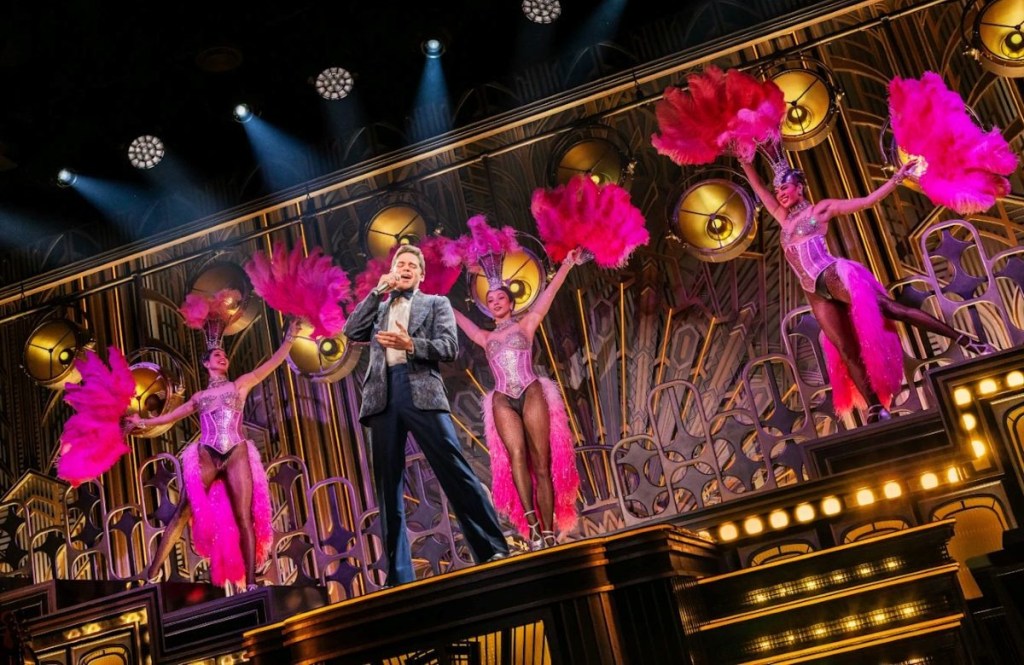
La Cage aux Folles, a concert revival of the 1983 musical, concludes a two-week engagement this evening at New York City Center under the auspices of Encores! It has a book by Harvey Fierstein, lyrics and music by Jerry Herman, and direction by Robert O’Hara, and it is a very poor production of a mediocre property – which remains mediocre despite having seen some minor refreshments, and blessed nonetheless with some real assets, notably the character and purposeful play regularly present in the lyrics and especially the lines.
The staging is conspicuously absent showmanship and skill, marked by events unaligned with musical accents, imprecise and poorly calibrated scene work, and undefined physical spaces, and capped off with a nonexistent final light cue. (Adam Honoré is the designer.) Plus, the concept for the production is incomplete, or unfinished, and slightly incongruous with the existing music arrangements and orchestrations – neither of which has been (substantially) rewritten to support the production’s apparent inclinations. (Joseph Joubert is music director, and he has presumably had a hand in creating the handful of alternate melodies.) The choreography, by Edgar Godineaux, is something close to dreadful, despite a strong unison isolation section at the top of the opening number. And the tap choreography, by Dormeshia, is pedestrian.
Wayne Brady, as Georges, is terrible, walking through the show with next to nothing in the way of a personalized, internalized character, wasting juicy lines of dialogue at every turn. Billy Porter, as Albin, is marginally better, but he, too, is wasting much of the material, both lines and lyrics, and no one seems to have accounted for his impaired vocal instrument – which is contributing to the diminished impact of his numbers. Alaman Diadhiou, as Jean-Michel, is deadweight. And James Jackson, Jr., as Jacob, is incredibly fine, executing the verbal and physical comedy with aplomb.
PRESS ANNOUNCEMENTS
Here is a list of select press announcements from the past week. Each headline is clickable for more information.
• Lin-Manuel Miranda and Eisa Davis’ Warriors to Open on Broadway in 2027
• The Sound of Music is Coming Back to Broadway, Starring Jasmine Amy Rogers
• Artistic Director Hana S. Sharif Abruptly Departs Arena Stage After Opening TLC Musical
• Shuler Hensley Will Direct On the Town Concerts at Carnegie Hall Next Year
• Courtney Reed, Claire Kwon, Marc delaCruz, More Join The Family Album Musical at La Jolla Playhouse
• Mystic Pizza: A New Musical Will Launch National Tour This Fall
• Qween Jean: Summer Legacy Ball and More Set for Little Island 2026 Summer Programming
• New Ballroom Musical Xtravaganza to Offer Public 1st Look Concert in Times Square
• Buena Vista Social Club Will Get a Puerto Rico Production
• Heathers Will Close Off-Broadway in November
• New Musical Wild About You Will Make Its London World Premiere in 2027
• Manhattan Theatre Club Commissions 2 New Musicals
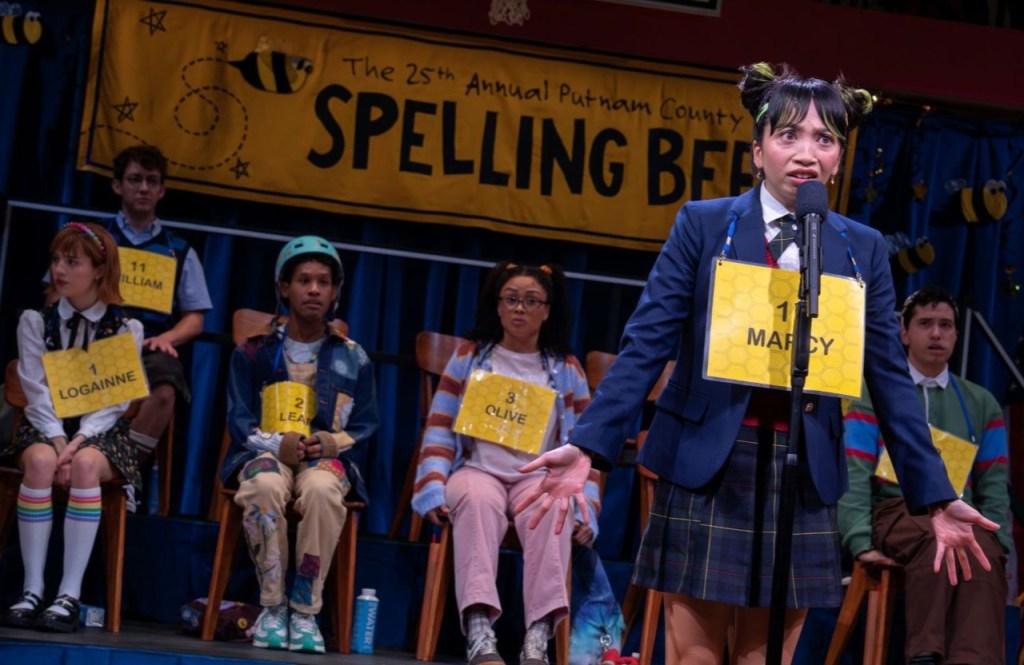
• Alex Newell Will Join Spelling Bee Off-Broadway Revival
• Brenda Braxton, David Elder, Jill Paice, More Will Lead Truly, Howard Hughes Musical Off-Broadway
• Ethan Slater and Betsy Wolfe Will Take Over Little Shop of Horrors Off-Broadway
PREVIEWS AND OPENINGS
Here is a list of the new musicals and revivals either opening or beginning previews during the upcoming week, specifically on Broadway and Off-Broadway. It contains, as well, select new musicals beginning performances regionally, and select new musicals and revivals beginning performances in New York City. Each title is clickable for more information.
Monday, June 29
• Opening: A Walk on the Moon
Tuesday, June 30
• NYC: The Potluck
• Regional: Cagney
Wednesday, July 1
Thursday, July 2
Friday, July 3
Saturday, July 4
Sunday, July 5
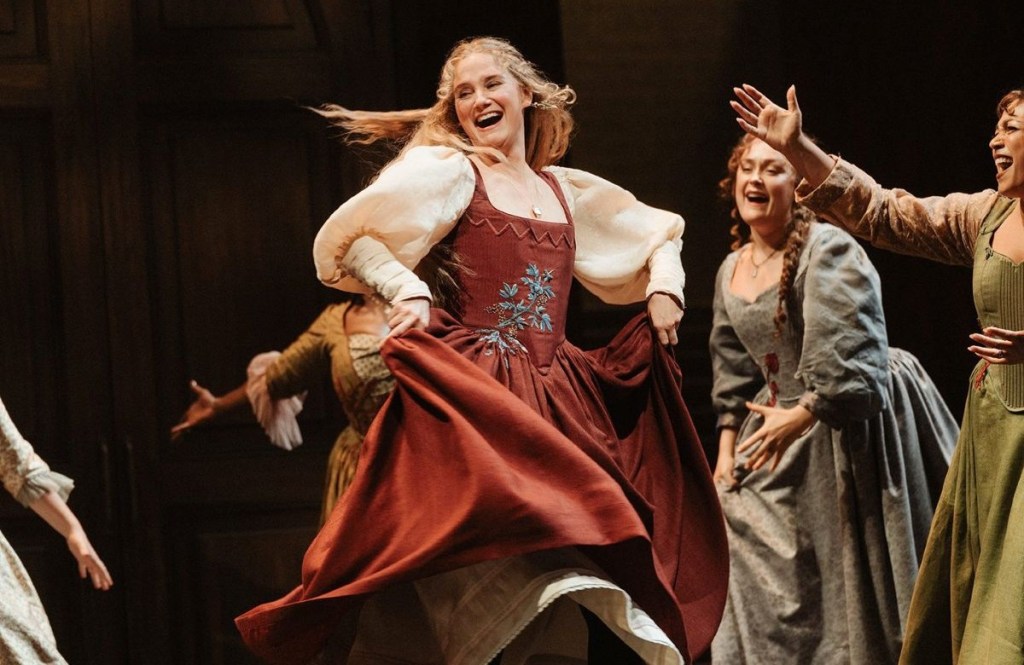
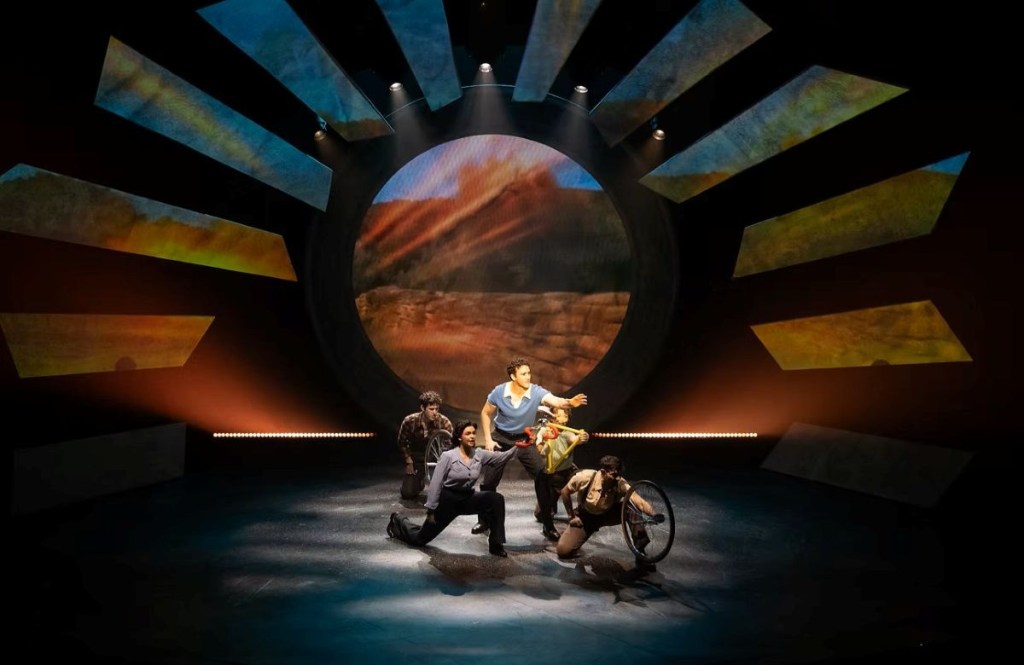
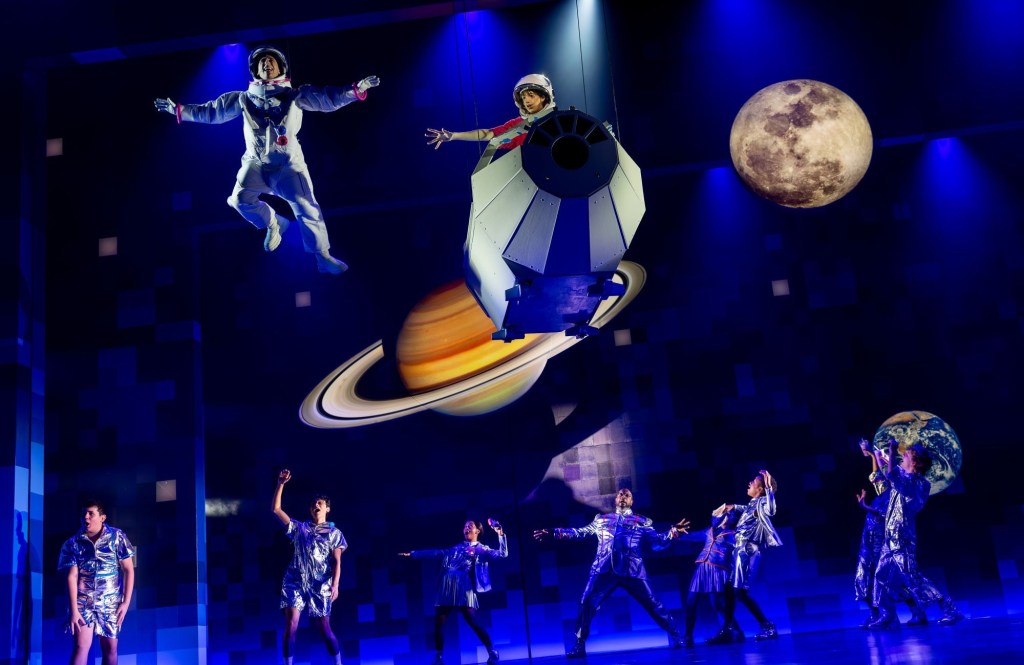
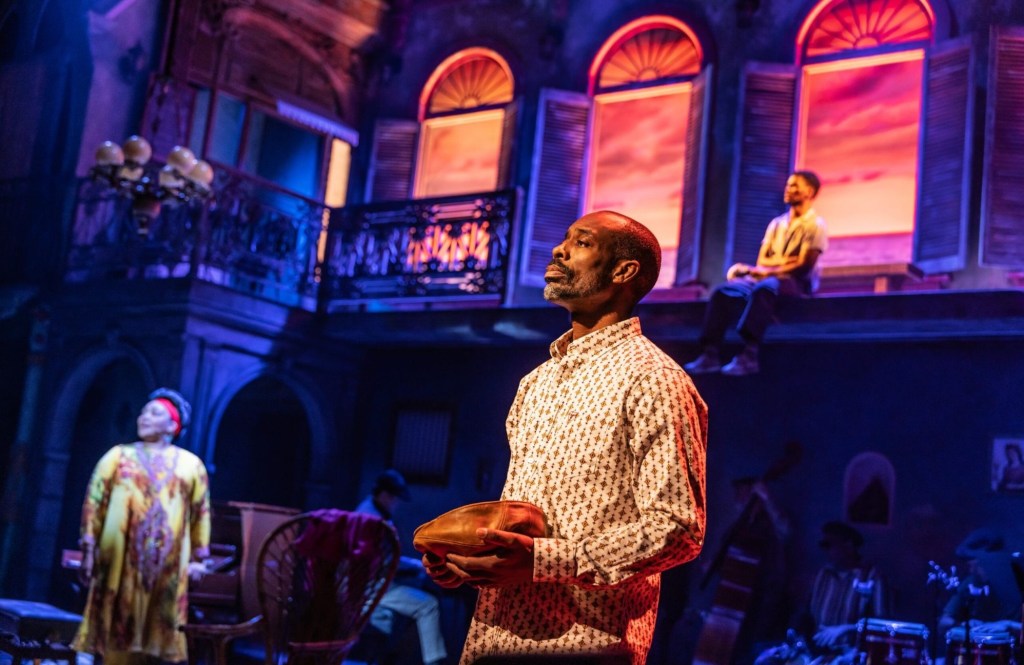
Photo of a scene from Basura by Greg Mooney.











 The Musical Theatre Report
Leave a comment