A journal for industry and audiences covering the past, present, and future of the musical stage.

Today is Sunday, and this week’s Report features a summer reading list, including works by Howard Dietz, Larry Gelbart, Carolyn Leigh, and Itamar Moses, who gives an update on three of his current projects: Nobody Loves You, An American Tail, and a new collaboration with Erik Della Penna and David Yazbek. Plus, a quote of the week; select press announcements from the past week; and the upcoming week’s previews and openings.
QUOTE OF THE WEEK
The lyric, by Carolyn Leigh, for “Eighth Avenue,” a comic lament sung by Lynn Redgrave in the 1976 revue Hellzapoppin’. The revue is inspired by the 1938 revue of the same name, and it endured a tortuous life. Leigh and Jule Styne were hired, early on, to write a handful of additional songs, and a trunk song by Leigh and Cy Coleman was similarly inserted into the proceedings. Hellzapoppin’ was headlined by Jerry Lewis, and its opening night performance on Broadway was to have been partially broadcast live on television, but the musical closed out of town.
Amendment to the city code:
Number four thousand, one hundred, eighty-nine, dash zee!
To loiter in a neighborhood
Other than one in which you pay
Maintenance, rental, or Con Edison, or all three
It’s a felony, or a fe-loney,
And all that baloney!
Which means that the bunch
With the “hots” for some urban renewal
Have succeeded in smashing
This city’s most glittering jewel:
Gee, I miss Eighth Avenue
Life has lost its spark
Hust’ling in the dark
Way up here at 69th and Park.
Since you passed that ordinance
Cleaning up Times Square
I miss the gang I used to bang
For just a “fin” and a subway fare
Cops ain’t coop’rative
Take the lady down in 7C
Her merchandise is twice the size
And she supplies it free
(When I could make a profit)
Once a guy could double park
Right outside my door
But no one in the carriage trade
Is gonna buck a meter maid
To make it to the 27th floor
It’s hell up north of Eight and 44th
Put it back the way it was before
Gee, I miss the tenderloin
Pickings there were prime
Love ain’t worth a dime
At Gristede’s or the Guggenheim!
Thursday nights and Saturdays
How can I make sales
When hand in hand in dry-dock land
The boys are cruising Bloomingdale’s?
Talk of fiscal suicide
How’s the Lincoln Tunnel gonna pay
With Jerseyites will stay home nights
Or turn around and say,
“Hello, Atlantic City”
Give me back the neighborhood
Where a girl can score
Prohibit at the very worst
Illicit love in Bensonhurst
Or litt’ring up the Coney Island shore
But don’t break faith
With 44th and Eighth
Put it back the way it was before
(We’ll get the tourists)
Put it back the way it was before
(Take city sales tax)
Put it back the way it was before
(Forget the Shuberts)
Put it back the way it was before!
SUMMER READING LIST
Summer is upon us, and here, in alphabetical order, are eight musicals into which I highly recommend sinking your teeth – for pleasure, for creative stimulation, for deepening your craft, for expanding your toolbelt, and or for increasing your frame of reference.
Assassins (1991)
You are undoubtedly already familiar with this superbly written narrative revue, by John Weidman and Stephen Sondheim, and you should nonetheless revisit the piece, whether or not the story and the style happen to be your cup of tea. Note, for instance, the expert routine (i.e. sequencing of sketches and songs), including the instances of back-to-back sketches, sans song; the order in which each assassin(ation) is tackled, and the individual manner in which each assassin(ation) is tackled, including the comingling of “Squeaky” Fromme and Sara Jane Moore, and the comic monologues of Samuel Byck, echoing, consciously or not, the early 20th century vaudeville turns of Joe Cook, Leon Errol, Julius Tannen, and the like; the track (i.e. appearance) of each character; the positioning, in the routine, of “Another National Anthem”; the diversity of musical styles, notwithstanding the sections of the songwriter’s familiar agitated staccato patter; the roughly eleven-minute scene, written almost exclusively in dialogue, that serves as the musical’s climax; the crackly dialogue; the buttons, situational invention, drama, and theatricality of the sketches; the definition and development of character; etc. But Assassins is necessarily not flawless, and, in 1992, for instance, “Something Just Broke” was inserted into the revue’s tight-knit routine, after the climax and immediately prior to the brief finale. If you read that version of the script, you might consider why that insertion must be considered inexpert and disadvantageous to the whole.
City of Angels (1989)
This incredibly fine, incredibly funny Hollywood satire centers around the making of a private detective film in the 1940s. It features celluloid scenes staged in black and white, real-life scenes staged in color, and deliberate character doubling, and its book, by Larry Gelbart, is first-rate. Note, for instance, the narrative structure, internal structure, and structural elements, including voiceovers, split-scenes, radio interludes, flashbacks, asides, and the like; the transitions; the tops and bottoms of scenes; the introduction of style, tone, characters, and conceit; the sharp, luxuriously playful dialogue littered with classy, sarcastic laugh lines rooted in situation and character; the sustained focus, freshness, and invention, including the confrontation at the end of the first act, and the doubling solo toward the top of the second; etc. Plus, the lyrics, by David Zippel, are clever, and the music, by Cy Coleman, is a vital, distinctive tapestry of jazz idioms, helping to distinguish the singular, stylish world of the show. But City of Angels has real detractors, and, to that end, you might similarly note, for instance, the failure of roughly half of the lyrics to effectively serve situation and character; the occasional lack of synchronicity of the lyrics and music, coupled with the occasional lack of theatricality in the rhythmic melodic lines; etc.
Excerpts from Flying Colors (1932)
Howard Dietz was a superb lyricist, and a leading figure in the elevation of the craft of lyric writing in the 1920s and 30s. He worked primarily with composer Arthur Schwartz, and he penned intricate, intelligent lines, invariably radiating sophistication – steeped in jazz, sonically, rhythmically, spiritually – flavored with gin – and regularly drenched in some combination of wit, cynicism, satire, and sex. Dietz was also a great sketch writer and a superb creator of original revue, with a knack for theatricality, a penchant for inventive stagecraft, and an acute awareness of the individual episodes and the whole, imbuing his cultured affairs with a wealth of fresh ideas, a distinct personality, and a precise, dynamic, and varied and balanced routine. In fact, Dietz sought to make the script of a revue “as complete as that of a play.”
Flying Colors is not, for it endured a particularly bumpy pre-production and tryout period. The routine is slightly out of whack – it remained unsettled on Broadway for weeks, unlike the routines of three prior Dietz revues – and a handful of the sketches and songs are subpar. But Flying Colors contains a heap of great writing, occasionally extraordinary, some of Dietz’s best, and you might savor the craft, the variety in execution and conceit, the cohesion, the style, the literacy, the character, the intellectual and theatrical punch, the intellectual and theatrical playfulness, the efficient starts establishing the standalone items, the synchronicity and interplay of lyric and music, the balance and juxtaposition of certain sections of the routine, etc. You might even savor the treatment of the topical subject-matter (placing yourself within the context of the time).
Here are pages of the original script, including “Sister Act,” a sendup of the present trend in female harmonists and the popularity of picturesque paeans to life below the Mason Dixon, sung in the show by an out-of-tune male trio; “Smokin’ Reefers,” a slithery jazz number inspired by Dietz’s visit to a Harlem nightclub; “The Harvey Woofter Five Point Plan,” a monologue of economic nonsense delivered from a soapbox in Union Square; “Fatal Fascination,” a duet offering separate perspectives on a single short-lived love affair, with the woman singing the lyric and the man delivering spoken interjections and a brief monologue; “A Rainy Day,” a male solo concerning a romance begun by two strangers in the back of a taxi; “Day After Day,” a male solo concerning the same daily doings of a suave sophisticate, featuring a chorus composed entirely of single-word sentences; “Alone Together,” a solo vocal leading to a sultry pas de deux; and “A Shine on Your Shoes,” an uptempo rouser for the presently depressed public. It follows, in the routine, “On the American Plan,” a gleefully sadistic stock-market sketch, laced with suicide. Here are the programs from the opening and closing weeks of the revue’s Broadway run, with the associated writing credits.
Gypsy (1959)
Here is a second musical with which you are undoubtedly already familiar, and you should revisit the masterful property, by Arthur Laurents, Stephen Sondheim, Jule Styne, and Jerome Robbins, this summer and every summer. Note, for instance, the structure, routine, and selection of events, especially the selection of auditions, rehearsals, and performances; the vaudeville conceit, especially the placards; the explosive starts of scenes, often in the middle of the action; the delivery, to the audience, of offstage plot points through motivated dramatic action; the musical styles; the structure of each song, including verses, choruses, dance breaks, interludes, and interstitial dialogue; the entrance into each song, including music cue, introduction, and literal and emotional pitch; the entrance into each patch of interstitial dialogue; the exit from each patch of interstitial dialogue; the robustness of each of the characters, even the bit parts; the sharpness and efficiency of the dialogue; etc. And make sure you read the original script, not the published version.
Jim Jam Jems (1920)
This forgotten musical is necessarily immature, given the time at which it was written, but it is an exhilarating artistic feast, offering a glimpse of a new art form actively on the march toward maturity, eventually reaching maturity in the middle of the 20th century, courtesy of works like Guys and Dolls, of which Jim Jam Jems feels especially like a precursor. The Jazz Age caper, by Harry L. Cort, George E. Stoddard, and James F. Hanley, unfolds between 9:45pm and 12:30am on a single night in New York City, and it follows a dance-mad dame who sneaks out of her uncle’s Park Avenue residence and makes her way to an exclusive nightclub atop the Astorbilt Hotel.
Here is the original script, bearing an alternate title that was employed for eleven days during the musical’s Broadway run, due to a threatened lawsuit. Note, for instance, the boisterous personality and lickety-split pacing; the variety of structural elements, including integrated specialties, and the crisp fluidity toward which the composition seems to be inclined, including a number that carries the action from a city street into a cabaret, separately introducing two featured players along the way; the introduction and individuality of the crackbrained characters; the integrated songs, including a purposeful and plaintive reprise; etc.
Jim Jam Jems underwent numerous changes on the road to New York and during the New York run, including the elimination of “Everybody But Me,” an interpolated torch song originally slotted at the end of the second-act drunk scene, and performed by the uncle’s boozy ex-wife. If the musical had been written 30 or 40 years later, it might have been an artistic sensation.
Little Me (1962)
Little Me is an artistic sensation – wicked, acidic, satirical – an ecstatic show-business sketchbook that traces the rise of a busty young woman from the wrong side of the tracks, with a chronological plot played primarily through scenes involving a “Young Belle,” while an “Older Belle” serves as the show’s narrator, courtesy of a framing device that finds the brassy dame revealing her life story to novelist Patrick Dennis. And, in an added conceit, the musical’s leading man is tasked with playing seven of the men in Belle’s life, five of whom die, and two of whom are father and son. The piece is written by Neil Simon, Carolyn Leigh, and Cy Coleman, and it is an expertly crafted affair, built, with style and flair, expressly for the theatrical stage, and exploding with character and ingenuity.
Note, for instance, the collection of blackouts, crossovers, interludes, and full scenes that form the individual world, akin to a cinematic vaudeville or a cinematic revue; the stings, underscores, and tags integral to the formation of said world, and to the crispness, excitement, and dynamism of the same; the structural variety and juxtaposition, including an eccentric ballet begun with dialogue timed to percussive tinker toys, an alternate-mode reprise for “Young Belle,” and a full company reprise of a sweetly comic waltz, expanded into a soft shoe; the tops and bottoms of scenes; the tracking of characters, including the leading man’s doubling, and the onstage union of “Young Belle” and “Older Belle” in the second act, courtesy of the title song; the punchy, personalized dialogue, including the rapid-fire crosstalk allotted a pair of vaudeville agents, and the smooth talk and slangy phrases allotted a cool cat from Drifter’s Row; the intricate blending of lines, lyrics, and music; the playfulness and exquisite synchronicity of the lyrics and music; the diversity of musical styles; etc.
Little Me is an exceptionally well made musical comedy, but it is necessarily not flawless, and, to that end, you might similarly note, for instance, the musically mild opening number, the anticlimactic button of the first act, the untidy top of the second act, and the false ending caused by the unsteady execution of the plot points in act two, scene twelve. (Note: I would advise reading the original script, not the script contained in the published collection of Neil Simon works, and not the drastically altered scripts for the unsatisfactory 1982 and 1998 revivals.)
The Itamar Moses Musicals
The Band’s Visit (2017) and Dead Outlaw (2025) are two of the best written new musicals of the 21st century, and Itamar Moses is almost certainly the most skillful book writer currently working on Broadway. The book of a stage musical, as you know, is not merely the spoken dialogue. It is the structure, the composition, the characters, the plot (where applicable), the situations, the incidents, the environment, and the musical routine. It is, according to Oscar Hammerstein II, “the prime generator of the other creative talents in a production, the wellspring of all the entertainment values which eventually decorate it and frequently outshine it.”
Though you have presumably seen the original Broadway productions of The Band’s Visit and Dead Outlaw, you should revisit each piece on the page – specifically examining, in microscopic detail, the masterful work that Moses has done in fashioning, vividly and emphatically for the stage, these two wildly different stories, with wildly different styles, structures, and narrative compositions. (Note: Dead Outlaw will soon be available to read, either via purchase or perusal, with a licensing deal in the midst of being finalized, and the stage show is different than the Audible radio play.)
Many are the assets of Moses, as a craftsman, revealed in these two works, and one of the most striking must be the sharp delineation of character in dialogue, coupled with the extraordinary focus and efficiency of the same. Examine, for instance, the opening scene of The Band’s Visit. Examine the opening line of Dead Outlaw – and nearly every scene that follows. (See my review.) But Moses’ dialogue is merely the beginning. And the end, so to speak, is that glorious, essential intangible: a sense of precision, detail, and rigor guiding every facet of the storytelling, in the pursuit of a complete, distinctive work of theatre art.
The book of a stage musical is nonetheless not written in a vacuum, and much credit is due Moses’ collaborators: David Yazbek, David Cromer, and, specifically on Dead Outlaw, Erik Della Penna.
Moses is currently in the “early research phase” on a new project with Della Penna and Yazbek, and it concerns a (different) historical figure from the 20th century. The next step in the musical’s development, Moses relates, may find him “writing a handful of sample scenes and trying to find a tone or a style and maybe a conceit.” Separately, Moses and Yazbek had, several years ago, been contemplating a stage adaptation of the 2006 film The Lives of Others, but they were unable to secure the rights.
Two other musicals on which Moses is currently working are An American Tail and Nobody Loves You – which premiered at the Old Globe Theatre in 2012, and played a stint at Second Stage in 2013. (“Boy meets girl. Boy loses girl. Boy goes on girl’s favorite reality dating show to win girl back.”) Moses penned the piece with lyricist and composer Gaby Alter, a childhood friend, and he confesses that he and Alter had, at the time, “little idea” what they were doing. (Nobody Loves You was essentially Moses’ first musical.)
Moses and Alter, feeling they had not “solved it on the page,” revisited the piece, from time to time, in the years immediately following its Off-Broadway run, and they eventually began making what Moses describes as “real changes” for a 2017 production at Horizon Theatre Company in Atlanta. “That was proof of concept,” he explains, “that there was another level it could get to, craft-wise.”
A new iteration of the musical was seen last year at American Conservatory Theatre in San Francisco under the direction of Pam MacKinnon. Nearly half of the score is different, the book, Moses says, has been “massaged all over the place,” and the authors now feel “really satisfied” with the piece. And the piece may now have new commercial producers attached.
An American Tail, meanwhile, is based on the 1986 animated film, and it premiered at Children’s Theatre Company in Minneapolis in 2023. The musical is coauthored by Michael Mahler and Alan Schmuckler and directed by Taibi Magar, and the team is currently exploring potential production opportunities at regional theatres, with the aim, Moses relates, of completing the necessary creative work to land on a definitive version of the piece.
And Moses would “love” to revisit his 2014 musical The Fortress of Solitude, written with the late lyricist and composer Michael Friedman.
PRESS ANNOUNCEMENTS
Here is a list of select press announcements from the past week. Each headline is clickable for more information.
• Evita Will Play the Winter Garden Theatre Beginning in February 2027
• Chess Will Close Early on Broadway
• Cats: The Jellicle Ball Extends on Broadway Through 2027
• Christopher Gattelli to Direct and Choreograph New Cinderella Tour
• Sting Will Star in Reimagined The Last Ship in the West End
• The Lost Boys Tickets Now on Sale Through 2027
• The Lost Boys Sets Release Date for Broadway Cast Album
• Playwrights Horizons Will Stage World Premieres from Aleshea Harris, Else Went, Kate Attwell, More in 2026–2027 Season
• Little Shop of Horrors to Cancel Performances at Westside Theatre Due to HVAC Repairs
• Chrissy Metz to Make Broadway Debut in & Juliet in June
• Schmigadoon! Will Get a Broadway Cast Album
• New York State Budget Adds $150 Million to NYC Theatrical Production Tax Credit
PREVIEWS AND OPENINGS
Here is a list of the new musicals and revivals either opening or beginning previews during the upcoming week, specifically on Broadway and Off-Broadway. It contains, as well, select new musicals beginning performances regionally, and select new musicals and revivals beginning performances in New York City. Each title is clickable for more information.
Monday, June 1
Tuesday, June 2
Wednesday, June 3
• Regional: My Ántonia
• London: Sinatra
Thursday, June 4
• Opening: Girl, Interrupted
Friday, June 5
Saturday, June 6
• Regional: Elephant Shoes
Sunday, June 7
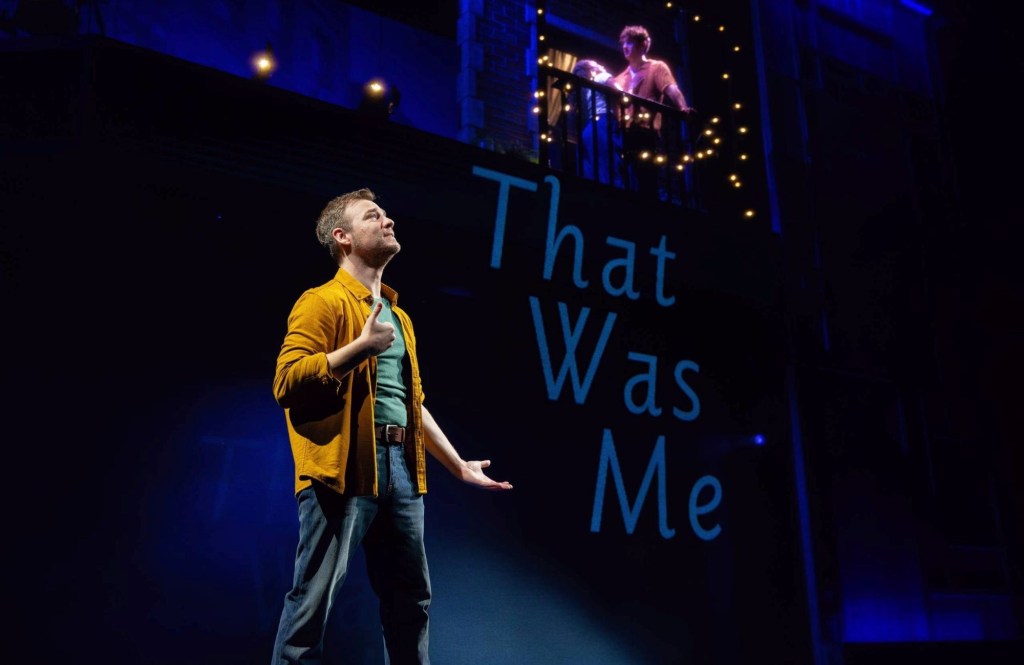
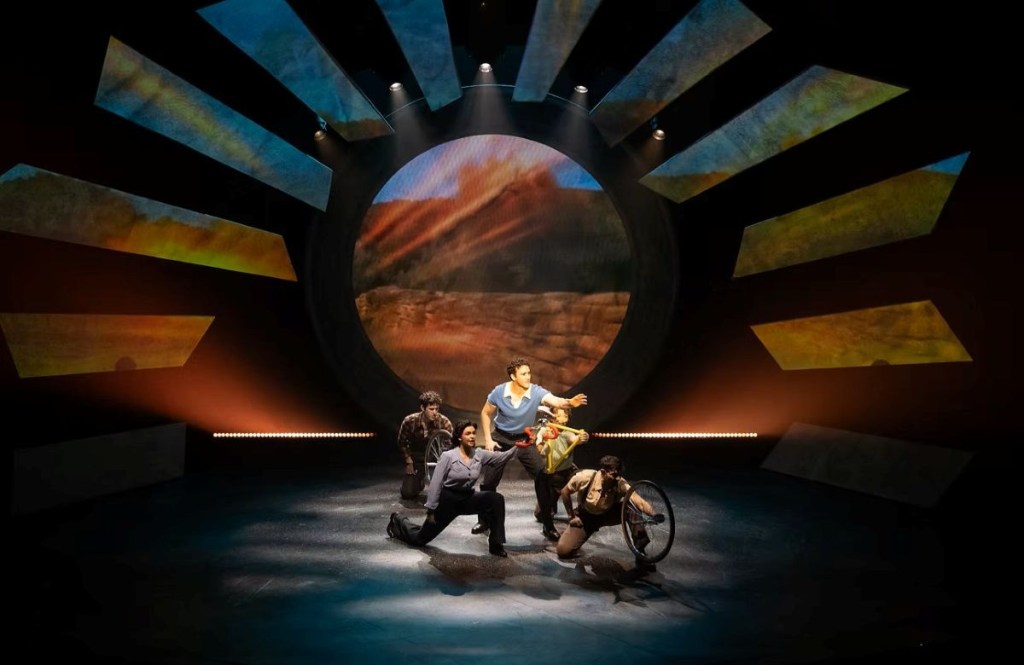
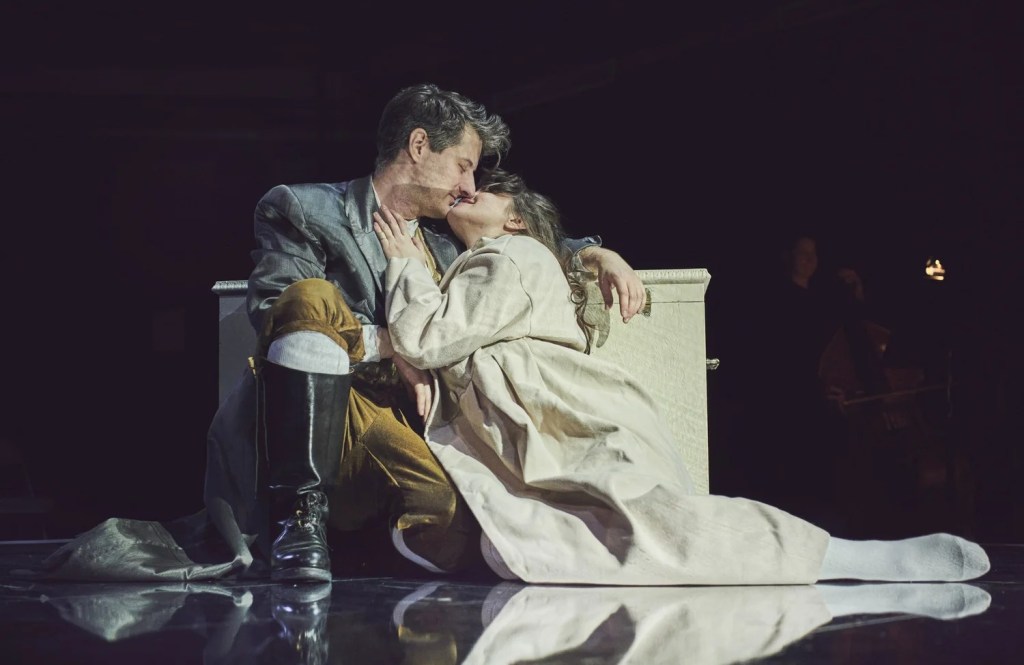
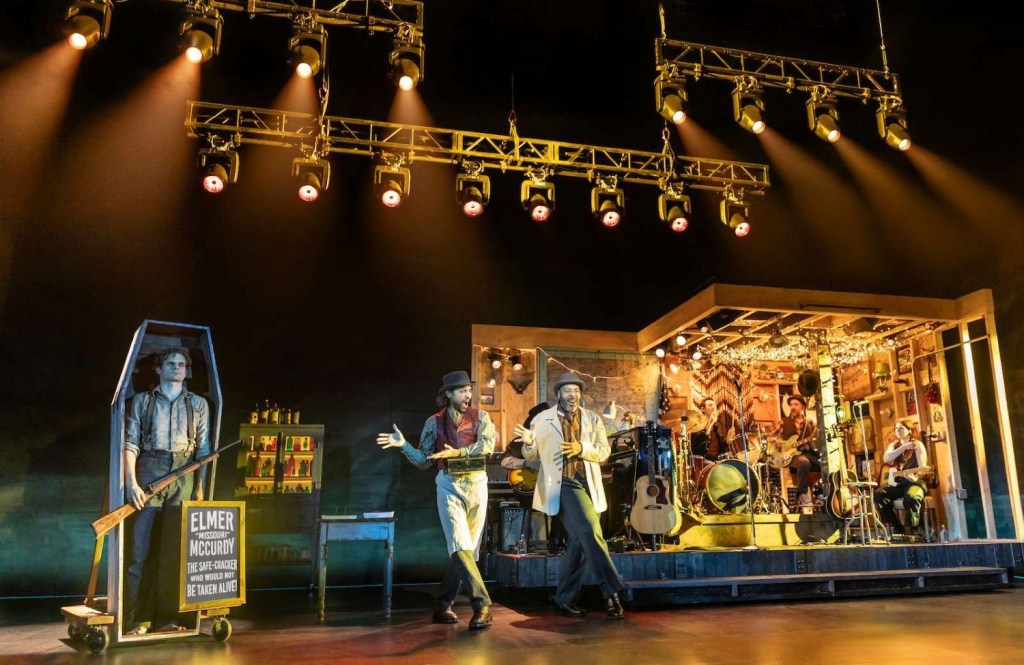
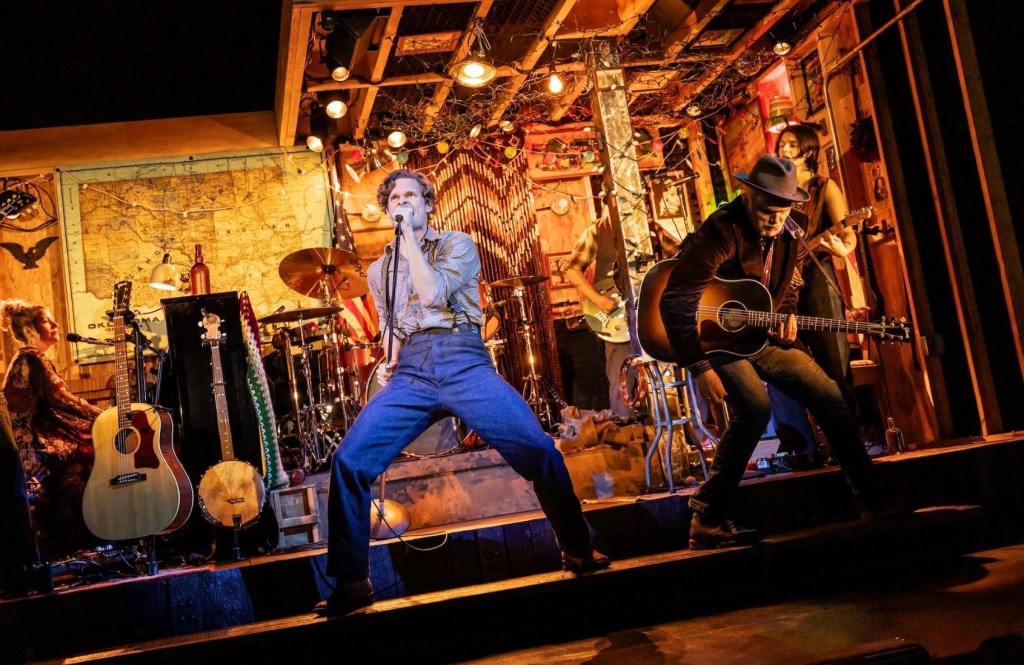
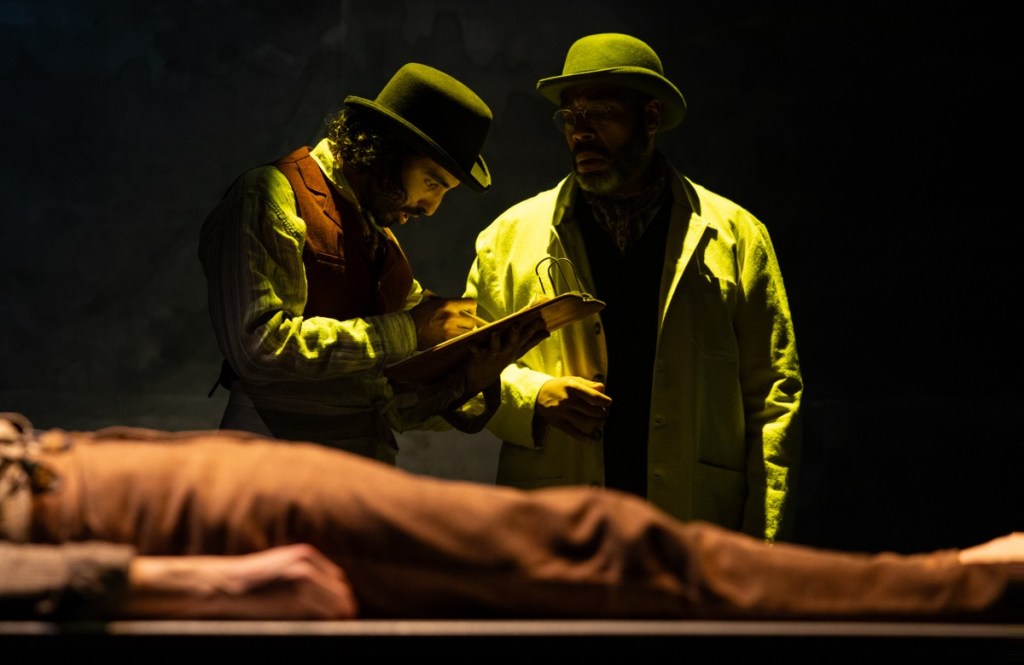
Photo of a scene from Dead Outlaw by Matthew Murphy.























Leave a comment