A journal for industry and audiences covering the past, present, and future of the musical stage.

107 Weeks in the Red, Including 7 Months of Free Admission, or Are Runways Really Shorter?
On September 18, Situation Interactive, a marketing firm whose theatrical clients include Mamma Mia! and The Outsiders, will be hosting a livestream event entitled “The Out-of-Town Tryout: Lessons Before New York.” The marketing copy for the event reads, “Opening a show on Broadway is harder than it’s ever been. The runway is shorter, the stakes are higher, and the margin for error is razor-thin.” Well, if that is the case, and disregarding the ineloquent contraction accenting the first sentence, when exactly was opening a show on Broadway easy, or easier? When was the runway longer, and how long was that evidently uniform runway? And when were the stakes lower, and exactly what stakes are being discussed in the first place?
In fact, the extent to which the opening of a show on Broadway is difficult is relative, and the length of the runway is individual to each production, if, as in business, runway refers to the period of time one has to launch a new venture before running out of cash. Opening a show on Broadway is hard. Period. The initial launch window, from the official announcement to opening night, has, for more than a century, ranged from mere weeks to upwards of a year. And perhaps the blatant sensationalism and quasi-hysteria clouding the current conversation, concerning runway, is a result of the false and recently popular notion that every Broadway show is inherently well crafted and high quality, and that every Broadway show is automatically blessed with a commercial audience that will invariably lead to profitability – if only that show is given enough time to find it and or capture it.
The Ladder (1926), for instance, is a dream play by J. Frank Davis that centers around a woman torn between two lovers, and it unfolds in four different time periods: 1300, 1670, 1844, and the present, with deliberate character doubling. The original production had a cast led by Antoinette Perry, and it was presented by Brock Pemberton, serving as an agent for Texas millionaire and producer Edgar B. Davis, who made his fortune in oil and rubber. Davis reportedly hatched the idea for the play, which deals with reincarnation, a subject near and dear to his heart, and he reportedly spent somewhere in the neighborhood of $1.5 million – a current value of roughly $28 million – to keep the production running for 107 losing weeks. (Davis denied having an affinity for reincarnation, and said that the playwright, to whom he had no familial relation, was a good friend.)
The Ladder opened to generally poor reviews and precious little business, playing to around 30 patrons per night. Determined to find a paying audience for the show and, in so doing, spread the show’s message – “heaven is not reached at a single bound, but we build the ladder by which we rise” – Davis embarked upon an advertising campaign that included the publication of letters and telegrams sent to Pemberton, who was the public face of the production company until he publicly withdrew, by the likes of playwright Zona Gale, the Theatre Guild’s Hamilton MacFadden, and Rev. Fred W. Stacey, of St. James Methodist Episcopal Church, whose letter read: “It was our great privilege to attend your play, The Ladder, last evening. To say that we ‘enjoyed’ it does not begin to express our experience. We did enjoy it. It is a wonderful production. The characters were all magnificent. Miss Antoinette Perry was superb. The message of the play gripped us. Your play is the answer some of us have been longing for to the question, ‘Must we always have filth on our stage?’ Those of us who have criticized the immoral play will show our appreciation of your effort by supporting your endeavor. I shall recommend The Ladder to my friends in private conversation and from my pulpit.” A separate advertisement for the show read, “Due to the widespread enthusiasm for The Ladder, arrangements have been made for an indefinite run.”
On Christmas Day, December 25, 1926, Davis chose not to charge admission for either one of the play’s two performances, and, four months later, he instituted a refund policy, whereby any dissatisfied customer could request reimbursement for the price of their ticket at the end of the respective performance. Separately, that same month, April 1927, he initiated a weekly essay contest, on the subject of reincarnation, awarding $500 to each week’s winner. “Although prize-letter contests are familiar devices in the field of play exploitation,” The New York Times reported, “the size of the award is, in this instance, much greater than has ever been offered.” The essay contest, which did not require the applicants to have actually seen the play, lasted 12 weeks, and it reportedly cost Davis a total of $8,500, because the benevolent oil man wound up giving prize money to the runners up as well.
By the summer of 1927, during which the weekly grosses averaged less than $400 with the weekly operating costs remaining north of $7,000, The Ladder had undergone significant revisions, including changes to the plot and the scenic design, and actor and director Margaret Anglin was summoned to restage the piece – from which author J. Frank Davis’ name would eventually be removed. Then, on Thanksgiving Day, November 24, 1927, Davis – the producer – instituted a free admission policy for what was announced as an indefinite period. A prepared statement read, “The management feels that while the present version of the play contains much that is meritorious and worthy of the theatregoers’ attention, The Ladder has not reached the point where critics can be called in and the play presented as ordinarily prescribed by theatrical custom. During this period, until the play reaches its ultimate state, all performances of The Ladder will be absolutely free.”
The Ladder played to packed houses, absolutely free, for seven months straight. Then, on July 11, 1928, following a dark week for rehearsals, Davis reinstituted a charged admission policy with a $3 top, and the “ultimate” version of the play was officially unveiled – to approximately 75 people, only 35 of whom were paying customers. But, Billboard noted, “Most of the reviewers who attended the reopening said that it was better than when originally produced and were forced to admit that it is far better entertainment than many shows that play on Broadway.”
The Ladder, which changed theatres five times over the course of its extended run, limped on for another four months, “often” playing to tiny houses comprised of no more than a dozen patrons. And, as The New York Times noted, “Nothing proved able to change the size of the audiences.”
Ruth Selwyn’s 9:15 Revue (1930), meanwhile, had no such hobbyist behind it, and the entertainment ran out of cash after one week, with the actors’ salaries, for that week, going unpaid – though Actors’ Equity ultimately recovered the $7,900 in salaries from the Managers’ Protective Association, of which Selwyn was a member, having made a deposit of $10,000 to join. (Her MPA membership meant that she was not required to post a bond with Equity.) The original revue, which acquired a new director out-of-town, had sketches and songs written by an ever-changing roster of heavyweights, including Harold Arlen, Eddie Cantor, Ira and George Gershwin, and Ring Lardner, and it notched an estimated loss of $140,000. Selwyn told The New York Times, “Play-producing is hell!”
Ballyhoo of 1932, an original revue with lyrics by E.Y. Harburg, closed after 12 weeks, with the principal cast failing to get paid for the final week of the run. Hot-Cha! (1932), with Bert Lahr and Lupe Vélez, closed after 15 weeks, despite the entire cast taking a pay cut, despite the authors agreeing to a delay in their royalties, and despite the top ticket price being dropped from $5.50 to $4.40. (One actor refused to take a cut, and he was replaced.) And Heaven on Earth (1948), which reportedly took 114 backers’ auditions to capitalize, closed on Broadway after two weeks, at a loss of more than $300,000, despite efforts to raise an additional $30,000 to keep the musical afloat, despite the Shuberts agreeing to reduce the rent on the Century Theatre, and despite the performers willing to work for minimum, with the blessing of Actors’ Equity.
That’s the Ticket! (1948) did not even arrive in New York. The political satire, by Julius Epstein, Philip Epstein, and Harold Rome, closed in Philadelphia and reportedly lost its entire capitalization, of roughly $200,000. Major revisions were to have taken place, with Robert H. Gordon replacing original director Jerome Robbins, and an additional $75,000 was in the process of being raised to bring the musical to Broadway, but producer Joseph Kipness abandoned the piece two months after its out-of-town demise.
Strip for Action (1956), too, closed out-of-town, reportedly losing more than $350,000, which represented the production’s entire capitalization and additional funding that was raised to cover two separate claims made by the musical’s replacement book writer and scenic designer. (Broadway, at the time, originated most new musicals, with a couple of commercial out-of-town engagements taking place immediately prior to the New York opening.)
Copper and Brass (1957), a Nancy Walker vehicle, survived its out-of-town tryouts in New Haven and Philadelphia, but the musical lasted only five weeks on Broadway. It was capitalized at $320,000, with a 10% overcall, and $300,000 was eaten up bringing the show to New York, by which time it had acquired a new director, a new choreographer, and a new featured actor. Copper and Brass had, on Broadway, a weekly gross potential of $53,000 and a weekly nut believed to be between $33,000 and $43,000, but the average weekly gross for the five-week run was only $26,500. And, incidentally, not unlike a current marketing tactic, three songs from the show were released, by Decca, as pop recordings in the weeks prior to and immediately following the Broadway opening: Sammy Davis, Jr. recorded “Cool Credo,” Jeri Southern recorded “You Walked Out,” and Dick Williams, who was featured in the cast, recorded “Don’t Look Now” and “You Walked Out.”
The Lieutenant (1975), which garnered very good reviews from a handful of prominent news outlets, was “suspended” after only nine performances, until its producers could “raise $100,000 to promote it.” But the “rock opera,” about the My Lai massacre and a resulting court-martial, never reopened.
And the 1978-1979 season, on Broadway, witnessed a parade of early closings, including Ballroom (1978), which lasted only 116 performances and lost roughly $2 million. One of the show’s producers, Bernard Gersten, believed that the team’s “biggest mistake” was likely not providing for, in the production budget, a post-opening advertising campaign. (“It just never occurred to us.”) He and his colleagues had intended to bank on the name of the show’s producer, director, and co-choreographer, Michael Bennett, late of A Chorus Line (1975), as well as the opening night reviews. But Bennett’s name did not “translate,” and the opening night reviews were lousy. Matthew Serino, whose advertising firm represented Ballroom, said, at the time, that he had begun advising all Broadway producers to “overbudget” their shows, anywhere from $200,000 to $250,000, to give the show “a fighting chance.” “I believe,” he professed, “that, given the right amount of money, any show can be sold.” But that is a gross and destructive viewpoint, and history proves, clearly and unequivocally, otherwise. Look at The Ladder.
Not coincidentally, the industry’s contemporaneous public comments concerning the 1978-1979 season’s early closings largely ignored the fact that, as The New York Times noted, a “great number” of the musicals produced that season were “at best marginal.” The Times attributed the poor quality of these properties to a dereliction or deterioration of “standards” on the part of “seasoned professionals,” coinciding with a rapid influx of “new,” “inexperienced,” and “uncritical” investors and producers, who saw musicals as a “hot” investment and “easy” to make. “Second-rate shows came into being,” the Times observed, “and met a predictable fate.”
Situation Interactive is, today, surely not the only company or individual shouting about supposedly shorter runways, or, relatedly, rising production costs, and the environment is, today, surely different than it was 99 years ago, when Broadway encompassed vaudeville, nightclubs, burlesque, and legit, and when a single season saw the opening of more than 100 plays and musicals; or 83 years ago, when I.H. Herk was sentenced to six months in jail for producing Wine, Women, and Song; or even 20 years ago, when page-buster ads were popular. But opening a show on Broadway is not inherently harder; the runway is not inherently shorter, or homogenous; and quality should not be left out of the equation – for the fact remains: the musical theatre matured in the middle of the 20th century, and well crafted material has never had a negative impact on the box office. A little perspective is in order. And perhaps some ingenious solution to a producing problem of the present will be found in the solution to a producing problem of the past.
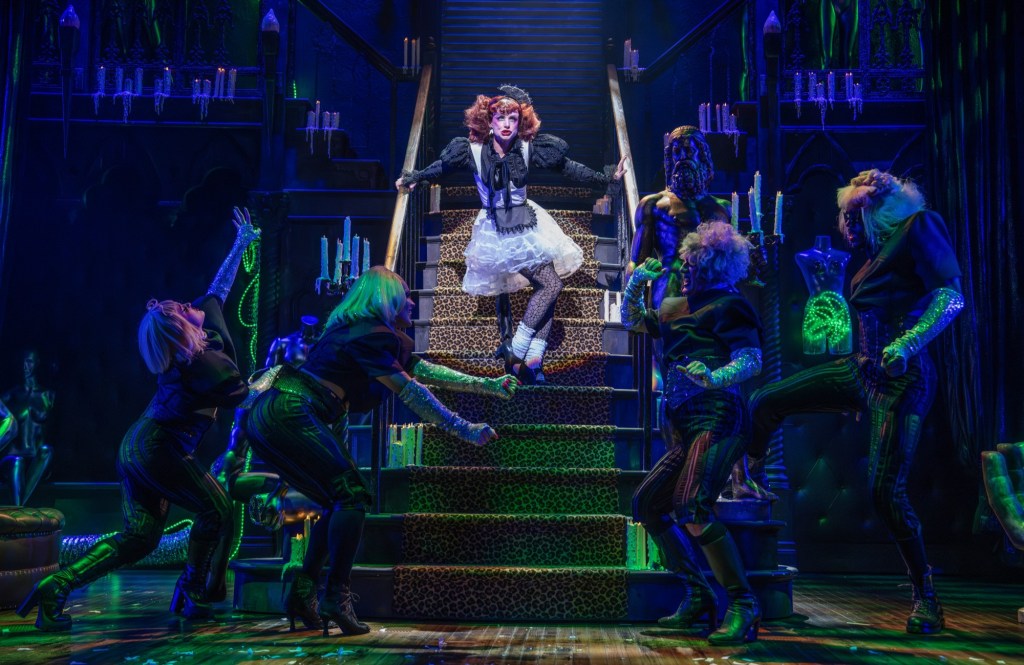
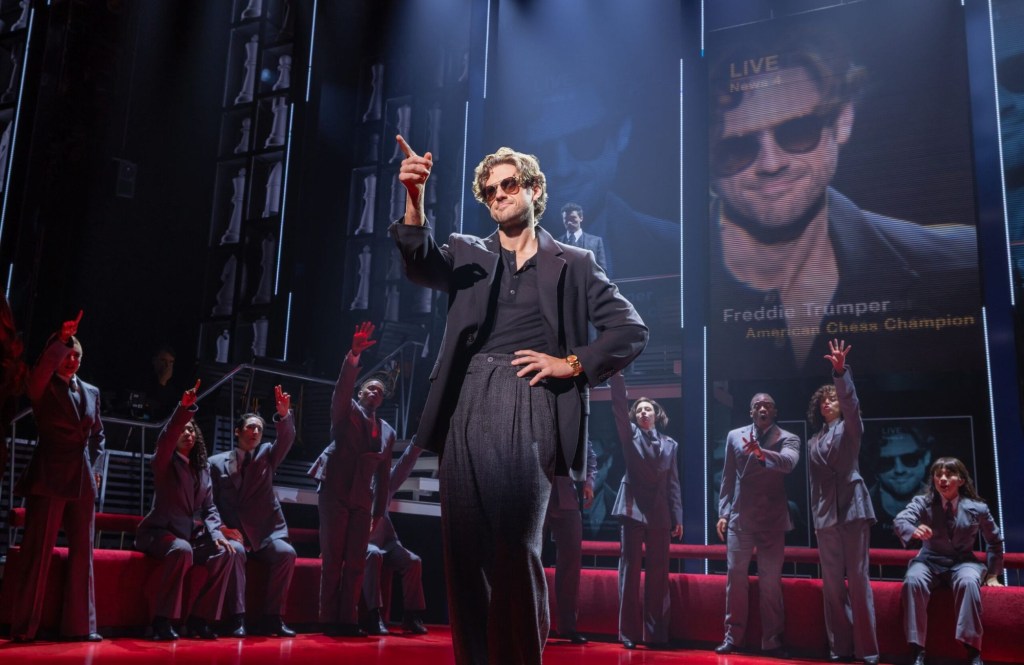
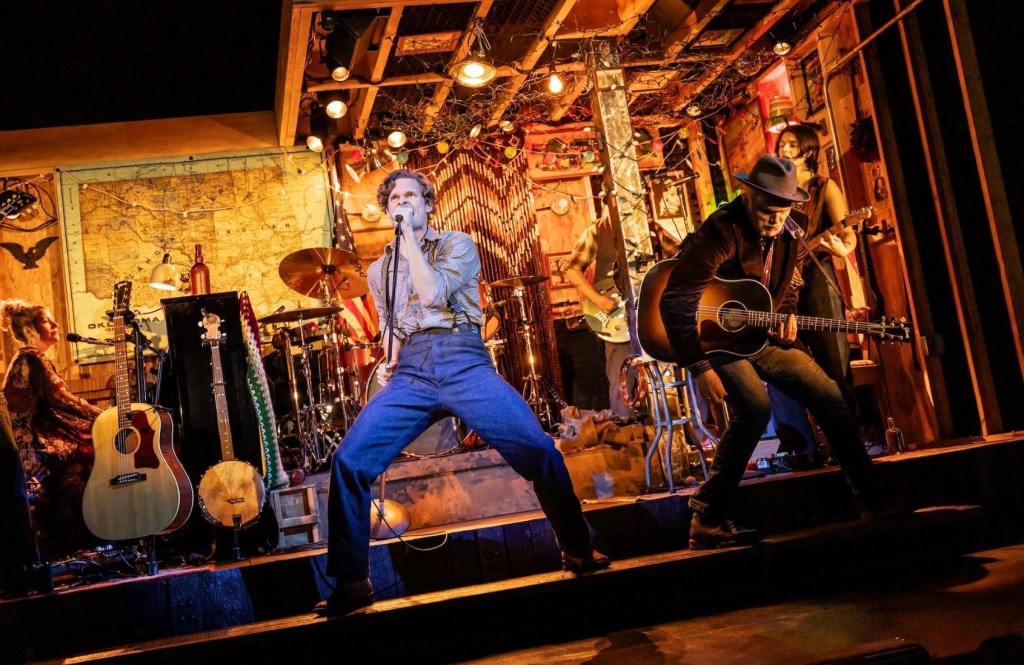
Photo of a scene from The Outsiders by Matthew Murphy.
2 responses
-
-
You bet! THE LADDER is such a fascinating, crazy case study. Glad you enjoyed.
LikeLike
-































Leave a comment