A journal for industry and audiences covering the past, present, and future of the musical stage.
Today is Sunday, and this week’s Report contains my detailed notes on 1972 at American Repertory Theater and Wanted at the James Earl Jones Theatre. Plus, a quote of the week; select press announcements from the past week; and the upcoming week’s previews and openings. Note: I am in the midst of writing a new book, so my notes on this fall’s productions are likely to be uncharacteristically brief; today’s notes are an exception.
QUOTE OF THE WEEK
The lyric, by Maxwell Anderson, for “How Can You Tell an American?,” from the 1938 musical Knickerbocker Holiday.
How can you tell an American?
Has he any distinguishing flavor?
Could you spot him on an elephant in Turkestan
Or floating on a raft fifty miles at sea
As you’d know a single leaf from the sassafras tree
By its characteristic savor?
It isn’t that he’s short or tall,
It isn’t that he’s round or flat,
It isn’t that he’s civilized or aboriginal
Nor the head-size of his hat,
No, it’s just that he hates and eternally despises
The policeman on his beat, and the judge at his assizes,
The sheriff with his warrants and the bureaucratic crew
For the sole and simple reason that they tell him what to do;
And he insists on eating, he insists on drinking,
He insists on reading, he insists on thinking –
Free of governmental snooping or a governmental plan –
And that’s an American!
How can you tell an American?
Has he any distinguishing notion?
There’s something in the essence of a good champagne
That makes you certain sure you’re not imbibing rain,
And you won’t succeed in growing an American man
On the opposite side of an ocean.
It isn’t that he’s good or bad,
It isn’t that he’s gay or grim,
It’s only that authority repels him as a lad
And never goes down with him.
Yes, it’s just that he hates both the guts and the faces
Of the people who can order him and put him through his paces,
The assessor with his taxes or the colonel at review
Or any fool official who can tell him what to do,
And he won’t go to heaven and he won’t go to hell,
And he will not buy and he will not sell,
According to the precepts of a governmental plan –
And that’s an American!
How can you tell an American
When it comes right down to cases?
Is there any one virtue or particular vice
Like a Scotchman’s whiskey or a Chinaman’s rice
Or a gypsy’s addiction to the moving van
That marks him among the races?
It isn’t that he’s black or white,
It isn’t that he works with tools,
It’s only that it takes away his appetite
To live by a book of rules.
Yes, it’s just that he hates and he damns all the features
Of any mortal man set above his fellow creatures,
And he’ll hate the undertaker when at last he dies
If he hears a note of arrogance above him where he lies;
He does his own living, he does his own dying,
Does his loving, does his hating, does his multiplying
Without the supervision of a governmental plan –
And that’s an American!
1972 AT AMERICAN REPERTORY THEATER
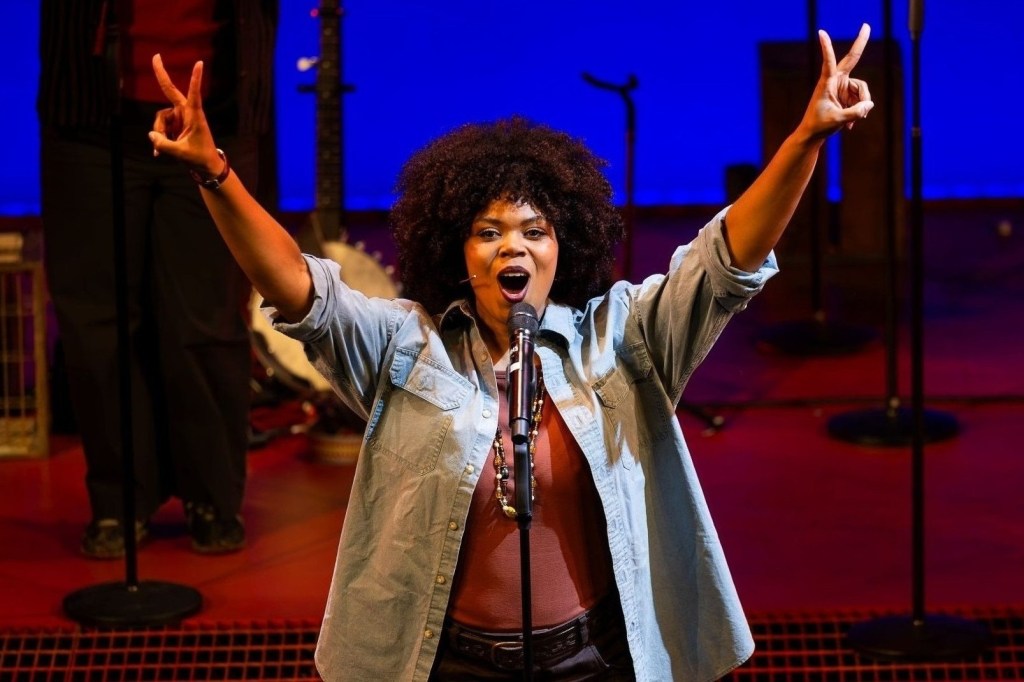
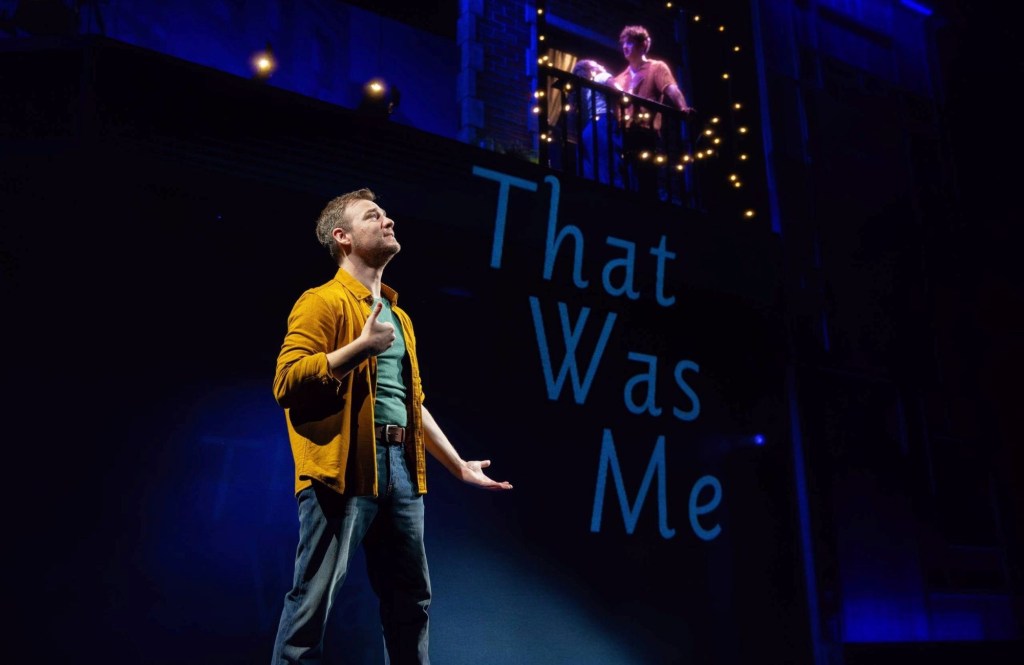
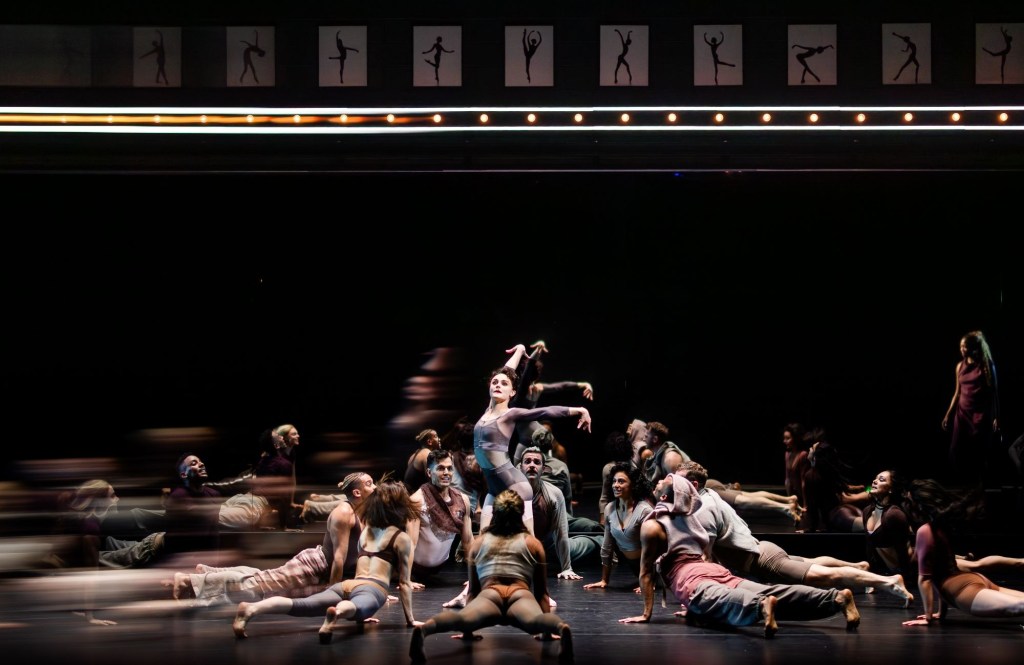
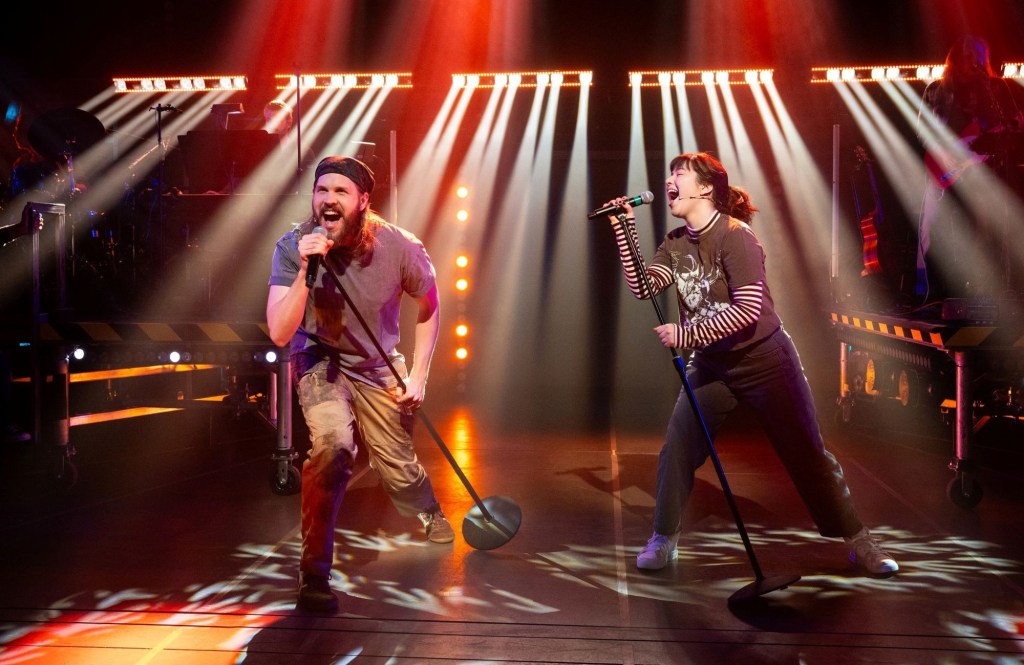
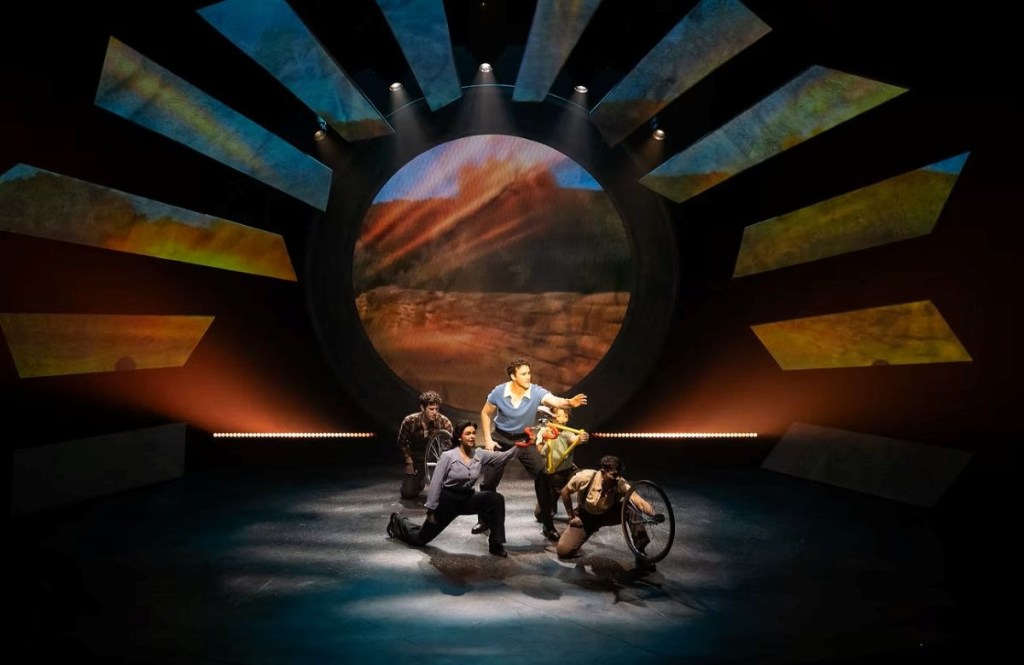
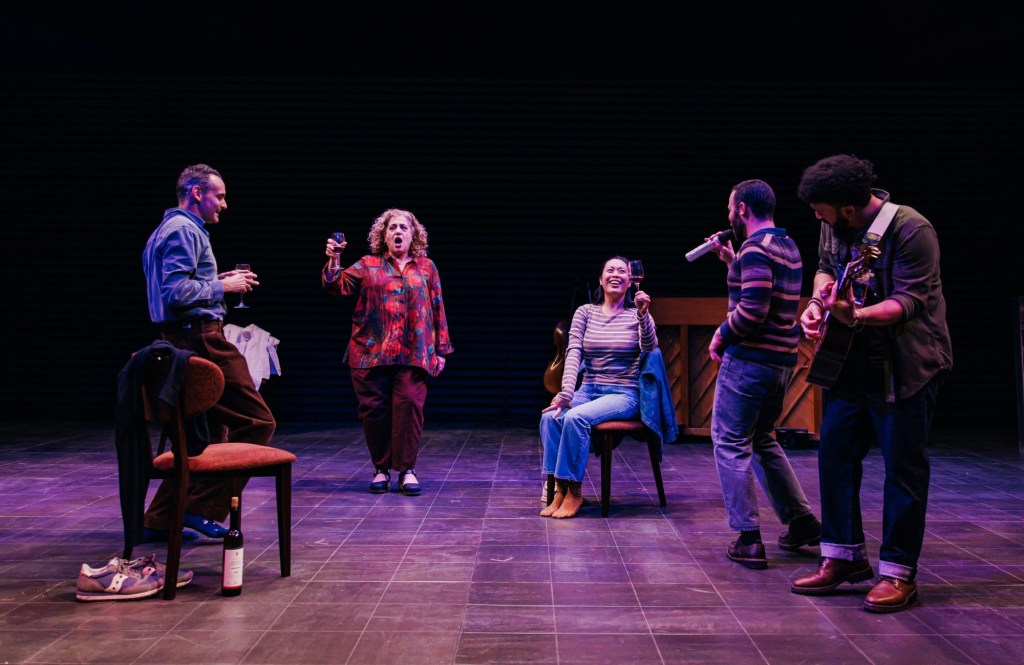
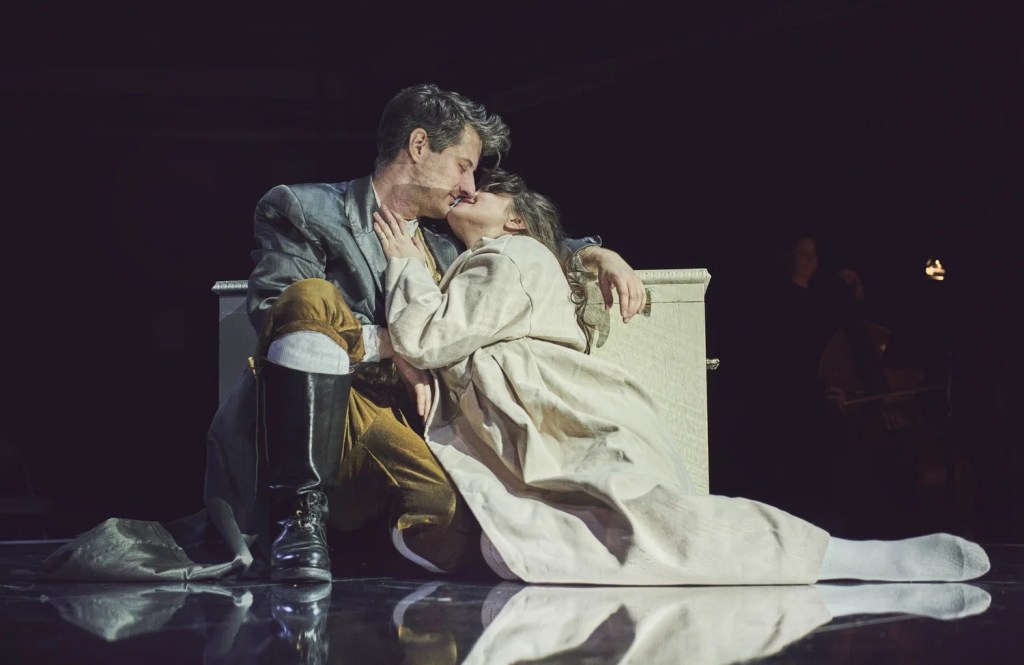
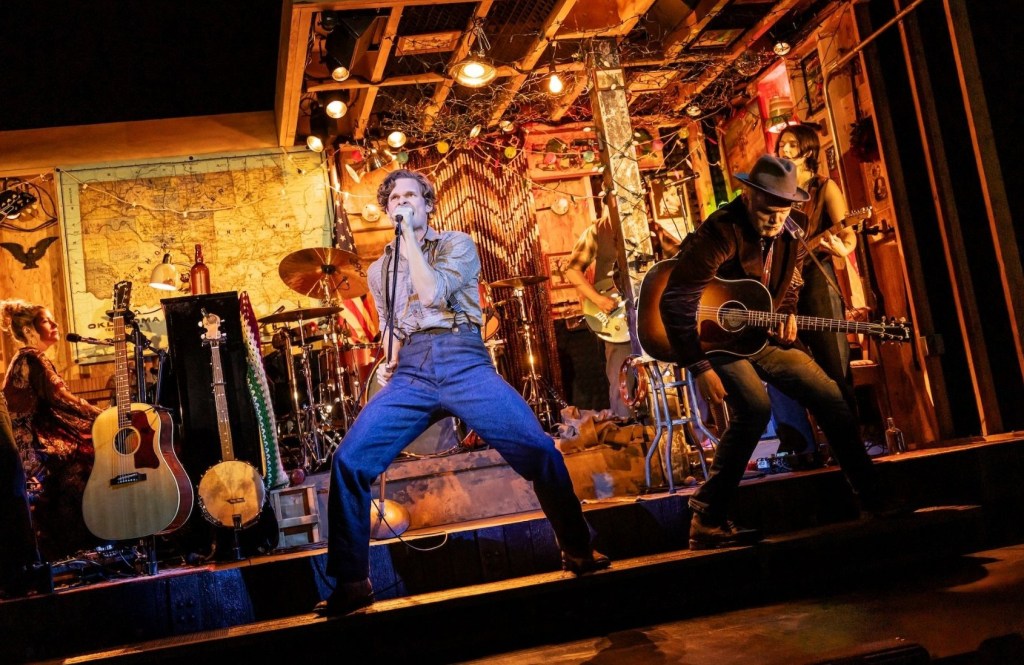
1972 is currently playing a world premiere engagement at American Repertory Theater in Cambridge, Massachusetts. It has a book, lyrics, and music by Chadwick Stokes and a book and direction by Jessie Nelson, and it is, at present, a very poor piece of theatre. But it might be something quite exciting if Stokes and Nelson are willing to embrace the specific medium in which they have chosen to work – which will inherently mean significant rewriting and restaging – and perhaps if Stokes and Nelson are willing to receive an assist, credited or not, from a more skilled theatrical hand.
The musical, which currently runs roughly 80 minutes, follows a newly pregnant 19-year-old woman, Hannah, who, at the top of the show, decides to leave her abusive boyfriend and have an abortion. She learns how to ride the rails with three male drifters, she watches a young Black woman, Louisa, die at the hands of a drug-addled doctor in an underground clinic, and she eventually connects with a group of “Janes” in Chicago, where she has an abortion and joins the fight for women’s rights. Here are my notes.
• 1972, despite being flavored with concert, has no clear, distinct identity – which is contributing to the muddled state of the storytelling and the stage. Stokes and Nelson must, if they intend to realize an effective theatrical enterprise, define the narrative world and the narrative language. Are the actors and musicians, for instance, playing themselves or characters or both, and, if both, when and how is the distinction being made between the two? Are the actors and musicians serving as narrators? What is the distinction being made between narration, comment, and action, and when and how are narration, comment, and action being used? Who is playing instruments, when are they playing instruments, and why are they playing instruments? When and why are handheld microphones being used? When and how are projections being used? How is each song meant to function in a dramatic context as part of a continuous story? How do the songs relate to each other from a standpoint of structure and composition? And so forth. 1972, by the way, could, with clarification and definition, have a wonderfully dynamic narrative design. Indeed, certain moments already suggest such a design: the single-line side-shift going into the prison tableau, the train-jump accented with a blinding flash of front-light on the button of the opening number, the isolated squares of downlight in the underground clinic, the doctor interlude, the projection snaps, etc. But these moments are rough and imprecise, and they are lost in a rock-infused protest piece that seems to have been haphazardly thrown together.
• The lyrics are largely untheatrical: many or most have been written about situation and character, rather than for situation and character; many or most suggest the story, rather than telling the story; and many or most are poetic – which would not be a problem if they were also dramatically active. But they are not. (The theatrical stage is not the recording studio.) Since 1972 is almost exclusively sung, the untheatrical lyrics must be blamed, alongside the unsteady story structure and the unclear identity, for the extraordinary thinness of the story and the characters, to the extent that the musical even has characters. Plus, the false rhymes are legion, and they attract unwanted attention.
• The music, while not unpleasant, tends to fall into a similar groove – which does not help to individualize moments, to cultivate character, or to propel the narrative. 1972 is in danger of sonic monotony. The opening nonetheless carries considerable musical interest, with fine accents from trumpet and trombone. (The arrangements and orchestrations are not formally credited in the program.) But why is Stokes, who plays(?) one of the drifters, leading the opening? And anonymously no less. Which brings us back to the first point: what is the musical’s identity? What does it want to be? How does it operate?
• The scenic design, by Amy Rubin, might wind up being marvelous. A large hollowed-out freight car is situated mid-stage, filling the width of the stage and drenched in red. The deck downstage of the unit is open for playing, and a cyc is situated on the upstage wall. (A clean, attractive look.) Nelson and Rubin have introduced a neat jack-in-the-box conceit on the second song, for which the stage-right interior wall of the car unit is swung open (in-stage) at roughly a 90-degree angle to result in two yellow walls framing the central figure. But the hidden compartment is ultimately a false-setup, an incomplete thought, because Nelson and Rubin have failed to carry forward or develop the potentially valuable conceit, with no other hidden compartments revealed during the remainder of the show.
• Why has Louisa not been handed an entire song revealing her hopes and dreams, in tandem with her situation? Such a song would surely aid in the dramatic impact of her death – five minutes later. Her death is, at present, not affecting in the least, largely because we have not come to know her. And because the execution of her death is terribly poor. (Louisa could be a show-stealing role, if Stokes and Nelson write her well.)
• In addition to sporting a faulty lyric, “Bird in Hand” is structurally obvious, with each of the three drifters singing successively.
• A musical mode shift that occurs when Hannah makes her first jump onto a train is a fine idea, inexpertly executed. And the creators have not made a moment out of the jump. Nor have they made a moment out of her entrance into the train yard. Indeed, moments are missed throughout the show.
• Some of the material, like “Headrush,” has, consciously or not, a valuable inclination toward purposeful play – which should be enhanced, refined, and expanded upon across the board.
• “It’s for You, Jane” might be developed into a showstopper. And why has the primary Jane not been developed into an actual role? She, too, could steal the show, if Stokes and Nelson write her well.
• “Chicago” and “Sound the Siren” might eventually make a dynamite sandwiching sequence, and the descriptor pileup in “Chicago” is a fine idea, presently forced and purposeless.
• “Loaded Nissan,” sung by Hannah, is a major missed opportunity.
• “The Months,” sung by Hannah, is terribly labored.
• The groundwork has not been effectively laid for the string of events that occur after Hannah gets an abortion.
• The abortion debate, initiated by a drifter, is anemic. (Stokes and Nelson have aggressively eschewed drama at nearly every turn.)
• The train element of the story comes and goes whenever convenient.
• The talk of a drifter’s daughter comes and goes whenever convenient.
• The talk of the Vietnam War comes and goes whenever convenient.
• The circumstances and climactic tensions – real or not – suggested by the year 1972 are strangely unexploited. (1972 could just as easily be 1968.)
• Ben Stanton has done a solid job with the lighting design.
• The cast is generally subpar, with Stokes, Darren Buck, and Will Urmston being very poor. Khaila Wilcoxon has a powerhouse voice, but, as the primary Jane, she has no role.
• Character. Clarity. Detail. Definition. Dynamism. Drama. Synchronicity. Theatricality. Stokes and Nelson have much work to do.
WANTED AT THE JAMES EARL JONES THEATRE
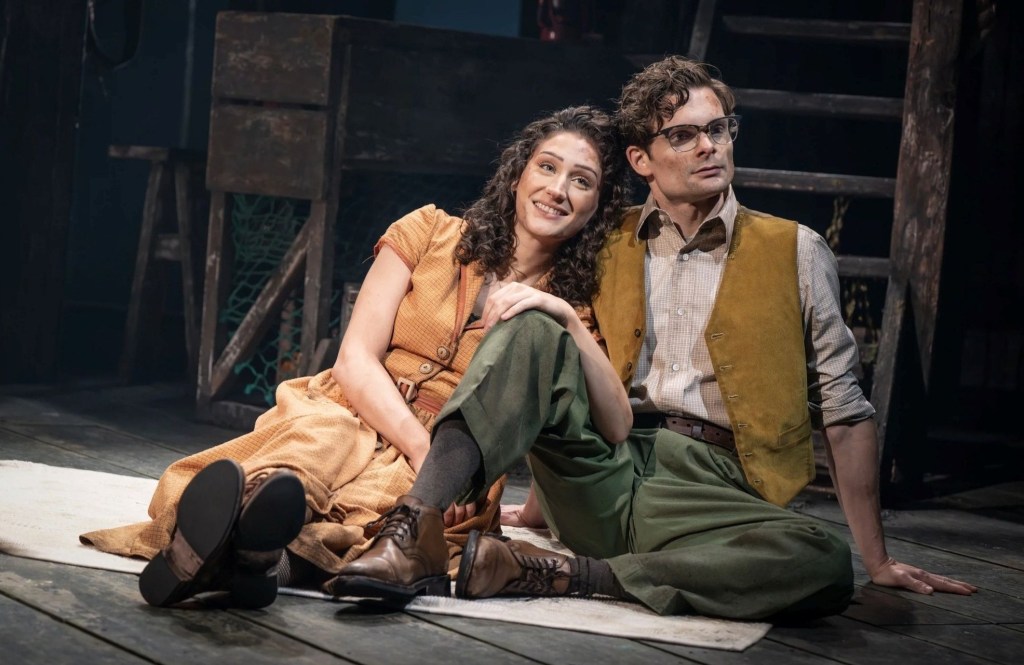
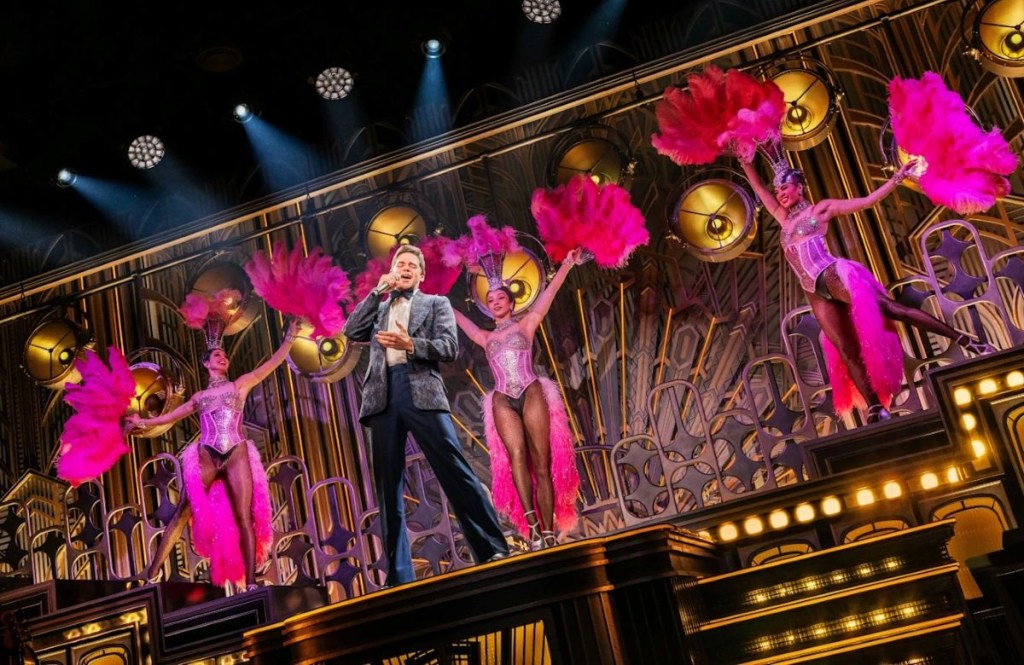
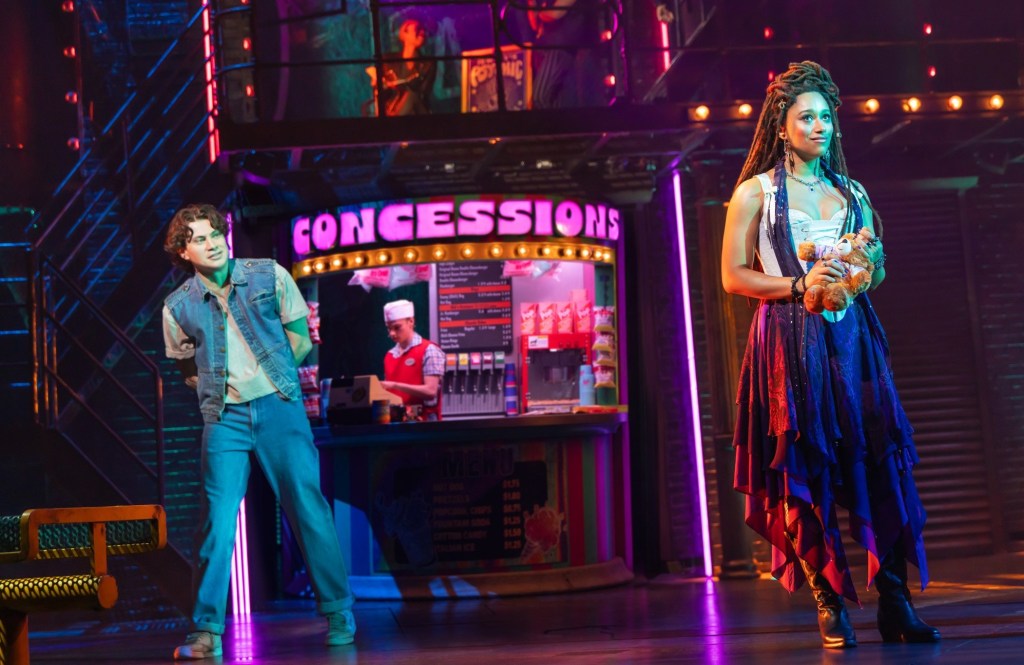
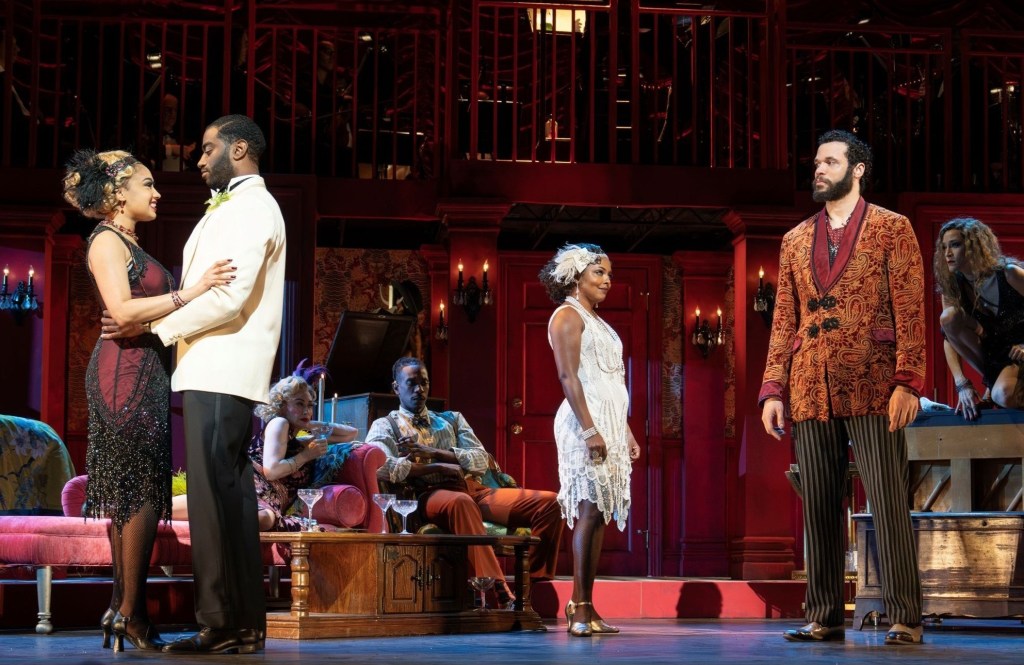
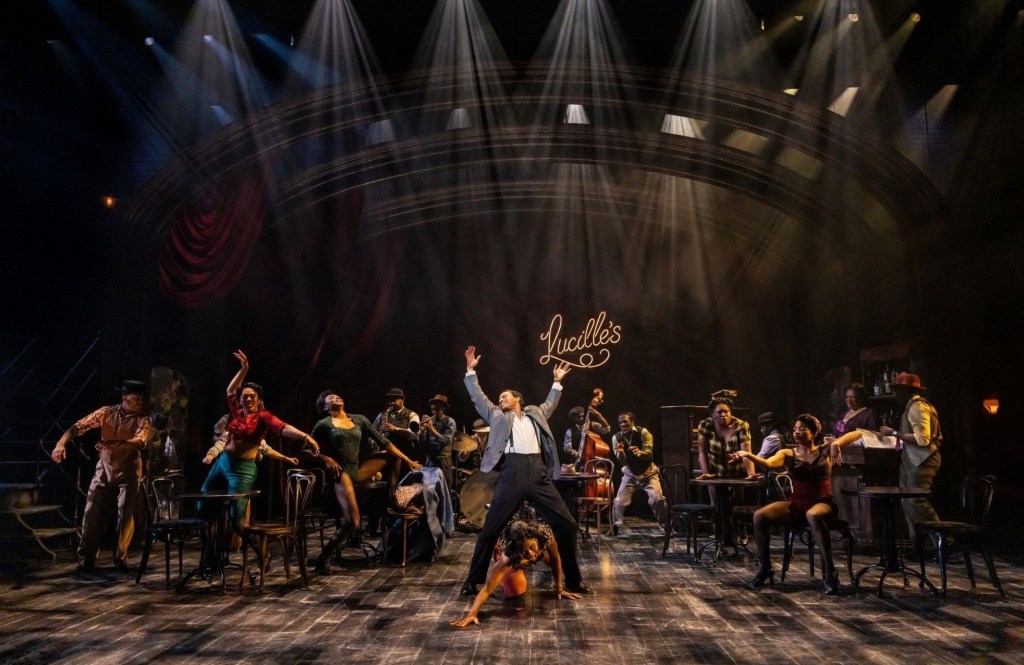
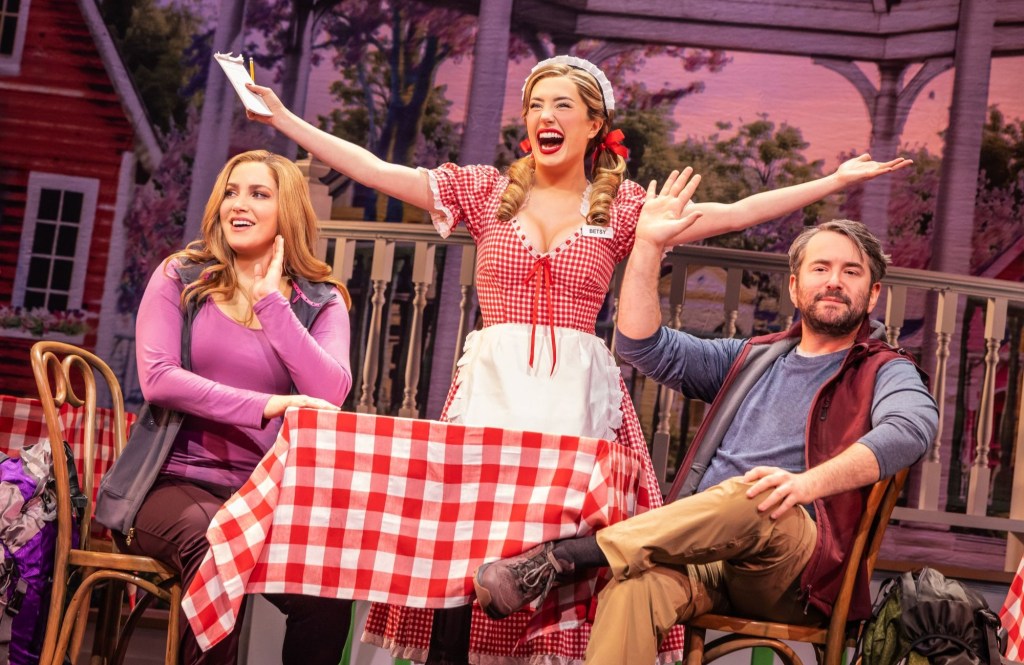
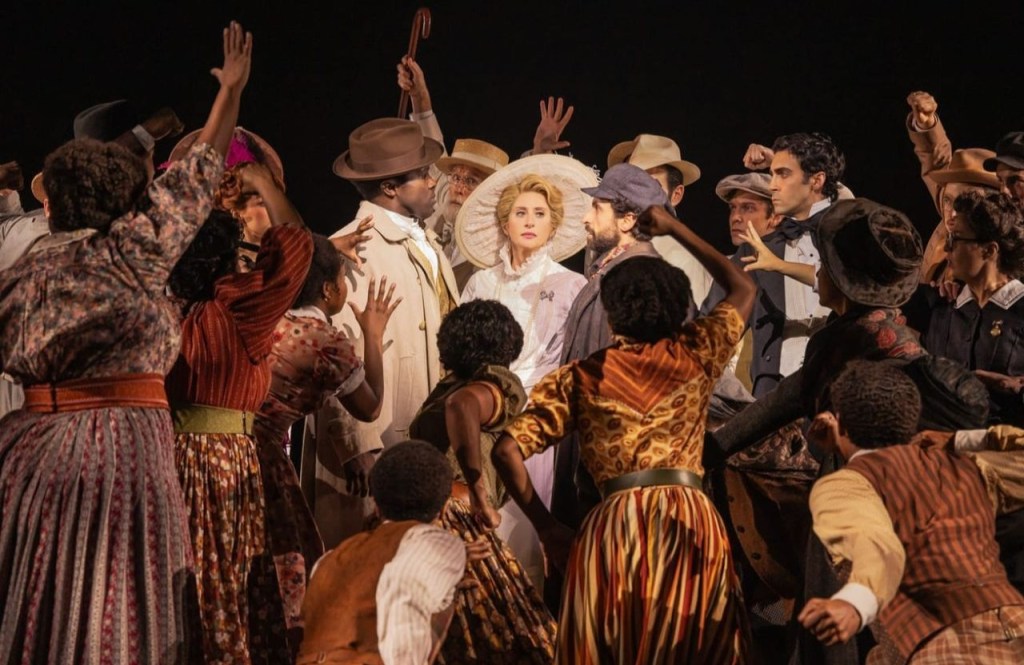
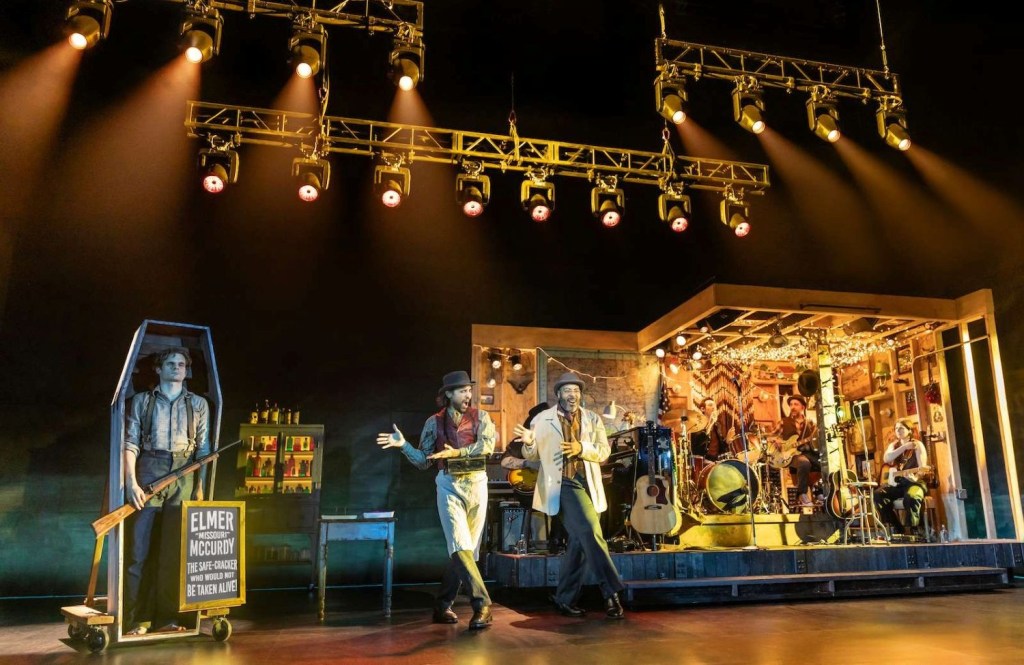
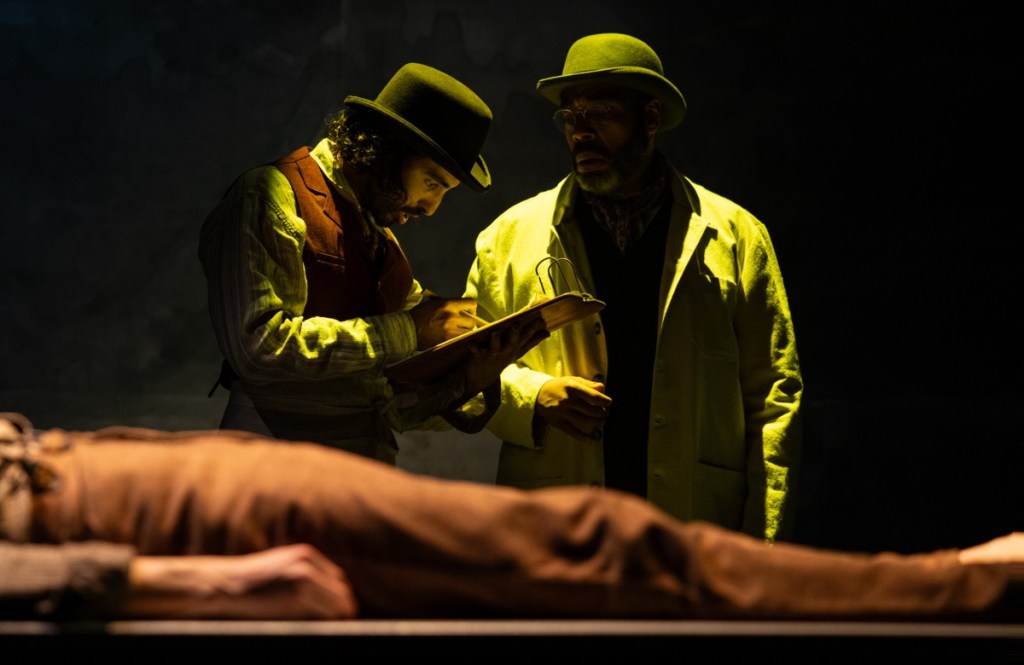
Wanted, a new musical inspired by the true story of Mary and Martha Clarke, opened on Broadway this evening at the James Earl Jones Theatre. It has a book and lyrics by Angelica Chéri, music by Ross Baum, and direction by Stevie Walker-Webb, and it is a terrible, terrible mess, revealing little in the way of skill on the part of the creators.
The scene work is frequently clunky. The dialogue frequently fails to build into song. The songs tend to lack a clear dramatic purpose, a clear dramatic reason for being. (A matter of execution and spotting.) The lyrics tend to be unfocused, generically phrased, and dramatically unproductive. The music tends to be bland and sometimes melodically bizarre. (Baum and Austin Cook are credited with the arrangements.) The lyrics and melodic lines rarely reveal a precise, explosive alignment. The vocal wailing is incessant and dramatically unsupported and off-putting. The characters are not fully etched (as a result of the wasteful, malfunctioning material). The composition is rough, nondescript, undefined. The staging is blazingly poor and devoid of a distinct aesthetic. (Some gimmicks, like assembling benches and chairs to create a bank-teller window and a settee, suggest a shoestring theatre troupe, for no apparent reason.) And the musical’s dramatic pulse is especially faint. Indeed, the narrative threatens to stall out numerous times over the course of the show, little helped by a poorly integrated Greek chorus of Kinfolk, on whom the creators have squandered heaps of stage time.
“Gun & Powder” is an amorphous sequence and a missed opportunity. “Just Passing Through” is an amorphous sequence and a missed opportunity. “Frenchman Father” is a travesty. “Dangerous” contains an exceedingly clever lyric motif concerning the race of the central figures, but the motif fails to earn much of a payoff because the authors have fumbled the execution of the overall number – which nonetheless registers as one of the most active and effective numbers in the show. “Freedom,” “Inheritance,” “Sanctuary,” and “The Shot That Shook the Soul” are static, and eat up stage time. “Invisible” and “Under a Different Sun” wander, and eat up stage time. “Real Woman” and “Mary’s Nightmare” flop around, and eat up stage time. A lengthy confrontation, in dialogue, is saddled with a piddly musical addendum. And “Wide Open Plains,” sung by the sisters, is saddled with a piddly dialogue addendum leading to a piddly musical interlude, sung by mom, and a piddly gun reveal. (Mom casually pulls the gun out of an upside-down bench partially obscured by a slender wooden beam – and then says almost nothing about the gun.)
Sadly, the gun reveal is one of many, many moments throughout the musical that are passed over, unsculpted, uncoordinated, or incomplete. Others include the hatching of the core idea, the initial makeover, the struggle to learn white speech-patterns (a ‘something, something’ motif is, in principle, sensational and inspired and, in practice, undeveloped and abandoned), the hatching of the second idea, the robberies, the courting of Jesse and Mary, the nuptial gun shot, the awakening of the presumed dead, the hand placed romantically on a knee, etc. The blame for this clumsiness lies with the authors and the director, who has not demonstrated, in Wanted, a command of the (musical) stage.
Mary and Jesse get stuck on a bed, singing nothing in particular, and with nothing in particular to do. (Why does he remove her stockings?) Martha twice gets stuck on the scaffolding, due in part to immobile material. A sneaky entrance for Mary muddies the button of a solo for Martha. The fight scene is ridiculous. The quasi-leader of the Kinfolk sings a solo line while sauntering upstage. The division of Kinfolk duties is not effective. A delicious gossip motif, for Sissy and Flo, has not been fully exploited. And the preachy finale, anchored with a bumbling lyric (“it’s in the blood”), is begun unsteadily, in terms of the division of vocals coupled with the staging of mom and daughters.
The choreography, by Chelsey Arce, is dreary – including a reflection bit in “The Way I Am.” The orchestrations, by John Clancy and Scott Wasserman, are rarely distinct. The scenic design, by Beowulf Boritt, is rustic drab. The projections, by Stefania Bulbarella, are tacky. (A flying flock of birds?) The lighting, by Adam Honoré, is slightly less than serviceable, and the flashing beams of white downlight are repeated ad nauseam – to what effect? And the principal cast is thoroughly unremarkable, with the positive exception of Awa Sal Secka and Aurelia Williams.
The story of Wanted has real possibilities – whether it is true or not. Too bad it has been so poorly told. And with a $20.5 million price-tag no less!
PRESS ANNOUNCEMENTS
Here is a list of select press announcements from the past week. Each headline is clickable for more information.
• Taran Killam, Bonnie Milligan, Ava Briglia Will Lead Premiere of The Bad News Bears: A Musical
• Operation Mincemeat Extended on Broadway to July 2027
• Alan Cumming and Shirley Henderson Will Lead A History of Paper Off-Broadway
• The Rocky Horror Show Extends on Broadway Through May 2027
• Krystal Joy Brown, Marc Kudisch, Demarius Copes, More Join Red Bull Theater Benefit Staging of Cole Porter’s Out of This World
• See Who’s Starring in That Tap Dance Show Off-Broadway
• Buena Vista Social Club Sets Broadway Closing Date; West End Premiere Planned for 2027
• Derek Klena Will Be the Next Jay Gatsby in The Great Gatsby on Broadway
• Nick Rashad Burroughs, Aisha Jackson, More Set for Free Your Arms Too Short to Box with God Concerts
• Maybe Happy Ending Tickets Now on Sale Through April 2027
• Slam Frank Extended to January 2027 with Added Saturday Late-Night Performances
PREVIEWS AND OPENINGS
Here is a list of the new musicals and revivals either opening or beginning previews during the upcoming week, specifically on Broadway and Off-Broadway. It contains, as well, select new musicals beginning performances regionally, and select new musicals and revivals beginning performances in New York City. Each title is clickable for more information.
Monday, November 9
Tuesday, November 10
• Previews: Galileo
Wednesday, November 11
• Regional: Girls Just Want to Have Fun
Thursday, November 12
• Opening: The King’s Critique
• Concert: Happy End
Friday, November 13
Saturday, November 14
Sunday, November 15
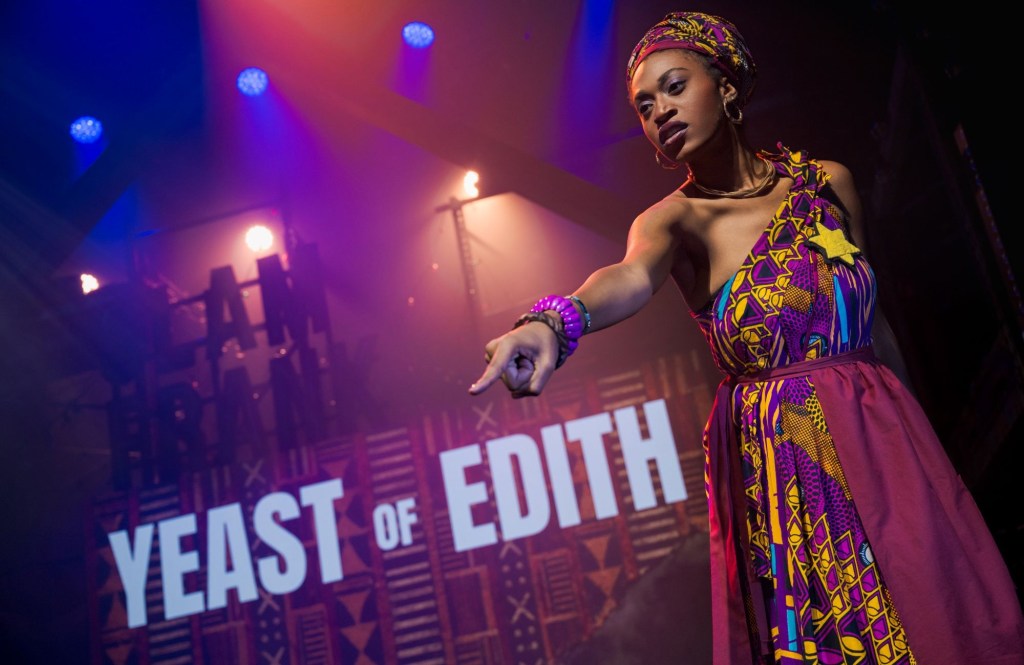
Photo of Khaila Wilcoxon in 1972 by Hawver and Hall.











Leave a Reply